There is something wonderfully inviting about a beautifully styled charcuterie board.
It sits somewhere between food and decoration: generous enough to encourage sharing, beautiful enough to become part of the table setting and relaxed enough to make entertaining feel effortless.
But creating a luxurious charcuterie board isn’t simply a matter of buying expensive cheese and arranging everything on a wooden platter.
The secret is composition.
A beautiful board balances colour, texture, shape, flavour and height so that every part feels intentional without looking overly arranged. It should feel abundant, but never chaotic; elegant, but never precious.
And, perhaps most importantly, it should make your guests want to reach across the table and help themselves.
If you’re planning a larger gathering, the same philosophy can extend to the whole meal. Our guide to How to Host a Chic Dinner Buffet at Home Without Making It Complicated explores how thoughtful presentation can make entertaining feel generous and relaxed without leaving the host stuck in the kitchen.
Why a Charcuterie Board Feels So Luxurious
Charcuterie has become popular partly because it combines two things people naturally enjoy: beautiful presentation and relaxed sharing.
Unlike a formal plated starter, a board invites everyone to participate. Guests can choose what appeals to them, try different combinations and return for another bite whenever they like.
That makes it particularly well suited to entertaining at home.
A luxury board is therefore less about extravagance and more about thoughtful abundance.
Instead of filling the surface with as many ingredients as possible, think about creating contrast:
Creamy cheese beside something crisp.
Sweet fruit beside something salty.
Rich cured meat beside something fresh.
Soft textures beside crunchy ones.
A few beautiful details can make the whole arrangement feel much more sophisticated.
Start With the Right Board
Before choosing the food, choose the canvas.
The serving board itself becomes part of the presentation, so its shape, material and size matter.
A large wooden board creates a relaxed, rustic mood. Marble feels cooler and more contemporary. A beautiful stone or ceramic platter can make the presentation feel more refined, while a collection of smaller boards can work beautifully for a larger gathering.
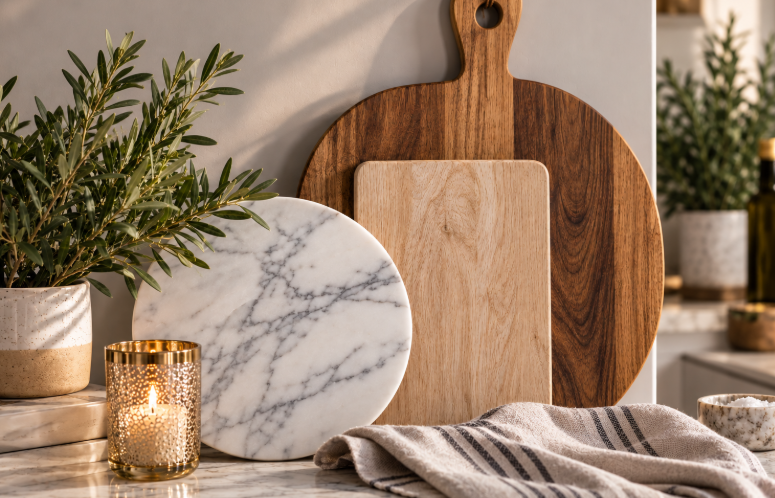
For an especially elegant result, consider the style of the occasion first.
A casual afternoon with friends might suit warm wood and natural linen.
A sophisticated evening gathering could call for marble, darker ceramics, polished serving pieces and candlelight.
This is the same principle that applies to a beautiful dining table: the individual pieces don’t have to be extravagant when they work together. Our guide to The Art of Setting a Beautiful Table: Simple Ways to Make Every Meal Feel Special explores how flowers, linens, lighting and tableware can transform even an uncomplicated meal.
Choose a Colour Palette Before You Shop
One of the easiest ways to make a charcuterie board look professionally styled is to think about colour before ingredients.
That doesn’t mean everything needs to match.
Instead, choose three or four dominant tones and allow the ingredients to create variation within that palette.
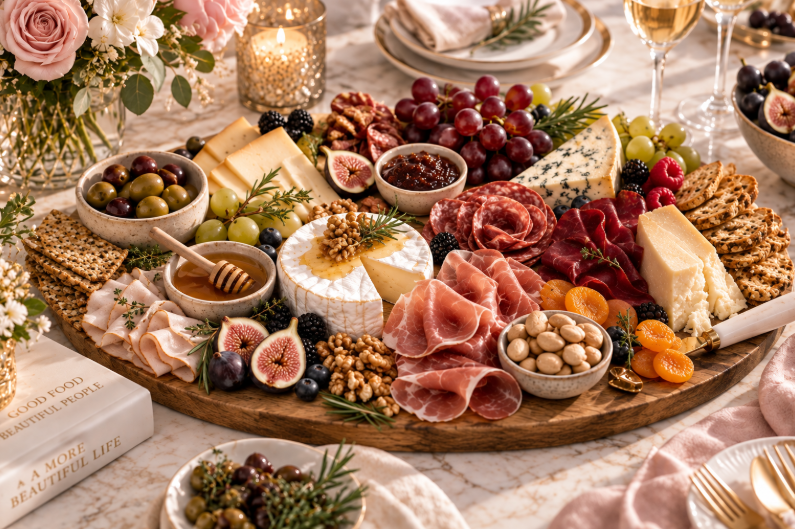
A Mediterranean-inspired board might bring together creamy ivory cheeses, green grapes, figs, olives and fresh herbs.
A romantic evening board could revolve around blush pink, burgundy, deep purple and cream, using strawberries, figs, cherries, prosciutto and flowers for subtle colour.
For a classic luxury aesthetic, warm neutrals work beautifully: cream, caramel, brown, burgundy and soft green.
The objective is simple:
Make the board look delicious before anyone takes the first bite.
DID YOU KNOW?
The visual appeal of a charcuterie board comes largely from contrast. Mixing different colours, shapes, heights and textures creates a more dynamic composition than arranging similar ingredients together.
The Essential Elements of a Luxury Board
A memorable board doesn’t need dozens of ingredients.
In fact, too much variety can make the result feel cluttered.
Start with a few strong foundations.
Cheese
Choose a combination rather than one single cheese.
A soft cheese provides creaminess, a firm aged cheese brings texture and a stronger flavour, while something unusual — such as a blue cheese, truffle cheese or beautifully flavoured chèvre — gives the board a point of interest.
You don’t need six or seven cheeses.
Three thoughtfully chosen varieties can be enough.
Charcuterie
Cured meats introduce savoury depth and beautiful visual movement.
Prosciutto can be folded loosely into ribbons or waves. Salami can be arranged in overlapping circles or folded into small rosettes. More rustic cured meats can simply be clustered naturally rather than positioned too precisely.
The trick is not to make every piece identical.
A little variation makes the board feel more abundant.
Something Fresh
Fresh ingredients prevent the board from becoming visually or gastronomically too heavy.
Grapes, berries, sliced pears, figs, apple wedges and seasonal fruit all work beautifully.
Fresh herbs can also introduce a subtle green element without requiring another substantial ingredient.
Something Crunchy
Nuts, crisp crackers, breadsticks and toasted elements provide the texture that makes a board interesting from the first bite to the last.
Choose a few shapes rather than filling the board with multiple varieties.
A delicate cracker beside a rustic piece of bread can create enough contrast.
Something Sweet
A little sweetness helps balance salty, savoury and creamy flavours.
Honey is an obvious choice, but fig jam, quince paste, dried apricots, dates or dark chocolate can create a more sophisticated finish.
For a particularly elegant presentation, serve honey or jam in a small bowl rather than allowing it to spread across the board.
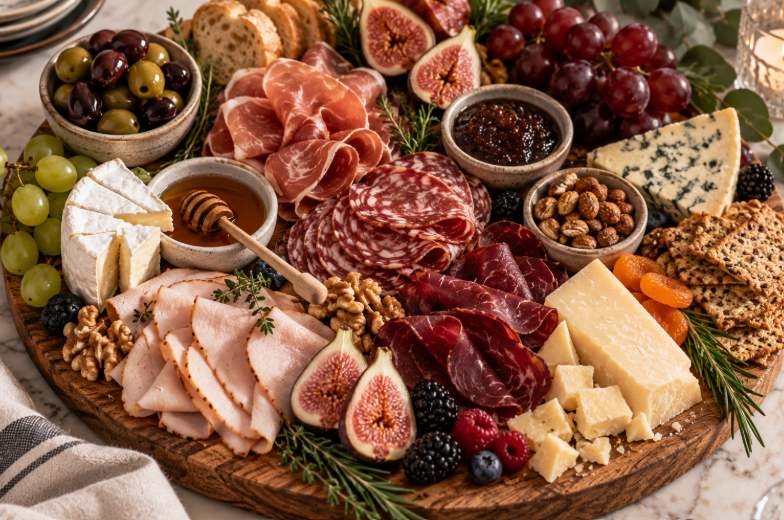
Create Structure Before You Start Filling the Board
One of the biggest styling mistakes is beginning with the smallest ingredients.
Instead, work from large to small.
Start by positioning the largest elements:
Cheeses first.
Then bowls or small dishes for honey, olives, preserves or nuts.
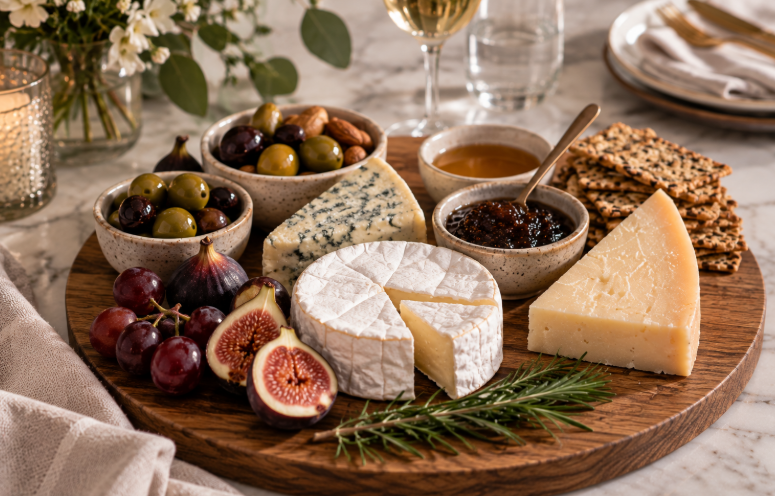
Then the larger portions of charcuterie.
After that, begin filling the spaces with fruit, crackers and smaller ingredients.
Finally, add the decorative details.
This creates a sense of structure and makes it much easier to achieve the effortless abundance that defines a beautiful board.
Think in Clusters, Not Rows
A luxury charcuterie board shouldn’t look like a supermarket display.
Avoid arranging every ingredient in perfectly straight lines.
Instead, create small clusters.
Place several grapes beside one cheese.
Fold a few slices of prosciutto around another.
Let crackers overlap slightly.
Scatter nuts naturally around the base of a cheese.
Repeat colours in different parts of the board so the eye moves around the entire composition.
This creates the impression that the board has evolved naturally, even though every element has been deliberately placed.
STYLE TIP
Leave a little breathing room. A board doesn’t need to be completely covered from edge to edge. Leaving small areas of visible marble, wood or stone gives the composition somewhere to rest and makes the ingredients themselves look more abundant.
Add Height for a More Sophisticated Presentation
Flat boards can sometimes look visually heavy.
Creating a little height makes the arrangement much more interesting.
You can achieve this without elaborate equipment.
Use small bowls for preserves and olives. Stack crackers into a loose pile. Fold charcuterie rather than laying every slice flat. Place a wedge of cheese slightly higher than the surrounding ingredients.
Even a small amount of vertical variation can change the entire appearance of the board.
This is also where elegant serving pieces can become decorative elements in their own right.
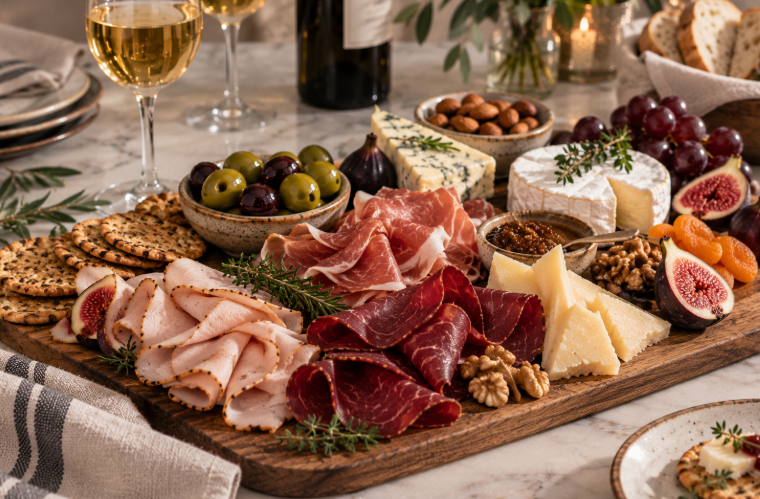
The Details That Make It Feel Special
Once the main ingredients are arranged, the finishing touches become important.
Fresh rosemary, thyme, basil or other herbs can introduce colour and a natural fragrance.
Edible flowers can create a romantic touch for a girls’ night, birthday or special celebration.
Small bowls in ceramic, glass or polished metal can add structure.
A beautiful cheese knife resting beside the board makes the presentation feel considered rather than merely assembled.
And don’t forget the surface underneath.
A linen runner, beautiful napkin or elegant tray can turn a charcuterie board into part of a complete entertaining moment.
The board itself may be the star, but its surroundings determine how luxurious it feels.
Make the Board Part of the Experience
A charcuterie board is at its best when it encourages people to gather around it.
Place it somewhere accessible rather than treating it as decoration that guests are afraid to disturb.
Set out appropriate knives and small plates.
Make sure the ingredients are easy to reach.
And think about what people will drink alongside it.
A relaxed afternoon gathering might call for sparkling water, iced tea or coffee, while an evening board could sit beautifully alongside wine or sophisticated non-alcoholic drinks.
The important thing is that everything feels connected.
A beautifully styled board shouldn’t feel like an isolated centrepiece.
It should feel like part of the occasion.
That same attention to atmosphere is what makes an intimate gathering at home so enjoyable. For another relaxed entertaining idea, see How to Host the Perfect Afternoon Coffee at Home: An Elegant Guide.
Luxury Is in the Balance
The most beautiful charcuterie boards aren’t necessarily the most expensive.
They are the ones where every element feels considered.
A good cheese doesn’t need five garnishes around it.
A handful of beautiful grapes can be more effective than three different fruits competing for attention.
A little prosciutto, arranged thoughtfully, can look more luxurious than an overcrowded pile of cured meats.
And a simple wooden board can be every bit as elegant as marble when the ingredients and surrounding table setting have been chosen with care.
This is one of the simplest principles of elegant entertaining:
Luxury is not about adding more. It is about choosing better and presenting it beautifully.
Choose a Theme That Gives the Board Personality
A theme doesn’t have to be complicated.
It can be as simple as deciding on a particular flavour profile, colour palette or mood before you begin.
The Mediterranean Board
Think creamy cheeses, olives, grapes, figs, rustic bread, marinated vegetables, fresh herbs and a handful of nuts.
The result feels abundant and relaxed, making it perfect for an afternoon gathering or an informal dinner.
The Romantic Board
This is where softer colours and delicate details come into play.
Use strawberries, figs, cherries, pink-toned grapes, creamy cheeses, prosciutto and a little dark chocolate. Add fresh flowers or a few edible petals for a subtly feminine finish.
It would be beautiful for Valentine’s Day, an anniversary or a girls’ night in.
The Classic Luxury Board
Keep the palette sophisticated and restrained: ivory, deep red, rich brown and touches of green.
Choose a small number of exceptional cheeses, beautifully sliced charcuterie, figs, grapes, honey, preserves and quality crackers.
This approach is particularly elegant for an evening dinner party.
Create a Signature Combination
One of the easiest ways to make a board feel more sophisticated is to think about combinations rather than individual ingredients.
A guest shouldn’t have to work out which ingredients belong together.
Create little flavour stories throughout the board.
Try a creamy cheese with honey and walnuts.
Pair aged cheese with quince paste and a crisp cracker.
Combine prosciutto with fresh fig.
Try a soft cheese with pear and a touch of honey.
The idea is to give people several possibilities for building their own perfect bite.
That makes the experience feel more generous and considered.
Use Small Bowls as Design Elements
Small bowls are practical, but they also help create visual structure.
Use them for anything that could otherwise spread across the board: olives, preserves, honey, nuts or smaller fruits.
Glass creates a lighter, more delicate appearance.
Ceramic feels relaxed and artisanal.
Metallic or gold-accented pieces can make an evening board feel more glamorous.
Try not to use too many different styles.
Repeating one material or finish creates cohesion, particularly when the board itself already contains a lot of visual variation.
Arrange the Charcuterie With Movement
Cured meats can be one of the most beautiful parts of the board when arranged thoughtfully.
Instead of laying every slice flat, create variation.
Fold thin slices loosely into ribbons.
Overlap salami in small fans.
Create small rosettes when you want a more decorative presentation.
Leave some pieces naturally loose rather than making everything perfectly symmetrical.
The objective is movement.
The eye should travel from one part of the board to another rather than stopping at a rigid pattern.
Make Fruit Look Deliberate
Fruit is one of the easiest ways to add freshness and colour, but it can quickly make a board look informal if it is placed without consideration.
Use fruit to repeat colours and connect separate areas.
If you have purple figs on one side, introduce another small purple element elsewhere.
Cluster grapes rather than scattering them evenly.
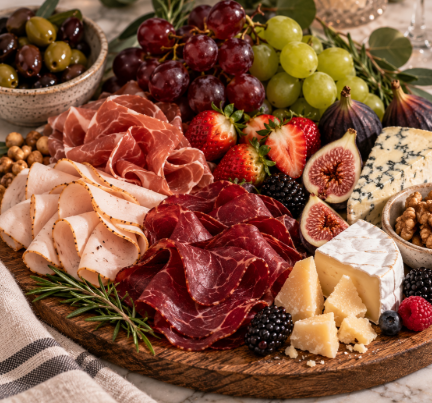
Halve larger fruit so guests can immediately see the texture inside.
And use seasonal fruit whenever possible. It tends to look more beautiful naturally because of its colour and shape.
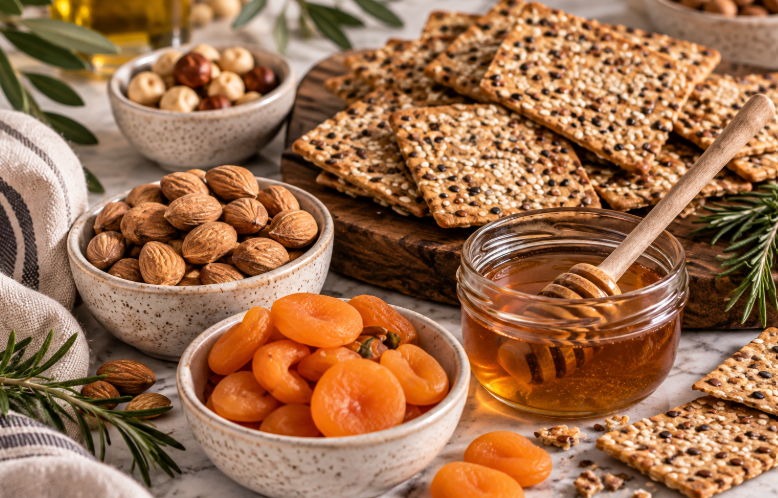
Don’t Forget the Bread and Crackers
Crackers and bread often end up treated as an afterthought.
They shouldn’t be.
Their shape, colour and texture contribute significantly to the overall composition.
Use a combination of one or two styles rather than a large assortment.
Thin, delicate crackers can make the board feel refined.
A rustic sourdough or artisan loaf can introduce warmth.
Breadsticks can add height.
Arrange them in small groups and leave enough accessible around the board that guests don’t have to reach across other ingredients.
The Art of Making a Board Look Abundant
There is a fine line between abundant and overcrowded.
The trick is to create density in some areas while leaving breathing space in others.
Instead of spreading every ingredient evenly across the entire board, create fuller clusters around the cheeses and bowls, then allow smaller gaps between them.
This makes the board appear generous without becoming visually overwhelming.
And remember that abundance doesn’t require enormous quantities.
A few beautifully arranged ingredients often look more luxurious than a board overloaded with average ones.
People eat with their eyes.
It’s one of the simplest principles of entertaining, and a charcuterie board demonstrates it beautifully. Before anyone tastes the cheese, fruit or charcuterie, they have already experienced the colour, texture and composition of the table.
That’s why presentation matters.
Style the Table Around the Board
Once the board is finished, don’t stop there.
Think about what surrounds it.
A linen table runner can create a softer foundation.
A cluster of candles can add warmth in the evening.
Small flowers can introduce colour without competing with the food.
Beautiful glassware can make even a casual gathering feel more intentional.
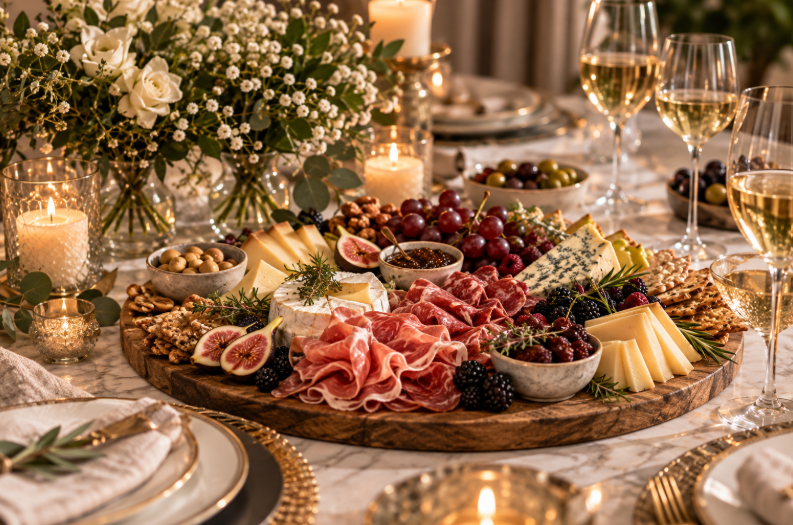
And when the occasion calls for it, a few elegant place settings around the board can transform a simple shared platter into the centre of a complete entertaining scene.
The board should feel integrated into the setting rather than placed randomly in the middle of the table.
How to Style a Charcuterie Board for a Girls’ Night In
A girls’ night gives you permission to make the board a little more playful.
Keep the presentation beautiful, but introduce more colour and variety.
Think strawberries, grapes, chocolate, soft cheeses, crackers, olives, nuts and small sweet treats.
You could even create separate sweet and savoury zones so guests can move between them throughout the evening.
A beautiful board also means the host can spend less time serving.
Everything is already there.
Everyone can help themselves.
And the food becomes part of the conversation rather than an interruption to it.
That relaxed approach is one reason a beautifully styled board works so well for informal entertaining at home.
How to Style a Charcuterie Board for a Dinner Party
For a dinner party, the board can become more restrained.
Choose fewer ingredients and make each one count.
Aged cheeses, quality cured meats, seasonal fruit, a beautiful preserve and a handful of carefully chosen accompaniments can be more than enough.
Keep the colour palette connected to your table setting.
If your table is neutral, introduce deep burgundy or green through fruit and herbs.
If your dinnerware is darker, ivory cheeses and pale fruit can create beautiful contrast.
At a more formal occasion, consider serving the board as an elegant first course rather than leaving it on the table all evening.
This gives it a clear role within the meal while maintaining the relaxed pleasure of shared food.
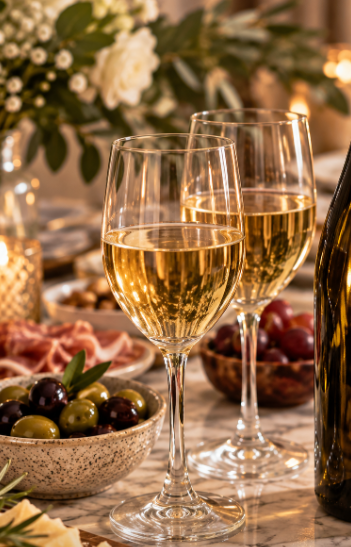
Pair the Board With the Right Drinks
The drink selection can subtly change the character of the board.
For a daytime gathering, chilled sparkling water with citrus, iced tea or beautifully presented fruit-based drinks keeps things light.
For an evening occasion, serve drinks that complement rather than overpower the flavours on the board.
A useful principle is to think about balance rather than complexity.
Rich cheeses benefit from freshness.
Salty cured meats work well with something refreshing.
Sweet fruit and preserves become more interesting alongside more savoury flavours.
And whatever you serve, elegant glassware and thoughtful presentation will make the entire experience feel more cohesive.
Don’t Overdecorate the Food
It can be tempting to keep adding flowers, herbs, edible petals, decorative bowls and other details once the board begins to take shape.
Know when to stop.
The food should remain the star.
Use decorative elements to frame the board rather than compete with it.
A few sprigs of rosemary can be enough.
One beautiful bowl can be more effective than five.
A single cluster of flowers beside the board can create more impact than petals scattered everywhere.
Luxury is often created through restraint.
Prepare Ahead Without Losing the Beautiful Finish
One of the great advantages of a charcuterie board is that much of it can be prepared before guests arrive.
Choose and portion your cheeses.
Wash and prepare fruit.
Arrange serving bowls.
Prepare your preserves and accompaniments.
Then leave the final assembly until shortly before serving.
This allows the board to look fresh and prevents delicate ingredients from sitting out unnecessarily long.
Keep anything that requires refrigeration chilled until the appropriate time, particularly soft cheeses and perishable foods.
The goal is to make entertaining look effortless without creating unnecessary work at the last minute.
The Finishing Touch: Step Back Before You Serve
When you think the board is finished, don’t immediately put it on the table.
Take a moment to look at it from a little distance.
Is one side noticeably heavier?
Are there enough different colours?
Does one ingredient dominate?
Are there empty spaces that could benefit from a small cluster?
Can every major element be reached easily?
Sometimes one final handful of grapes or a small bowl of nuts is all the board needs.
And sometimes the most elegant decision is to remove something.
EDITOR’S NOTE
The beauty of a luxury charcuterie board isn’t in how many ingredients you can fit onto a platter. It’s in the feeling you create around it. Choose ingredients with different flavours and textures, arrange them with intention, add a few thoughtful details and then let your guests do the rest.
The board should invite people to linger.
It should give them something to discover, something to share and something beautiful to look at while conversation unfolds.
That is what makes it more than food.
It becomes part of the occasion.
The Fancylicious Approach to Elegant Entertaining
A luxury charcuterie board doesn’t require a professional caterer, an enormous budget or a table overflowing with complicated dishes.
What it really requires is good curation.
Choose a beautiful foundation. Build around a few excellent ingredients. Introduce contrast through colour, texture and shape. Add height where you can. Give the arrangement a little breathing room. Then finish with the details that make the setting feel personal.
Most importantly, don’t lose sight of the reason you’re making it.
Entertaining at home should still feel enjoyable for the person hosting.
A beautifully styled board gives you something wonderfully useful: a centrepiece that looks impressive, encourages sharing and allows you to spend more time with your guests.
And perhaps that is the most luxurious part of all — creating a beautiful experience without making it feel like work.