

Working from home offers flexibility, comfort and the freedom to create a routine that suits your lifestyle. But when your office is only a few steps from your kitchen, it can also become surprisingly easy to spend most of the day sitting down.
Between back-to-back video calls, long stretches at your desk and the temptation to keep working through lunch, movement can gradually disappear from the working day. Even when you finish work, the transition from your desk to your sofa may feel almost automatic.
The solution is not necessarily to squeeze a full workout into an already busy schedule. Often, it is about making small, intentional changes that help you move more naturally throughout the day.
From creating a workspace that encourages movement to building short activity breaks into your routine, staying active while working from home can be both achievable and enjoyable.
Why Working from Home Can Make Us Less Active
When you work in an office, movement often happens without much thought. You might walk to a meeting room, visit a colleague, take the stairs or head out to buy lunch. At home, many of these everyday opportunities disappear.
You can move from your bed to your desk, spend hours in the same position and finish the day without having taken a proper break.
Long periods of sitting can contribute to stiffness and discomfort, while a lack of regular movement can make it harder to maintain an active daily routine. The answer is not to feel guilty about sitting — it is to recognise when you have been still for too long and introduce opportunities to move.
Think of activity as something that can be spread throughout the day, rather than something that only counts when you are wearing workout clothes.
1. Create a Workspace That Encourages Movement

Your workspace can influence how you feel and move throughout the day. A comfortable, thoughtfully arranged home office makes it easier to work well while also creating opportunities to change position.
Start with the essentials. Your chair should support a comfortable sitting position, your screen should be at a suitable height, and your keyboard and mouse should be positioned so that your shoulders can relax.
Then consider how you can make movement part of the space itself.
- Keep water nearby, but get up regularly to refill it. Use the opportunity to stretch your legs rather than keeping everything within arm’s reach.
- Create a reason to stand. Place a notebook, document tray or other frequently used item somewhere that encourages you to change position.
- Consider a sit-stand option. If your setup allows it, alternating between sitting and standing can introduce variety into the working day. Standing for hours without moving, however, is not the goal.
- Make space for a short stretch. Even a small clear area beside your desk can make it easier to move between tasks.
A well-designed workspace should support both concentration and comfort. For more inspiration on creating a home environment that feels considered and inviting, explore our guide to making your home feel more luxurious through thoughtful details and styling.
For a more detailed approach to creating a workspace that combines function and style, read How to Build a Luxury Capsule Home Office . It explores how thoughtful choices can make your home office feel more organized, comfortable and inspiring.
2. Take Short Movement Breaks Between Tasks
You do not need to wait until lunchtime to move. One of the easiest ways to become more active is to use the natural pauses in your working day.
Instead of moving straight from one task to the next, take a few minutes to stand up, stretch or walk around your home. These small breaks can help interrupt long periods of sitting without significantly disrupting your schedule.
Try incorporating movement into moments you already have:
- After finishing a meeting, stand up and walk around for a couple of minutes.
- While waiting for a document to download or a file to upload, step away from your screen.
- Between tasks, stretch your shoulders, gently move your neck and extend your legs.
- When you finish a phone call, take a short walk before returning to your desk.
The idea is to make movement part of your working rhythm, rather than treating it as another task to fit into your calendar.
DID YOU KNOW?
The World Health Organization recommends that adults limit sedentary time and replace it with physical activity of any intensity, including light movement. Short activity breaks are a practical way to introduce more movement into a day spent working at a desk.
3. Turn Phone Calls into Walking Opportunities
Not every work task requires you to be seated in front of your computer. If you have a phone call that does not involve screen sharing, reviewing documents or taking detailed notes, consider walking while you talk.
A short walk around your home, on your balcony or outside can turn an otherwise sedentary part of your day into an opportunity to move.
You could also use voice notes or audio messages when appropriate, allowing you to stand or walk while thinking through a response.
Of course, this will not work for every meeting. Video calls, presentations and tasks requiring close concentration may mean staying at your desk. The goal is simply to recognise which parts of your working day offer a little more flexibility.
4. Make Your Lunch Break an Active One
When working from home, lunch can easily become something you eat while checking emails. But stepping away from your desk gives you an opportunity to change your environment and move.
If the weather allows, take a walk outside before or after lunch. Even a short outing can help you break up the day and get away from your screen.
Other options include:
- Preparing lunch while standing and moving around the kitchen.
- Taking a short walk around your neighbourhood.
- Doing a few gentle stretches before sitting down to eat.
- Using part of your break for a brief, low-impact workout.
You do not need to turn every lunch break into an exercise session. Some days, a relaxed walk is enough; on others, you may prefer to use the time to rest.
If you want easy meal inspiration for your working week, our guide to The Glow Kitchen: 5 Easy High-Protein Lunches for Busy Days offers practical ideas for making lunch feel more satisfying without spending too much time preparing it.
5. Add a Few Simple Stretches to Your Day
You do not need a dedicated home gym to introduce movement into your routine. A few gentle stretches can be an accessible way to change position after spending time at your desk.

Try these simple movements during a break:
- Shoulder rolls: Slowly roll your shoulders backwards, then forwards, to release some of the tension that can build up while working.
- Chest opener: Stand tall, gently draw your shoulders back and open your chest without forcing the movement.
- Calf raises: Hold the back of a stable chair if needed, rise onto your toes and lower slowly.
- Gentle standing extension: Stand comfortably and stretch upwards, lengthening your body without arching your lower back.
- A short walk: Sometimes the simplest movement is the most practical. Walk around your home for a few minutes before returning to work.
Keep the movements comfortable and controlled. Stop if anything causes pain, and choose alternatives that suit your mobility and physical needs.
TIP
Make movement feel like a natural part of your day, not a punishment for sitting. Keep comfortable shoes near your desk, choose an attractive water bottle you enjoy using and create a little space where you can stretch between tasks. When the habit feels easy and pleasant, you are more likely to maintain it.
Staying active while working from home does not have to mean adding another demanding commitment to your schedule. The most sustainable approach is to find ways to move that fit naturally around your work, energy levels and personal routine.
6. Try a Short At-Home Workout
One advantage of working from home is that you do not need to travel to a gym to fit in some exercise. A short workout before work, during a longer break or at the end of the day can be a convenient way to build activity into your routine.
You do not need elaborate equipment. A little space, comfortable clothing and a few simple movements can be enough to get started.

Here are a few options to consider:
- Bodyweight squats: A simple way to incorporate lower-body movement. Use a comfortable range of motion and keep the movement controlled.
- Wall push-ups: A gentler alternative to floor push-ups that works the upper body.
- Standing marches: March on the spot at a pace that feels comfortable.
- Glute bridges: If getting down to the floor is comfortable for you, this movement can help engage the muscles around the hips and glutes.
- A short yoga flow: Gentle transitions between familiar poses can combine movement with a moment of calm.
Start with a few minutes and build gradually according to your fitness level. If you are new to exercise, have an injury or have a health condition that affects physical activity, choose appropriate movements and seek professional guidance when needed.
The goal is to find something manageable enough to repeat, not to exhaust yourself between meetings.
7. Use Your Calendar to Make Movement Happen
When work becomes busy, movement is often the first thing to disappear. A simple solution is to give it a place in your calendar.
You could schedule a short walk after lunch, a five-minute movement break between meetings or a workout before you open your laptop.
Think of these as flexible appointments rather than rigid obligations. If a meeting runs late, move the activity to another suitable time instead of abandoning it altogether.
A few ideas to try:
- Before work: Take a short walk or do a gentle mobility routine.
- Mid-morning: Stand up and move between tasks.
- At lunchtime: Step outside or take a brisk walk if your schedule and the weather allow.
- Mid-afternoon: Take a brief movement break to interrupt a long period of sitting.
- After work: Go for a walk, attend a fitness class or do a short home workout.
You do not need to follow every suggestion every day. Choose the moments that work with your schedule and build from there.
8. Create a Routine You Can Actually Maintain
Before settling down at your desk, take a few minutes for yourself. A simple morning skincare routine can be a lovely way to ease into the day, helping you feel refreshed and ready to focus. For inspiration, explore The Ultimate Luxury Skincare Routine: Morning & Night Steps for Glowing Skin.
The most effective routine is one that fits your life. If you regularly have demanding mornings, an early workout may not be realistic. If your afternoons are filled with meetings, lunchtime might offer a better opportunity.
Start by identifying the times when movement feels easiest. Then choose one or two habits you can repeat consistently.
For example, you might begin with a short walk at lunchtime and a brief stretch between meetings. Once those habits feel natural, you can add another activity if you want to.
It is also worth varying your movement. Walking, stretching, strength exercises, dancing and yoga offer different experiences, and variety can make an active routine feel less repetitive.
Make your movement breaks something to look forward to. Put on a favourite playlist for a short home workout, keep a comfortable pair of trainers by the door or create a calm corner for stretching.
A routine that feels enjoyable is easier to return to than one built entirely around obligation.
Small moments of movement, repeated throughout the day, can make a meaningful difference. An active lifestyle doesn’t have to begin with a perfect routine — it begins with the choice to move a little more.
9. Make Your Home a Place That Supports Movement
Your surroundings can influence your daily habits. A home that makes movement convenient can help you incorporate it without constantly having to remind yourself.
You do not need to redesign your space. Small adjustments can make a difference:
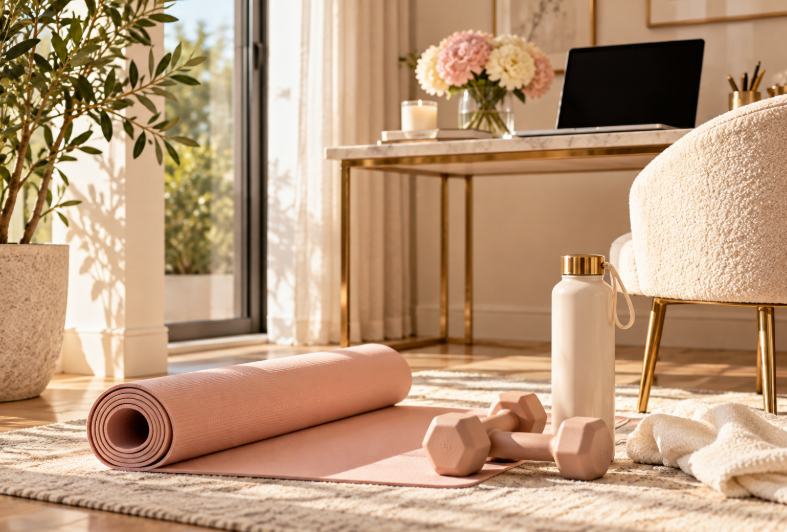
- Keep a yoga mat somewhere accessible if you enjoy stretching or home workouts.
- Leave walking shoes near the entrance so it is easy to head outside.
- Create a little space beside your desk for standing exercises.
- Keep resistance bands or other equipment nearby if you already use them.
- Make your home office comfortable enough to encourage regular changes of position.
If you are refreshing your workspace, consider how it supports your wellbeing as well as your productivity. Good lighting, a comfortable chair, an organized desk and enough room to move can all contribute to a more pleasant working environment.
Your surroundings should work with your routine, not complicate it. Even small changes can make movement feel like a natural part of your working day.
Working from home doesn’t mean you have to spend every working day at the same desk. When your schedule allows, consider taking your laptop to a café for a change of scenery. A different environment can make the day feel more varied, whether you’re catching up on emails, reading, or working on a creative project. For inspiration, discover The Best Stylish Cafés in Dubai for Working, Reading & Coffee Dates.
10. Find Your Own Balance Between Movement and Rest
Staying active is important, but so is allowing yourself time to rest. Working from home can blur the boundaries between professional and personal life, making it tempting to fill every spare moment with another task — or another self-improvement goal.
Movement should support your wellbeing, not become a source of pressure.
Some days, you may have time for a workout and a long walk. On others, a few short breaks and a little stretching may be all that fits. Both can be part of a flexible routine.
Try to pay attention to how you feel, allow yourself to adapt and avoid treating missed workouts as a reason to give up altogether.
A Simple Daily Movement Plan
If you prefer a little structure, use this example as a starting point. Adapt the timing to your working hours and personal needs.
| Moment | Activity |
|---|---|
| Before work | A short walk or gentle stretching |
| Mid-morning | Stand up and move between tasks |
| Lunch break | A walk outside or a short workout |
| Mid-afternoon | A few minutes of movement |
| After work | A walk, yoga session or preferred exercise |
You can also use the World Health Organization’s physical activity guidance as a broader reference point. For adults, it recommends 150–300 minutes of moderate-intensity aerobic activity, or 75–150 minutes of vigorous-intensity activity, per week, alongside muscle-strengthening activities on at least two days. These are general recommendations, not a requirement to achieve everything immediately.
The important thing is to build up gradually and choose activities that suit your current fitness and circumstances.
EDITOR’S NOTE
Working from home invites us to rethink what a healthy working day looks like. Productivity is important, but so is creating a space where our wellbeing has room to thrive. A thoughtful balance of focus, movement and rest can make the working day feel not only more comfortable, but more fulfilling.
Final Thoughts
Working from home does not have to mean spending the entire day sitting at your desk. With a few thoughtful adjustments, you can create a working routine that makes movement a natural part of everyday life.
Take short breaks, walk when your schedule allows, make lunch an opportunity to step away from your screen and find an activity you genuinely enjoy. These small habits can help break up sedentary periods and make your working day feel more balanced.
Above all, remember that consistency matters more than perfection. You do not need a complicated workout plan or a complete lifestyle overhaul to begin moving more.
Start with one simple change, build on it when you are ready, and create a routine that works for you — and for the life you want to lead beyond your desk.