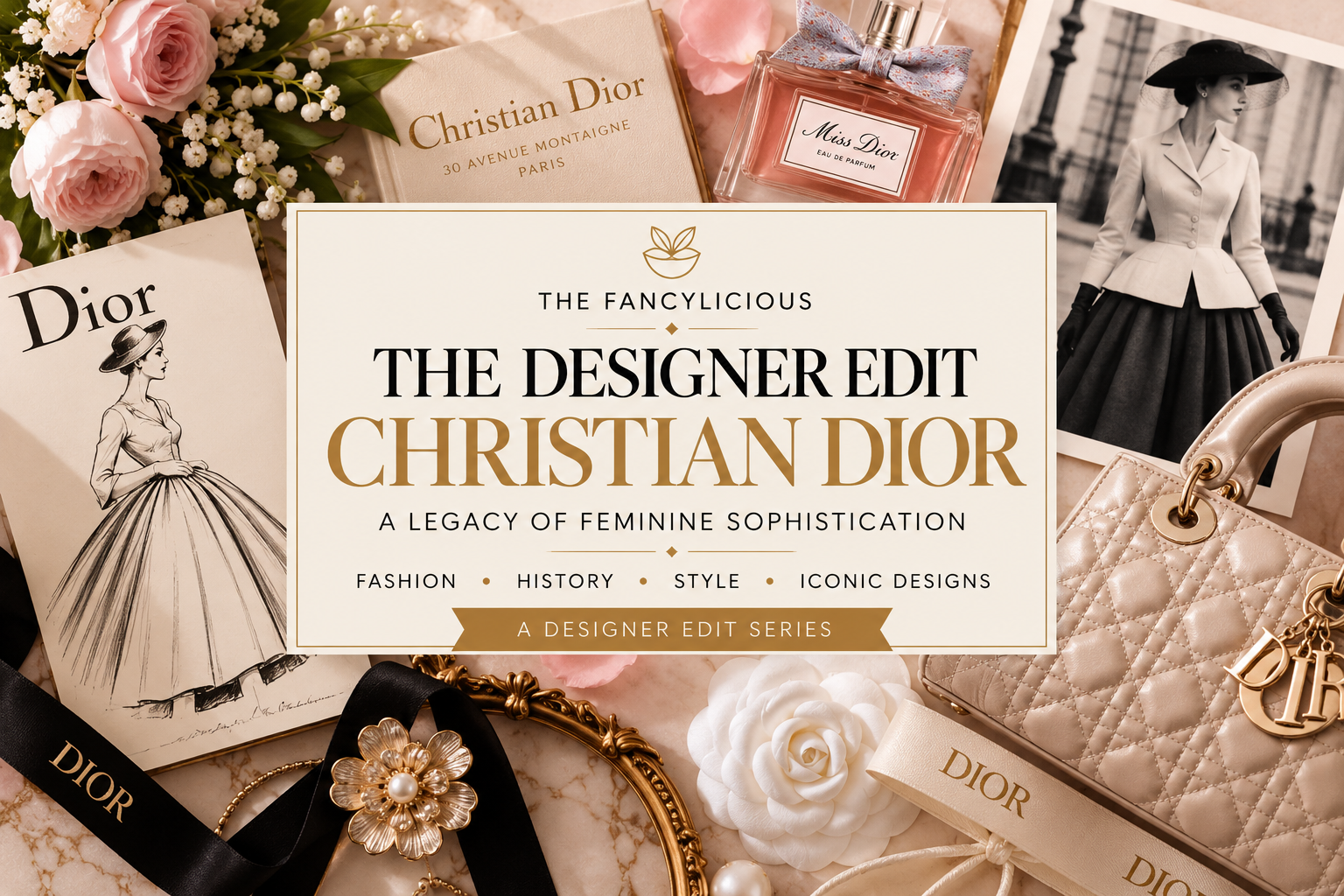
A Legacy of Feminine Sophistication
There are fashion houses that follow the mood of their time, and then there are those that redefine it. Dior belongs firmly to the latter.
When Christian Dior presented his first collection in Paris in 1947, he introduced more than a new wardrobe. He proposed an entirely different vision of femininity—one built around sculpted waists, graceful proportions, luxurious fabrics and an unapologetic sense of beauty.
From the revolutionary New Look to the Bar Jacket, from Miss Dior to the Lady Dior handbag, the language of the house has always balanced structure with romance. Flowers, architecture, craftsmanship and Parisian elegance became part of a vocabulary that continues to shape the way luxury fashion is imagined today.
This is the story of Christian Dior—the designer, the dreamer and the man behind one of the world’s most influential fashion houses.
The Man Behind the Maison
Christian Dior was born on January 21, 1905, in Granville, Normandy, and his childhood surroundings would become an important source of inspiration throughout his life. At the Villa Les Rhumbs, his family’s home, Dior developed an early fascination with gardens, architecture and the visual arts.
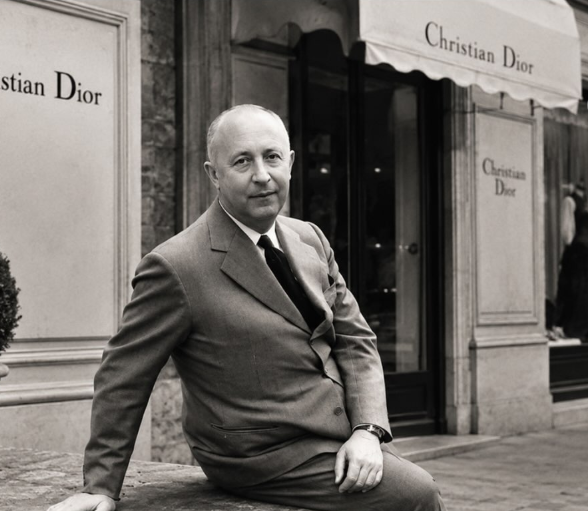
Before fashion became his destiny, Dior moved through the artistic world of Paris, where he developed an instinct for illustration, creativity and composition. His sensitivity to colour and form would eventually become fundamental to his approach to couture.
What distinguished Dior was not simply his ability to design beautiful clothes. He understood atmosphere.
A Dior collection was never intended to be merely a selection of garments. It was a complete world—one in which clothing, fragrance, flowers, interiors and even the presentation of a fashion show contributed to the same emotional experience.
That philosophy can be traced back to his own words:
My house, from the beginning, was meant to be a temple of elegance and joy.
The statement captures something essential about Dior. Luxury, for him, was not about excess for its own sake. It was about creating beauty so carefully considered that it could transform the experience of being dressed.
A New Vision of Femininity
By the end of the Second World War, fashion had been shaped by years of restrictions, practicality and fabric rationing. Dior recognised an appetite for something different.
He offered women softness, volume and drama.
His first collection was presented on February 12, 1947, at 30 Avenue Montaigne in Paris. The collection introduced silhouettes with defined waists, fuller skirts and a distinctly sculptural relationship between the body and the garment. Dior called the line the Corolle Line, while fashion editors quickly gave it another name: the New Look.
The change was dramatic.
The silhouette moved away from the pared-back wartime wardrobe and towards an image of femininity that felt almost theatrical: a narrowed waist, rounded or structured shoulders, an accentuated hipline and skirts that extended generously below the knee.
Dior had essentially made silhouette itself a statement.
His clothes did not simply dress the body. They created an architectural frame around it.
And that became one of the defining characteristics of the house.
The New Look: A Fashion Revolution
The New Look was more than a successful collection. It became one of the most important turning points in twentieth-century fashion.
The exaggerated proportions were deliberately luxurious. Generous quantities of fabric created movement and volume, while tightly constructed bodices and defined waists created contrast.
At a time when fashion had been forced into practicality, Dior brought back the pleasure of dressing.
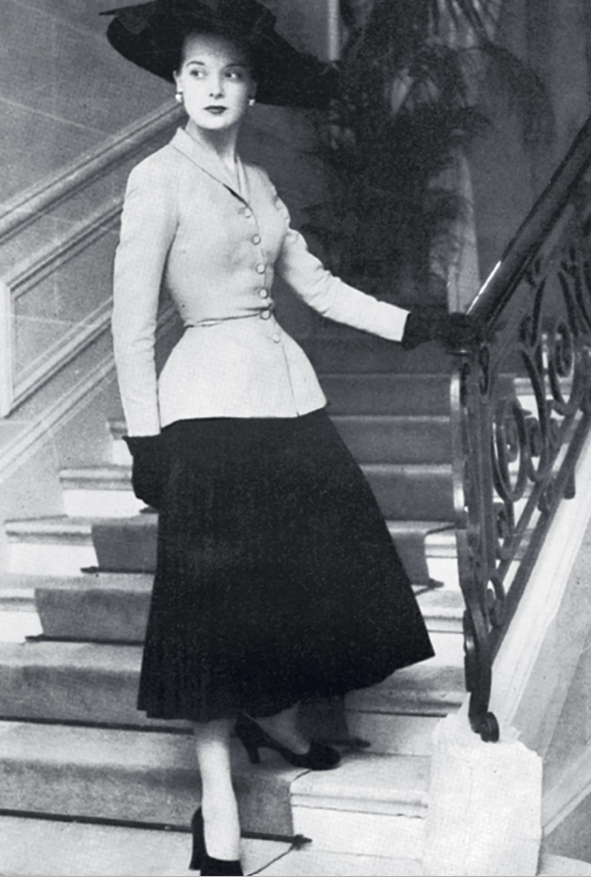
The Metropolitan Museum of Art describes the 1947 Dior silhouette through its exaggerated hipline, elongated narrow midriff, broader shoulders and full pleated skirt—elements that became immediately associated with the designer’s new aesthetic.
At the heart of this revolution was an idea that would remain central to Dior long after Christian Dior himself was gone:
femininity could be powerful precisely because it was beautiful.
The New Look restored glamour to the fashion landscape and helped re-establish Paris as a global centre of couture.
The Bar Jacket
If one garment could express the essence of Christian Dior’s original vision, it would be the Bar Jacket.
First created in 1947, it became one of the defining pieces of the New Look. Its architecture is immediately recognisable: a fitted waist, structured yet graceful construction, notched lapels and carefully positioned pockets that emphasise the body’s proportions.
The effect is remarkably sophisticated.
The jacket creates a sculpted upper body before flowing naturally into the fuller proportions of the Dior silhouette. It is simultaneously tailored and feminine—a balance that explains why the Bar Jacket continues to be revisited by the house.
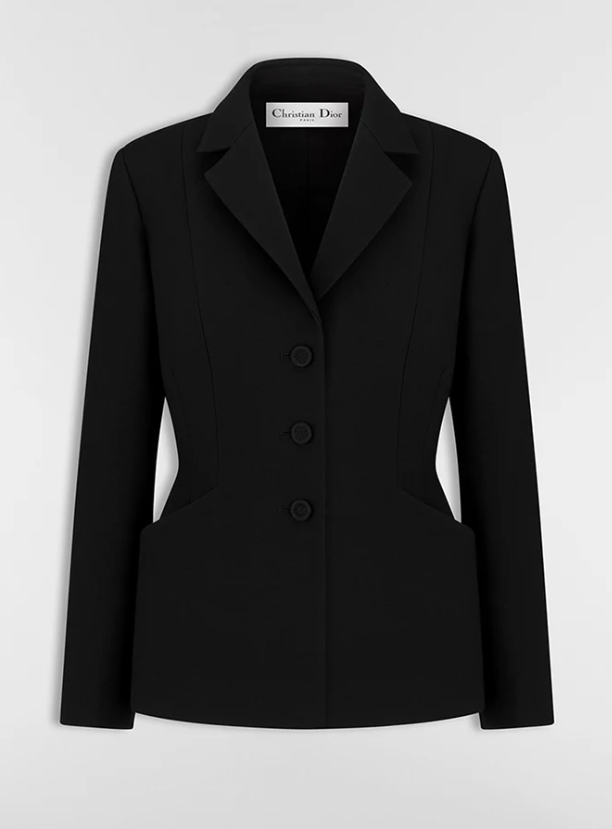
Dior still describes it as an emblematic style of the New Look, and contemporary versions continue to preserve the defining waist-enhancing construction of the original.
There is something timeless about its precision.
The Bar Jacket does not depend on decoration to make an impression. Its power comes from proportion, construction and restraint.
That is perhaps the most enduring lesson of Dior.
Dior and the Language of Flowers
Flowers were never merely decorative in the world of Christian Dior.
They were part of his imagination.
His childhood was surrounded by gardens, and his fascination with flowers continued throughout his career. Roses, lily of the valley and other botanical forms became recurring references in his collections and fragrances. Dior’s relationship with flowers was so profound that they became almost a second design language for the house.
The rose, in particular, became one of Dior’s most enduring symbols. The house describes it as Dior’s flower par excellence, linking it to his childhood memories and his mother’s garden in Granville.
The floral influence could appear in obvious ways—embroidered petals, botanical prints and sculptural flowers—but it also existed more subtly in the shapes of garments.
Dior often approached the female silhouette almost as a garden in bloom.
The body became the stem.
The skirt became the petals.
The couture construction created the architecture.
This connection between fashion and nature remains one of the reasons Dior feels so distinctly romantic without becoming sentimental.
DID YOU KNOW?
Christian Dior was deeply passionate about flowers. He studied their Latin names, created personal herbariums and famously carried a sprig of lily of the valley for good luck at his fashion shows.
Miss Dior: Fashion Meets Fragrance
For Christian Dior, fashion was never limited to clothing.
In 1947, alongside his debut fashion collection, he introduced Miss Dior, the house’s first fragrance. Dior wanted to be as much a perfumer as a couturier, and the perfume became an olfactory extension of the New Look.
He famously asked perfumer Paul Vacher to create:
“Make me a fragrance that smells like love.”
The resulting fragrance was designed to accompany the new femininity Dior was presenting through couture.
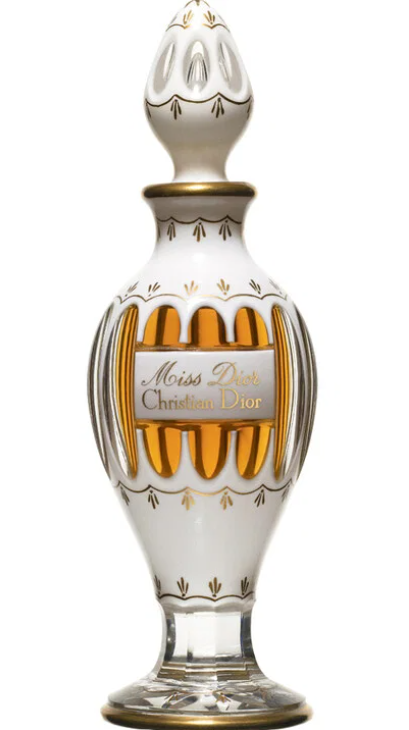
This was an important moment in the history of luxury branding. Fashion and fragrance were no longer separate worlds. Together, they created a complete Dior universe—one in which a woman could wear the silhouette, carry the accessories and leave behind the fragrance of the house.
The floral character of Miss Dior also reinforced Dior’s lifelong relationship with gardens and flowers, with rose, jasmine and lily of the valley becoming part of its enduring olfactory identity.
The Lady Dior: From Fashion Icon to Cultural Icon
Few handbags have achieved the cultural recognition of the Lady Dior.
With its structured shape, architectural lines and distinctive Cannage motif, the bag became one of the house’s most recognisable expressions of Dior elegance.
Its story became particularly significant in September 1995, when Lady Diana was visiting Paris for the opening of the Paul Cézanne retrospective at the Grand Palais. She was presented with a Dior handbag, and the association between the princess and the bag quickly became extraordinary. The house subsequently gave it the name Lady Dior.
During an official visit to Argentina later that year, Diana was photographed carrying the bag as she stepped from a plane in Buenos Aires. The image travelled around the world, helping transform the handbag into a global fashion icon.
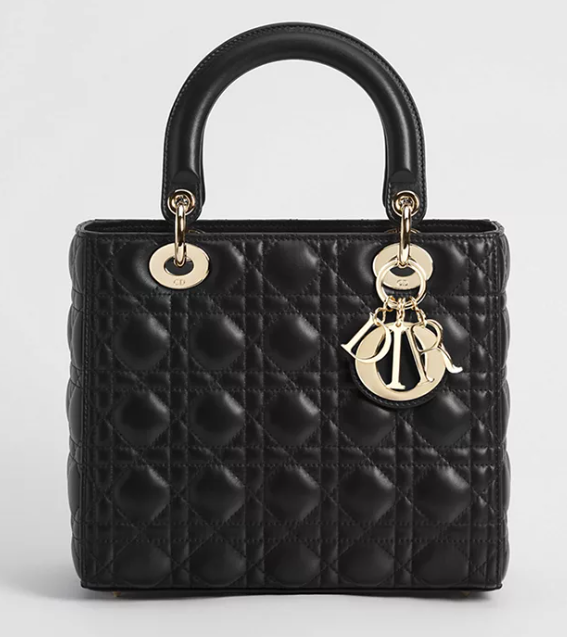
The Lady Dior illustrates something fascinating about luxury fashion: sometimes an object becomes iconic not simply because of its design, but because a moment, a woman and a cultural story become permanently attached to it.
For more timeless handbag silhouettes, explore The Best Designer Handbags That Never Go Out of Style.
The Signature Codes of Dior
Dior’s visual language has evolved across generations, but several signatures continue to connect the house to its origins.
The Cannage
The Cannage pattern is one of Dior’s most recognisable motifs, particularly associated with the Lady Dior. Its graphic structure brings an almost architectural quality to handbags and accessories while maintaining the elegance of the house.
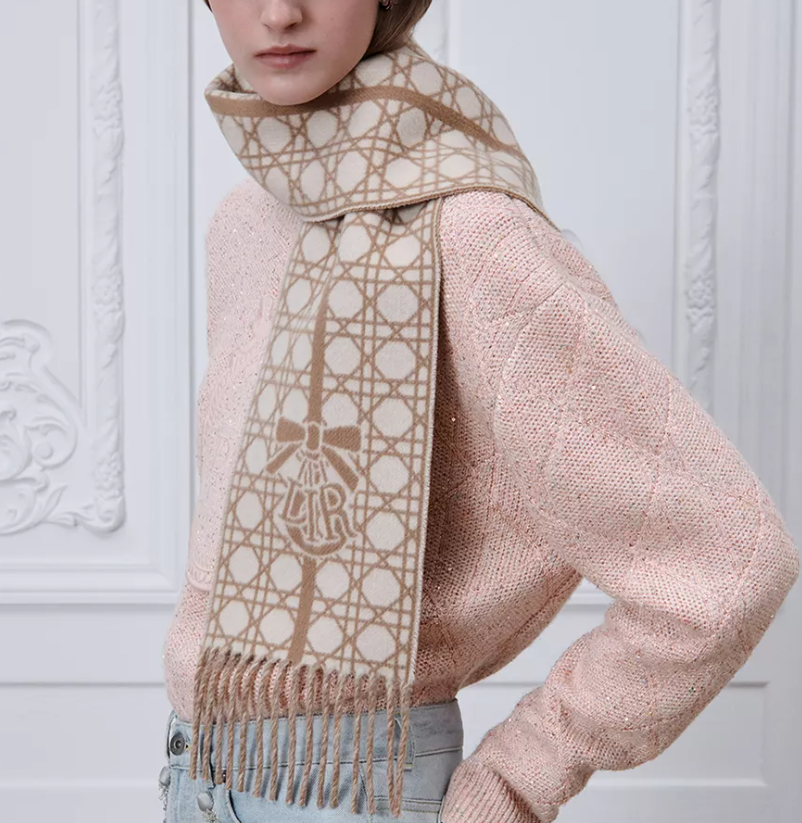
The Rose
The rose represents Dior’s deep connection with gardens, femininity and couture. It has appeared repeatedly across fashion, jewellery, beauty and fragrance.
The Bar Silhouette
The defined waist and sculptural proportions introduced in 1947 remain an important reference point for Dior. Even when interpreted through contemporary tailoring, the relationship between structure and femininity remains unmistakably Dior.
The CD Monogram
Dior’s identity is also expressed through its typography and the CD monogram, which combines Christian Dior’s initials and has become an important signature across accessories, jewellery and handbags.

For more fascinating stories behind the world’s most recognisable luxury symbols, read The Meaning Behind Luxury Brand Logos: The Stories You Never Knew.
The Bow
The bow is another recurring Dior element, bringing softness and romance to everything from couture to fragrance. In Miss Dior, the bow became particularly memorable as part of the fragrance’s visual identity.
Together, these elements create something more powerful than a logo.
They create a Dior vocabulary.
The Dior Woman: Structure Meets Romance
The enduring appeal of Dior lies in its ability to make opposing ideas work together.
Structure and softness.
Tailoring and movement.
Architecture and flowers.
Tradition and reinvention.
The Dior woman is not defined by one particular garment or decade. She is defined by proportion, polish and intention.
A fitted jacket can feel feminine without being fragile. A full skirt can feel dramatic without being excessive. A structured handbag can look powerful while remaining elegant.
This is why Dior’s aesthetic continues to translate so naturally into contemporary wardrobes.
STYLE TIP
Take inspiration from Dior’s love of flowers: a single floral brooch, camellia detail or delicate rose motif can add romance without overwhelming an elegant look.
The Evolution of Dior
Christian Dior’s greatest achievement may have been creating a language strong enough to survive beyond its creator.
After his sudden death in 1957, the house entered a new chapter under the direction of designers who each interpreted Dior’s vocabulary differently. From Yves Saint Laurent and Marc Bohan to Gianfranco Ferré, John Galliano, Raf Simons and Maria Grazia Chiuri, each brought a distinctive perspective while continuing to engage with the codes established by Dior.
Today, the maison has entered another significant chapter with Jonathan Anderson, who became Dior’s Creative Director in 2025. His appointment marks a new interpretation of the house’s heritage, bringing a contemporary and more exploratory perspective to Dior’s couture, ready-to-wear and accessories.
What makes this succession particularly fascinating is that Dior has never required its designers to reproduce the past literally.
Instead, each generation has been encouraged to reinterpret it.
The waist can be softened. The skirt can become shorter. Couture can become more conceptual. The traditional Bar silhouette can be transformed through new fabrics and construction.
But the spirit remains recognisable.
The Designers Who Shaped the Maison
Yves Saint Laurent
When Yves Saint Laurent took over after Christian Dior’s death, he brought a younger, more modern sensibility to the house.
His time at Dior was relatively brief, but historically important. He demonstrated that the maison’s identity could evolve without losing its connection to Parisian couture.
His later career would, of course, establish an entirely different fashion vocabulary—one built around tailoring, Le Smoking and a new kind of female power.
You can explore his remarkable story in The Designer Edit: Yves Saint Laurent.
Marc Bohan
Marc Bohan’s long tenure gave Dior a sense of continuity while introducing a more understated elegance.
His approach was sophisticated rather than deliberately disruptive, helping establish Dior as a house capable of dressing generations of women without becoming trapped in a single historical moment.
Gianfranco Ferré
The Italian designer brought architectural precision to Dior during his tenure.
His understanding of construction, volume and couture technique created a fascinating dialogue between French tradition and Italian design sensibility.
John Galliano
John Galliano brought theatricality, historical references and extraordinary storytelling to Dior.
His collections transformed the runway into a spectacle, demonstrating how the house’s heritage could become a source of fantasy rather than simply nostalgia.
Raf Simons
Raf Simons approached Dior from a more minimalist and contemporary perspective.
His work explored the relationship between couture, modern art, architecture and clean silhouettes, proving once again that Dior’s codes could be expressed without relying exclusively on historical references.
Maria Grazia Chiuri
Maria Grazia Chiuri brought a distinctly contemporary perspective to Dior, particularly through her focus on the relationship between fashion, feminism and women’s identity.
Her tenure demonstrated that the Dior woman could be both deeply connected to the maison’s romantic heritage and firmly rooted in the cultural conversation of the present.
Dior itself describes this succession as a continuous reinterpretation of its codes, rather than a simple repetition of its history.
Dior Under Jonathan Anderson: A New Chapter
In 2025, Jonathan Anderson became the creative force behind Dior, opening a new chapter for one of fashion’s most storied maisons. His arrival is significant not simply because of his reputation as one of contemporary fashion’s most distinctive designers, but because of the way he approaches heritage: with curiosity, irreverence and a willingness to reinterpret rather than simply reproduce it.
His first couture work for Dior has already begun exploring that relationship between history and modernity. For Spring-Summer 2026, Anderson approached couture almost like a collector assembling a cabinet of curiosities, bringing together references from art, nature and historical objects while translating them into new silhouettes.
The approach feels particularly appropriate for Dior.
Christian Dior himself drew inspiration from gardens, architecture, art and the world around him. Anderson is now taking that same spirit of curiosity and applying it to a new generation of Dior design.
Rather than abandoning the house’s heritage, he is re-coding it.
The Lady Dior, for example, has already been revisited through Anderson’s contemporary perspective, while new designs such as the Diorly and Dior Bow introduce fresh shapes into the house’s accessories vocabulary.
His appointment therefore represents something important for Dior’s continuing story: the next chapter does not need to look like the previous one to remain unmistakably Dior.
Anderson himself has described the challenge of designing for Dior as requiring an “empathy with its history while forging a path forward.”
That may ultimately become the defining idea of this new era.
Christian Dior created the vocabulary. Jonathan Anderson is now exploring how far that vocabulary can evolve.
Celebrity Style Files
Dior’s relationship with influential women has always been central to its cultural identity.
Grace Kelly
Grace Kelly represented the polished elegance that became synonymous with mid-century Dior. Her association with the house reflected the close relationship between couture and the glamorous women who brought these designs into the public imagination.
Marilyn Monroe
Marilyn Monroe became closely associated with Dior fragrance culture, and her name remains part of the house’s history of celebrated clients. Dior itself includes Monroe among the notable women connected with its legacy.
Elizabeth Taylor
Elizabeth Taylor’s extraordinary glamour made her a natural part of Dior’s wider history of celebrity clients, illustrating how the house’s couture aesthetic translated effortlessly into Hollywood.
Princess Diana
Few Dior relationships became as culturally significant as that between Princess Diana and the Lady Dior.
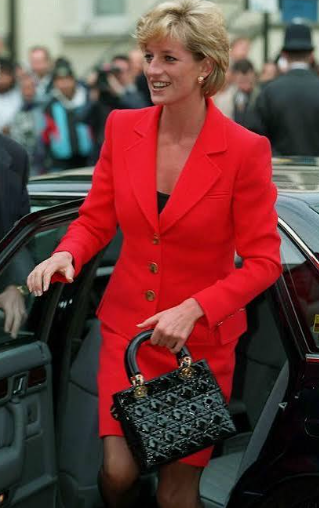
Her association with the handbag in 1995 transformed it from a beautiful accessory into an international fashion symbol. Dior continues to describe Diana as the exceptional ambassador whose relationship with the bag inspired its name.
Natalie Portman
Natalie Portman represents a more contemporary expression of Dior elegance. Her long-standing relationship with the house demonstrates how Dior’s romantic aesthetic can be interpreted through a modern, understated red-carpet sensibility.
Jennifer Lawrence
Jennifer Lawrence has also become part of Dior’s contemporary celebrity universe, appearing in Dior campaigns and red-carpet looks that show how the maison continues to connect couture heritage with modern Hollywood.
The common thread is not a single style.
It is the ability to make Dior feel distinctive without becoming costume-like.
INVESTMENT INSIGHT
For a lasting Dior investment, look to enduring house signatures such as the Lady Dior or Bar Jacket—pieces whose distinctive design and connection to Dior’s heritage give them relevance far beyond a single season.
Why Dior Remains a Luxury Icon
Dior has survived because it created something more valuable than a trend.
It created codes.
The nipped waist.
The Bar Jacket.
The full skirt.
The rose.
The Cannage.
The Lady Dior.
The couture atelier.
The connection between fashion and fragrance.
These elements can be reinvented without losing their identity.
That is the distinction between a fashion label and a true luxury maison.
Dior also understands the importance of storytelling. Its most recognisable objects carry narratives that extend beyond their physical design. A handbag can evoke Princess Diana. A fragrance can recall the New Look. A rose can lead back to Christian Dior’s childhood garden.
Luxury becomes more powerful when the object has a history worth remembering.
How to Dress Like Dior
You do not need a head-to-toe Dior wardrobe to capture the spirit of the maison.
The secret is proportion.
Start with a beautifully tailored blazer that gently defines the waist. Add a feminine skirt or elegant trousers and keep the colour palette refined—black, ivory, navy, beige, grey or soft pastels.
Then introduce one recognisable accessory.
A structured handbag.
A pair of elegant pumps.
Pearls.
A silk scarf.
Or simply a beautiful fragrance.
Dior’s aesthetic is ultimately about creating a polished silhouette rather than accumulating decoration.
For more practical ways to achieve a refined wardrobe without relying exclusively on designer labels, explore How to Look Expensive on a Budget: 12 Styling Rules That Actually Work.
The Dior principle is simple:
Choose fewer things, but choose them beautifully.
Fascinating Facts About Christian Dior
He Had an Extraordinary Connection With Gardens
Flowers were central to Dior’s imagination from childhood. He learned their Latin names, created herbariums and spent time in the rose garden surrounding his family home in Granville.
He Designed Fashion and Fragrance as One World
Dior did not regard perfume as an afterthought. Miss Dior was created alongside his first fashion collection, establishing fragrance as an integral part of the Dior universe from the beginning.
Lily of the Valley Was His Lucky Charm
Christian Dior wore a sprig of lily of the valley in his buttonhole during his fashion shows and even had the flower stitched into the hems of dresses for good luck.
The House Remained at 30 Avenue Montaigne
The legendary Paris address where Dior presented his first collection remains central to the identity of the maison. The address is inseparable from the origins of the New Look and Dior couture.
Dior’s Legacy Is Defined by Reinvention
From Yves Saint Laurent to Jonathan Anderson, successive creative directors have interpreted the Dior codes through very different creative perspectives. The fact that the house can accommodate such contrasting visions is itself part of its legacy.
EDITOR’S NOTE
Dior’s greatest legacy is not simply the New Look. It is the idea that femininity can be continually reinvented while elegance remains unmistakably timeless.
Frequently Asked Questions
What is Christian Dior best known for?
Christian Dior is best known for introducing the New Look in 1947, characterized by a defined waist, fuller skirts and a highly feminine silhouette. He also founded the Dior fashion house and created Miss Dior fragrance.
What is the Dior Bar Jacket?
The Bar Jacket is one of Dior’s most iconic designs. Introduced in 1947, it features a sculpted waist and architectural tailoring and became a defining expression of the New Look.
Why is the Lady Dior so famous?
The Lady Dior became internationally famous through its association with Princess Diana. She was given a Dior handbag during a visit to Paris in 1995, and the house subsequently named the design Lady Dior in her honour.
What are Dior’s signature design codes?
Some of Dior’s best-known codes include the Bar silhouette, Cannage motif, rose, CD monogram, bows, structured handbags and floral references.
Is Dior considered a luxury fashion house?
Yes. Dior is one of the world’s most established luxury fashion houses, with a heritage spanning haute couture, ready-to-wear, handbags, jewellery, beauty and fragrance.
Final Thoughts
Christian Dior changed fashion by changing the way femininity was imagined.
His New Look arrived at a moment when the world was ready for beauty again. The defined waist, generous skirt and carefully constructed silhouette became more than a fashion statement—they became symbols of a new chapter.
But Dior’s real achievement was bigger than one collection.
He created a house with enough imagination to evolve.
The designers who followed him each found different ways to interpret his legacy. The Bar Jacket became a continuing symbol of couture. Miss Dior transformed fragrance into part of the fashion experience. The Lady Dior became one of the world’s most recognisable handbags. Flowers became a permanent part of the house’s visual language.
And decades later, Dior continues to demonstrate the principle that made Christian Dior extraordinary in the first place:
true elegance does not need to chase the future. It simply needs to keep reinventing itself.
That is the enduring legacy of Dior.