From Travel Trunks to Global Luxury
Some luxury houses are remembered for a silhouette, others for a fragrance or a particular approach to dressing. Louis Vuitton began with something more fundamental: the art of travel.
Founded in Paris in 1854, Louis Vuitton transformed the practical business of making luggage into a world of craftsmanship, innovation and enduring style. What began with carefully constructed travel trunks eventually expanded into iconic handbags, accessories and ready-to-wear collections recognised around the world.
Yet the maison’s appeal has never rested on a logo alone. Its history reveals a continuous effort to combine function with elegance, familiar design codes with new ideas, and tradition with the changing rhythms of modern life.
From the original trunks to the Speedy, Keepall and Neverfull, Louis Vuitton has repeatedly reimagined how luxury can accompany us through everyday life. Its story is not simply about fashion’s most recognisable accessories; it is about how a practical object can become part of a cultural legacy.
To understand Louis Vuitton is to discover how a craftsman’s vision evolved into one of the most influential names in global luxury.
The Man Behind the Maison
Born in 1821 in Anchay, eastern France, Louis Vuitton left home as a teenager and made his way towards Paris. There, he entered the world of specialist packing and trunk-making, learning how to prepare and protect the possessions of wealthy clients.
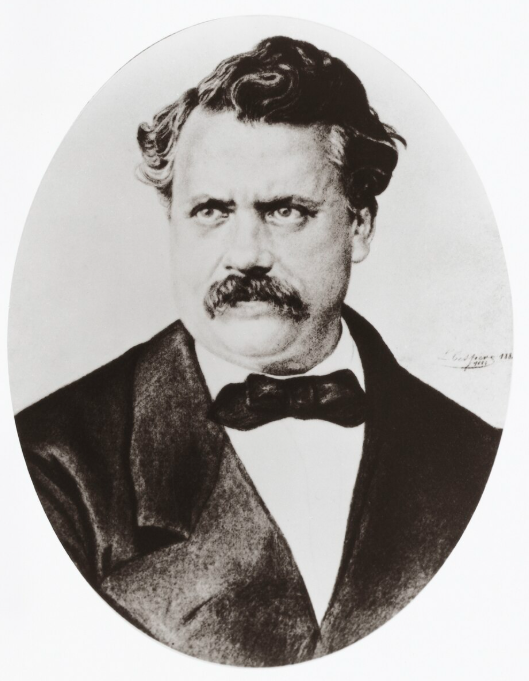
His experience gave him an intimate understanding of the demands of nineteenth-century travel. Luggage needed to withstand long journeys, protect valuable belongings and accommodate the increasingly popular forms of rail and sea transport.
In 1854, Vuitton opened his own business on Rue Neuve-des-Capucines in Paris. His approach was distinguished by practical ingenuity as much as by craftsmanship. Around 1860, he developed flat-topped trunks that could be stacked more efficiently than traditional rounded designs. He also used lightweight, coated canvas rather than relying exclusively on leather.
These decisions helped establish the principles that would define the maison: thoughtful construction, durable materials and a clear understanding of the customer’s needs.
In 1859, Vuitton and his family expanded their operations to Asnières-sur-Seine, where the workshops became central to the business. The site remains an important part of the house’s heritage.
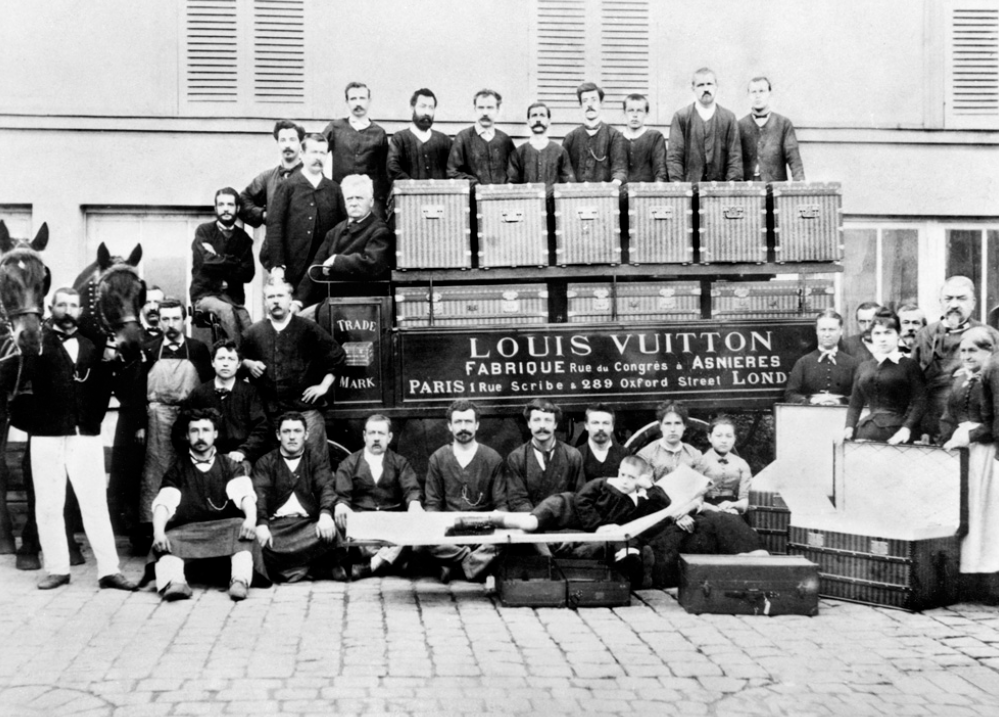
Louis Vuitton did not set out merely to create expensive luggage. He sought to make travel more practical and refined—and that combination became the foundation of his legacy.
The Art of Travel: A New Standard of Luxury
In the nineteenth century, travelling was often an elaborate undertaking. Trunks had to accommodate clothing and personal possessions while moving between carriages, trains and ships. Their construction was as important as their appearance.
Vuitton approached this challenge as a craftsman and problem-solver. Flat tops made trunks easier to stack, while carefully selected materials helped reduce weight and improve resistance to the demands of travel.
The business also evolved with its customers. In 1872, the house introduced striped canvas, followed by the Damier pattern in 1888. Georges Vuitton, Louis’s son, later developed a multi-tumbler lock system designed to protect clients’ belongings.
These innovations were not isolated details. They established a broader philosophy in which design, security and visual identity worked together.
The original trunks remain a powerful expression of that philosophy. Their structured forms and considered construction continue to influence the maison’s contemporary accessories, connecting today’s collections to the workshop where its reputation began.
The Birth of the Signature Canvas
Louis Vuitton’s signature patterns emerged partly from the need to protect the house against imitation. As its trunks became increasingly successful, distinctive canvas designs helped identify the originals and strengthen the brand’s visual identity.

Trianon Grey and striped canvas
The early grey canvas offered a practical alternative to heavier leather. In 1872, the house introduced striped canvas, subsequently refining its colours and patterns as imitations became a growing concern.
The Damier canvas
Introduced in 1888 by Louis and Georges Vuitton, Damier featured a checkerboard design incorporating the house’s name. Its geometric simplicity made it distinctive without relying on elaborate decoration.
The Monogram canvas
In 1896, Georges Vuitton created the Monogram canvas in tribute to his father, combining the LV initials with stylised floral motifs. Influenced by artistic traditions including Art Nouveau and Japonism, the design became one of fashion’s most recognisable signatures.
The Monogram was originally created for the house’s travel goods, but its adaptability eventually carried it across handbags, wallets, accessories and contemporary collections.
In 2026, the pattern celebrates its 130th anniversary—a milestone that demonstrates the longevity of a design conceived more than a century ago.
Georges Vuitton and the Monogram Revolution
While Louis established the business, Georges helped transform the family name into an enduring emblem.
After his father’s death in 1892, Georges continued to develop the house’s international presence and visual identity. His work included the Damier canvas, the multi-tumbler lock and the Monogram pattern, which combined practical concerns with a distinctive decorative language.
The initials honoured the founder, while the floral motifs gave the design its characteristic rhythm. Repeated across the canvas, these elements made the house’s luggage recognisable from a distance.
The Monogram also created new possibilities for the future. Once its visual identity was established, Louis Vuitton could introduce new shapes and categories while maintaining a clear connection to its origins.
The result was a design language capable of evolving across generations without losing its sense of heritage.
DID YOU KNOW?
In 1885, Louis Vuitton opened its first store outside France in London’s Oxford Street, marking an important step in the maison’s international expansion long before it became a global luxury powerhouse.
The Iconic Pieces That Define Louis Vuitton
Louis Vuitton’s best-known bags demonstrate how the house translated its expertise in travel into objects for everyday life. Each design has a different personality, shaped by its original purpose and the way customers have adopted it.
The Iconic Trunks
The trunks remain the foundation of the maison’s identity. Their structured forms, reinforced details and considered construction reflect the practical demands that shaped the business from the beginning.
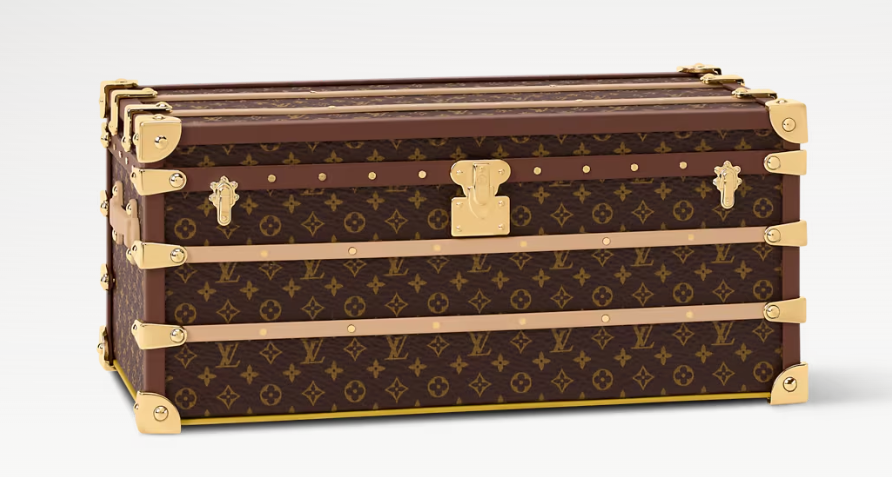
Today, historic trunks represent more than luggage. They evoke an era when travelling was an occasion in itself and personal possessions were carried in objects designed to last.
The Speedy
Created in the 1930s as the Express, the Speedy reflected a growing fascination with speed and modern mobility. Its flexible construction offered a lighter alternative to rigid luggage.
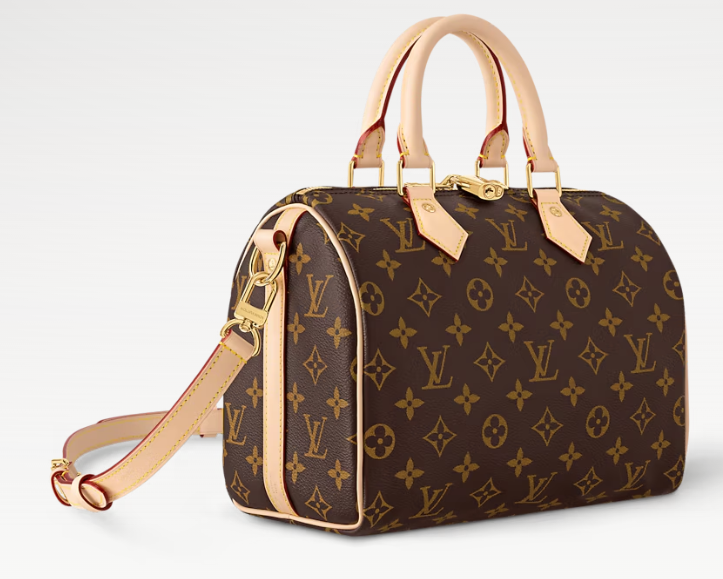
The design was later reimagined in Monogram canvas and became especially associated with Audrey Hepburn, whose preference for a smaller version helped popularise the Speedy 25. Its rounded silhouette and rolled handles have since become familiar elements of the house’s handbag vocabulary.
The Keepall
Introduced in the 1930s under the name Tientout, the Keepall brought the maison’s travel expertise into a flexible, spacious format. Its rounded silhouette and practical construction made it suitable for short journeys without the rigidity of a traditional trunk.
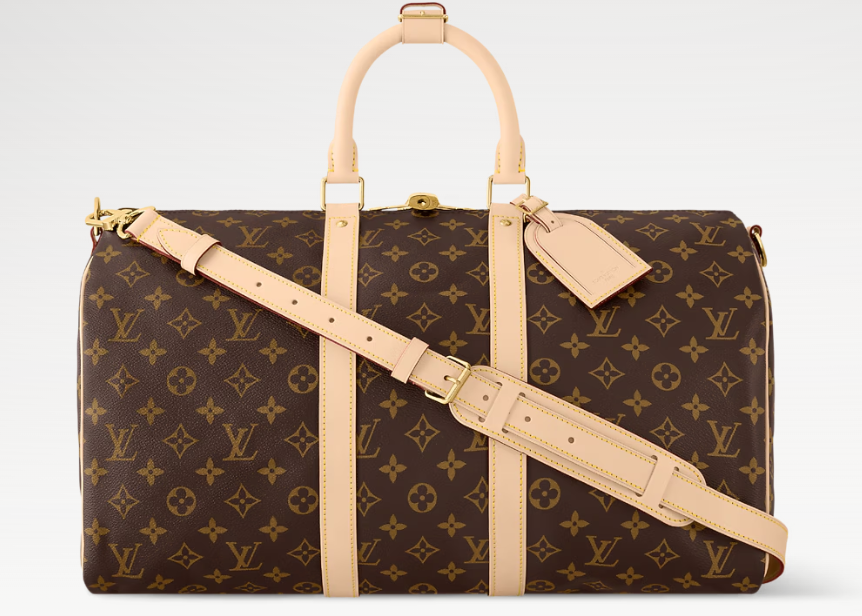
The Keepall remains one of the clearest expressions of the brand’s original purpose: travel accessories can be useful, beautifully made and recognisable without sacrificing practicality.
The Noé
Designed in 1932 following a request from a champagne producer for a bag capable of carrying five bottles, the Noé is one of Louis Vuitton’s most distinctive creations.
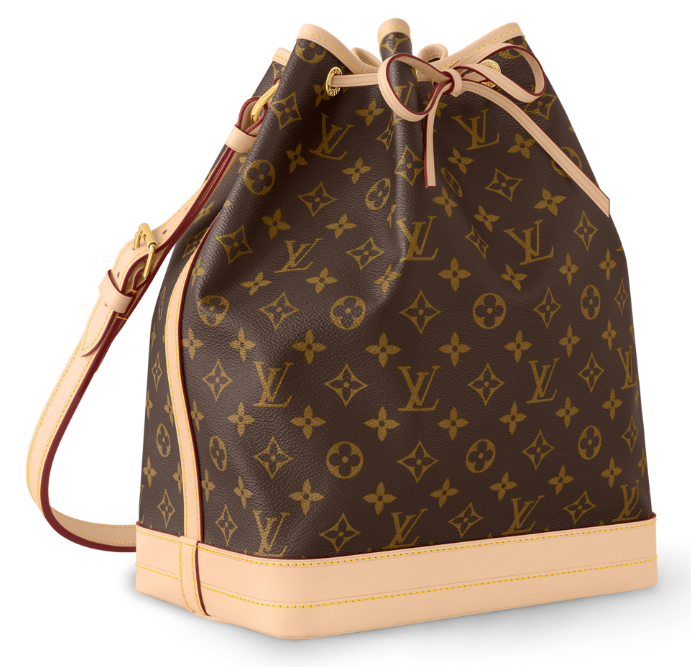
Its drawstring closure and generous bucket shape originated in a very specific practical requirement. Over time, the design evolved into a city handbag, demonstrating how an object created for one purpose can acquire a completely different place in fashion.
The Alma
The Alma‘s structured body, rounded base and double handles offer a more architectural expression of the house’s aesthetic. Its lineage can be traced to the Squire Bag of 1934, with subsequent evolutions leading to the Alma name in 1992.
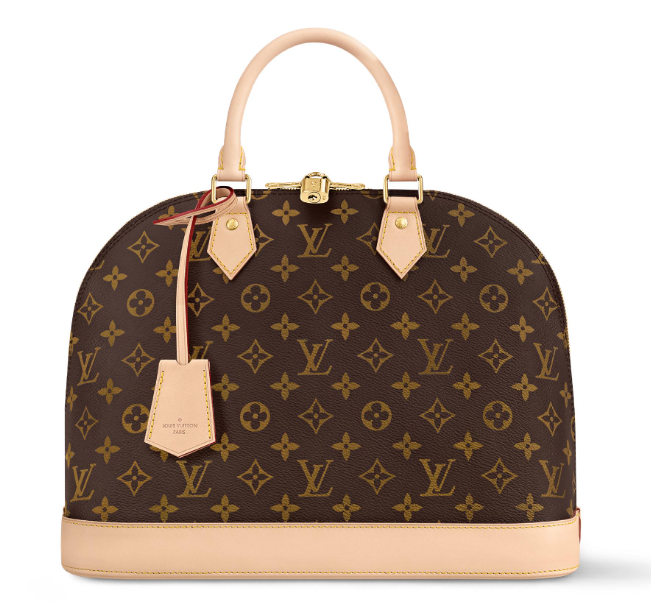
Its elegant proportions distinguish it from the more relaxed Speedy and Noé, making it a lasting choice for those who favour a polished silhouette.
The Neverfull
Introduced in 2007, the Neverfull represents a contemporary interpretation of the maison’s practical philosophy. Its spacious interior, lightweight construction and adaptable shape respond to the demands of modern daily life.
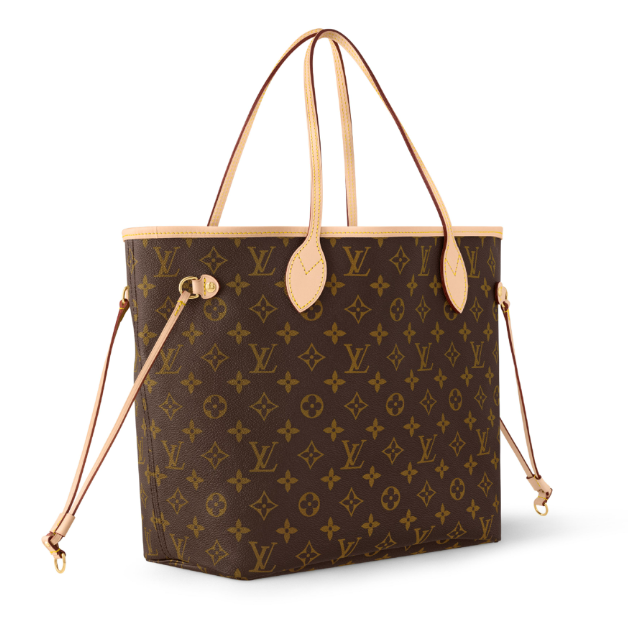
The tote demonstrates how Louis Vuitton can reinterpret its heritage for a new generation without relying solely on nostalgia.
The Signature Codes of Louis Vuitton
Beyond its iconic shapes, the maison has developed a collection of visual and material details that help define its identity.
Monogram and Damier
The two patterns remain central to the house’s identity. Monogram communicates an immediately recognisable heritage, while Damier offers a more geometric alternative. Both originated in the maison’s early efforts to establish a distinctive design language.
Vachetta leather
The natural, pale leather trim found on many classic canvas pieces can develop a deeper patina with use. Its appearance changes over time, making care and handling part of the ownership experience.
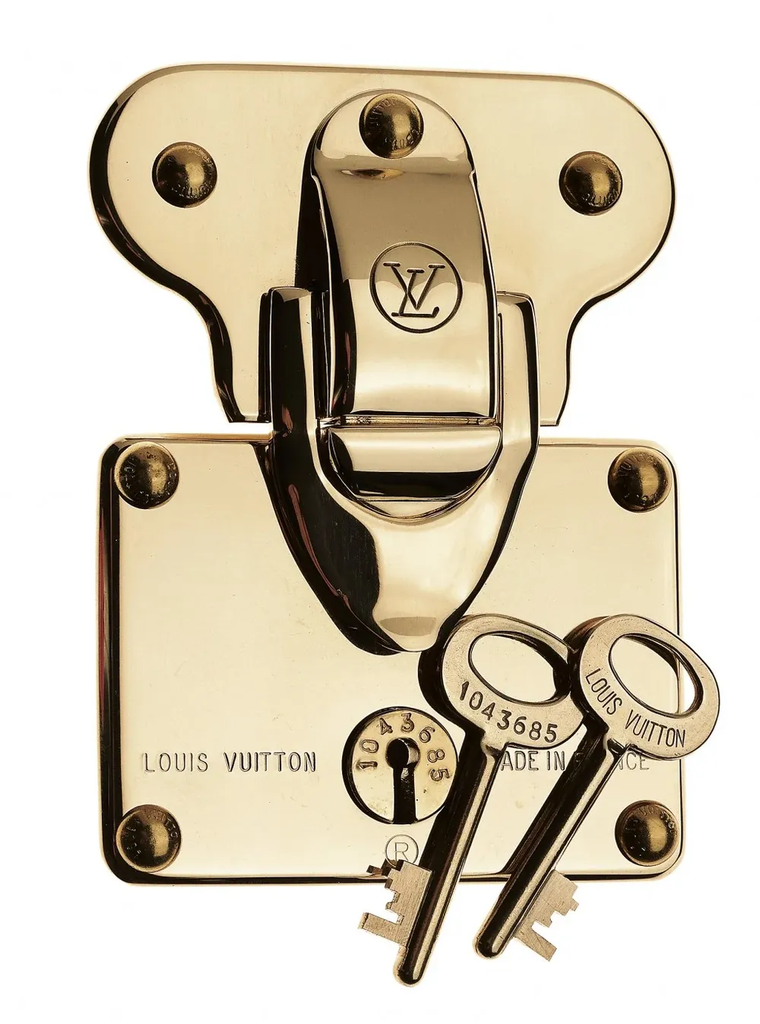
Locks and hardware
Metal fittings and engraved details recall the original trunk-making business, where security and durability were essential considerations. These details are functional, but they also form part of the house’s visual identity.
Craftsmanship and contruction
Structured shapes, carefully finished edges, reinforced corners and considered proportions all echo the maison’s roots in luggage craftsmanship. Even when a design is contemporary, its construction can retain traces of that original discipline.
Travel-inspired design
Perhaps the most enduring signature is less tangible. Louis Vuitton’s designs evoke movement, discovery and the idea of carrying familiar objects into unfamiliar places. Travel is not simply a historical reference; it remains a central part of the brand’s storytelling.
For readers interested in how luxury houses use visual identity to build recognition, our article The Meaning Behind Luxury Brand Logos: The Stories You Never Knew explores the significance of these design choices across iconic names.
The Louis Vuitton Aesthetic: Heritage Meets Modern Life
There is no single way to define the Louis Vuitton aesthetic. It can be expressed through a structured Alma, a well-travelled Keepall or a spacious Neverfull. What connects these pieces is their combination of recognisable design and practical purpose.
The house’s accessories often provide a focal point without requiring an entire outfit to revolve around them. A signature bag can complement relaxed denim, refined tailoring or a minimalist dress, bringing texture and character to otherwise simple combinations.
This versatility helps explain why the designs have remained relevant across generations. Their appeal lies not only in their visual recognition, but also in the different ways people incorporate them into their lives.
The broader lesson is that personal style does not require every item to make a statement. Sometimes one thoughtfully chosen accessory is enough.
STYLE TIP
Let a signature bag take centre stage. Pair a patterned Louis Vuitton design with clean tailoring, understated jewellery and a restrained colour palette, allowing its texture and distinctive details to stand out naturally.
The Evolution of Louis Vuitton
After Louis Vuitton’s death in 1892, Georges continued to develop the family business. During the twentieth century, the house expanded its international presence and adapted to changing forms of travel, gradually moving beyond traditional luggage.
The expansion into new categories allowed the house to reach customers whose relationship with travel was no longer defined by elaborate trunks. The Speedy, Keepall and Noé each expressed a different aspect of this evolution, preserving the original emphasis on function while introducing new silhouettes.
The brand’s modern transformation accelerated in the late twentieth century. Louis Vuitton became part of LVMH in 1987, placing the house within a larger luxury group formed through the merger of Louis Vuitton and Moët Hennessy. The partnership placed the maison within a wider luxury portfolio and created a new context for its international growth.
The transition into contemporary fashion accelerated in 1997, when Marc Jacobs became the house’s first creative director for ready-to-wear. His tenure brought runway collections and high-profile artistic collaborations into the maison’s identity, establishing a stronger relationship with contemporary culture.
Subsequent designers have interpreted the house’s heritage in different ways. Nicolas Ghesquière brought an architectural and futuristic sensibility to women’s collections, while Virgil Abloh reshaped menswear through a dialogue between luxury, streetwear and contemporary culture.
Since 2023, Pharrell Williams has led the men’s collections, bringing his background in music and popular culture into the house’s creative universe.
These different approaches demonstrate that Louis Vuitton’s heritage is not a fixed aesthetic. It is a foundation that allows new designers to experiment while maintaining a connection to the maison’s history.
The Designers Who Shaped the Maison
Marc Jacobs
Marc Jacobs brought Louis Vuitton firmly into the world of contemporary runway fashion. During his tenure, the house developed a more expansive ready-to-wear identity and became known for collaborations that connected luxury with contemporary art and popular culture.
His collaborations with artists including Stephen Sprouse, Takashi Murakami and Richard Prince challenged conventional ideas about how a heritage brand could use its signature patterns. The Monogram became a canvas for experimentation, demonstrating that a familiar symbol could evolve without losing its recognition.
Nicolas Ghesquière
Nicolas Ghesquière introduced a distinctive vision of modern femininity, combining architectural silhouettes, historical references and experimental materials.
Under his direction, the house’s women’s ready-to-wear collections developed a distinctive balance of structure, experimentation and wearability. His approach shows how Louis Vuitton’s travel heritage can inspire more than luggage: it can inform the design of an entire wardrobe.
Virgil Abloh
Virgil Abloh brought a new cultural perspective to menswear, connecting luxury craftsmanship with streetwear, contemporary art and a wider conversation about representation in fashion.
Abloh approached the maison’s codes as a language that could be reinterpreted. His collections challenged the boundaries between formal luxury and everyday dressing, while his collaborations and cultural influence introduced Louis Vuitton to new audiences.
His legacy extends beyond individual collections. He helped broaden the conversation about who luxury fashion speaks to and how heritage houses can remain relevant to changing generations.
Pharrel Williams
Pharrell Williams became Louis Vuitton’s men’s creative director in 2023, bringing together fashion, music, art and contemporary culture. His appointment reinforced the house’s ambition to operate not simply as a fashion label, but as a cultural force.
His collections reinterpret familiar luxury codes through bold colour, streetwear influences, innovative styling and collaborations. This approach reflects a world in which fashion is increasingly connected to music, sport and digital culture.
Together, Ghesquière and Williams illustrate the maison’s dual identity: one rooted in craftsmanship and historical continuity, the other continually exploring new forms of expression.
Celebrity Style Files
Louis Vuitton’s relationship with celebrity culture has helped introduce its iconic designs to successive generations.
Audrey Hepburn
Audrey Hepburn became closely associated with the Speedy, helping establish the smaller handbag format as an enduring fashion classic.
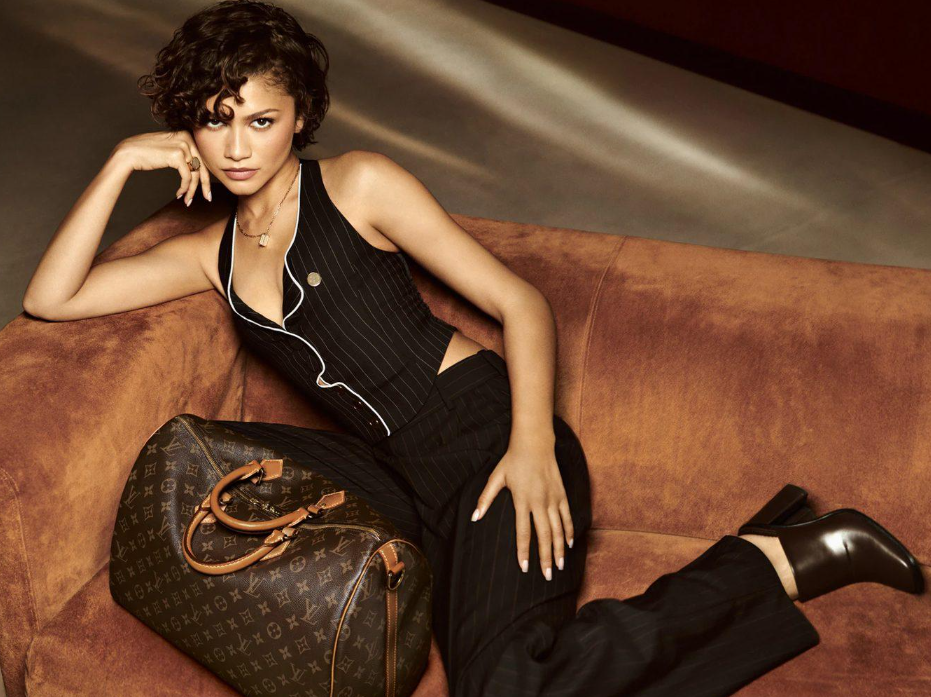
Zendaya
Zendaya represents a contemporary connection to the maison. As a house ambassador, she has appeared in campaigns celebrating its Monogram heritage, including the 2026 anniversary celebrations.
Catherine Deneuve
Catherine Deneuve brings a different perspective to the house’s story, linking a celebrated cinematic presence with the enduring appeal of its classic accessories.
Hoyeon
Hoyeon represents a newer generation of fashion figures associated with Louis Vuitton, illustrating how its familiar designs continue to connect with changing audiences.
These relationships show how an established design can acquire new meaning through the people who wear it, while retaining its original identity.
Life is so short you can’t waste even a day subscribing to what someone thinks you can do, versus knowing what you can do.
Why Louis Vuitton Remains a Luxury Icon
Louis Vuitton’s enduring influence rests on the relationship between craftsmanship, recognisable design and the ability to evolve.
Its signature patterns provide immediate visual recognition, while its established silhouettes connect contemporary accessories to the history of the house. The result is a design language that can be reinterpreted without losing its identity.
Cultural relevance also plays a role. Artistic collaborations, changing creative leadership and contemporary collections have allowed the maison to engage with new audiences while maintaining its heritage.
Ultimately, Louis Vuitton transformed a practical object into a cultural symbol. Its creations can communicate personal taste and a connection to fashion history while still serving a purpose.
INVESTMENT INSIGHT
For enduring design appeal, consider classic silhouettes such as the Speedy, Alma or Keepall. Their established forms and connection to the maison’s heritage give them lasting relevance, although resale value depends on condition, demand, authenticity and wider market factors.
How to Dress Like Louis Vuitton
Louis Vuitton’s aesthetic can inspire a polished wardrobe without requiring a head-to-toe designer look.
Start with structure. Tailored trousers, a crisp shirt or a well-cut blazer create a clean foundation for a signature accessory.
Choose one statement detail. A Monogram accessory, a structured handbag or a leather belt can introduce character without making the outfit feel overly coordinated.
Mix textures thoughtfully. Smooth leather, soft knitwear and structured cotton create interest while keeping the overall look refined.
Prioritise versatility. Choose accessories that complement your real routine, rather than pieces that look impressive but remain unused.
For more practical inspiration, explore How to Style a Blazer in 7 Different Ways and How to Choose the Right Handbag for Your Outfit.
Fascinating Facts About Louis Vuitton
- A workshop with a long history: The Asnières-sur-Seine site, established in 1859, became an important centre of the maison’s trunk-making tradition.
- A lock designed for security: Georges Vuitton patented a multi-tumbler lock system in 1889 to protect clients’ belongings.
- A milestone for the Monogram: The pattern celebrates its 130th anniversary in 2026.
- A broader creative identity: Marc Jacobs’s appointment in 1997 helped establish ready-to-wear as a central part of Louis Vuitton’s fashion identity.
EDITOR’S NOTE
Louis Vuitton’s greatest achievement is not simply the creation of recognisable bags. It is the transformation of travel, craftsmanship and practical ingenuity into a design legacy that continues to evolve. Its story reminds us that lasting luxury is built on purpose as well as appearance.
Frequently Asked Questions
What is the difference between Louis Vuitton and LVMH?
Louis Vuitton is a luxury fashion maison specialising in leather goods, ready-to-wear, accessories and other categories. LVMH is the larger luxury group that owns Louis Vuitton alongside numerous other maisons.
Where are Louis Vuitton products manufactured?
Production locations vary by product category and item. Louis Vuitton manufactures products in several countries, including France, Italy, Spain and the United States. The specific item’s markings and official documentation are the best references for its country of manufacture.
Can Louis Vuitton bags be repaired?
The house offers after-sales services for eligible products, subject to assessment and the type of repair required. Owners should contact an official Louis Vuitton store or customer-service channel to discuss available options.
How can you check whether a Louis Vuitton bag is authentic?
Consider the item’s provenance, seller reputation and purchase documentation. No single feature, including a date code or pattern detail, independently guarantees authenticity. For second-hand purchases, a reputable seller and qualified authentication service can provide additional reassurance.
Does Louis Vuitton still make travel luggage?
Yes. Travel remains part of the maison’s identity, and its collections include luggage and travel bags alongside handbags, accessories and ready-to-wear.
Final Thoughts
From a Parisian trunk-making workshop to a global luxury maison, Louis Vuitton has built a legacy around the art of travel. Its trunks established the foundation, its signature canvas created a distinctive identity, and its iconic bags brought that heritage into everyday life.
Through changing designers, new collections and cultural collaborations, the house continues to reinterpret its origins rather than simply repeat them.
Louis Vuitton’s story is ultimately about more than where we travel.
It is about the craftsmanship, imagination and traditions we choose to carry with us.