Discover how cost per wear works, how to calculate the real value of your purchases, and when spending more can make sense.
1. The True Value Behind the Price Tag
Some purchases become part of our everyday lives. A beautifully tailored coat accompanies us through countless mornings, a favourite handbag works with outfits we wear on repeat, and a well-made pair of shoes becomes a reliable choice for everything from busy weekdays to weekend plans.
Other purchases, however appealing in the moment, spend far more time sitting in a wardrobe or drawer than being used.
The difference isn’t necessarily the price, the brand or even the quality. It is the relationship between what we pay for something and the value we actually receive from it.
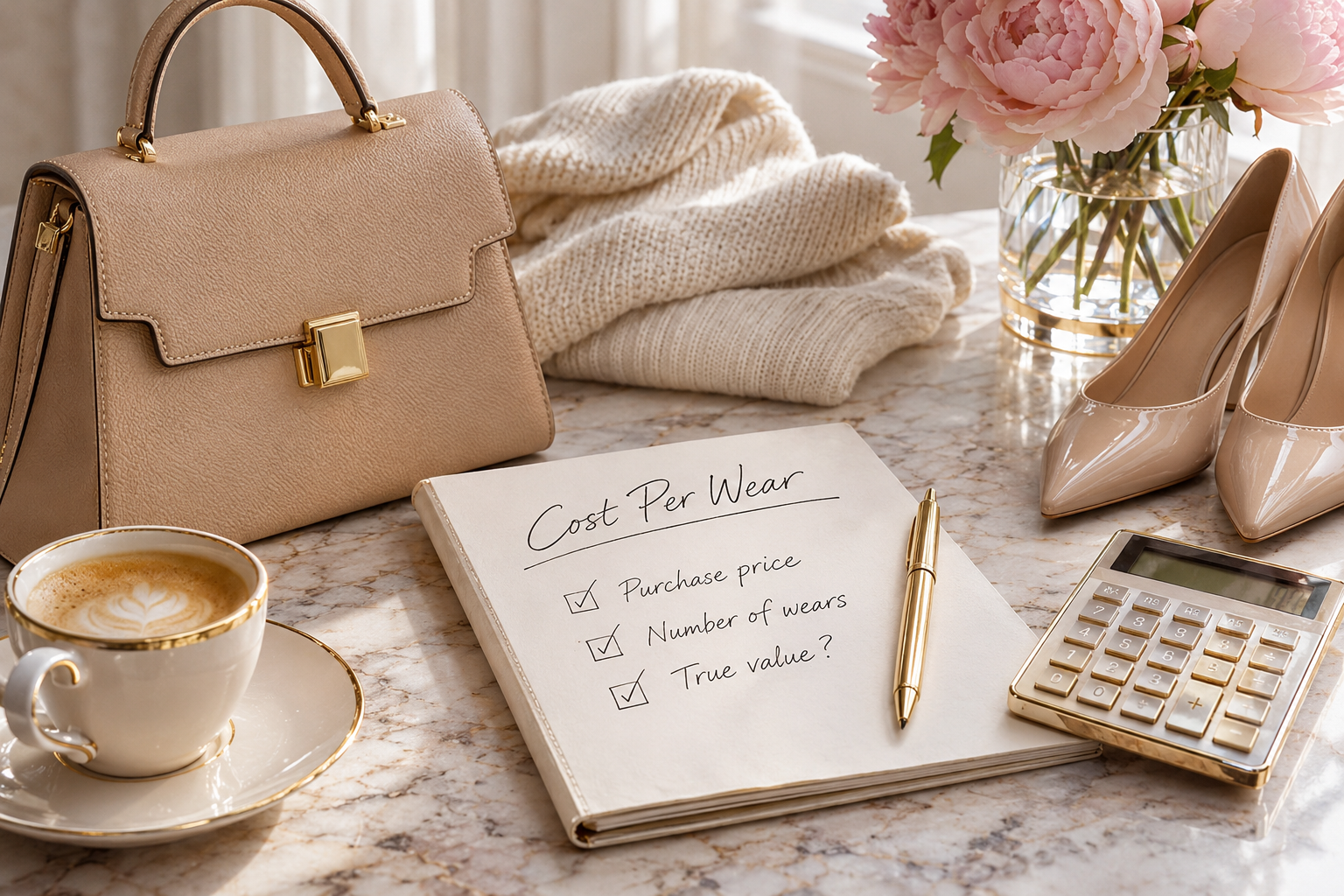
This is where cost per wear (CPW) becomes useful. Rather than judging a purchase by its price alone, we consider how frequently we use it and whether it deserves a place in our everyday lives.
For anyone who appreciates fashion, beauty and the finer details of living well, this offers a more considered approach to shopping. The goal isn’t to avoid spending money on beautiful things. It is to make choices that continue to feel worthwhile long after the initial excitement has passed.

2. What Is Cost Per Wear?
Cost per wear measures how much an item costs each time you wear it. The concept is most commonly associated with clothing, shoes and accessories, although a similar calculation can be applied to other products you use regularly.
An item with a high initial price may offer better value over time if you use it frequently. Meanwhile, something inexpensive can become a poor purchase if it is rarely used.
Imagine buying a dress for a special occasion. If you wear it once and never reach for it again, the entire purchase price is effectively the cost of that single wear. A more versatile dress worn repeatedly for dinners, celebrations and other events may deliver better value.
Neither scenario makes the purchase automatically right or wrong. Some items are bought for a particular moment, and the pleasure or significance they bring may justify the expense. Cost per wear is simply another way to understand a purchase, rather than a strict rule that every item must satisfy.
DID YOU KNOW?
The cost of owning a garment can extend beyond its price tag. Specialist cleaning, alterations and repairs can all add to its lifetime cost, making care requirements an important consideration when comparing two seemingly similar purchases.
3. How to Calculate Cost Per Wear
The formula requires only two figures:
Cost per wear = Purchase price ÷ Number of wears
For example, a handbag costing AED 2,400 that you wear 120 times has a cost per wear of AED 20.
The calculation helps put an item’s initial price into perspective, but it depends on realistic estimates. An item you expect to wear frequently may end up sitting unused, while a favourite piece can remain in regular rotation for years.
You can use the formula before making a purchase by estimating how often you are likely to use the item over a realistic period. Think about your existing routine, the occasions you attend and the clothes or accessories you already own.
For a more complete assessment, you can also consider repair and maintenance costs or any resale value, although these are not included in the basic formula. The simplest calculation is a starting point, not a guarantee that a purchase will prove worthwhile.
4. What Makes an Expensive Purchase Worthwhile?
A higher price alone tells us very little about whether something is worth buying. Several factors can help determine whether an item is likely to deliver lasting value.
Quality and construction
Materials, stitching, finishes and overall construction can influence how well an item holds up to regular use. A garment with thoughtful tailoring or a bag with well-finished details may remain appealing for longer than a poorly made alternative. However, quality varies between products and brands, so it is worth evaluating the individual item rather than assuming a luxury label guarantees superior craftsmanship.
Longevity
An item that remains functional and attractive over several years has more opportunity to deliver value than one that quickly wears out. Consider whether the design is likely to suit you beyond the current season and whether the materials can withstand the way you intend to use it.
Versatility
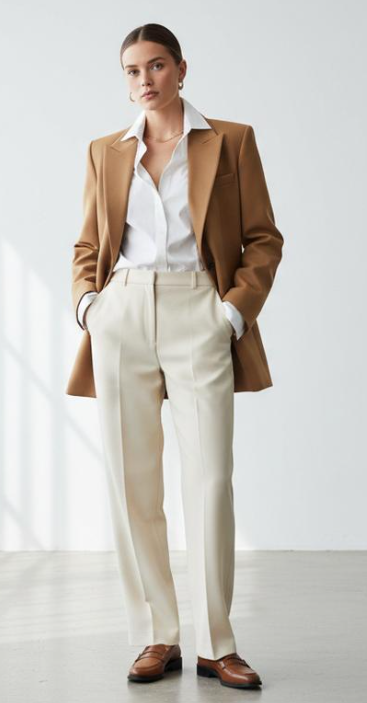
Some purchases earn their place because they work in several settings. A neutral blazer that complements both casual and tailored outfits, for instance, may prove more useful than a statement piece that suits only one particular look.
If you want to explore this idea further, our guide to The Chic Travel Capsule Wardrobe demonstrates how a carefully selected group of pieces can create multiple outfits without constantly adding new items.
Suitability for your lifestyle
Even a beautifully made item can be a poor choice if it doesn’t fit your routine. Delicate shoes may not suit someone who walks long distances every day, while an elaborate evening bag may have limited use for someone who rarely attends formal events
The most worthwhile purchase is one that works for the life you lead, not simply the life you imagine having.
STYLE TIP
Before investing in a wardrobe staple, think of three real outfits you would wear it with and two occasions when you would reach for it. If those combinations come naturally, the item may have a more practical place in your wardrobe than something that appeals only at first glance.
5. Looking Beyond the Brand Name
Luxury branding can be part of the pleasure of owning an item. The design, heritage, presentation and emotional connection to a particular house may all contribute to the experience. There is nothing wrong with valuing these qualities, provided you recognise what you are paying for.
However, a prestigious name cannot tell you exactly how an item will perform in your daily life. Two handbags from different brands may have very different prices while offering comparable practicality for your needs. Equally, a particular designer piece may have features, craftsmanship or a design you genuinely appreciate enough to justify the premium.
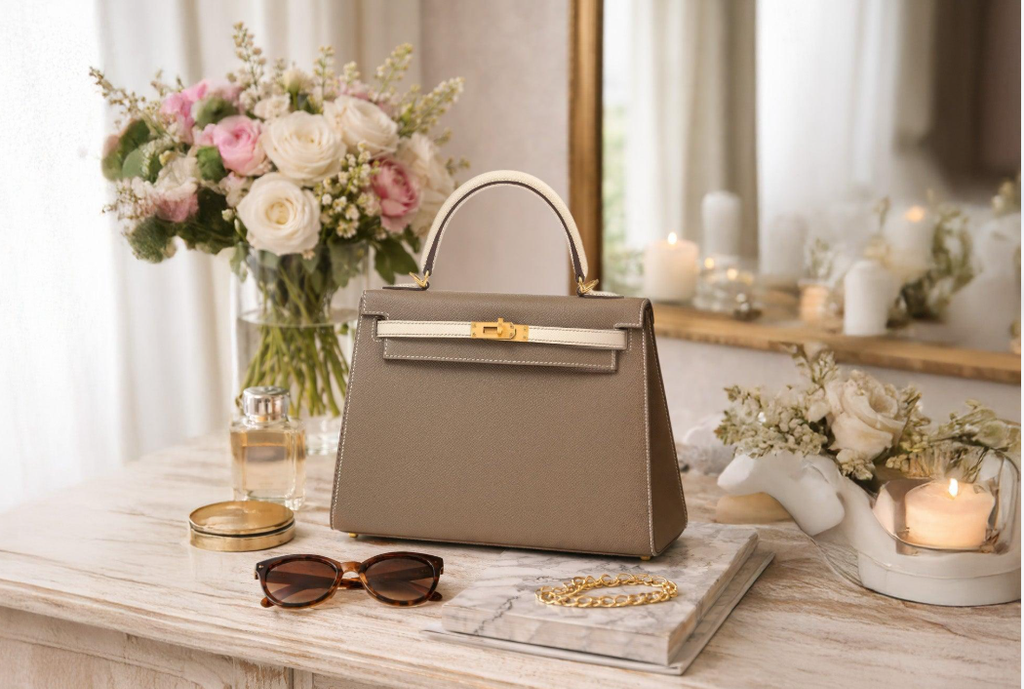
Before buying, separate the qualities you can evaluate from the appeal of the label itself. Examine the construction, consider how comfortable the item is to use, and think about whether you would still want it if the brand name were less visible.
This doesn’t mean choosing anonymously made products over designer pieces. It means making sure the purchase reflects your own priorities rather than relying entirely on the reputation of the brand.
6. Cost Per Wear in Practice: Four Everyday Examples
The formula becomes more meaningful when applied to everyday purchasing decisions. These illustrative examples use AED and realistic usage assumptions to show how frequency can influence value. They are not current retail price quotations.
THE EVERYDAY HANDBAG
Imagine investing AED 3,300 in a handbag that you use 3 times a week for 5 years. That works out to approximately 780 uses, giving you a cost of around AED 4.23 per use.
A handbag costing AED 660 that you use only 30 times would cost AED 22 per use.
The difference illustrates the importance of frequency. The more expensive handbag delivers the lower cost per use in this example, but only if you genuinely use it regularly, it remains in good condition and the purchase fits comfortably within your budget.
THE WINTER COAT
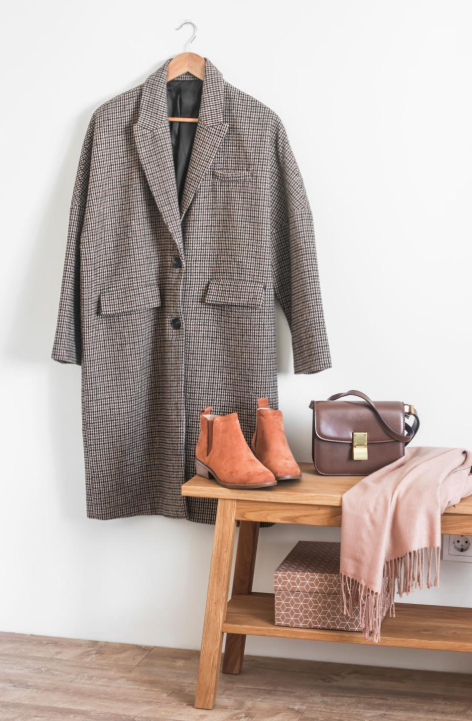
A quality coat costing AED 1,850 might seem expensive initially. If you wear it 60 times each winter for 5 years, that amounts to 300 wears and a cost of approximately AED 6.17 per wear.
A coat costing AED 550, worn only 40 times before needing replacement, would have a cost of AED 13.75 per wear.
These figures illustrate how a longer useful life can change the calculation. They do not prove that the more expensive coat will last longer; its materials, construction and care requirements still need to be considered.
THE PAIR OF SHOES
Consider a pair of shoes priced at AED 920, worn approximately once a week for 2 years. Assuming 100 wears, the cost comes to AED 9.20 per wear.
Now imagine spending AED 370 on a pair that becomes uncomfortable after a handful of outings. If you wear them only 10 times, the cost rises to AED 37 per wear.
Comfort is particularly important here. Shoes that look beautiful but hurt your feet are unlikely to become regular favourites, regardless of their original price.
THE BEAUTY TOOL
The same principle can apply outside fashion. Suppose a beauty tool costs AED 735 and is used twice a week for 3 years. At approximately 312 uses, the cost is around AED 2.36 per use.
A cheaper alternative might provide similar results, however, making it the more sensible option. The calculation helps frame the decision, but performance, suitability and the likelihood of regular use still matter.
These examples show how cost per use can make different purchasing decisions easier to compare. The figures are useful starting points, not a substitute for assessing the item itself.
7. Comparing Purchases Over Time
Sometimes the most useful way to apply cost per wear is to compare two options side by side. The following table illustrates how purchase price and frequency of use can change the outcome.
| Item | Purchase price | Estimated uses | Cost per use |
|---|---|---|---|
| Handbag A | AED 3,300 | 780 | AED 4.23 |
| Handbag B | AED 660 | 30 | AED 22.00 |
| Coat A | AED 1,850 | 300 | AED 6.17 |
| Coat B | AED 550 | 40 | AED 13.75 |
| Shoes A | AED 920 | 100 | AED 9.20 |
| Shoes B | AED 370 | 10 | AED 37.00 |
All figures are illustrative and based on the usage assumptions in Section 6.
The table makes one point clear: purchase price alone does not determine cost per use. However, the figures also rely on different assumptions about how often each item is worn. They do not establish that the more expensive option is inherently better.
For a fair comparison, consider products that serve a similar purpose and estimate their likely use over the same period. If you are comparing two coats, for example, ask whether both are suitable for your climate, routine and wardrobe. A coat that is inappropriate for your needs is not a meaningful alternative simply because its cost per wear looks attractive on paper.
It is also worth remembering that the lowest cost per wear is not always the best overall outcome. An item may be inexpensive per use but offer little enjoyment, while a special purchase may bring genuine pleasure even if you use it less frequently.
The calculation should inform your decision, not make it for you.
Buy less, choose well.
8. When the Cheaper Option Is Actually Better
It is easy to associate higher prices with better quality, but the relationship is not guaranteed. A luxury label may offer exceptional materials or craftsmanship, yet another product at a lower price could meet your needs just as well.
Consider a classic white shirt. If an affordable version fits beautifully, washes well and works with your existing wardrobe, there may be little reason to spend considerably more on a designer alternative.
The same applies to accessories, everyday footwear and beauty tools. Paying extra makes sense only when the additional cost brings something you genuinely value, whether that is better construction, a more comfortable fit, longer-lasting performance or a design you will enjoy for years.
It is also worth questioning the influence of trends, limited editions and attractive packaging. These can make a purchase feel urgent, even when it offers little practical value. An item does not become more worthwhile simply because it is expensive or difficult to obtain.
The aim is not to choose the cheapest option every time. It is to recognise when the premium offers a meaningful benefit and when it mainly reflects branding or personal preference.
9. Beyond Fashion: Applying the Principle to Everyday Life
Although cost per wear is most commonly used for clothing and accessories, the broader idea can help us think about other purchases.
Beauty: A beauty tool used consistently may justify its cost more readily than one that remains unused in a drawer. With skincare and makeup, however, suitability, performance, expiration dates and individual needs matter just as much as frequency of use.
Home essentials: Frequently used kitchen equipment, quality bed linen or a well-made desk chair may justify a larger initial outlay if they perform well and last. Decorative objects bought on impulse can be harder to justify if they contribute little to your daily life.
Technology: A device used every day may provide more value than one bought for a feature you rarely need. Compatibility, reliability, repairability and how long it remains useful are also worth considering.
Experiences require a different perspective. A special dinner, a weekend away or a memorable celebration cannot be measured meaningfully by the number of times you use an item. Their value may lie in enjoyment, connection or memories rather than repeated use.
Not every purchase needs to be optimised mathematically. The purpose of considered spending is to make room for what genuinely matters, including occasional pleasures that do not fit neatly into a formula.
10. Common Cost-Per-Wear Mistakes to Avoid
Cost per wear can be a useful tool, but it is easy to misinterpret the result. A few common mistakes can make a purchase appear more worthwhile than it really is.
Overestimating how often you will use something
It is tempting to imagine wearing a new blazer every week or carrying a handbag almost every day. But your actual habits may be different. Estimate usage based on your current lifestyle, not on an ideal routine you may never adopt.
Treating durability as a certainty
A high price does not guarantee that an item will last longer. Construction, materials, maintenance and how the item is used all influence its lifespan. Check these factors rather than assuming the expensive option will automatically offer more years of use.
Ignoring the cost of ownership
Some purchases require repairs, specialist cleaning, replacement parts or other maintenance. These expenses can affect the overall value of an item. If you want a more comprehensive calculation, add relevant ownership costs to the purchase price before dividing by the estimated number of uses.
Buying something simply because the calculation looks good
An item with a low projected cost per wear is still unnecessary if you already own something that serves the same purpose. The calculation should help evaluate a purchase you genuinely need or want, not create a justification for buying more.
Forgetting personal enjoyment
A special-occasion dress may not be worn frequently, but that does not automatically make it a poor purchase. If it fits your budget and brings you genuine enjoyment, its value may extend beyond a simple numerical calculation.
The most useful approach is to combine the numbers with honest judgement. Cost per wear offers perspective, but you remain the best judge of what deserves a place in your life.
11. How to Shop More Intentionally
Before making a significant purchase, take a moment to consider these questions.
- Will I genuinely use it? Think about your current habits rather than how you hope your lifestyle might change.
- Does it meet a real need? Identify what the item adds to your wardrobe, routine or home.
- Is the quality appropriate for the price? Examine the materials, construction, performance and care requirements.
- Does it work with what I already own? An item that complements your existing wardrobe or routine may be easier to use regularly.
- Am I buying it for the right reasons? Consider whether you want the item itself or are responding to a trend, promotion or moment of excitement.
- Can I comfortably afford it? A low projected cost per wear does not justify spending beyond your means or taking on debt for a non-essential purchase.
For larger purchases, it can also help to pause before checking out. Give yourself time to decide whether you still want the item when the initial excitement has faded.
For more inspiration on making everyday choices feel considered, read 10 Luxury Habits Every Elegant Woman Incorporates Into Her Daily Routine. The article explores how intention can shape everyday life beyond the things we buy.
The aim is not to turn every shopping decision into a lengthy calculation. It is to develop a clearer sense of what deserves your money and what is unlikely to earn its place in your life.
EDITOR’S NOTE
True value is personal. One person may reach for a structured designer handbag every morning, while another finds greater satisfaction in a well-made affordable alternative. The best purchase is the one that suits your needs, reflects your taste and brings lasting value without compromising your financial comfort.
12. The Fancylicious Edit: Buy for the Life You Actually Live
There is an elegance to knowing what works for you. It means recognising the pieces you reach for repeatedly, the products that genuinely support your routines and the purchases that continue to bring pleasure long after they are unwrapped.
Cost per wear offers one way to make those decisions more consciously, but it is not a measure of personal style or a rule that every purchase must obey. Some things earn their value through daily use; others are special precisely because they are enjoyed occasionally.
The real opportunity is to become more selective without becoming restrictive. You can appreciate beautiful design, invest in quality when it makes sense and still recognise when a simpler option is enough.
Ultimately, a considered lifestyle is not defined by how much you own or how much you spend. It is shaped by choosing things that deserve a place in your everyday life—and feeling confident about the reasons behind those choices.