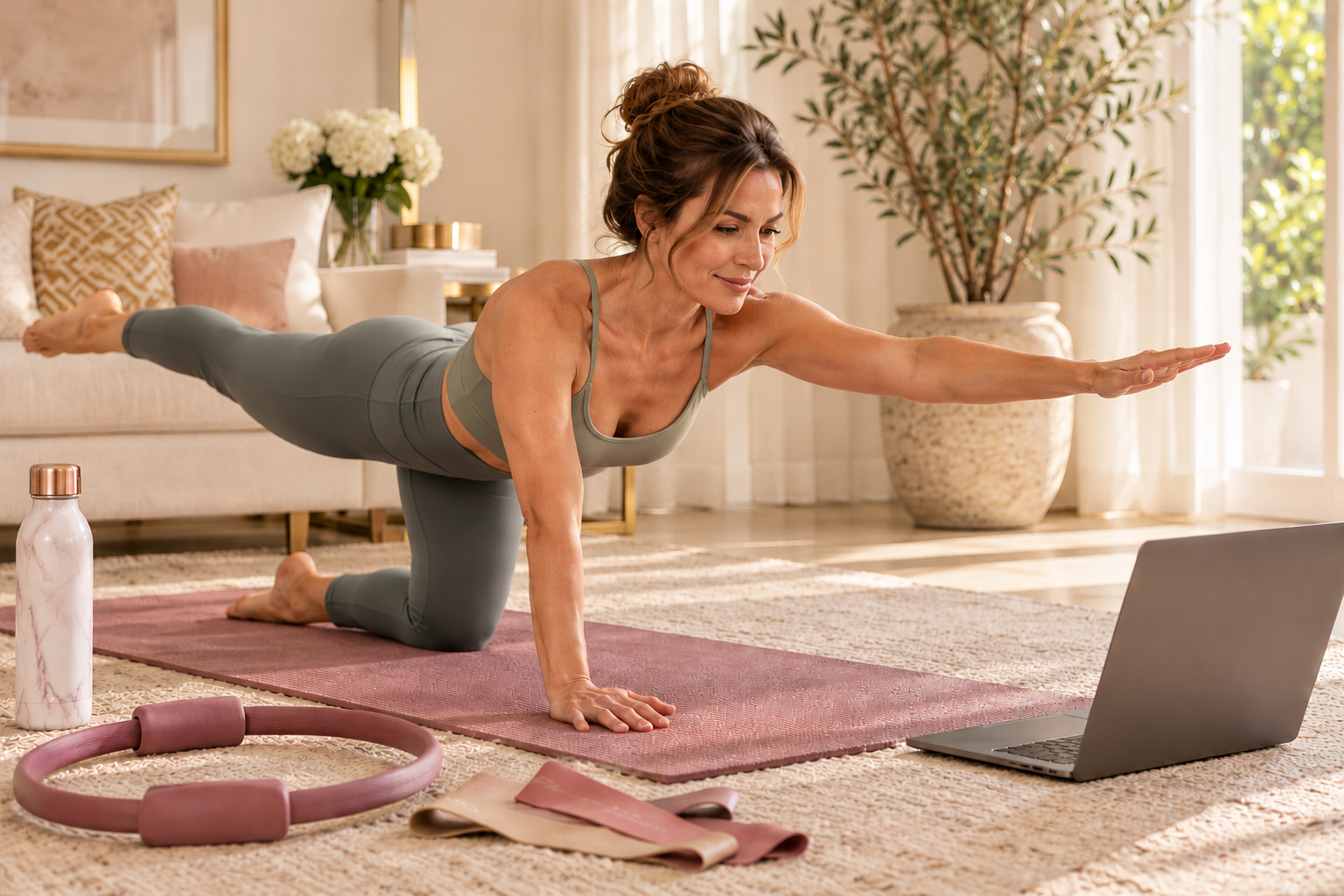
Discover how to get started with Pilates, learn beginner-friendly movements and create a simple home practice that fits naturally into your lifestyle.
Pilates offers a considered approach to movement, combining concentration, coordination and exercises designed to develop strength and mobility. Rather than focusing exclusively on intensity, it invites you to pay attention to how you move and gradually become more familiar with your body’s capabilities.
You don’t need a private studio or a room full of equipment to begin. With suitable instruction, a little floor space and a comfortable mat, you can explore mat Pilates at home and discover whether it suits your lifestyle.
For beginners, the most useful starting point is a straightforward one: understand what Pilates involves, learn the basic positions and choose a routine that feels appropriate for your current abilities.
What Is Pilates?
Pilates is a form of exercise that emphasises coordination, core strength, posture, balance and controlled movement. Exercises often involve moving the arms, legs and torso while maintaining awareness of alignment and breathing.
There are two familiar approaches. Mat Pilates uses a mat and primarily relies on body weight, while Reformer Pilates uses specialised equipment with springs and a moving carriage to provide resistance and assistance.
Mat Pilates is generally the more practical starting point for home practice because it requires little equipment. However, the movements still need to be learned correctly, and a beginner class or tutorial led by a qualified instructor can help you understand appropriate technique.
What Makes Pilates Appealing to Beginners?
Pilates can complement a varied exercise routine in several ways.
Core strength: Many exercises engage muscles around the abdomen, back and pelvis, helping develop strength and control around the trunk.
Coordination and balance: Exercises may require you to move one limb while maintaining a stable position elsewhere, encouraging coordination and body awareness.
Mobility: Some sequences incorporate gentle movement through the joints and comfortable stretches, helping you explore your available range of motion.
Concentration: Following the instructions requires attention to positioning and movement, offering a different experience from workouts that focus on speed or repetition.
The benefits you experience will depend on your practice, individual circumstances and the exercises you choose. Pilates is one component of physical activity rather than a replacement for every other form of exercise.
What You Need to Begin
You can start without investing in an extensive collection of fitness accessories. A few essentials are enough to create a practical home setup.
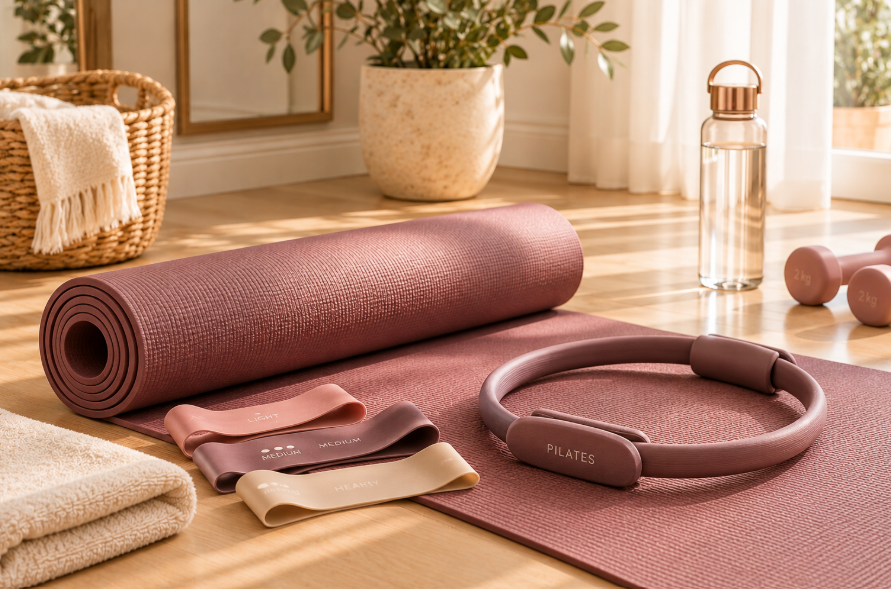
A supportive mat
Choose a mat that provides sufficient cushioning for your knees and spine without being so soft that it feels unstable. Consider the surface of your floor and how comfortable you feel lying down on it.
Comfortable clothing
Choose clothes that allow you to bend, stretch and change positions without restriction. Specialist activewear is optional; comfort and freedom of movement are what matter.
Clear floor space
Make sure you have enough room to lie down, extend your arms and move your legs without hitting nearby furniture. Check the space around you before starting a video or class.
Optional accessories
Resistance bands, small exercise balls and Pilates rings can introduce variety to certain routines. They are not essential for beginners, so wait until you understand the exercises before deciding whether you need them.
Reliable instruction
Look for a beginner-specific class that demonstrates each movement clearly and offers alternatives. Written descriptions alone cannot show every detail of technique, so use the sequence alongside appropriate instruction rather than treating it as a substitute for a demonstration.
If you are creating a more comfortable environment for working and living at home, our guide to building a luxury capsule home office offers ideas for combining thoughtful design with everyday functionality.
TIP
When choosing a Pilates mat, pay attention to grip and cushioning rather than colour or appearance alone. Your hands and feet should feel stable during movement, while your knees and spine should have enough support when you lie down. If you plan to practise regularly, a mat that is easy to clean and store neatly can be a more worthwhile investment than a collection of accessories you may rarely use.
Four Fundamentals to Learn First
Before trying a sequence, familiarise yourself with these four principles. Your instructor may introduce them differently depending on the exercises and teaching approach.
1. Breathing
Keep breathing comfortably throughout each movement. Some exercises include specific breathing cues, but avoid holding your breath or straining to follow a pattern you have not yet learned.
2. Control
Move at a pace that allows you to follow the instructions. If you cannot maintain a comfortable position, reduce the range of movement or choose an easier variation.
3. Alignment
Pay attention to the position of your head, shoulders, spine, pelvis and limbs as instructed. Good alignment is specific to the movement; it does not mean forcing every part of your body into a rigid position.
4. Adaptation
Exercises should suit your current abilities. Adjustments are a normal part of learning, and an instructor can help you identify alternatives when a position feels difficult or uncomfortable.
If you have an injury, persistent pain, a medical condition that affects exercise, or concerns about whether Pilates is appropriate for you, consult a qualified healthcare professional before starting. Stop any exercise that causes pain, dizziness or other concerning symptoms.
Preparing for Your First Session
Choose a short, beginner-specific class rather than attempting an advanced sequence simply because it looks appealing. Allow yourself time to listen to the instructions and understand the positions.
If you are uncertain about technique, consider an introductory class with a qualified instructor who can demonstrate the movements and suggest modifications.
You can also think about how movement fits into your wider lifestyle. If you work from home, our guide to How to Stay Active While Working from Home offers practical ideas for incorporating activity into your working day, alongside any dedicated exercise sessions.
The Best Apps for Following Pilates at Home
If you prefer guided workouts rather than planning a routine yourself, several apps and online resources can help you explore Pilates at home. The right choice depends on whether you want completely free instruction, short daily sessions or a more structured programme that you can follow over time.
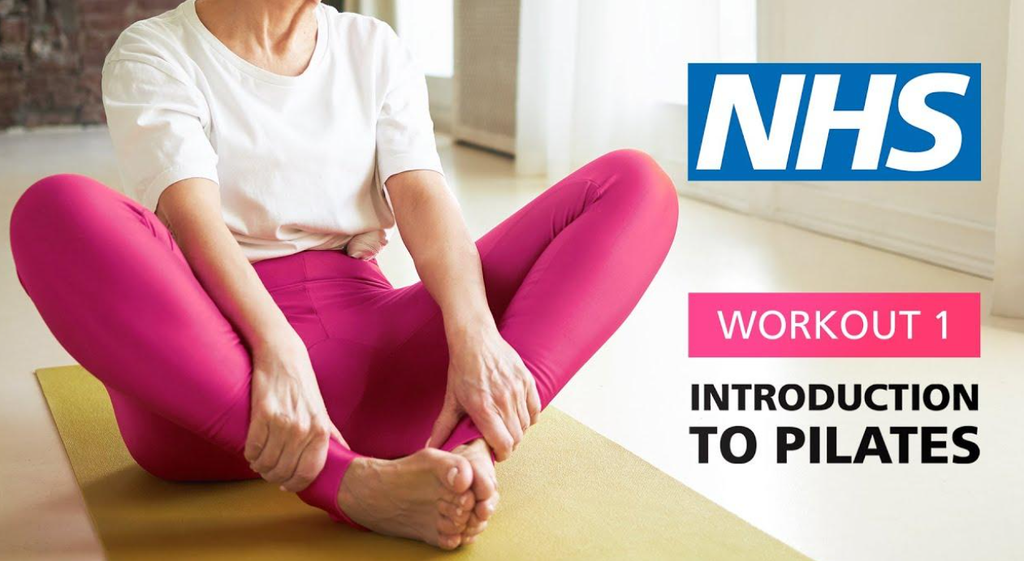
NHS Pilates for Beginners is a useful starting point if you want to try a free, follow-along workout without downloading an app.
For a more personalised experience, Pilates | Down Dog offers customisable mat sessions, allowing you to adjust your workouts to suit your preferences and experience level.
Fittbe Daily Pilates Workouts is another option for those who prefer guided sessions of varying lengths, while Pilates at Home: Easy Workout offers a beginner-oriented approach with video demonstrations and structured workouts.
Before choosing an app, consider how much time you can realistically dedicate to each session and whether you prefer individual workouts or a programme that provides more structure. Some apps offer free introductory access but require a subscription to unlock all their features, so check the current terms and availability in your app store before signing up.
Whichever option you choose, look for clear demonstrations, appropriate beginner modifications and instructions you can follow comfortably. Start with manageable sessions, give yourself time to learn the movements and remember that an app can support your practice, but it cannot replace individual professional guidance when you need help with technique or exercise modifications.
DID YOU KNOW?
Joseph Pilates originally called his method Contrology. The name reflected his emphasis on coordinating the mind and body through deliberate exercise. The method developed during the early twentieth century and subsequently became widely known by its creator’s surname.
A Simple Beginner-Friendly Pilates Sequence
Once you have appropriate instruction and are comfortable with the basic positions, you can begin exploring a short sequence. The exercises below are examples of movements commonly used in introductory routines, not a personalised programme. They may not be suitable for everyone.
Allow around 10–15 minutes if the exercises feel comfortable, and take breaks as needed. Follow a qualified instructor’s demonstration for technique and suitable modifications.
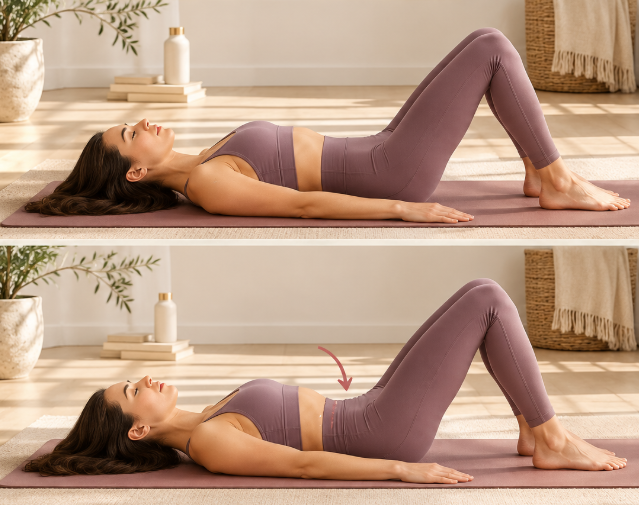
1. Pelvic tilts
Lie on your back with your knees bent and your feet flat on the mat. Keep your arms relaxed beside you.
Gently tilt your pelvis so that your lower back moves slightly towards the mat, then return to a comfortable neutral position. Avoid forcing your back against the floor.
Try five to eight repetitions if comfortable.
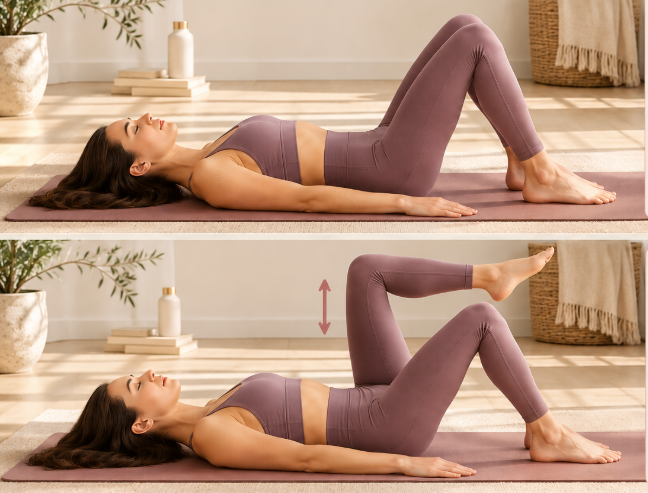
2. Alternating knee lifts
Remain on your back with your knees bent and your feet resting on the mat. Slowly lift one foot a small distance from the floor, then lower it with control. Repeat on the other side.
If lifting your foot makes it difficult to maintain a comfortable position, try sliding one heel away from you and back again instead.
Try four to six repetitions per side.
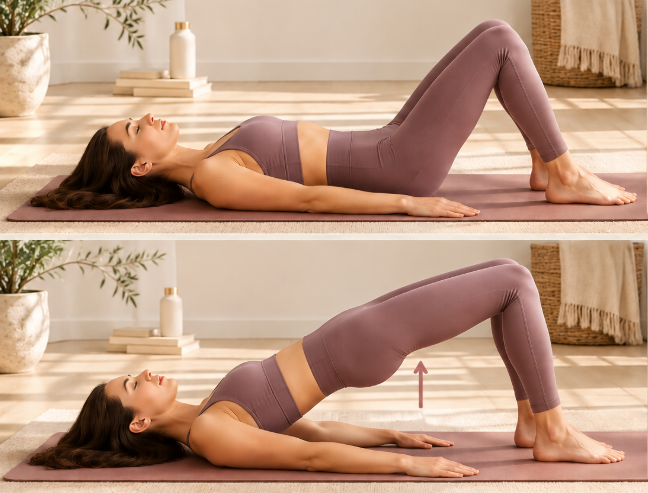
3. Glute bridges
Lie on your back with your knees bent and feet flat. Gently raise your pelvis, lifting your hips only as far as feels comfortable, then lower slowly.
Avoid forcing the movement through your lower back. If it feels uncomfortable, skip this exercise and ask an instructor for an alternative.
Try five to eight repetitions if appropriate.
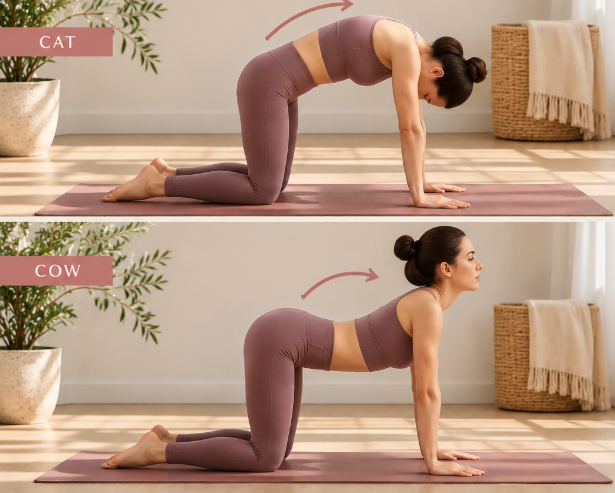
4. Cat-cow
Position yourself on your hands and knees, with your hands beneath your shoulders and your knees beneath your hips. Use cushioning if kneeling is uncomfortable, or choose an alternative.
Gently alternate between lengthening your spine and rounding your back. Keep the movement within a comfortable range and avoid exaggerating the position of your neck or lower back.
Try five to eight slow repetitions.
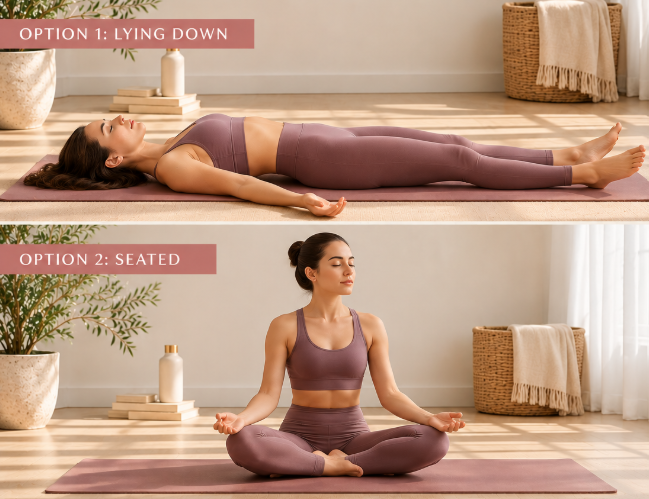
5. A comfortable finish
End in a comfortable seated or lying position. Take a moment to transition out of the session before returning to other activities.
You do not need to add more movements simply to make the sequence longer. As a beginner, learning a few suitable exercises with appropriate instruction is a sensible foundation.
How Often Should You Practise?
Choose a schedule that fits your existing commitments and physical activity. Two short sessions per week may be a manageable starting point for some beginners, while others may need to begin less frequently or choose shorter sessions.
As you become more familiar with the exercises, you can adjust the duration and frequency according to your comfort, energy levels and goals. Allow for rest and recovery, especially when introducing a new form of exercise.
Pilates can complement walking, aerobic activity and other forms of strength training. The right combination depends on your individual needs and preferences.
For context, the World Health Organization recommends that adults work towards 150–300 minutes of moderate-intensity aerobic activity per week, or 75–150 minutes of vigorous-intensity activity, alongside muscle-strengthening activities on at least two days per week. These are general public-health recommendations, not a target you must achieve immediately. Build up gradually and choose activities suited to your circumstances.
Common Mistakes to Avoid
Choosing an advanced routine too soon
Complex movements are not a prerequisite for getting started. Choose a class intended for beginners and use the modifications demonstrated by the instructor.
Rushing to finish
Pause the video, rest or reduce the number of repetitions when needed. You do not have to match the instructor’s pace.
Forcing a position
A movement should not require you to push your body into a position that feels strained. Work within a comfortable range and ask for guidance if you are unsure how to modify an exercise.
Expecting immediate results
Learning a new exercise method takes time. Initially, focus on understanding the movements and becoming familiar with the routine rather than judging every session by physical changes.
Ignoring individual needs
Online guidance cannot account for every injury, medical condition or physical limitation. Seek individual advice when appropriate, and stop if an exercise causes pain or unusual symptoms.
Fitting Pilates into Everyday Life
A home practice can be easier to maintain when it fits into your existing schedule rather than requiring a complete lifestyle overhaul.
You might prefer a short session before work, during a quiet afternoon or after finishing your main responsibilities. Choose a time that works with your energy levels and commitments.
If you prefer to exercise later in the day, you can make the transition from work to personal time feel more intentional with our guide to The 30-Minute Evening Reset That Makes Tomorrow Feel Easier.
It can help to decide in advance which days you intend to practise and keep your mat accessible. If your plans change, adjust the schedule instead of treating one missed session as a reason to abandon the routine.
You can also make the experience more enjoyable by choosing comfortable clothing, preparing your space in advance and selecting a class whose teaching style suits you. These small practical choices can remove friction without turning exercise into another elaborate task.
Once your movement session is over, you might choose another way to unwind, such as the simple skincare ritual in our guide to creating a luxury at-home facial.
A few well-designed movements, properly performed in a balanced sequence, are worth hours of doing sloppy calisthenics or forced contortion.
Finding an Approach That Suits You
As you become more familiar with Pilates, you may discover that you prefer certain instructors, class formats or movement styles. Some people enjoy the privacy of practising at home, while others appreciate the structure and feedback of an in-person class.
You do not need to commit to one format permanently. Explore beginner classes, learn from qualified instructors and choose the approach that feels appropriate for your abilities and preferences.
If you eventually decide to purchase accessories, base your choices on the exercises you enjoy and the guidance you receive rather than assuming that additional equipment is essential.
EDITOR’S NOTE
Wellness does not need to become another performance to manage. Let your Pilates practice be something you explore on your own terms: a skill to learn, an activity to enjoy and a routine that can evolve as your needs change.
Final Thoughts
Beginning Pilates at home can be straightforward: choose suitable instruction, learn a few basic movements and allow yourself time to become familiar with them.
Start with a short session, make use of appropriate modifications and build your practice at a pace that respects your individual needs. Combine Pilates with other forms of movement that suit your lifestyle, and seek professional guidance if you have concerns about exercise safety.
There is no single perfect way to practise. Find an approach that works for you, and let your experience guide what comes next.