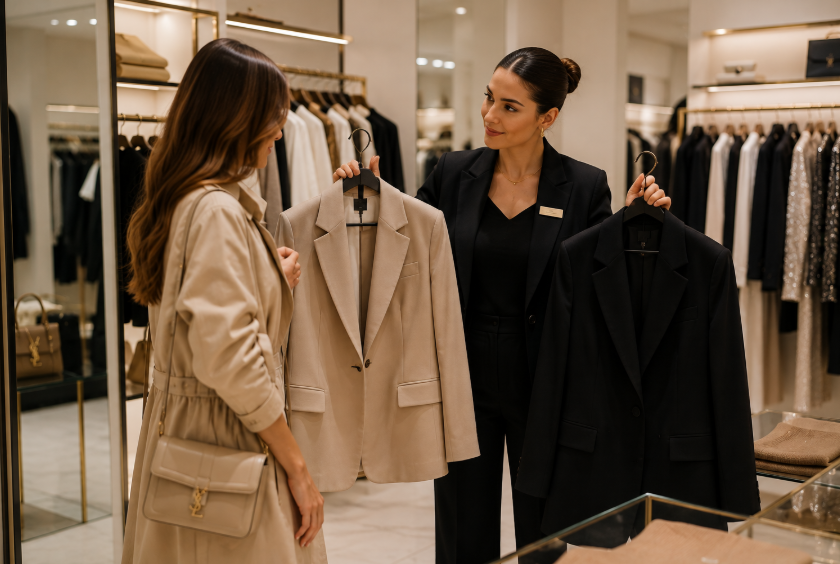
For years, fashion advice has told women that they need to dress according to a specific body shape.
Hourglass? Emphasise your waist.
Pear? Balance your shoulders.
Apple? Hide your middle.
Rectangle? Create curves.
Inverted triangle? Draw attention away from your shoulders.
Some of these ideas can be useful as styling observations, but the rigid rules attached to them are increasingly outdated.
Your body does not need to be corrected by your clothes.
The more modern approach is much simpler: understand your proportions, notice which silhouettes you naturally enjoy, and use clothing to create the visual effect you want — whether that means defining your waist, creating volume, showing your shoulders, elongating your legs or simply wearing something because you love it.
Fashion should give you options, not restrictions.
What Does “Dressing for Your Body Shape” Actually Mean?
Body-shape dressing isn’t about finding a list of clothes you’re supposedly allowed to wear.
It’s about understanding how different garments interact with your natural proportions.
A blazer with strong shoulders can change the balance of an outfit. A high-waisted skirt can change where the waist appears visually. A flowing dress can create movement, while tailored trousers can add structure.
These effects are useful to understand, but they aren’t rules.
If you love an oversized blazer even though traditional advice says you should avoid adding volume to your shoulders, wear it.
If you have a fuller figure and love fitted dresses, there is no reason to hide them.
If you have a straight silhouette and prefer loose, minimalist clothing rather than trying to create curves, that’s perfectly valid too.
The goal is choice.
And this is where body shape and outfit proportions are related, but not identical. Our Ultimate Guide to Outfit Proportions looks specifically at how lengths, volumes, hems and individual garments interact within an outfit. Here, we’re taking that idea one step further: how can you use those principles to dress your body in a way that feels authentic?
Forget the Idea That You Need to “Fix” Your Shape
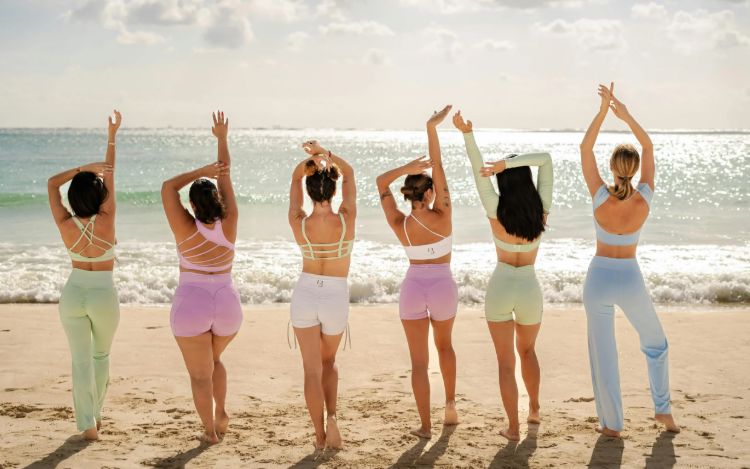
One of the biggest changes in modern fashion is moving away from the idea that certain body types need to be visually corrected.
Your shoulders aren’t too broad.
Your hips aren’t too wide.
Your waist doesn’t need to look smaller.
Your legs don’t need to look longer.
These are simply characteristics of your body.
Clothing can emphasise, soften, balance or contrast those characteristics — but none of those choices is inherently better than another.
Sometimes you might want to create the appearance of a longer leg line. Other days, you might prefer an oversized silhouette that deliberately disguises your natural shape.
Both are valid.
Style is about deciding what you want the clothes to communicate, rather than constantly trying to make your body conform to an imaginary ideal.
DID YOU KNOW?
The traditional “five body shapes” are only a simplified styling framework. Most women don’t fit perfectly into one category — and your proportions can also appear different depending on your posture, clothing, fabric, silhouette and even the way a garment is styled.
The Five Common Body Shapes — As a Starting Point, Not a Rulebook
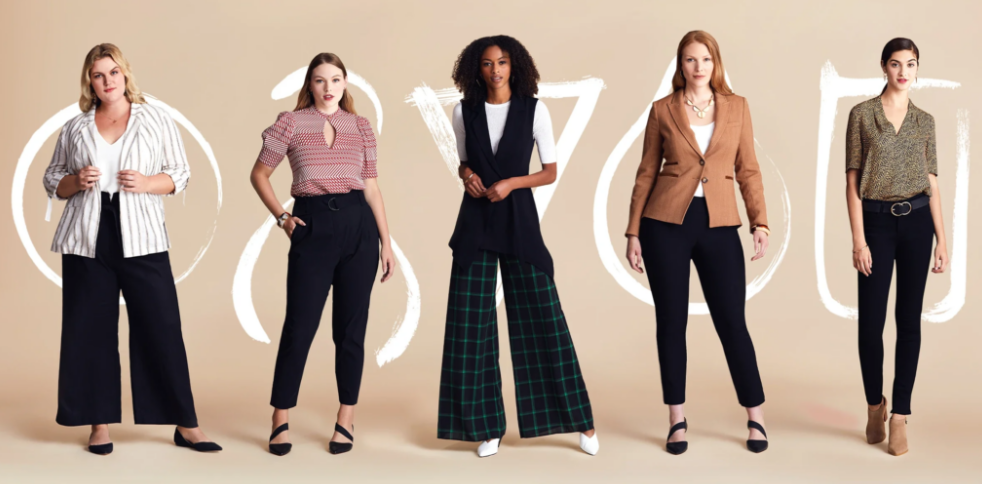
You may have heard of the five most commonly discussed body-shape categories:
- Hourglass — shoulders and hips appear relatively balanced, with a more defined waist.
- Pear or triangle — the hips appear wider than the shoulders.
- Apple or round — more visual fullness tends to sit around the middle.
- Rectangle or straight — shoulders, waist and hips appear relatively similar in width.
- Inverted triangle — the shoulders appear broader than the hips.
These descriptions can be helpful when you’re trying to understand why certain clothes create a particular effect.
But don’t become too attached to the label.
You may be between two categories. Your shape may change over time. And the same person can look completely different in a fitted dress, an oversized shirt or a structured blazer.
Think of the categories as a fashion vocabulary, not a set of instructions.
If You Have an Hourglass Shape
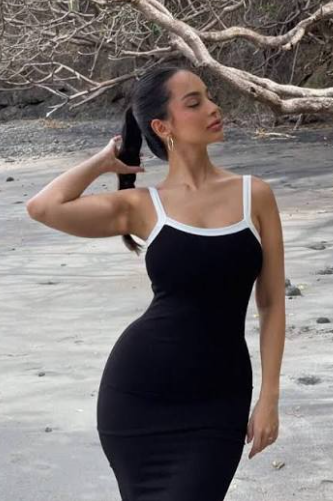
An hourglass silhouette is traditionally described as having relatively balanced shoulders and hips with a more defined waist.
The classic advice is usually simple: show your waist.
And yes, if you enjoy highlighting your waist, this can be incredibly effective.
Try:
- high-waisted trousers
- fitted or wrap dresses
- belted coats
- tucked-in shirts
- pencil or softly flowing skirts
- cropped jackets
- tailored blazers
But here’s where we move away from the old rules: you don’t have to define your waist every time.
An oversized blazer over straight-leg trousers can look incredibly chic on an hourglass figure. So can a relaxed knit with wide-leg trousers.
The silhouette becomes less about showing every curve and more about creating an intentional relationship between volume and structure.
A beautifully tailored blazer, for example, can highlight the natural shape of the shoulders and waist without being tightly fitted.
If you want to emphasise your waist
Try a belt, a tucked-in top or a high-rise bottom.
If you want a more relaxed silhouette
Choose a softly oversized jacket or sweater and keep the rest of the outfit relatively streamlined.
If you want to elongate the silhouette
A tonal outfit or long, uninterrupted line can create that effect without relying on heels.
There is no requirement to choose one approach.
If You Have a Pear or Triangle Shape
A pear or triangle shape is generally described as having more visual width through the hips than the shoulders.
Traditional fashion advice often says to minimise the lower half and add volume to the upper half.
You absolutely can do that if you like the effect.
But you don’t have to hide your hips.
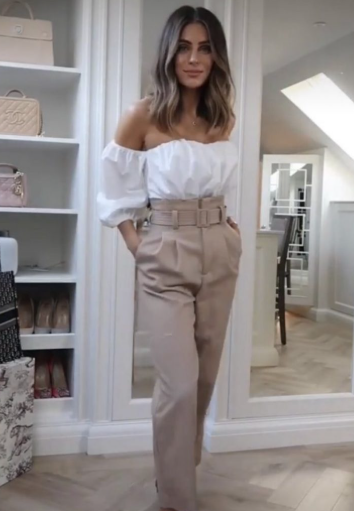
In fact, one of the easiest ways to dress a pear-shaped silhouette beautifully is simply to let the proportions exist.
A flowing midi skirt can look gorgeous when paired with a simple fitted top. Wide-leg trousers can create a long, elegant line. A tailored blazer can add structure without making the outfit feel overly engineered.
Try experimenting with:
- V-neck or open-neck tops
- structured jackets
- softly defined shoulders
- high-waisted trousers
- A-line skirts
- flowing midi skirts
- straight-leg denim
- monochromatic outfits
And don’t assume that every outfit needs to create an hourglass effect.
A minimalist combination of a simple knit, wide-leg trousers and elegant flats can look incredibly sophisticated precisely because it doesn’t try to exaggerate the body.
The most important thing is choosing the silhouette you like seeing in the mirror.
If You Have an Apple or Round Shape
Apple or round body-shape descriptions generally refer to a silhouette where the middle appears fuller relative to the shoulders and hips.
Traditional advice tends to focus heavily on disguising the stomach.
That doesn’t have to be the goal.
If you prefer clothes that skim rather than cling around the middle, there are plenty of beautiful options:
- softly draped blouses
- straight-leg trousers
- open jackets
- longline blazers
- V-neck tops
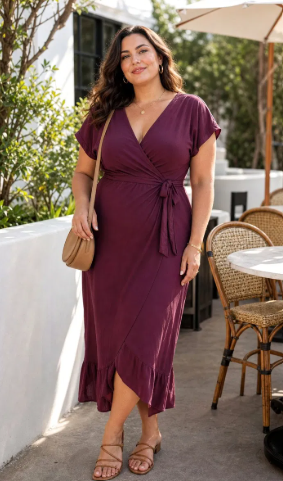
- flowing dresses
- tailored trousers
- monochromatic outfits
An open blazer over a simple top can create two vertical lines through the body, while a V-neck can create visual openness around the neckline.
But fitted clothing isn’t forbidden.
A well-cut fitted dress can look just as beautiful as a flowing one. The difference is simply in the effect you want.
If you love a fitted silhouette, look for fabrics with enough structure and stretch to move comfortably with you rather than choosing a garment that feels restrictive.
Comfort is part of looking polished.
And if you’re building a wardrobe that works for your everyday life in Dubai, remember that the pieces you actually enjoy wearing will always be more useful than clothes selected because an outdated rule told you they were “flattering.” Our guide to the essential wardrobe pieces every woman needs in Dubai is a useful companion when thinking about versatile foundations.
If You Have a Rectangle or Straight Shape
A rectangle or straight silhouette generally has shoulders, waist and hips that appear relatively similar in width.
Traditional styling advice often says to create the illusion of curves.
But again, you don’t need to.
A straight silhouette can look incredibly elegant in minimalist tailoring, oversized clothing and clean architectural shapes.
If you do want to create more waist definition, you can experiment with:
- belted jackets
- wrap tops
- high-waisted trousers
- tucked-in shirts
- pleated skirts
- cropped jackets
- dresses with defined waists
But if you prefer a more relaxed aesthetic, embrace it.
Think:
Oversized blazer + straight trousers + simple top + refined accessories
or:
Long column dress + structured handbag + minimal jewellery
These looks don’t attempt to create exaggerated curves, and that’s exactly what makes them feel modern.
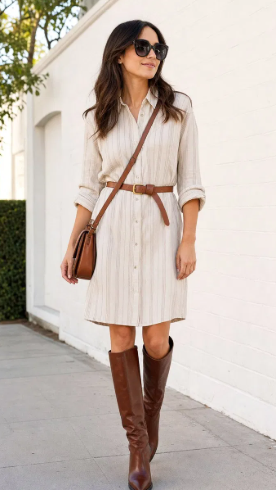
The key is understanding that a straight silhouette is not something that needs correcting.
It can be the foundation for an incredibly sophisticated wardrobe.
If You Have an Inverted Triangle Shape
An inverted triangle is generally described as having shoulders that appear broader than the hips.
The traditional rule is to minimise the upper body and add volume below.
Again, that’s one option — not an obligation.
If you want to create more balance, you could experiment with:
- wide-leg trousers
- flowing skirts
- A-line skirts
- fuller trousers
- softer necklines
- minimal shoulder detailing
- longer jackets
- interesting shoes
But there’s another option that modern fashion embraces beautifully:
accentuate the shoulders.
Strong tailoring can look spectacular on broader shoulders.
A sharply cut blazer, structured coat or architectural top can create a powerful silhouette rather than something that needs to be softened.
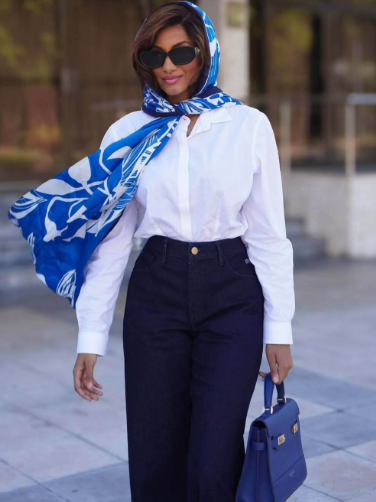
This is a perfect example of why old-fashioned body-shape rules can be limiting.
The same characteristic that one fashion guide tells you to “minimise” can actually become one of your most distinctive style features.
Your Body Doesn’t Have to Fit Into One Category
Perhaps the most important thing to remember is that very few women fit neatly into one body-shape category.
You might have:
- a defined waist but broader shoulders
- fuller hips and a relatively straight waist
- a long torso and shorter legs
- narrow shoulders and fuller arms
- a combination of several characteristics
That’s completely normal.
Instead of asking “What body shape am I?”, try asking:
What do I like to emphasise?
Maybe you love your shoulders.
Maybe you love your legs.
Maybe you enjoy showing your waist.
Maybe you prefer everything covered and flowing.
Maybe you don’t think about your body at all when choosing clothes.
All of these are perfectly valid approaches.
The most useful fashion “rule” is simply this:
Dress the body you have, not the body a fashion chart tells you that you should have.
STYLE TIP
Before rejecting a garment because you’ve been told it isn’t “flattering” for your body shape, try it in at least two different sizes or silhouettes and style it differently.
A blazer can look completely different worn open, buttoned, belted or layered.
A skirt can change dramatically depending on where it sits on the waist.
And a dress can go from fitted and feminine to relaxed and modern simply through the addition of a jacket or different accessories.
Sometimes the problem isn’t the garment.
It’s the styling.
Understanding your proportions can be useful, but the real fun begins when you stop treating them as restrictions.
Once you know what different silhouettes do visually, you can decide whether you want to emphasise, balance, elongate, soften or completely ignore those effects.
That freedom is what makes modern personal style so much more interesting than a list of rules.
Dress for What You Want to Emphasise
Instead of starting every outfit with “What should I hide?”, try starting with:
“What do I want this outfit to highlight?”
Perhaps you love your waist and want to define it.
A tucked-in shirt with high-waisted trousers can do that instantly.
Perhaps you love your shoulders.
A structured blazer or an elegant sleeveless top can make them the focus.
Maybe your legs are your favourite feature.
A shorter skirt, tailored shorts or a dress with a higher hem can draw attention there.
Or perhaps you don’t want to emphasise any particular part of your body. You simply want to create a beautiful overall silhouette.
In that case, monochromatic dressing, fluid fabrics and clean tailoring can create a sophisticated result without putting the focus on one specific feature.
There is no universally “best” body part to highlight.
The choice belongs to you.
Don’t Let “Flattering” Become a Restriction
The word flattering is used constantly in fashion, but it can sometimes become a surprisingly limiting concept.
A garment doesn’t have to make you look slimmer, taller or more hourglass-shaped to be successful.
It can simply:
- make you feel confident
- express your personality
- suit the occasion
- be comfortable
- make you excited to get dressed
- create the aesthetic you want
An oversized shirt might not traditionally be described as “figure flattering,” but it can look incredibly chic with tailored trousers and elegant accessories.
A dramatic maxi skirt might add visual volume, but that doesn’t make it a bad choice.
A boxy jacket might make your silhouette appear wider, but perhaps that architectural shape is exactly what makes the outfit interesting.
Fashion isn’t a mathematical equation where the smallest-looking silhouette automatically wins.
Sometimes impact matters more than optical slimming.
Use Trends Without Losing Your Personal Style
One of the easiest ways to avoid outdated body-shape rules is to stop thinking that every trend needs to be adapted to “correct” your proportions.
Instead, ask how the trend can work with your existing style.
For example, if oversized tailoring is everywhere, you don’t have to decide whether your body shape is “allowed” to wear it.
Try different proportions.
An oversized blazer might work beautifully with slim trousers.
A voluminous pair of trousers could balance better with a fitted knit.
A flowing dress could be paired with a structured handbag.
A cropped jacket could work with a high-waisted skirt.
The answer isn’t always yes or no.
Often, it’s simply about how you combine the pieces.
And if you already have a favourite dress in your wardrobe, don’t assume you need a completely new outfit to create variety. Our guide to styling one dress five different ways shows how dramatically the overall silhouette can change simply through styling.
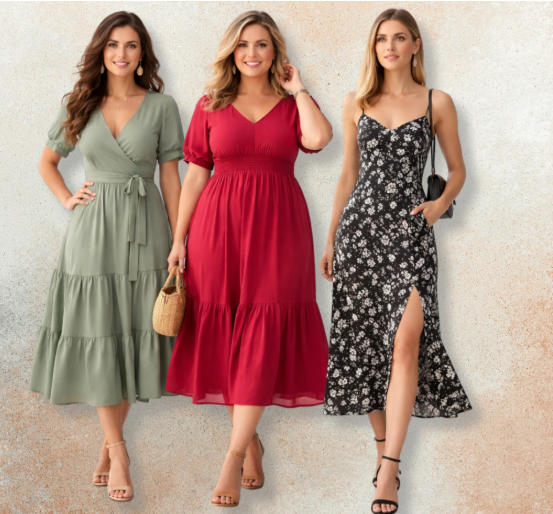
Fabrics Matter More Than Body-Shape Rules Suggest
Two garments with exactly the same silhouette can look completely different because of their fabric.
A stiff cotton shirt creates more structure than a fluid silk blouse.
A thick knit adds visual volume.
A lightweight fabric drapes closer to the body.
A crisp tailored trouser creates a completely different line from a soft wide-leg trouser.
This is why simply knowing your body shape isn’t enough.
When shopping, pay attention to:
Structure
Structured fabrics can create sharper, more defined lines.
Drape
Fluid fabrics move with the body and can create softer silhouettes.
Weight
Heavier fabrics naturally create more visual presence.
Stretch
Stretch can make fitted pieces much more comfortable and wearable.
Texture
Bouclé, velvet, ribbed knits and other textured fabrics can add visual interest without needing bold prints or embellishment.
Learning how fabrics behave is often more useful than memorising a list of garments you’re supposedly not allowed to wear.
EDITOR’S NOTE
The best body-shape rule is simple: there are no clothes you are forbidden to wear. Use styling advice as inspiration, not instruction. Your body isn’t a fashion problem to solve — it’s simply the canvas your personal style works with. And when you find silhouettes that make you feel confident, comfortable and unmistakably yourself, you’ve already found what matters most.
Proportion Is About More Than Your Body Shape
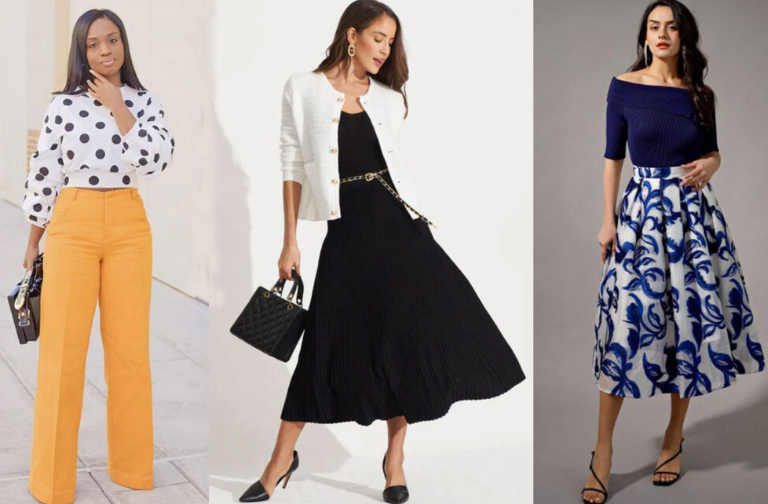
There’s another reason rigid body-shape rules don’t always work: your vertical proportions matter too.
You might have a longer torso and shorter legs, or longer legs and a shorter torso.
You might be petite but have relatively long legs.
You might be tall with a short waist.
These differences can completely change how the same outfit looks.
This is where details such as:
- rise height
- jacket length
- skirt length
- trouser length
- shoe shape
- neckline
- colour breaks
can make a difference.
For example, high-rise trousers can visually move the waist upward, while a longer jacket can create a more relaxed vertical line.
But once again, these aren’t rules.
If you love a low-rise silhouette, wear it.
If you prefer long jackets, don’t abandon them simply because someone says a shorter jacket would make your legs appear longer.
Looking taller is not automatically the goal.
Don’t Underestimate the Power of Styling
Sometimes the same clothes can create completely different results depending on the small details.
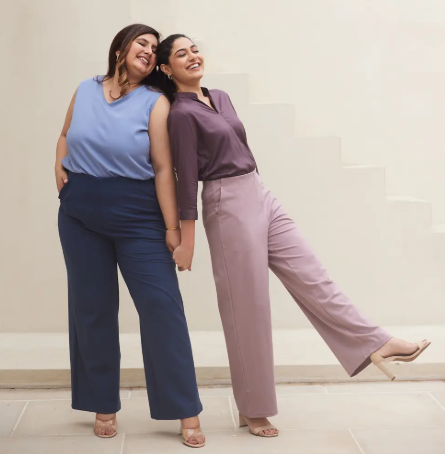
Take a simple pair of wide-leg trousers.
You could wear them with:
- a fitted tank and sandals for summer
- a tucked-in shirt and loafers for work
- a cropped jacket and heels for evening
- an oversized knit and sneakers for a relaxed look
The trousers haven’t changed.
The styling has.
The same applies to dresses, skirts, jeans and blazers.
This is why developing your personal styling skills is more valuable than memorising body-shape rules.
You learn to look at a garment and think:
“How can I make this work for me?”
rather than:
“Am I allowed to wear this?”
When You Want to Create More Balance
There will absolutely be occasions when you want to use clothing to create visual balance.
That’s perfectly fine.
For example:
To create more definition at the waist
Try:
- belts
- tucked-in tops
- wrap silhouettes
- high-waisted bottoms
- cropped jackets
To create more volume on the lower half
Try:
- wide-leg trousers
- pleated skirts
- A-line skirts
- textured fabrics
- statement shoes
To create more structure on the upper half
Try:
- tailored blazers
- structured shoulders
- interesting necklines
- statement earrings
- scarves
To create a longer visual line
Try:
- tonal dressing
- longer trousers
- vertical details
- streamlined silhouettes
- shoes that don’t create a strong visual break
These techniques are useful when you want the effect — not because your body supposedly requires it.
The Most Stylish Approach? Knowing When to Ignore the Rules
The women with the most interesting personal style aren’t necessarily following every traditional styling rule.
They’re often doing something much more useful:
They know why they’re making a choice.
They might wear a dramatic oversized coat because they want a powerful silhouette.
They might choose a fitted dress because they love showing their shape.
They might wear flats with a long skirt because comfort matters more to them than creating the illusion of longer legs.
They might combine several statement accessories because maximalism is their style.
And they might completely ignore the idea that an outfit needs to make them look slimmer.
That confidence is what makes the outfit feel intentional.
Fashion is about dressing according to what’s fashionable. Style is more about being yourself.
The Most Important Rule: Wear What Makes You Feel Like Yourself
Body-shape guides can be useful when you’re standing in a fitting room wondering why one silhouette feels more natural than another.
But they should never become a list of restrictions.
You don’t need to hide your stomach.
You don’t need to minimise your shoulders.
You don’t need to create curves.
You don’t need to make yourself look taller.
You don’t need to dress around a label.
Instead, learn what different cuts, fabrics, colours and proportions do — and then decide which effects you actually want.
Some days that might mean a beautifully tailored outfit that follows your natural shape.
Other days it might mean an oversized shirt, wide-leg trousers and flat shoes.
And sometimes the most stylish outfit is the one that completely ignores conventional advice.