
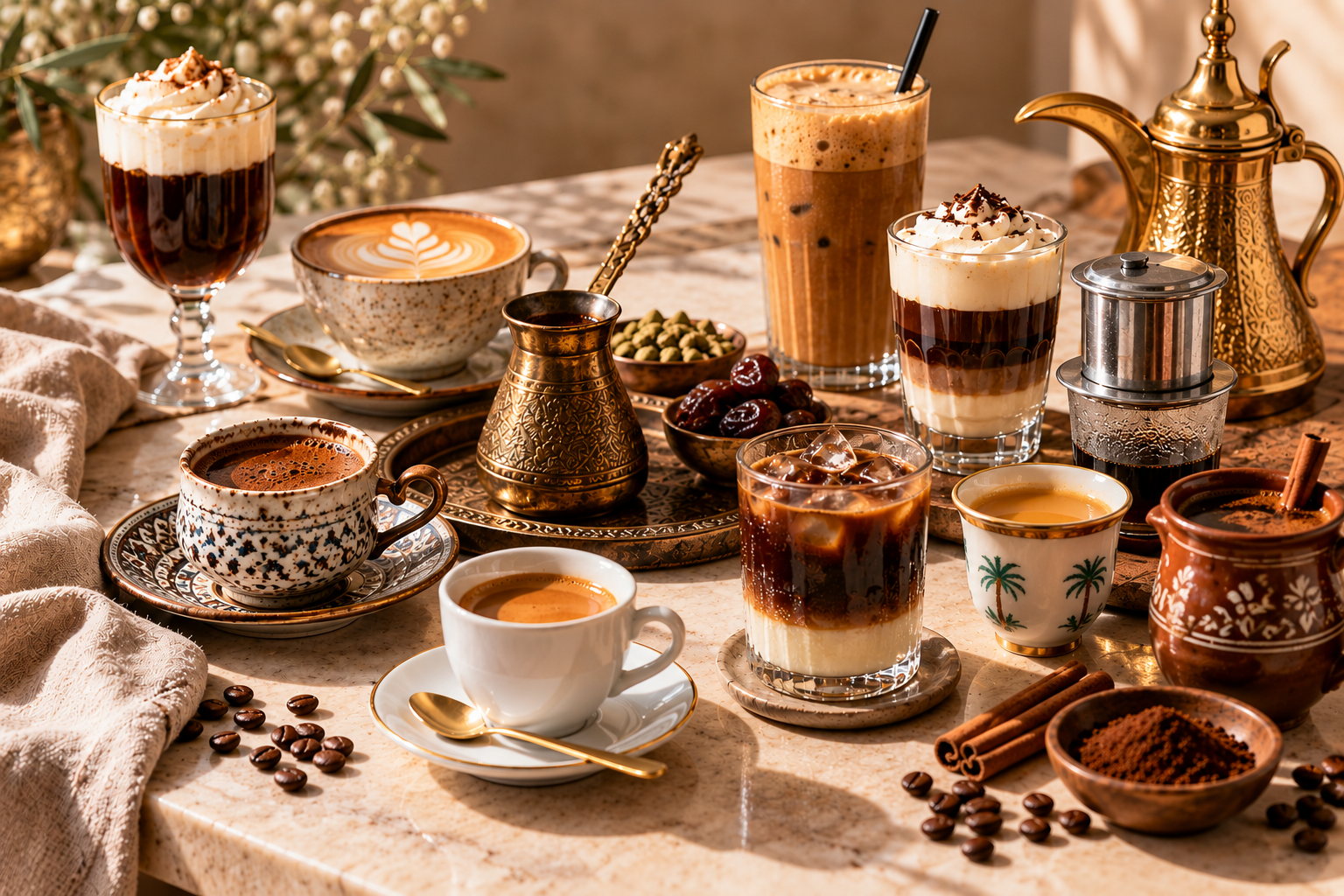
From the aromatic coffee pots of the Middle East to Italy’s espresso bars and Vietnam’s sweet iced coffee, discover 12 distinctive ways the world has made coffee its own.
Coffee may begin with the same humble bean, but the drink that reaches the cup can look remarkably different from one country to another. It might be dark and intensely concentrated, gently spiced, softened with condensed milk or served beneath a cloud of cream.
Across the world, coffee has evolved alongside local ingredients, daily routines and centuries of cultural exchange. Some preparations are defined by their brewing method; others are inseparable from the occasions on which they are served.
This is what makes exploring coffee so fascinating. A cup can reveal something about a place without requiring a passport.
From familiar Italian espresso to the lesser-known elegance of Turin’s bicerin, here are 12 distinctive coffee drinks and the stories behind them.
1. Turkish Coffee: An Art of Fine Grounds and Slow Brewing
Few coffee traditions are as closely associated with a particular preparation method as Turkish coffee.
Finely ground coffee is combined with water and, depending on preference, sugar in a small pot called a cezve. The mixture is heated slowly, producing a characteristic layer of foam before it is poured into small cups. Unlike filtered coffee, the grounds remain in the cup and gradually settle.
The result is intense, aromatic and full-bodied, with a texture that encourages small, unhurried sips.
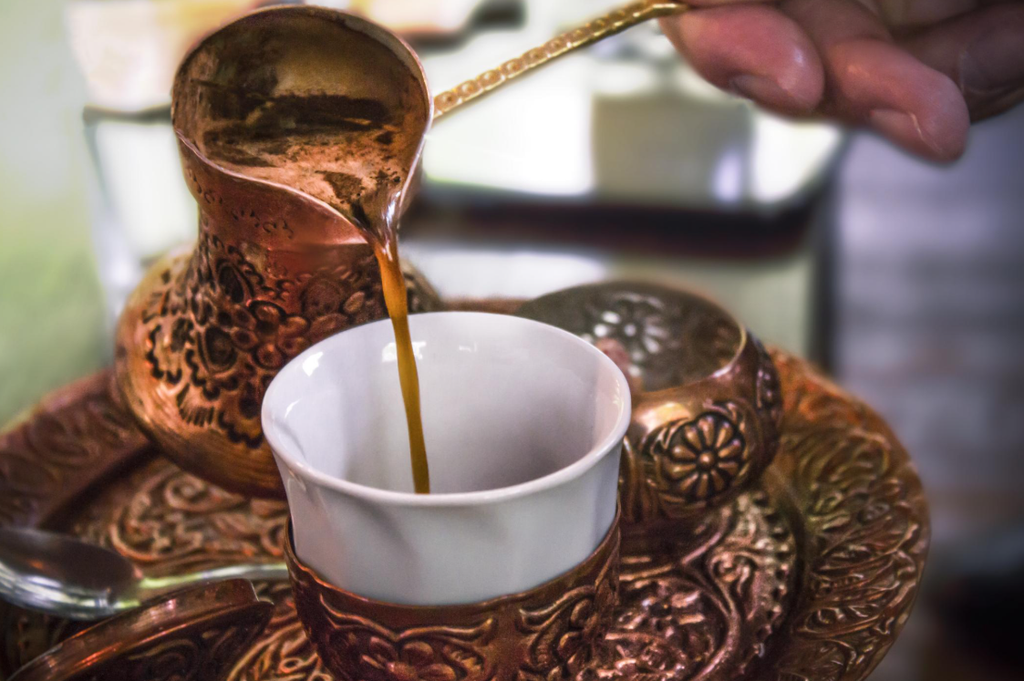
Yet Turkish coffee is more than a recipe. Its cultural significance lies in the social customs surrounding its preparation and service, from welcoming guests to sharing coffee during important family occasions. The grounds left behind have also inspired the familiar tradition of coffee-cup fortune-telling.
UNESCO inscribed Turkish coffee culture and tradition on its Representative List of the Intangible Cultural Heritage of Humanity in 2013, recognising both the preparation method and its place in social life.
What makes it distinctive: The exceptionally fine grind, unfiltered preparation and layer of foam.
The best way to appreciate it: Serve it in a small cup, allowing the grounds to settle before drinking. A glass of water alongside it is a traditional accompaniment.
2. Arabic Coffee: Fragrant, Delicate and Deeply Traditional
Arabic coffee – known as gahwa or qahwa in the Gulf – offers a striking contrast to the concentrated intensity of Turkish coffee.
Often prepared with lightly roasted beans, it is traditionally brewed in a pot known as a dallah. Depending on the region and household, cardamom is a defining addition, while other spices may also appear. Its colour can be much lighter than that of many familiar espresso-based drinks, and its flavour is often aromatic rather than heavily roasted.
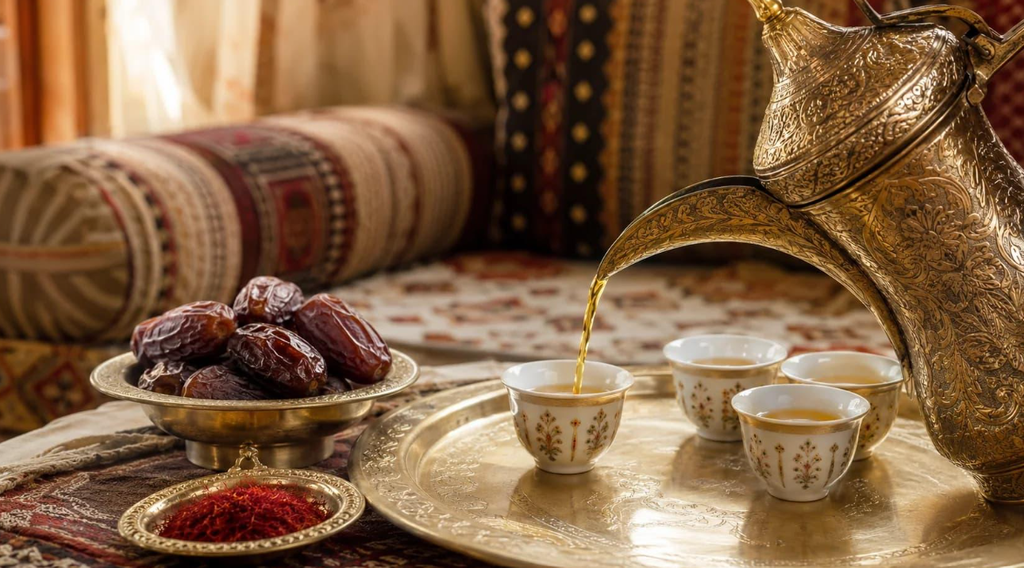
The drink is particularly associated with hospitality across the Arabian Peninsula and the wider Gulf region. It is commonly served in small cups, with hosts replenishing guests’ cups as part of the ritual. Dates are a familiar accompaniment, offering sweetness alongside the coffee’s gently spiced character.
In the UAE and neighbouring Gulf countries, Arabic coffee remains an important feature of gatherings, celebrations and welcoming visitors. UNESCO recognised Arabic coffee as an element of intangible cultural heritage in 2015.
What makes it distinctive: Light roasting, fragrant spices and a serving ritual closely associated with hospitality.
The best way to appreciate it: Notice the cardamom’s fragrance before taking a sip. The experience is less about intensity than about the balance between aroma, bitterness and spice.
Coffee can also become part of the experience of discovering a city, particularly in cafés where atmosphere and design are as memorable as what is served.
DID YOU KNOW?
Arabic coffee and Turkish coffee are not simply two names for the same drink. Their roasting traditions, preparation methods and serving customs can differ considerably, reflecting distinct coffee cultures across the Middle East and its neighbouring regions.
3. Espresso: Italy’s Concentrated Coffee Classic
In Italy, coffee culture often revolves around a deceptively small serving: espresso.
Made by forcing hot water through finely ground coffee under pressure, espresso produces a concentrated drink topped, when properly extracted, with a delicate layer of crema. Its compact size does not mean a lack of complexity. Depending on the beans and preparation, an espresso can reveal notes of chocolate, caramel, nuts, fruit or toasted grain.
Espresso also forms the foundation of many familiar café favourites, including cappuccino, latte and macchiato. But in an Italian bar, the straightforward espresso has a place of its own.

It is often enjoyed quickly at the counter, woven into the everyday rhythm of work, errands and conversation. Rather than treating coffee as an elaborate event, this tradition makes it an accessible part of daily life.
The word espresso refers to coffee prepared expressly for the drinker, with the method producing a cup to order.
What makes it distinctive: Pressure-based extraction, concentrated flavour and a small serving designed to deliver intensity.
The best way to appreciate it: Try it without milk first. Give the aroma a moment, then notice how its bitterness, sweetness and acidity interact.
For a taste of Italy beyond the coffee bar, explore our guide to the Italian dining experiences worth discovering in Dubai.
4. Bicerin: Turin’s Elegant Layers of Coffee, Chocolate and Cream
For something more indulgent, travel north to Turin, where the traditional bicerin turns three familiar ingredients into a distinctive local speciality.
The drink combines espresso or strong coffee, chocolate and cream in carefully arranged layers. Unlike a conventional mocha, in which coffee and chocolate are typically blended together, a traditional bicerin is known for its contrasting components.
Served in a small glass, it is visually striking without being extravagant. The dark coffee and chocolate sit beneath a pale layer of cream, creating a drink that feels almost like a dessert.

Bicerin is associated with Caffè al Bicerin, a historic Turin café dating to 1763. The drink became part of the city’s culinary identity, offering a glimpse into northern Italy’s long-standing café culture.
Its appeal lies in the relationship between the ingredients. Coffee provides depth, chocolate adds richness, and cream softens the overall experience.
What makes it distinctive: Three contrasting layers rather than a fully mixed coffee-and-chocolate drink.
The best way to appreciate it: Take a moment to observe the layers before tasting. The combination is rich, so a small serving is often enough.
5. Einspänner: Vienna’s Coffee Beneath a Crown of Cream
Vienna’s coffeehouse tradition has produced an array of preparations, but the Einspänner is especially memorable for its generous cap of whipped cream.
Traditionally served in a glass, the drink combines strong black coffee with a substantial topping of whipped cream. The cream creates a soft contrast to the coffee beneath it, while the glass allows the two elements to remain visually distinct.

Its name is associated with the one-horse carriage drivers of Vienna. The story commonly told is that the cream helped keep the coffee warm beneath its topping while allowing drivers to enjoy it with one hand. The precise details of such historical explanations should be treated as tradition rather than definitive proof, but the association has endured.
Today, the Einspänner remains a recognisable expression of Viennese café culture, where coffee is often accompanied by pastries, newspapers and time spent at the table.
What makes it distinctive: Strong coffee served beneath a thick layer of whipped cream, usually without the cream being stirred in immediately.
The best way to appreciate it: Taste the coffee and cream together before mixing them. Their contrast is part of the drink’s charm.
TIP
Coffee can be an elegant after-dinner alternative to a full dessert. A small bicerin or an Einspänner offers a more considered finish to a meal, particularly when served in glassware that allows its layers to become part of the presentation.
6. Greek Frappé: The Iconic Foam-Topped Iced Coffee
Greek frappé demonstrates how a simple preparation can become a defining feature of a country’s summer routine.
The drink is generally made by vigorously shaking or blending instant coffee with water, creating a thick layer of foam. It is then served over ice, with sugar and milk added according to preference.
Its origins are commonly traced to the 1957 Thessaloniki International Fair, where a Nescafé representative reportedly improvised an iced coffee after being unable to find hot water. The story has become part of the drink’s history, although it is best understood as the widely repeated account of its creation.
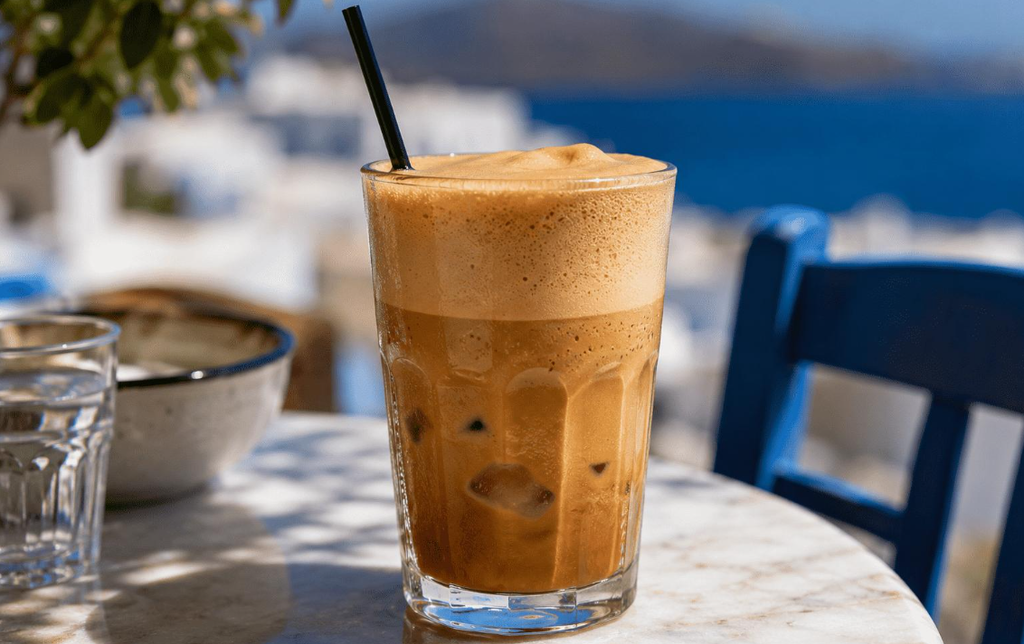
Unlike espresso-based iced drinks, the classic Greek frappé relies on instant coffee and aeration to produce its signature texture. The result is refreshing, slightly bitter and easily adapted to different levels of sweetness.
It has become closely associated with Greek summer life, from seaside cafés to long afternoons in the shade.
What makes it distinctive: Instant coffee transformed into a thick, persistent foam and served cold over ice.
The best way to appreciate it: Choose your sweetness level before mixing, then let the foam settle slightly as you sip. A tall glass makes the drink particularly inviting.
7. Vietnamese Iced Coffee: A Bold Brew with Sweet Condensed Milk
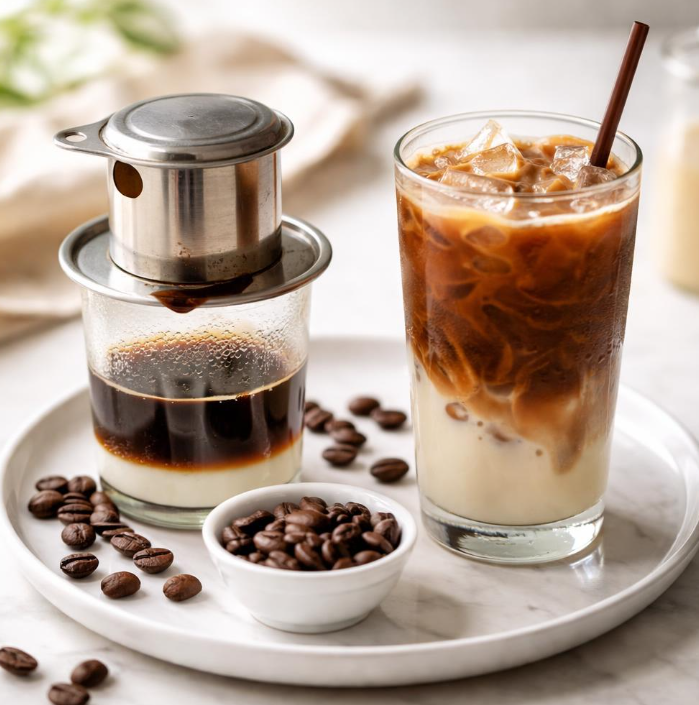
Vietnamese iced coffee, often called cà phê sữa đá when made with milk, is known for its contrast between a strong coffee base and the sweetness of condensed milk.
A traditional preparation uses a small metal drip filter, or phin, placed over a glass. Ground coffee is steeped as hot water slowly passes through it, producing a concentrated brew. Sweetened condensed milk is added before the coffee is poured over ice.
The resulting drink is dark, sweet and full-bodied. The condensed milk contributes both sweetness and a creamy texture, creating a different experience from an iced latte made with fresh milk.
Coffee cultivation expanded in Vietnam during the French colonial period, and the country’s coffee culture developed in distinctive ways over time. Robusta beans are particularly important to Vietnamese production, although preparations and bean choices vary.
The slow drip method is part of the pleasure: watching the coffee gather in the glass turns preparation into a small ritual.
What makes it distinctive: A metal drip filter, a strong coffee base and the characteristic use of sweetened condensed milk.
The best way to appreciate it: Let the coffee finish dripping, stir it with the condensed milk, then pour over plenty of ice for a balanced chilled drink.
8. Yuanyang: Hong Kong’s Unusual Coffee-and-Tea Combination
Yuanyang brings two familiar drinks together in a combination that might seem unexpected at first: coffee and milk tea.
Popular in Hong Kong, the drink combines brewed coffee with Hong Kong-style milk tea, which is traditionally prepared using strong black tea and evaporated or condensed milk. Recipes vary, and the proportions can be adjusted to suit individual tastes.
The name yuanyang refers to mandarin ducks, which are often used as a symbol of pairing. The name suits a drink built around the meeting of two distinct flavours.
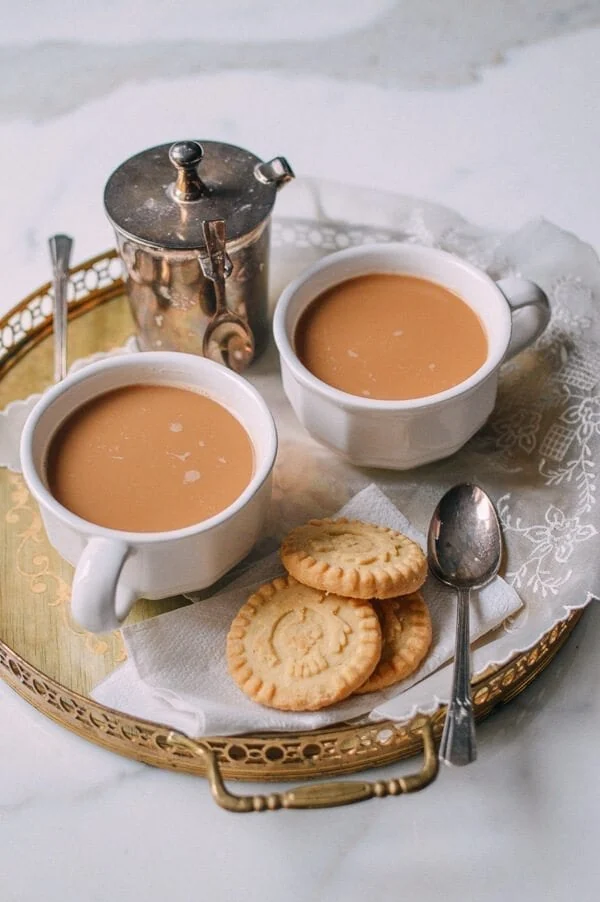
Coffee contributes roasted bitterness and depth, while the tea brings its own tannic character and fragrance. Milk softens both, creating a drink that is richer and more layered than either component alone.
Yuanyang is commonly associated with Hong Kong’s cha chaan teng cafés, informal eateries known for their eclectic menus and hybrid food traditions.
What makes it distinctive: The combination of coffee and strong milk tea in a single drink.
The best way to appreciate it: Try it chilled for a refreshing version, or hot if you prefer a softer, more comforting drink.
9. South Indian Filter Coffee: A Fragrant, Foamy Tradition
South Indian filter coffee, also known as filter kaapi, is a distinctive preparation built around a metal filter and a strong, aromatic brew.
Coffee grounds are placed in the upper chamber of a traditional filter, where hot water slowly passes through them. The resulting decoction is combined with hot milk and sugar according to taste.
Chicory is often blended with coffee in South Indian preparations, adding body and a characteristic earthy note. The exact ratio differs between households and cafés, so there is no single formula that defines every cup.

The drink is often served in a stainless-steel tumbler and a small bowl-like vessel called a dabara. Pouring the coffee between the two can cool it while creating a layer of foam.
Its appeal comes from both flavour and technique: the concentrated decoction, warm milk and foamy finish produce a drink that is distinct from an Italian cappuccino or a conventional filter coffee.
What makes it distinctive: A strong filtered decoction, the frequent use of chicory and the traditional tumbler-and-dabara serving method.
The best way to appreciate it: Look for the balance between coffee and milk. The ideal cup should feel robust and aromatic without becoming overwhelmingly bitter or sweet.
10. Café de Olla: Mexican Coffee with Cinnamon and Piloncillo
Café de olla is a traditional Mexican coffee preparation known for its warm spice notes and distinctive sweetness.
The name translates roughly to “coffee from the pot”. Traditionally, coffee is simmered with cinnamon and piloncillo, an unrefined cane sugar sold in solid cones or blocks. Some recipes include additional ingredients, such as cloves or orange peel, but these are variations rather than universal requirements.
The traditional clay pot associated with the drink is part of its identity, although it is not essential to every modern preparation. The coffee is generally served without milk, allowing the spice and sugar to complement the roasted flavour.

Café de olla is often linked to Mexican home cooking and regional food traditions. It offers a different approach to flavouring coffee: instead of adding milk or creating layers, the ingredients are infused during preparation.
What makes it distinctive: Coffee simmered with cinnamon and piloncillo, often in a traditional clay pot.
The best way to appreciate it: Start with a modest amount of sugar so that the coffee’s roasted character remains present alongside the cinnamon.
11. The Ethiopian Coffee Ceremony: Coffee as a Shared Experience
Ethiopia holds a particularly important place in coffee history. The country is widely regarded as part of coffee’s place of origin, and its coffee traditions encompass much more than the drink itself.
The Ethiopian coffee ceremony is a social practice in which green coffee beans are roasted, ground and brewed, often in a traditional pot called a jebena. The roasting process fills the room with the aroma of the beans, while the preparation and serving create a shared experience for those gathered.
Coffee is commonly served in small cups, and the ceremony can involve multiple rounds. The details differ between communities and households, so the ritual should not be reduced to a single fixed recipe.

Unlike the other entries in this guide, the Ethiopian coffee ceremony is not one standardised drink. It is included because it demonstrates how coffee can be defined as much by its preparation and social meaning as by its flavour.
The tradition offers a useful reminder that coffee’s global story is not simply a history of recipes travelling from one country to another. It is also a story of the communities that cultivate, prepare and share it.
What makes it distinctive: The roasting, brewing and serving process forms part of a wider cultural gathering.
The best way to appreciate it: If you have the opportunity to experience a ceremony, approach it as a cultural tradition rather than simply a coffee tasting.
12. Irish Coffee: Coffee with Whiskey and Cream
Irish coffee brings together hot coffee, Irish whiskey, sugar and a layer of cream.
The drink is widely associated with chef Joe Sheridan and Foynes in Ireland during the 1940s. According to the familiar origin story, Sheridan created the warming drink for travellers arriving by airboat on a cold evening. The preparation later became internationally known, particularly through its association with San Francisco’s Buena Vista Café.
A classic Irish coffee balances the warmth and bitterness of coffee with the sweetness of sugar and the flavour of whiskey. Lightly whipped cream is floated on top rather than stirred fully into the drink.
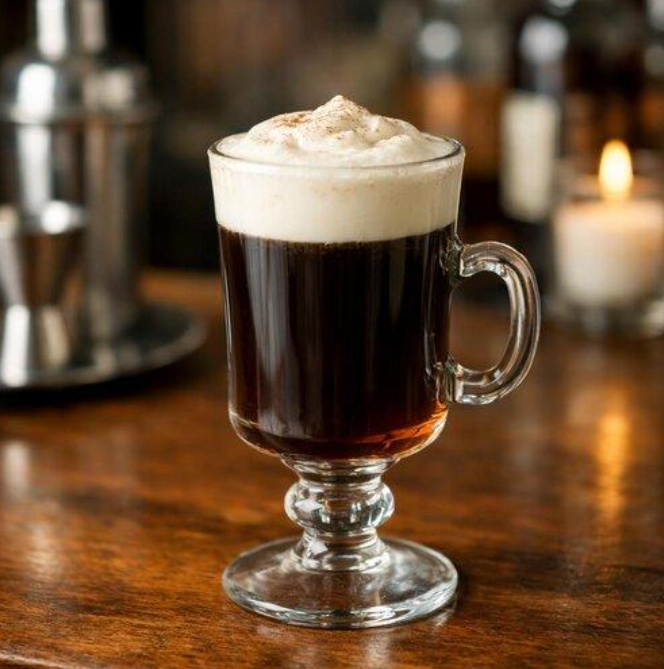
That final detail matters. The traditional experience involves sipping the hot coffee through the cool cream, creating a contrast in temperature and texture.
Irish coffee is different from a flavoured latte or a dessert-style coffee cocktail. Its identity rests on the relationship between the four core ingredients and the way they are assembled.
What makes it distinctive: Hot coffee, Irish whiskey, sugar and a separate layer of cream.
The best way to appreciate it: Serve it in a heatproof glass and float the cream gently on top. As an alcoholic drink, it is best reserved for an appropriate occasion and enjoyed responsibly.
Coffee is a language in itself.
Coffee crosses borders in ways few other everyday drinks do. Whether it is shared during a traditional ceremony, ordered at a neighbourhood café or prepared slowly at home, it creates opportunities for conversation and connection.
What These 12 Coffee Traditions Reveal
Looking across these drinks, the most interesting differences are not simply a matter of hot versus cold or black versus milky.
They reflect the many ways coffee has been adapted to local tastes and customs.
- Preparation creates identity. Turkish coffee is defined by its fine grounds and traditional brewing method, while espresso relies on pressure extraction and Vietnamese iced coffee is closely associated with its metal drip filter.
- Local ingredients change the flavour. Cardamom gives Arabic coffee its fragrance; condensed milk shapes Vietnamese iced coffee; cinnamon and piloncillo distinguish café de olla.
- Texture can be as important as taste. The foam of a Greek frappé, the cream of an Einspänner and the layers of a bicerin make the visual presentation part of the experience.
- Coffee can be a social tradition. Turkish coffee culture, Arabic coffee service and the Ethiopian coffee ceremony demonstrate how preparation and sharing can carry meaning beyond the cup itself.
These are not rigid categories. Recipes change between regions, cafés and households, and many traditions have evolved over generations. That variation is part of what makes the subject worth exploring.
How to Bring a World of Coffee into Your Own Kitchen
You don’t need specialist equipment or a cabinet full of ingredients to explore international coffee styles at home.
Begin with a few preparations that use equipment you already own. A Greek frappé can be made with instant coffee, water and ice. Vietnamese iced coffee introduces the distinctive combination of strong coffee and condensed milk. Café de olla offers a simple way to experiment with cinnamon and unrefined cane sugar.
If you prefer a more traditional approach, a small cezve opens the door to Turkish-style brewing, while a metal drip filter allows you to explore Vietnamese coffee more closely.
Presentation can also make the experience feel special. Use a small glass for layered drinks, a delicate cup for concentrated coffee or a tall glass for iced preparations. Keep the setting simple and let the drink itself take centre stage.
For ideas on turning coffee into a thoughtful gathering, read our guide to how to host the perfect afternoon coffee at home.
EDITOR’S NOTE
What I find most beautiful about coffee culture is the attention given to the details: the spices chosen, the vessel used, the way a drink is poured or the moment it is served. These small distinctions are what make familiar ingredients feel entirely different from one place to another.
Final Thoughts: One Bean, Countless Possibilities
From the compact intensity of Italian espresso to the fragrant spices of Arabic coffee, the layered indulgence of bicerin and the refreshing sweetness of Vietnamese iced coffee, each preparation offers a different perspective on a familiar drink.
Some are best understood through their technique. Others reveal their character through local ingredients, cultural history or the people who gather around them.
Together, these 12 examples show that coffee is not one universal experience. It is a collection of traditions, adaptations and personal preferences that continue to evolve.
And that may be the most appealing part of discovering coffee around the world: there is always another flavour to try, another preparation to learn and another story waiting in the next cup.
Start with a preparation you’ve never tried, discover the ingredients that make it distinctive, and perhaps find a new favourite along the way. After all, the next great coffee experience might be closer than you think.