A beautiful pair of trousers can look entirely different depending on where the hem falls. The difference might be only a few centimetres, yet that small adjustment can change the way the entire outfit comes together.
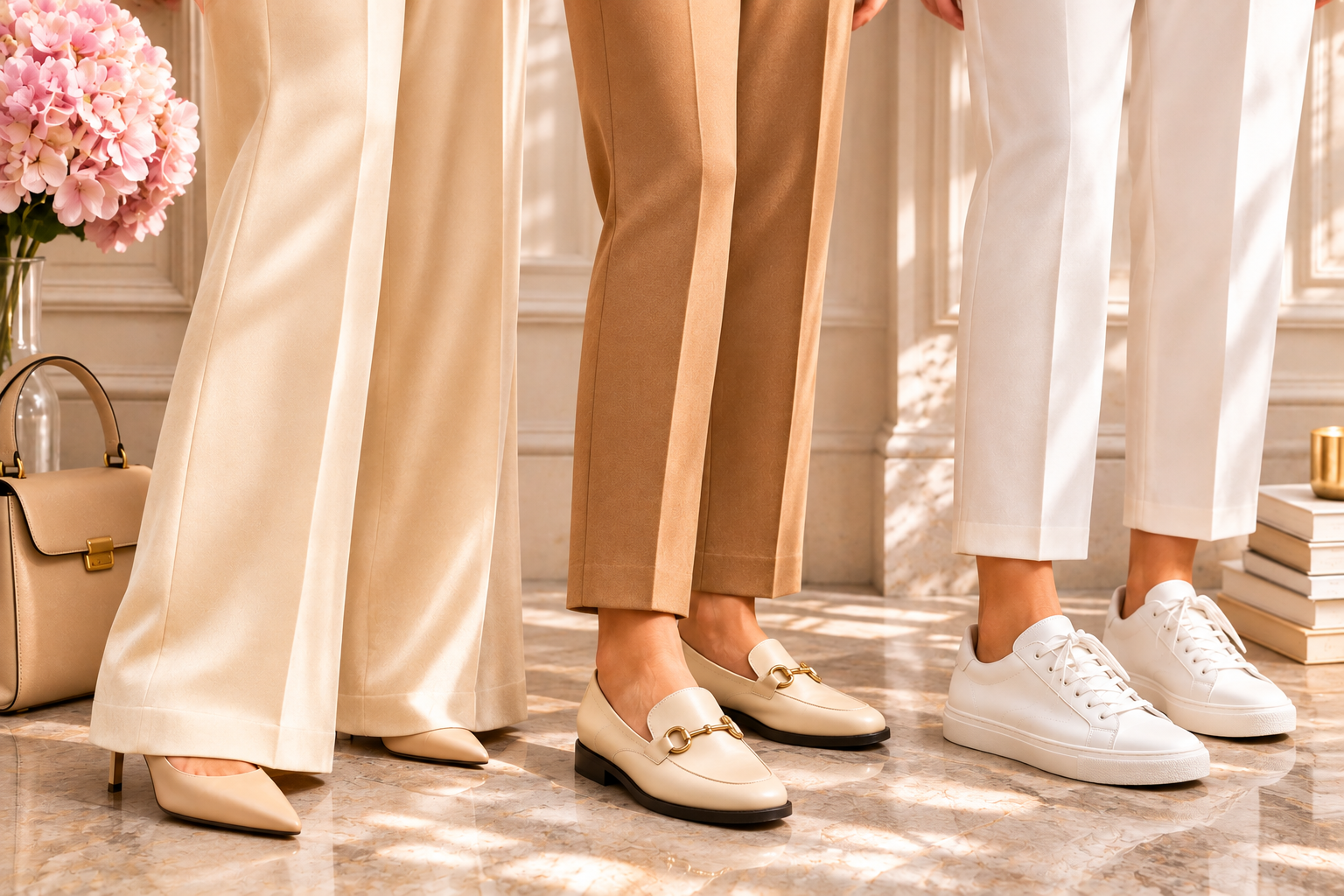
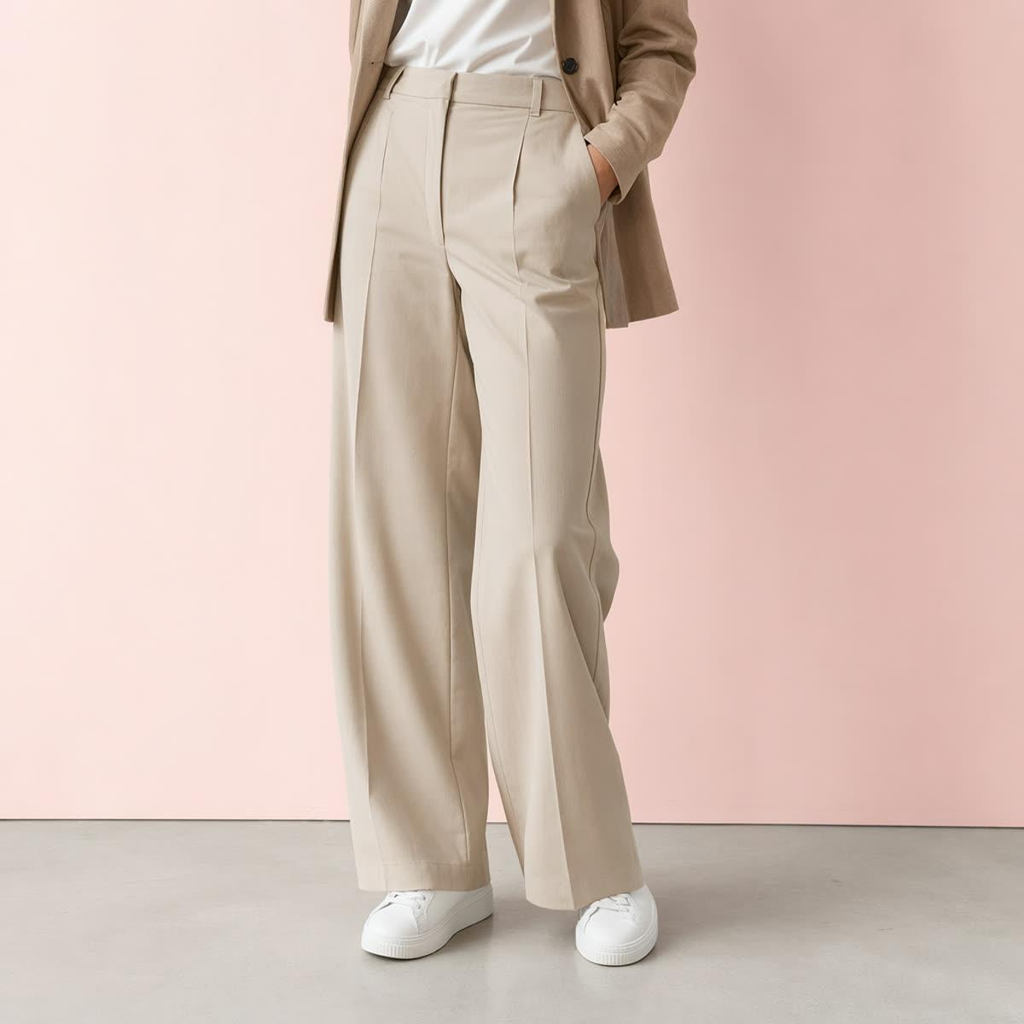
A pair of wide-leg trousers that falls gracefully over the front of a shoe creates a different impression from one that stops above the ankle. Straight-leg trousers can look particularly polished when the hem meets the shoe neatly, while a cropped silhouette makes the footwear a much more visible part of the outfit.
This is why choosing trousers shouldn’t end with finding the right fit around the waist and hips. The relationship between the hem and the shoe deserves just as much attention.
The challenge is that there isn’t one universally correct trouser length. The ideal finish depends on the cut of the trousers, the shape of the footwear, the heel height and the overall look you want to create.
A length that works beautifully with pointed-toe pumps may not be quite right with loafers or trainers. Equally, a pair of trousers that looks elegant with ankle boots might feel too short when worn with a delicate flat.
Understanding these differences makes it easier to choose, style and tailor trousers that work with the shoes already in your wardrobe.
How Trouser Length Changes the Overall Silhouette
Trouser length influences more than the appearance of the hem. It affects how the leg line meets the footwear and how the lower half of an outfit is perceived.
A longer hem can create a more continuous silhouette, particularly when the trousers and shoes work together in shape and colour. A shorter hem, on the other hand, draws attention towards the ankle and makes the footwear a more prominent feature.
Neither approach is automatically more flattering. They simply create different effects.
Consider three common finishes:
- Full-length: The hem extends towards the shoe, creating a more elongated and traditionally tailored appearance.
- Ankle-length: The trousers finish around the ankle, allowing more of the footwear to remain visible.
- Cropped: The hem sits noticeably above the ankle, making the shoe an intentional part of the outfit.
The distinction becomes particularly important when working with different trouser silhouettes. A cropped straight-leg style and a cropped wide-leg style may finish at a similar point, but their proportions can look very different.
For a broader understanding of how clothing lengths, shapes and volumes work together, explore The Ultimate Guide to Outfit Proportions: How to Balance Any Look. It offers a useful foundation for understanding why the relationship between individual pieces matters.
Understanding the Trouser Break
In tailoring, the term break describes the fold or crease that forms when the front of a trouser leg meets the shoe.
It is a small detail, but it can make a noticeable difference to the finished appearance of tailored trousers.
There are several traditional ways to approach this:
No break
The trouser hem meets the shoe with little or no visible folding of fabric. The result is a clean, sharp finish that works particularly well with contemporary tailoring and streamlined silhouettes.
Slight break
A small fold appears at the front where the trouser rests against the shoe. This offers a balanced finish that feels classic without looking overly formal.
Full break
The fabric creates a more noticeable fold over the shoe. This gives trousers a relaxed, traditional appearance, although too much excess fabric can make the hem look untidy.
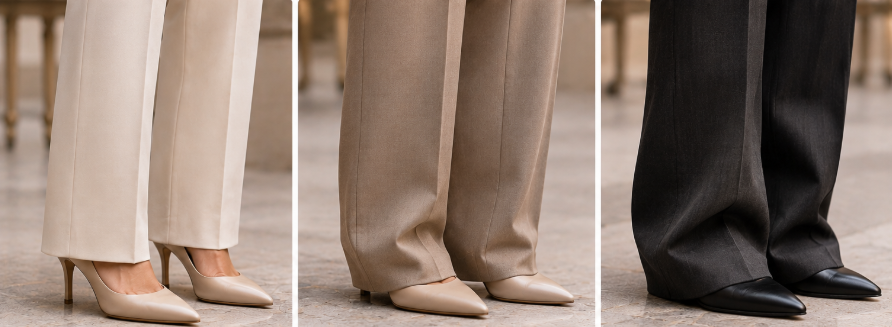
These terms are useful when discussing alterations with a tailor, but they shouldn’t be treated as strict rules. The right finish depends on the fabric, the width of the trouser leg and the footwear you intend to wear.
A pair of relaxed, wide-leg trousers will naturally behave differently from slim, sharply tailored cigarette trousers. The aim is to achieve a finish that looks deliberate rather than accidental.
What to Consider Before Choosing Your Trouser Length
Before deciding whether your trousers should finish at the ankle or fall closer to the shoe, consider how you actually intend to wear them.
A common mistake is having trousers altered while wearing one pair of shoes, only to discover that the length doesn’t work with the rest of your footwear.
A little preparation can prevent that.
Consider your usual footwear
Think about the shoes you wear most often with that particular pair of trousers. If you regularly alternate between flats and heels, you may need to decide which combination is the priority.
Pay attention to heel height
Even a modest difference in heel height can change where the hem falls. A pair of trousers that looks perfect with a mid-height heel may become noticeably longer with completely flat shoes.
Check the fabric
The weight and movement of the material affect how the hem hangs. Fluid fabrics may fall differently from structured wool, denim or heavier cotton.
Look at the trousers from every angle
Check the front, back and side rather than concentrating only on the hemline at the front. The trousers should sit neatly around the shoe without creating an awkward bunch of fabric or an uneven-looking finish.
Consider whether you need alterations
If the trousers are otherwise a good fit, a professional alteration may be all that is needed. However, it is worth discussing the desired finish with the tailor before any fabric is removed.
DID YOU KNOW?
Many tailored trousers are finished with extra fabric allowance inside the hem. This can provide room for future length adjustments, although the amount available depends on the original construction and garment design.
Why You Should Try Trousers On With the Shoes You Intend to Wear
The most reliable way to judge trouser length is to try the trousers on with the actual shoes you plan to wear.
Looking at a pair on a hanger or judging its length while barefoot can be misleading. Once you put on your footwear, the relationship between the hem, ankle and shoe changes.
If you’re shopping for trousers, take a pair of shoes with a similar shape and heel height to the ones you expect to wear. This gives you a much clearer idea of how the finished outfit will look.
If you’re having an existing pair altered, take the intended footwear to your fitting appointment. Explain whether you want the trousers to sit just above the shoe, rest lightly against it or create a more relaxed fall.
It’s also useful to consider whether you want one pair of trousers to work with several different shoes. If so, choose the footwear combination that matters most to you rather than trying to achieve an impossible length that works perfectly with every option.
For more inspiration on creating polished outfits with different types of footwear, read How to Dress Elegantly Without Wearing Heels. The guide explores how tailoring and shoe choices can work together without relying on additional height.
Good tailoring is often recognised not by what it adds, but by what it quietly puts into proportion.
Trouser Lengths to Wear with Heels
Heels offer considerable flexibility when it comes to trouser length. They can support a longer hem, add definition beneath wide-leg silhouettes and create a particularly elegant finish with tailored trousers.
Pointed-toe pumps
Pointed-toe pumps work beautifully with full-length straight-leg and wide-leg trousers. Allowing a little of the pointed toe to show beneath the hem creates a refined line without overwhelming the footwear.
For tailored trousers, a hem that falls close to the top of the shoe can look especially polished.
Slingbacks
Slingbacks are a lovely option with ankle-length and slightly cropped trousers. Their open heel and delicate straps make them more visible, so a hem that finishes around the ankle helps showcase the shoe.
They also work well with straight-leg trousers that sit just above the footwear.
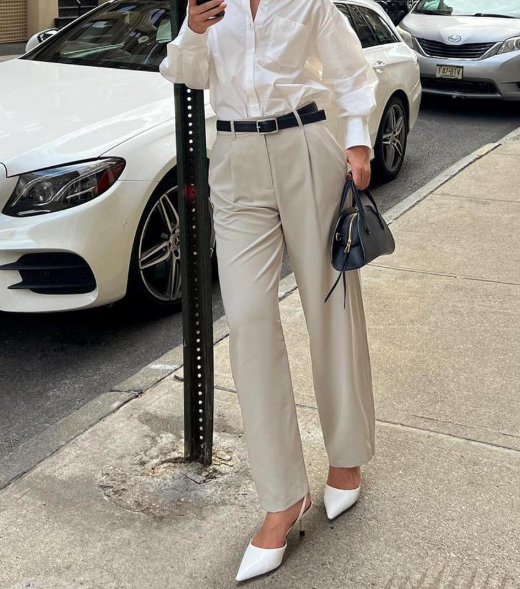
Block heels
Block heels provide a more substantial base and pair particularly well with full-length tailored trousers. They can also work with cropped styles, particularly when the shoe has a streamlined shape.
For wide-leg trousers, make sure the hem doesn’t drag along the floor or conceal the shoe entirely.
Trouser Lengths to Wear with Flats
Flat shoes can look just as polished as heels, but they often require a little more attention to the hemline.
Loafers
Loafers work particularly well with ankle-length straight-leg trousers, cigarette trousers, cropped and tailored styles that finish just above the shoe.
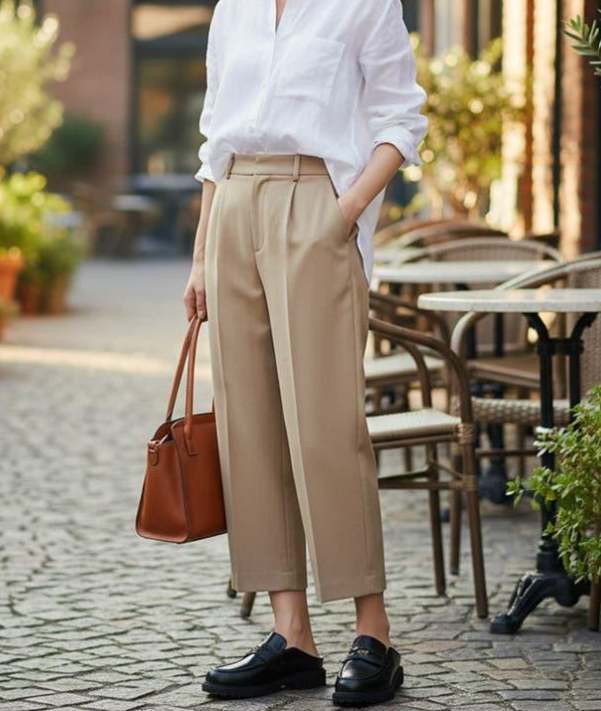
With wider trousers, a slightly longer hem can create a relaxed, contemporary silhouette, provided the fabric doesn’t overwhelm the footwear.
Ballet flats
Ballet flats have a delicate shape, making them particularly suited to cropped and ankle-length trousers. A little ankle visibility can help preserve the lightness of the outfit.
They also work well with slim or straight-leg trousers that finish neatly above the shoe.
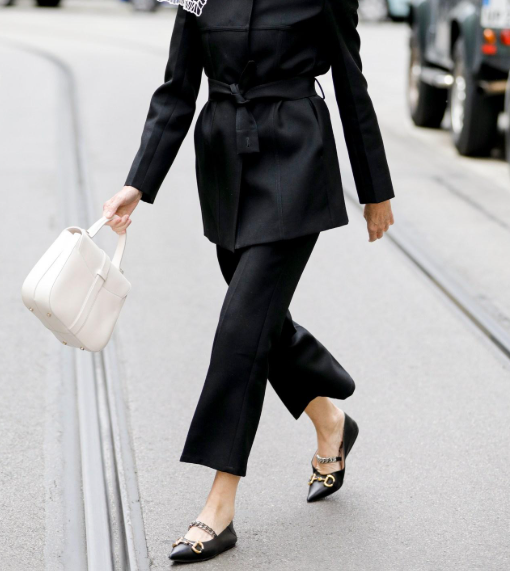
Pointed-toe flats
Pointed-toe flats offer a useful alternative to heels when you want a more elongated-looking finish. They can be paired with ankle-length tailored trousers or full-length straight-leg styles.
The pointed shape remains visible beneath a carefully finished hem, giving the outfit a refined appearance without additional heel height.
For more casual outfits, consider how the shape of the shoe balances the width of the trouser leg rather than relying on a particular length.
Trouser Lengths to Wear with Sneakers
Sneakers bring a more relaxed feel to tailored trousers and can make classic silhouettes feel considerably more contemporary.
The important consideration is the volume of the shoe.
Slim, low-profile sneakers
These work particularly well with cropped, ankle-length and straight-leg trousers. Their streamlined shape sits comfortably beneath a narrower hem and allows the ankle area to remain visible.
Chunky sneakers
Chunkier designs generally work better with trousers that have a little more volume. Straight-leg and wide-leg styles can provide a more balanced appearance than very narrow hems.
If the trousers are cropped, make sure the combination looks intentional rather than as though the hem has simply been shortened too much.
Classic leather sneakers
Minimal leather sneakers can be worn with both cropped and full-length tailored trousers. They are particularly useful when creating smart-casual outfits that combine traditional tailoring with relaxed footwear.
A neat hem and a clean shoe silhouette help keep the overall look polished.
Trouser Lengths to Wear with Ankle Boots
Ankle boots introduce another consideration: the point at which the trouser hem meets the top of the boot.
A small gap, a clean overlap or a deliberately cropped finish can all work, depending on the design of the trousers and boots.
Slim ankle boots
Slim-fitting ankle boots pair well with straight-leg and slightly cropped trousers. The narrower shape allows the hem to sit neatly without creating unnecessary bulk.
Heeled ankle boots
These can be worn with full-length straight-leg or wide-leg trousers. A longer hem that falls close to the boot creates a seamless appearance, particularly when the trousers are tailored.
Chunky ankle boots
Chunkier boots tend to work best with trousers that have a little more structure or volume. Straight-leg and wide-leg styles can balance the heavier footwear.
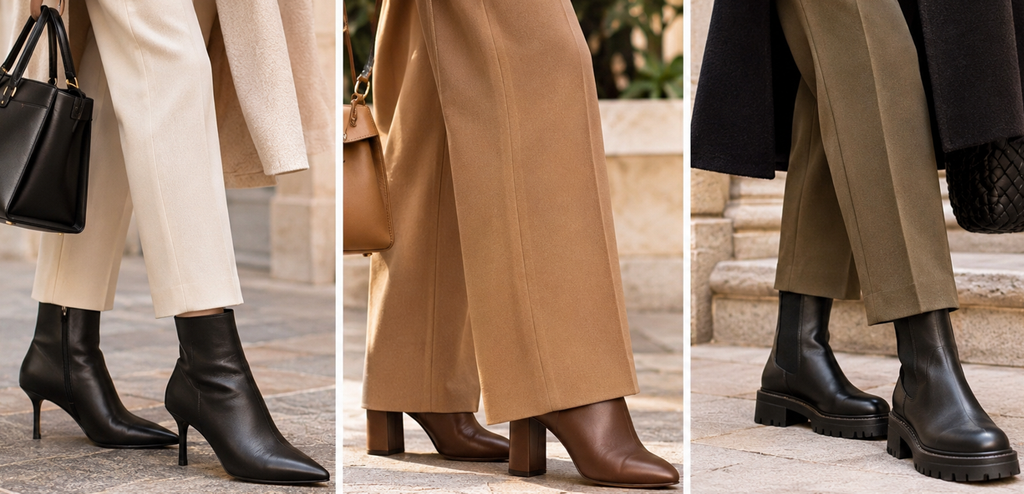
Avoid forcing a very narrow trouser hem over a bulky boot, as the fabric may bunch around the ankle.
Choosing the Right Length for Different Trouser Silhouettes
The shoe is only one part of the equation. The cut of the trousers also determines how the finished outfit looks.
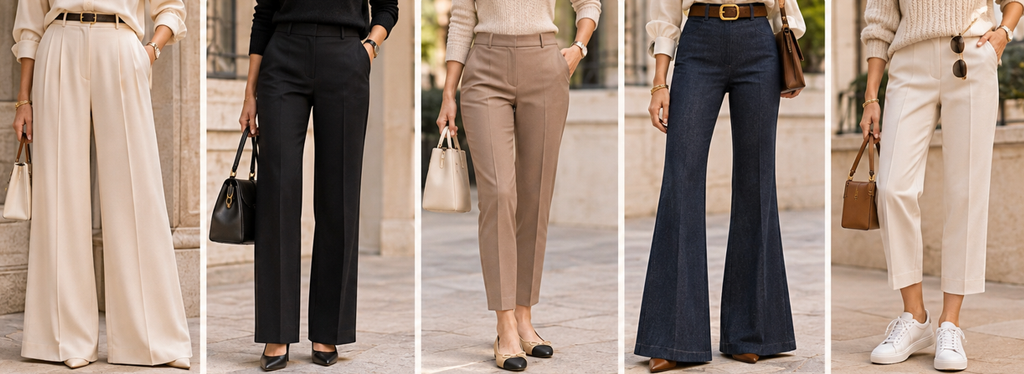
Wide-leg trousers
Wide-leg trousers usually benefit from a hem that falls towards the shoe, particularly when worn with heels or a more substantial flat. The fabric should move naturally without dragging on the ground.
With delicate flats, a slightly shorter length may be easier to manage.
Straight-leg trousers
This versatile silhouette works with several footwear styles. An ankle-length finish is particularly useful with loafers, ballet flats and low-profile sneakers, while a longer hem can work beautifully with pumps and ankle boots.
Slim and cigarette trousers
These styles generally look best when the hem finishes around the ankle or just above the shoe. Their narrower shape makes excessive fabric gathering particularly noticeable.
Flared trousers
Flared trousers are traditionally worn longer, often falling over part of the shoe. They work especially well with heels, which help maintain the intended shape and allow the hem to move freely.
If wearing flats, check that the hem doesn’t become so long that it catches beneath the shoe.
Cropped trousers
Cropped trousers are designed to reveal more of the ankle and footwear. They can be styled with loafers, ballet flats, sneakers, slingbacks and ankle boots, although the exact finish will depend on where the hem sits in relation to the shoe.
Common Trouser-Length and Shoe Pairing Mistakes
Even a well-chosen outfit can lose some of its polish when the hem and footwear don’t work together.
Here are a few details worth checking:
- Trousers dragging on the floor: Excessively long hems can become worn, dirty or caught beneath the shoe.
- Too much fabric gathering: A heavy fold around the ankle can make otherwise elegant trousers look untidy.
- A cropped hem that feels accidental: If the trousers stop at an awkward point, the length may not look intentional with the footwear.
- Ignoring the volume of the shoe: Very delicate flats and particularly chunky footwear create different visual effects and may need different trouser cuts.
- Altering trousers for only one occasion: If you regularly wear the same trousers with different shoes, consider this before deciding on a permanent hem length.
- Overlooking the back of the hem: A trouser length that looks good from the front may still drag or bunch at the back.
The goal is not to follow a rigid set of fashion rules. It is to notice when the relationship between the fabric and footwear looks considered.
STYLE TIP
When trying on trousers, photograph the outfit from the front and side while wearing the intended shoes. A photograph can make uneven hems, excess fabric and awkward proportions easier to spot than looking down at your own reflection.
How to Build a More Versatile Trouser Wardrobe
If you regularly wear several different types of shoes, it is worth thinking about versatility when choosing new trousers.
Rather than expecting every pair to work with every shoe in your wardrobe, identify the combinations you wear most often.
A pair of tailored straight-leg trousers might become your most versatile option, working with loafers during the day, pointed-toe pumps for a more formal occasion and clean sneakers for a relaxed weekend look.
Wide-leg trousers may be better suited to your preferred heels or substantial flats, while cropped styles can be particularly useful with ballet flats and ankle boots.
It can also be helpful to keep one pair of trousers specifically for a particular shoe combination. There is nothing wrong with having a favourite pair that works perfectly with your preferred heels, even if the length isn’t suitable for every other shoe.
The most useful wardrobe is not necessarily the one in which every item works with everything. It is the one in which your favourite pieces have a clear purpose and can be worn with confidence.
EDITOR’S NOTE
A beautifully finished outfit rarely depends on following every trend. The most successful combinations are often the ones that feel natural to your personal style, suit the occasion and allow you to move comfortably throughout the day.
Final Thoughts – The Finishing Touch That Makes a Difference
The relationship between trousers and shoes may seem like a small styling consideration, but it can change the entire character of an outfit.
A carefully finished hem can make tailoring look more intentional, allow a beautiful pair of shoes to stand out and bring greater harmony to the overall silhouette.
Rather than searching for one perfect trouser length, consider the cut of the trousers, the shape of the footwear and the way you intend to wear them.
Sometimes the difference between an outfit that looks almost right and one that feels completely polished comes down to a simple alteration.
And that is precisely why the details are worth getting right.