A European Christmas market is more than a collection of seasonal stalls. At its best, it offers a glimpse into the traditions, food and craftsmanship that shape the festive season in a particular city.
The custom has deep roots in Central Europe. Seasonal markets developed from winter gatherings where people bought provisions, gifts and practical goods before Christmas. Over the centuries, these gatherings evolved into celebrations featuring handmade decorations, regional delicacies, music and festive entertainment.
Today, the experience varies considerably from one destination to another. Some markets are known for centuries-old traditions and traditional wooden stalls. Others take place against the backdrop of royal palaces, medieval architecture or spectacular city squares. In Alpine destinations, mountain scenery adds another dimension to the atmosphere.
That variety is precisely what makes a Christmas market trip so appealing. You can spend one evening tasting regional specialities in a historic square, another browsing artisan decorations, and the next exploring a city’s museums, cafés and cultural landmarks.
For this guide, we have selected 12 destinations in 12 different countries. Rather than presenting several markets from the same country, each destination offers a different perspective on European Christmas traditions.
1. Strasbourg, France — Discover the Heritage of the Christmas Market
Strasbourg has earned its reputation as one of Europe’s most celebrated Christmas destinations, and its appeal goes beyond the impressive festive decorations. The Alsatian capital has a long-standing connection with the Christmas market tradition, giving its celebrations a particularly strong sense of history.
The city’s Christkindelsmärik dates back to 1570 and is traditionally associated with Place Broglie. Today, festive markets extend across several central squares, with Strasbourg Cathedral and the historic streets of the Grande Île providing an extraordinary setting.
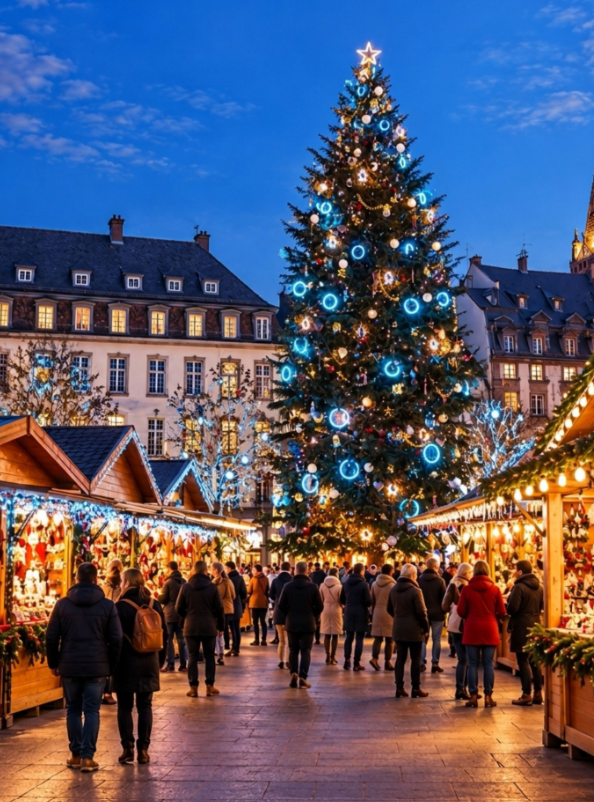
One of the most distinctive features of Strasbourg at Christmas is its Alsatian character. The region’s architecture, food and decorative traditions reflect a cultural history influenced by both France and Germany. This is particularly evident in the timber-framed buildings, traditional ornaments and seasonal specialities found throughout the Old Town.
What to look for
- Place Broglie: the historic setting associated with the Christkindelsmärik.
- Strasbourg Cathedral: one of the city’s most recognisable landmarks, surrounded by festive activity.
- Petite France: a picturesque neighbourhood of timber-framed houses, canals and narrow streets.
- Alsatian specialities: look for bredele, traditional Christmas biscuits, and pain d’épices, a fragrant spiced bread.
Strasbourg is especially appealing to visitors interested in traditional European Christmas customs. Its market experience is closely connected to the city’s identity rather than being simply a seasonal attraction added for tourists.
Best for: Traditional Christmas atmosphere, Alsatian food and historic architecture.
For official visitor information, explore Strasbourg’s Capital of Christmas.
DID YOU KNOW?
Strasbourg’s famous Christmas tree is traditionally displayed in Place Kléber, not beside the cathedral. The square becomes one of the city’s main festive meeting points, with an impressive illuminated tree at its centre.
2. Vienna, Austria — Christmas Markets in an Imperial Setting
Vienna offers a more grand and architectural interpretation of the Christmas season. The Austrian capital is known for its imperial palaces, classical music and elegant cafés, and its Christmas markets make particularly beautiful use of these surroundings.
The Vienna Christmas Market at Rathausplatz is among the city’s most recognisable festive attractions. Set in front of the Neo-Gothic City Hall, it combines traditional stalls, seasonal food and decorative displays in one of Vienna’s most impressive public spaces.
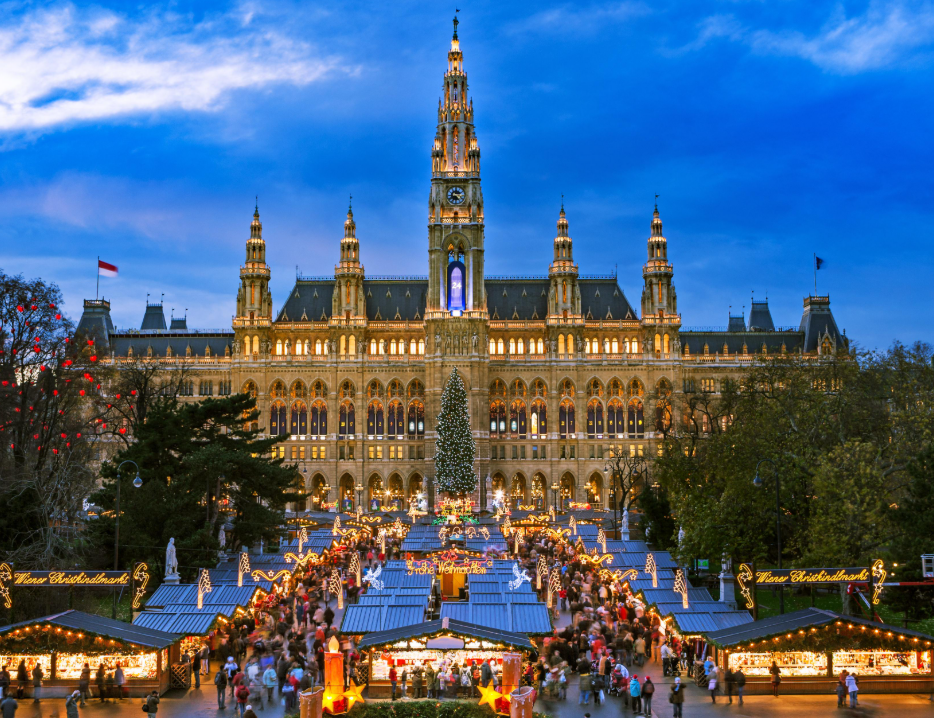
For a different setting, the Christmas market at Schönbrunn Palace offers an opportunity to experience the festive season in front of the former imperial summer residence. The palace’s grand façade provides a dramatic backdrop, while the market places greater emphasis on traditional crafts, seasonal gifts and Austrian specialities.
What to look for
- Rathausplatz: the grand City Hall setting and one of Vienna’s best-known Christmas markets.
- Schönbrunn Palace: a festive market framed by imperial architecture.
- Austrian seasonal baking: try Vanillekipferl, crescent-shaped vanilla biscuits, and traditional gingerbread.
- Viennese coffee houses: make time for a coffee and cake in one of the city’s traditional cafés.
Vienna is also a destination where the Christmas market experience can easily become part of a wider cultural holiday. Visitors can combine festive shopping with concerts, museums, historic cafés and the city’s celebrated architecture.
Best for: Elegant festive surroundings, palace settings and a Christmas city break with culture.
3. Nuremberg, Germany — Experience a Classic German Christmas Market
Germany has a particularly strong Christmas market tradition, but Nuremberg’s Christkindlesmarkt stands out for its distinctive customs and carefully preserved atmosphere.
Held in the Hauptmarkt, the city’s central square, the market is recognised for its traditional red-and-white striped stalls, handcrafted decorations and regional food. Its setting among the historic buildings of the Old Town gives it a character that feels closely connected to the city’s past.
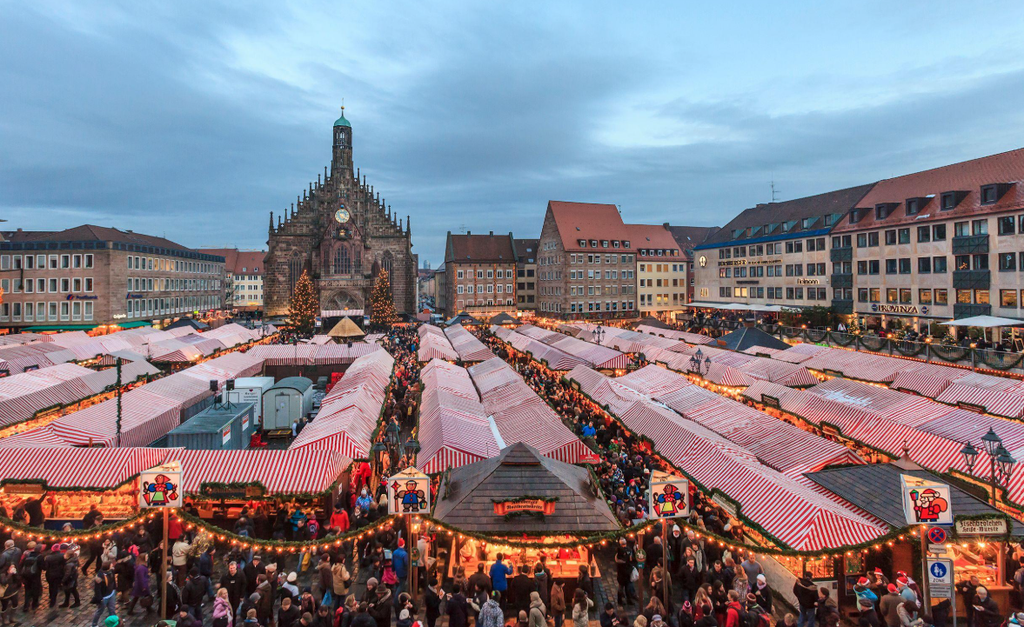
One of the market’s defining traditions is its ceremonial opening by the Christkind, a symbolic Christmas figure who delivers a prologue from the gallery of the Church of Our Lady. The occasion marks the beginning of the festivities and is an important part of Nuremberg’s seasonal identity.
What to look for
- Christkindlesmarkt: the main market in the Hauptmarkt, surrounded by historic architecture.
- The Christkind opening ceremony: a long-standing festive tradition.
- Nürnberger Rostbratwürste: small grilled sausages traditionally served in a bread roll.
- Nürnberger Lebkuchen: the city’s famous spiced gingerbread, often presented in decorative tins.
Nuremberg is particularly interesting for travellers who want to understand the traditions behind German Christmas markets. Its food specialities and ceremonial customs give the visit a stronger local identity than a market based primarily on seasonal shopping.
Best for: Traditional German Christmas culture, regional food and handcrafted decorations.
For market information, visit Tourism Nuremberg’s Christkindlesmarkt guide.
4. Prague, Czech Republic — A Christmas Market Beneath Gothic Towers
Prague’s Old Town is one of Europe’s most atmospheric historic centres, and the Christmas season makes its architectural character even more striking.
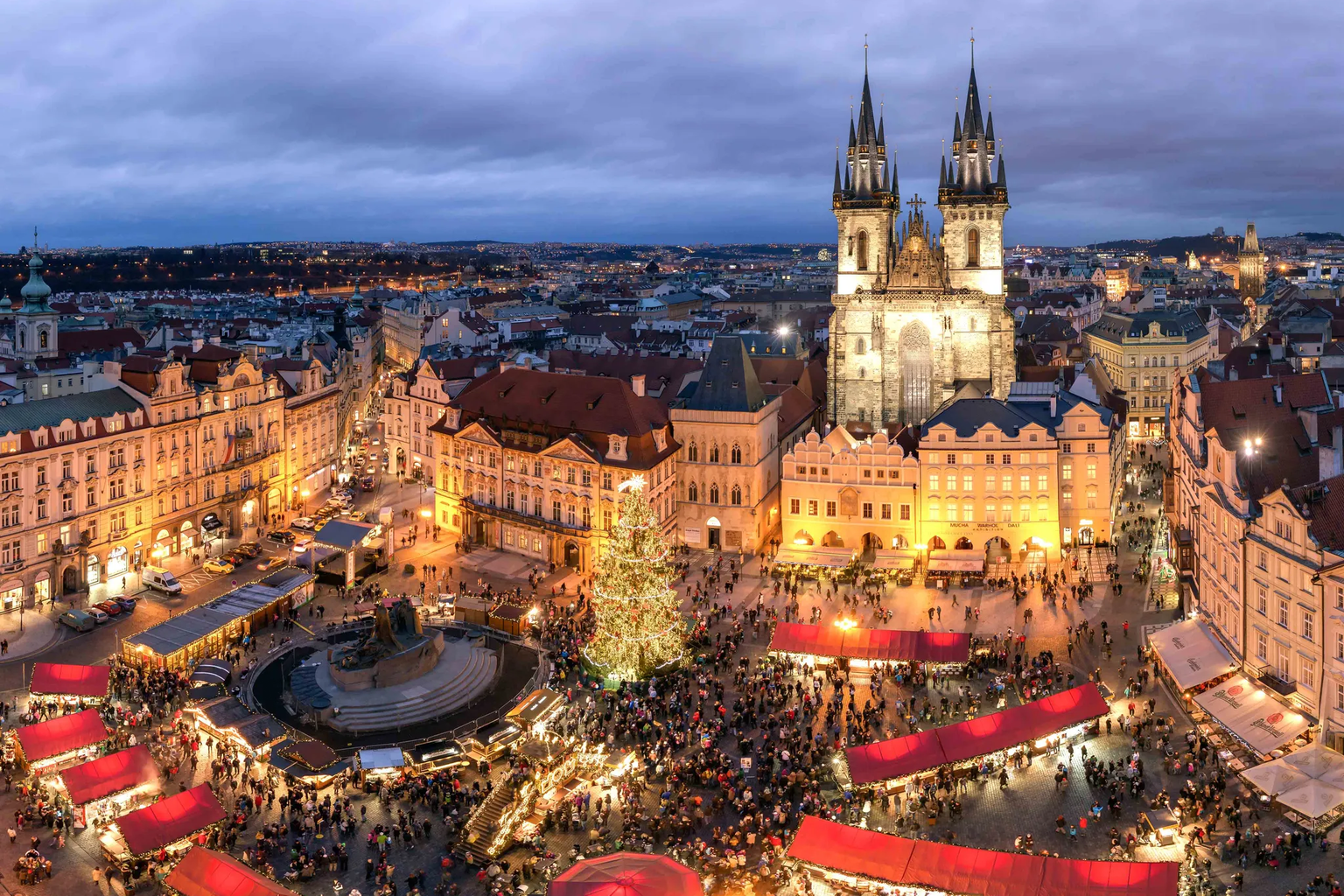
The main Christmas market takes place in Old Town Square, where decorated stalls sit beneath the towers of the Church of Our Lady before Týn. A large Christmas tree becomes the focal point, while the surrounding historic buildings create an unmistakable setting.
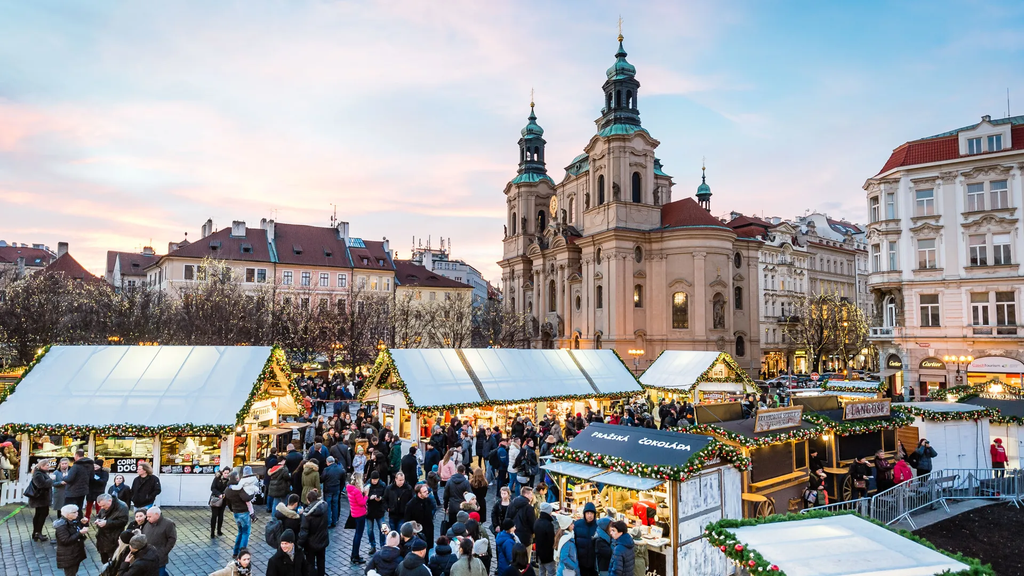
Wenceslas Square hosts another major market, giving visitors a second central location to explore. Both squares are within reach of Prague’s principal historic attractions, making it easy to combine market visits with sightseeing.
What distinguishes Prague is the way its festive markets fit into the wider experience of the city. The market is not isolated from its surroundings: the Astronomical Clock, Charles Bridge, historic lanes and riverside views all contribute to the appeal of a winter visit.
What to look for
- Old Town Square: the main festive setting, with the Christmas tree and historic architecture.
- Wenceslas Square: another central market location, surrounded by shops and city landmarks.
- Czech Christmas treats: look for perníčky, decorated gingerbread biscuits, and trdelník, a sweet pastry cooked over a rotating spit.
- Traditional crafts: wooden decorations, glass ornaments and ceramics make distinctive souvenirs.
Prague is a particularly attractive choice for couples and travellers who enjoy historic cities. Its compact centre makes it possible to explore several major sights on foot, although comfortable shoes are essential on the cobbled streets.
Best for: Romantic winter city breaks, historic architecture and traditional Czech festive treats.
The official Prague City Tourism Christmas Markets guide provides information about the city’s market locations.
5. Budapest, Hungary — Festive Lights, Local Food and Thermal Baths
Budapest offers a Christmas market experience with a different combination of attractions. The Hungarian capital is known for its monumental architecture and riverside setting, but it also has something that makes a winter visit particularly appealing: its thermal-bath culture.
One of the city’s best-known festive events is Advent Basilica, held in the square in front of St Stephen’s Basilica. Its location gives the market an impressive architectural backdrop, while light projections and seasonal decorations add to the evening atmosphere.
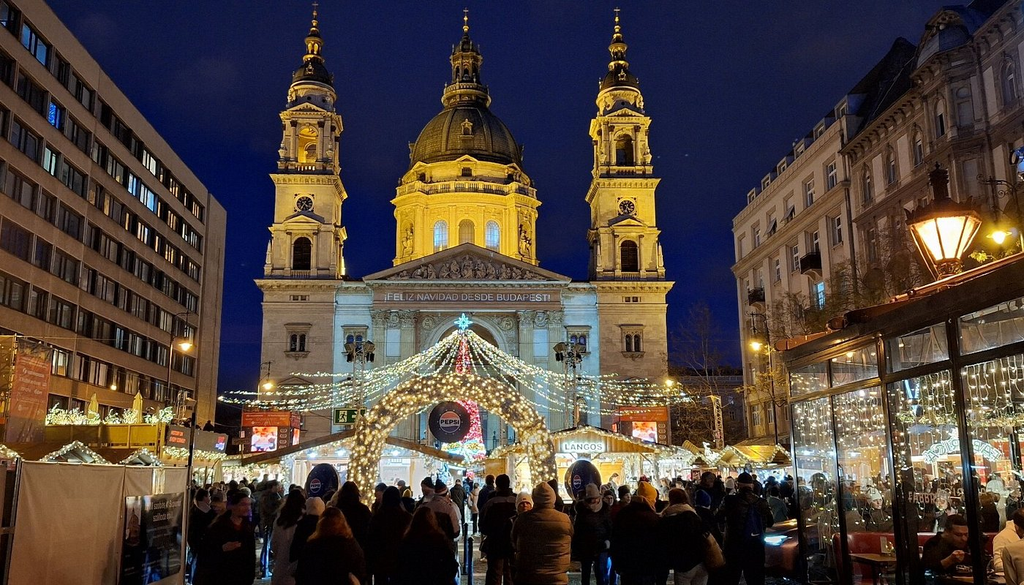
The market brings together food stalls, artisan products and festive entertainment. It is a particularly good place to discover Hungarian seasonal specialities rather than simply browsing familiar international Christmas gifts.
What to look for
- Advent Basilica: a festive market in front of St Stephen’s Basilica, known for its illuminated setting.
- Kürtőskalács: chimney cake, a sweet pastry baked until golden and coated with sugar or other toppings.
- Lángos: a traditional fried dough speciality, often served with savoury toppings.
- Hungarian artisan products: look for handmade decorations and locally produced gifts.
A major advantage of choosing Budapest is the opportunity to combine the Christmas market with one of the city’s thermal baths. A visit to the Széchenyi Thermal Bath, for example, offers a very different experience from the evening market atmosphere. Its outdoor pools are particularly distinctive in colder weather.
Best for: Travellers who want to combine Christmas markets, Hungarian cuisine, architecture and thermal-bath experiences.
EDITOR’S NOTE
A beautiful Christmas escape isn’t measured by how many markets you visit, but by the moments you take the time to enjoy. Choose a destination that captures your imagination, and let the season unfold at its own pace.
6. Bolzano, Italy — An Alpine Christmas in South Tyrol
Bolzano offers one of Italy’s most distinctive Christmas market experiences, thanks to its location in South Tyrol, where Italian and Alpine cultures meet.
The city’s main market takes place in Piazza Walther, a central square framed by historic buildings and the Gothic cathedral. During the festive season, wooden chalets showcase local crafts, decorations and regional food. The surrounding streets add to the atmosphere, with traditional architecture and mountain scenery giving the city a distinctly Alpine identity.
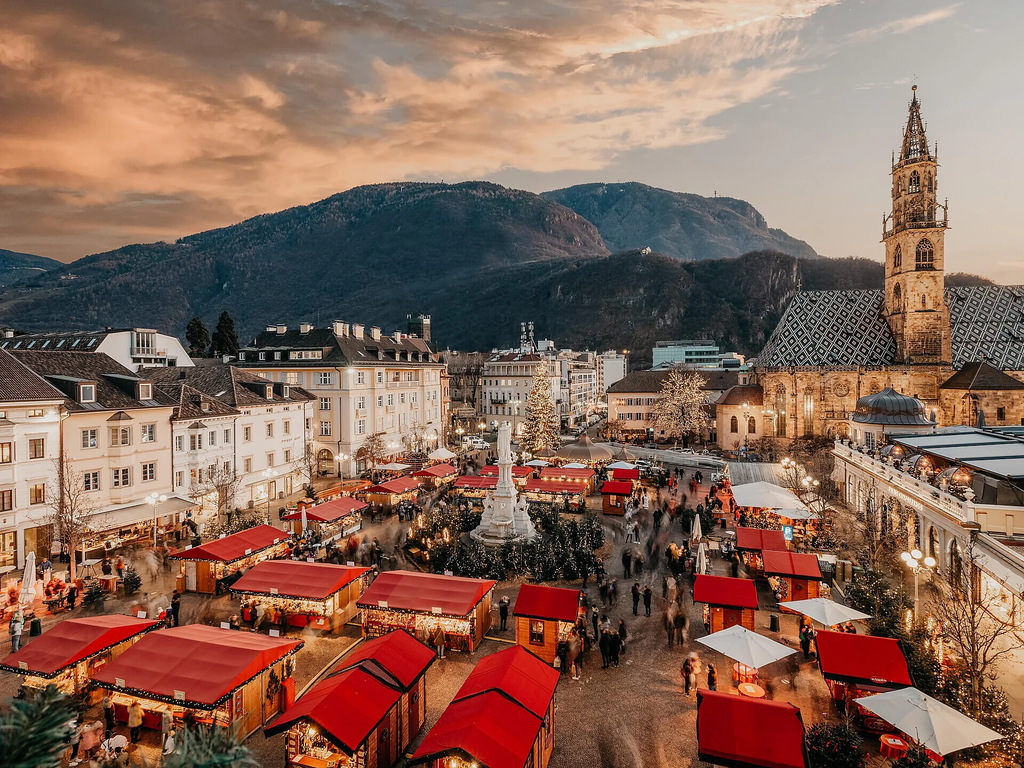
Unlike some larger European markets, Bolzano’s appeal is closely tied to its regional character. The stalls offer an opportunity to discover South Tyrolean craftsmanship, including felt and wool products, wooden objects and seasonal decorations.
Food is another highlight. Look for Speck (a smoked and cured ham associated with South Tyrol), apple strudel, traditional biscuits and local wines. These regional specialities reflect the area’s culinary traditions and make the market an excellent place to discover something beyond the usual festive treats.
What to look for
- Piazza Walther: the main Christmas market, with its decorated stalls and cathedral setting.
- South Tyrolean crafts: woollen accessories, wooden decorations and handmade gifts.
- Regional food: Speck, apple strudel, traditional biscuits and local wines.
- The surrounding mountains: a beautiful Alpine backdrop that makes Bolzano particularly appealing for a winter break.
Bolzano is also a good base for discovering more of South Tyrol. Visitors with additional time can explore the surrounding villages and mountain scenery, although winter transport and weather conditions should be considered when planning excursions.
Best for: Alpine scenery, regional food and a Christmas market with a strong local identity.
Official information is available through Bolzano’s Christmas Market guide.
7. Bruges, Belgium — A Medieval City Transformed for Winter
Bruges has a naturally romantic atmosphere, with its medieval streets, historic buildings and canals. During the festive season, the Belgian city becomes an especially appealing destination for a winter city break.
The Christmas markets form part of Bruges’ wider Winter Glow programme. Festive stalls are traditionally found around the Markt and other central locations, allowing visitors to explore the city’s historic centre while browsing seasonal gifts and food.
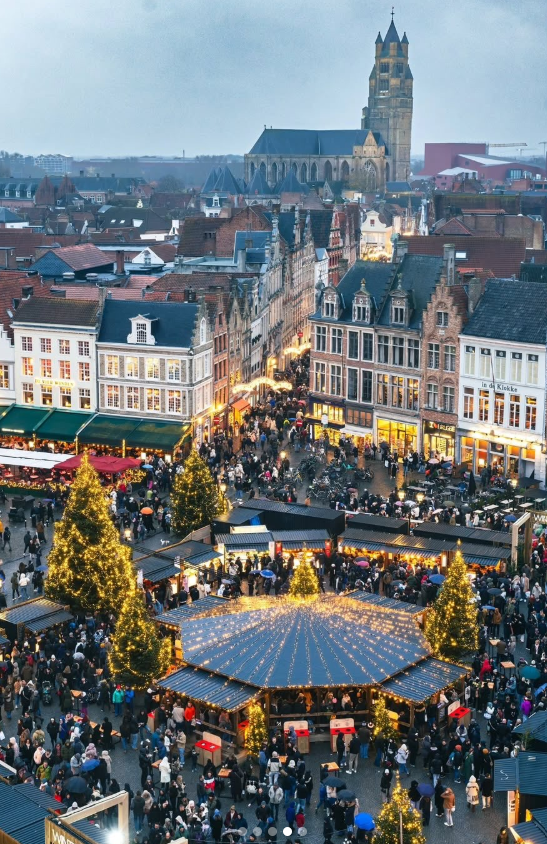
What makes Bruges different from many other destinations is the combination of its Christmas celebrations with its architecture and canals. The experience is not limited to one square. A walk through the illuminated streets, past the historic façades and along the water, is an attraction in itself.
What to look for
- The Markt: Bruges’ central square, surrounded by historic buildings and the Belfry.
- The Burg: another beautiful historic square, worth including in a walking route.
- Belgian chocolate: discover specialist chocolatiers and beautifully presented seasonal creations.
- Waffles and winter treats: ideal for a relaxed stop between exploring the market and the Old Town.
Bruges is compact enough to explore on foot, making it particularly suitable for a long weekend. Visitors can combine the Christmas market with the city’s museums, independent shops and traditional restaurants without needing an elaborate transport plan.
Best for: Romantic winter escapes, medieval architecture and Belgian chocolate.
For current visitor information, consult Visit Bruges’ Christmas Markets guide.
8. Copenhagen, Denmark — Nordic Christmas at Tivoli Gardens
Copenhagen offers a festive experience shaped by Scandinavian design and the Danish idea of hygge: a feeling of warmth, comfort and togetherness.
The highlight is Christmas at Tivoli Gardens. One of the world’s oldest amusement parks, Tivoli takes on a completely different atmosphere during the festive season. Trees, lights and seasonal decorations transform the gardens, while the park’s attractions and food stalls create an experience that goes beyond a traditional Christmas market.
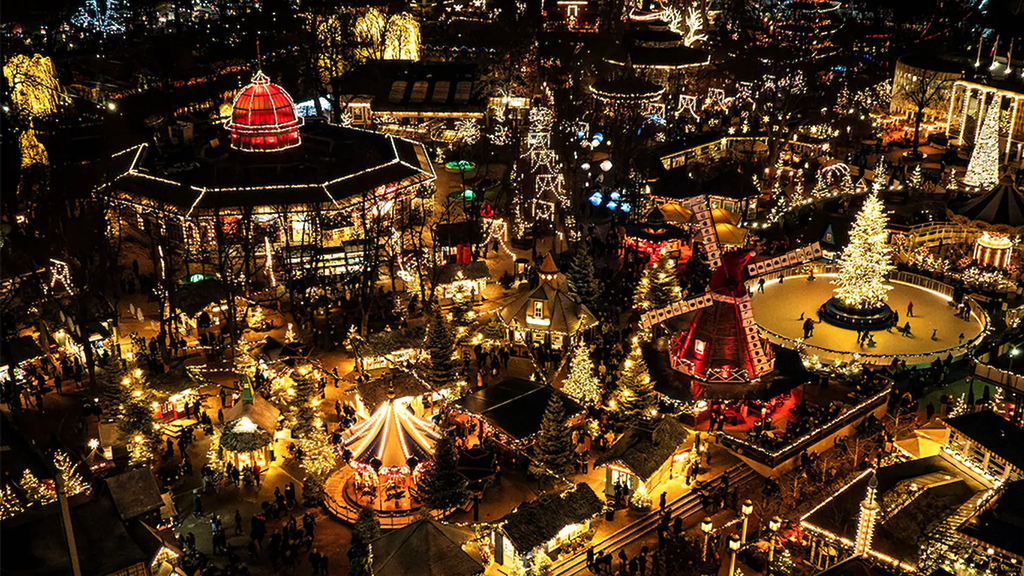
The setting is particularly appealing after dark, when the illuminated gardens create a warm contrast with the winter sky. Visitors can browse festive stalls, enjoy seasonal treats and explore the park’s attractions in one visit.
What to look for
- Tivoli Gardens: the main festive attraction, with decorations, entertainment and seasonal stalls.
- Æbleskiver: small, round Danish pancake-like treats, traditionally served with jam and icing sugar.
- Gløgg: a warm spiced drink associated with the Scandinavian Christmas season.
- Danish Christmas traditions: look out for seasonal decorations, handcrafted gifts and festive food.
Copenhagen is also a destination worth exploring beyond Tivoli. Its design shops, cafés, waterfront areas and contemporary architecture offer a different perspective on the city.
Best for: Scandinavian Christmas atmosphere, festive lights and a family-friendly winter experience.
9. Tallinn, Estonia — A Medieval Christmas Fairytale
Tallinn’s Christmas market has a setting that feels almost made for the festive season. Its medieval Old Town, with cobbled streets, historic merchant houses and defensive towers, provides a distinctive backdrop for winter celebrations.
The market takes place in Town Hall Square, known locally as Raekoja plats. Its central Christmas tree is the focal point, surrounded by wooden market huts selling local crafts, decorations, food and seasonal gifts.
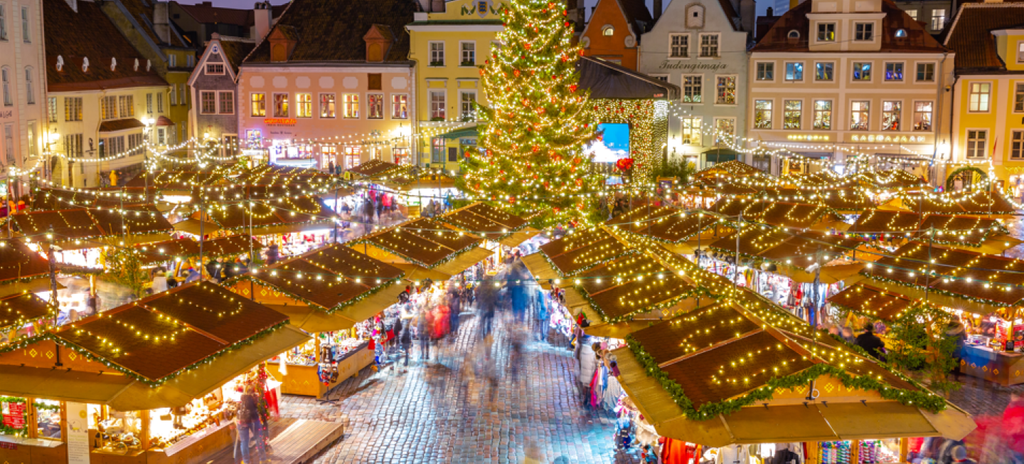
Tallinn has a particularly interesting connection to Christmas tree history. The city is often associated with one of Europe’s earliest public Christmas tree traditions, dating back to the fifteenth century. Historical interpretations of the first decorated public tree vary, so the claim is best understood as part of Tallinn’s long-standing festive heritage rather than an uncontested record.
What to look for
- Town Hall Square: the heart of the Christmas market, surrounded by medieval architecture.
- Estonian handicrafts: woollen accessories, handmade decorations and local design.
- Traditional food: seasonal dishes, gingerbread and warming drinks.
- The Old Town: historic viewpoints, churches and atmospheric streets that are particularly beautiful in winter.
Tallinn is a strong choice for travellers looking for a different kind of Christmas market destination. Its smaller historic centre and distinctive Baltic atmosphere offer a contrast to the grand squares of Vienna or the larger markets of Germany.
Best for: Medieval surroundings, local crafts and a distinctive Baltic winter experience.
For visitor information, see the official Tallinn Christmas Market website.
10. Zagreb, Croatia — Discover the Atmosphere of Advent Zagreb
Zagreb‘s festive celebrations, known as Advent Zagreb, are spread across several locations in the Croatian capital. Rather than concentrating everything in a single market square, the event creates a series of festive spaces throughout the city centre.
This makes Zagreb particularly interesting for visitors who enjoy exploring different neighbourhoods and discovering new settings along the way.
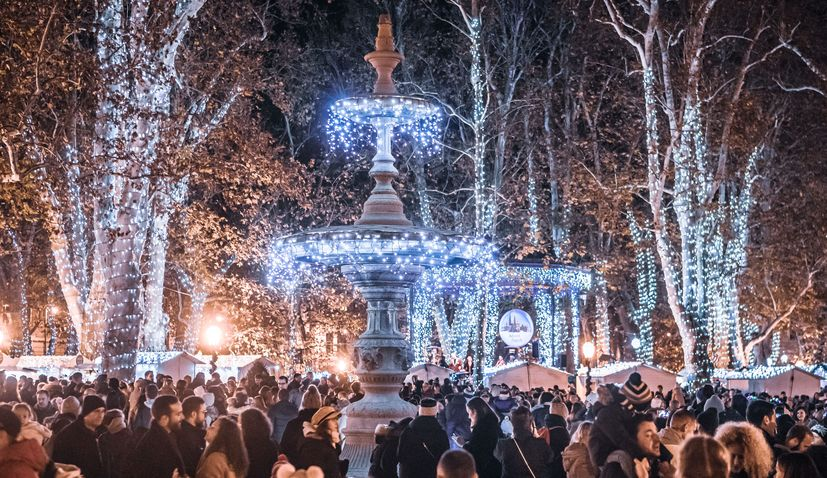
Ban Jelačić Square is one of the central locations, while Zrinjevac Park is especially atmospheric during the festive season. Its tree-lined paths, illuminated decorations and seasonal stalls create a setting that feels quite different from a traditional market surrounded by historic buildings.
King Tomislav Square has also been an important part of Advent Zagreb, with its festive programme and seasonal attractions.
What to look for
- Zrinjevac Park: a beautifully decorated setting with illuminated trees and festive stalls.
- Ban Jelačić Square: a central meeting point for the city’s seasonal celebrations.
- King Tomislav Square: traditionally associated with winter activities and festive entertainment.
- Fritule: small fried dough balls, often flavoured with citrus or other seasonal ingredients.
Zagreb’s appeal lies in the variety of its Advent programme. Visitors can move between different locations, enjoy local food and discover the city’s cafés, architecture and cultural attractions along the way.
Best for: A lively festive city break, multiple market locations and Croatian seasonal food.
For current information, visit the official Advent Zagreb website.
11. Edinburgh, United Kingdom — A Scottish Christmas in a Dramatic Setting
Edinburgh offers a particularly striking backdrop for Christmas celebrations. Its historic Old Town, elegant Georgian New Town and imposing castle give the Scottish capital a strong sense of character throughout the year, but the festive season adds another layer of atmosphere.
The main traditional Christmas market is held in East Princes Street Gardens, with the Scott Monument and the city’s historic skyline providing a distinctive setting. Other festive activities take place across the city centre, creating a wider seasonal programme beyond the market itself.
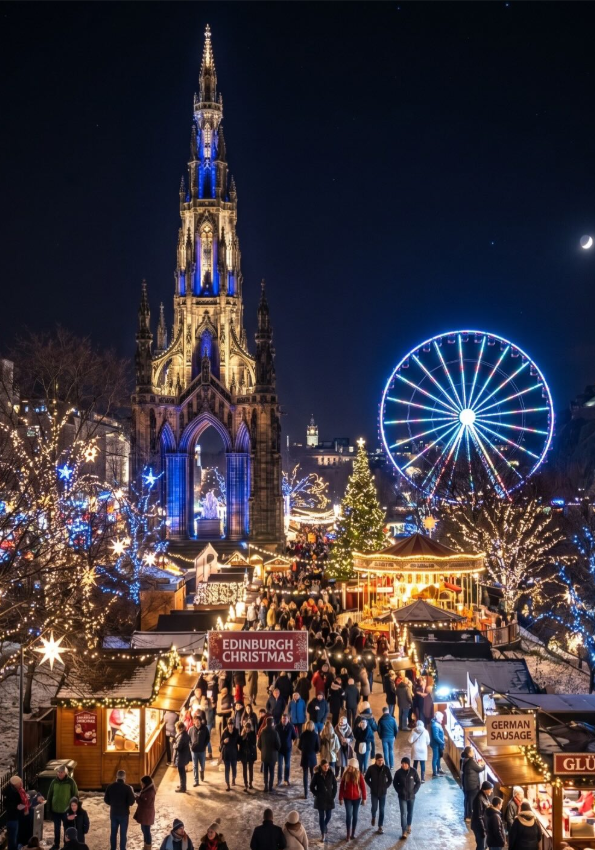
Edinburgh is particularly appealing because it combines a festive market visit with a wealth of cultural attractions. Visitors can discover the city’s literary heritage, visit museums and galleries, or enjoy the independent shops and cafés around the Old Town and New Town.
What to look for
- East Princes Street Gardens: the traditional Christmas market setting.
- Scott Monument: a striking landmark overlooking the gardens.
- Edinburgh Castle: an iconic feature of the city’s skyline.
- Scottish seasonal treats: look for shortbread, traditional baked goods and warming winter dishes.
A visit to Edinburgh can also include a walk along the Royal Mile, a stop at a traditional pub or an afternoon exploring the city’s historic architecture. This makes it a particularly rewarding destination for travellers who want more than a market-focused trip.
Best for: Scottish festive traditions, historic landmarks and a Christmas city break with plenty of cultural experiences.
For visitor information, see Edinburgh’s official Christmas guide.
12. Riga, Latvia — A Baltic Christmas in the Old Town
Riga completes our journey through 12 European countries. Latvia’s capital offers a different kind of festive setting, combining historic architecture, traditional crafts and the atmosphere of a Baltic winter.
The Christmas market is traditionally held in Dome Square, in the heart of the Old Town. The square is surrounded by historic buildings, with Riga Cathedral providing a memorable backdrop for the seasonal stalls.
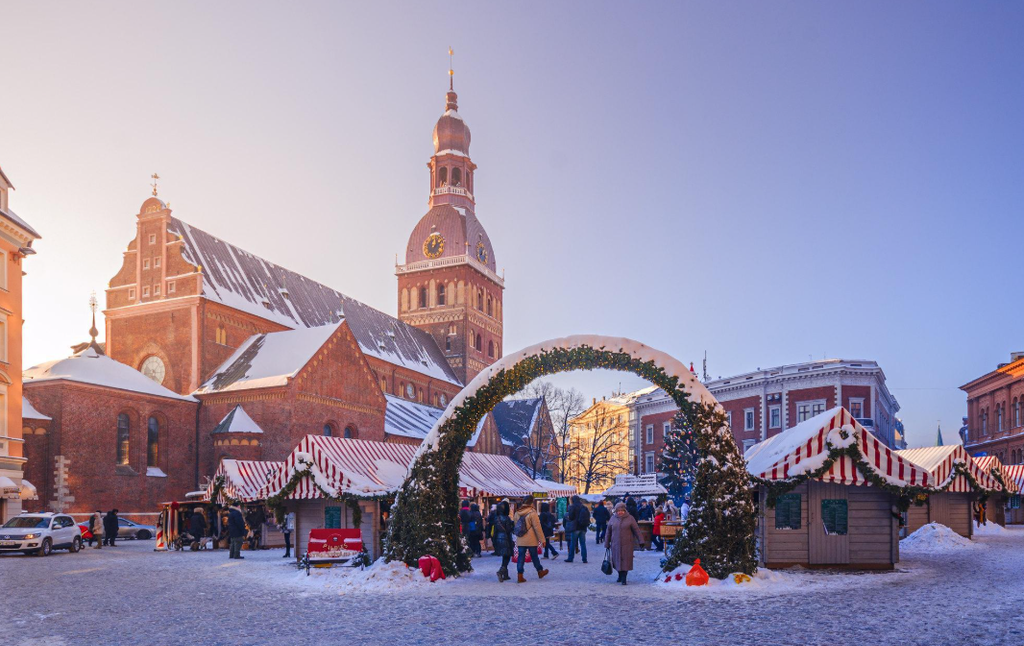
Riga’s festive atmosphere is particularly appealing to travellers who prefer discovering destinations that are slightly less familiar. Its Old Town is compact and rewarding to explore, with cobbled streets, historic churches and architectural details that give the city a distinctive character.
What to look for
- Dome Square: the traditional setting for Riga’s central Christmas market.
- Latvian handicrafts: handmade decorations, woollen products and locally produced gifts.
- Seasonal food: traditional baked goods and warming winter specialities.
- Riga Old Town: historic streets and architecture that are especially atmospheric in winter.
Riga is also associated with the history of public Christmas trees. The city commemorates an early decorated tree tradition, although historical claims about the first public Christmas tree are debated. It remains an interesting element of Riga’s festive identity.
Best for: A less conventional European Christmas destination, Baltic traditions and historic architecture.
Christmas is not only found in the decorations or the gifts, but in the traditions, flavours and small moments that make a place feel special.
When Is the Best Time to Visit Europe’s Christmas Markets?
Most European Christmas markets open during the second half of November or towards the beginning of December, but there is no single calendar followed by every city.
The best time to visit depends on the atmosphere you want, the market’s opening schedule and whether you plan to travel before or after Christmas.
Late November: The Start of the Festive Season
Late November is a good option for travellers who want to see cities as the Christmas season begins. Many markets open around this period, and festive decorations start appearing across historic centres.
Not every market follows the same schedule, so check the dates before arranging your trip.
Early to Mid-December: A Particularly Good Time to Visit
For many travellers, the first half of December offers a good balance. Most major markets are usually operating, seasonal activities are underway and the cities have fully embraced the festive atmosphere.
It is also a useful period for visitors who want to enjoy the markets before the busiest days immediately preceding Christmas.
Christmas Week and Beyond
If you plan to travel around Christmas itself, check closing dates carefully. Some markets finish before 24 December, while others continue between Christmas and New Year or into January.
This is particularly important if your trip is built around one specific market rather than the wider city.
Check Before You Travel
Opening dates, operating hours and individual attractions can change from one year to another. Always consult the official market organiser or destination tourism website before booking flights and accommodation.
You should also check whether the market operates every day, whether individual stalls have different hours and whether special events require advance booking.
What to Eat, Drink and Discover at European Christmas Markets
Food is one of the most enjoyable ways to experience the differences between European Christmas markets. Each destination has its own seasonal specialities, and trying regional dishes can make the journey feel much more personal.
Traditional Food Worth Trying
Rather than looking for the same dishes at every market, explore what is specific to each country.
Some examples include:
- France: Alsatian bredele biscuits and pain d’épices in Strasbourg.
- Austria: Vanillekipferl and traditional seasonal pastries in Vienna.
- Germany: Nuremberg sausages and Lebkuchen gingerbread.
- Czech Republic: decorated gingerbread and trdelník.
- Hungary: kürtőskalács and lángos.
- Italy: South Tyrolean Speck and apple strudel in Bolzano.
- Belgium: chocolate, waffles and seasonal sweet treats.
- Denmark: æbleskiver and other traditional Christmas baking.
Sampling local specialities is a lovely way to understand the culinary traditions behind each market. It is also a reason to avoid treating every destination as interchangeable.
Seasonal Drinks
Warm drinks are a familiar feature of many European markets. Germany and Austria are particularly associated with Glühwein, a spiced warm wine, while other countries have their own seasonal variations.
Non-alcoholic alternatives are also widely available, including hot chocolate, spiced fruit drinks and warm juices.
Handmade Gifts and Local Craftsmanship
Christmas markets can be excellent places to find gifts with a stronger connection to the destination than mass-produced souvenirs.
Look for handmade ornaments, wooden decorations, ceramics, woollen accessories, candles and locally designed products. If you are buying something fragile, check how it can be packed safely for the journey home.
Experiences Beyond Shopping
Some of the most memorable parts of a Christmas market trip happen away from the stalls.
A concert in a historic church, a walk through an illuminated Old Town, a visit to a local museum or a relaxed afternoon in a traditional café can make the trip feel more complete.
How to Plan a Beautiful European Christmas Market Getaway
A Christmas market trip can be a long weekend in one city or a longer journey combining several destinations. The best itinerary is the one that gives you enough time to enjoy the places you visit.
Choose One Destination or Combine Nearby Cities
If you have three or four nights, focusing on one city is often the most enjoyable option. You can explore the main market, discover the historic centre and enjoy the local food without constantly checking train schedules.
For a longer trip, consider combining destinations with convenient transport connections. Vienna and Budapest, for example, are a natural pairing for a Central European itinerary.
Strasbourg can also be part of a wider Alsace trip, while Bruges can be combined with other Belgian destinations if you have more time.
Avoid trying to visit too many cities in a short period. Travelling between destinations takes time, and the festive experience is best enjoyed without rushing.
Book Accommodation and Transport in Advance
December is a popular period for European city breaks, particularly in destinations with well-known Christmas markets.
Booking accommodation early gives you more choice, especially if you want to stay within walking distance of the historic centre. Before confirming a hotel, check its location, transport connections and cancellation conditions.
For intercity travel, compare train and flight options carefully. Include airport transfers, baggage costs and the time needed to reach your accommodation when comparing prices.
Pack for Cold Weather
European winter conditions vary considerably. Northern and Central European destinations can experience freezing temperatures, while Alpine areas may have snow and more demanding weather.
A practical packing list includes:
- A warm insulated coat.
- Comfortable waterproof walking shoes or boots.
- Knitwear and thermal layers.
- Gloves, a scarf and a hat.
- A compact umbrella or weatherproof outer layer.
- A crossbody bag for everyday essentials.
For inspiration on creating versatile outfits without overpacking, read our guide to The Chic Travel Capsule Wardrobe: What to Pack for a Stylish Long Weekend Away.
Plan Your Spending
Christmas markets are generally enjoyable to explore without a rigid schedule, but it is worth deciding how much you want to spend on food, gifts and attractions.
Set aside a budget for the experiences that matter most to you. You might choose to spend more on a special dinner, a beautiful hotel or a concert while keeping the rest of the itinerary relatively simple.
If you are considering a short escape rather than a longer holiday, our guide to How to Plan a Luxurious Weekend Getaway on a Budget offers additional ideas for balancing comfort and spending.
STYLE TIP
A Christmas market is best enjoyed on foot, so choose footwear that combines elegance with comfort. A refined pair of leather ankle boots can complement a winter outfit while keeping you comfortable as you explore cobbled streets and festive squares.
The Final Edit: Finding Your Perfect European Christmas Escape
There is no single definition of the perfect European Christmas market. For some travellers, it is the historic traditions of Strasbourg or Nuremberg. For others, it is the imperial elegance of Vienna, the Alpine scenery of Bolzano or the romantic streets of Bruges.
The appeal of these destinations lies in their differences. Each market reflects the character of its city, from regional food and handmade crafts to architecture, music and local celebrations.
If you are planning your first Christmas market trip, choose the destination that most appeals to you rather than trying to visit as many as possible. Give yourself time to explore beyond the market, discover local traditions and enjoy the city at its own winter pace.
Because the real magic of a European Christmas escape is not simply what you see.
It is the atmosphere you experience, the traditions you discover and the memories you bring home.