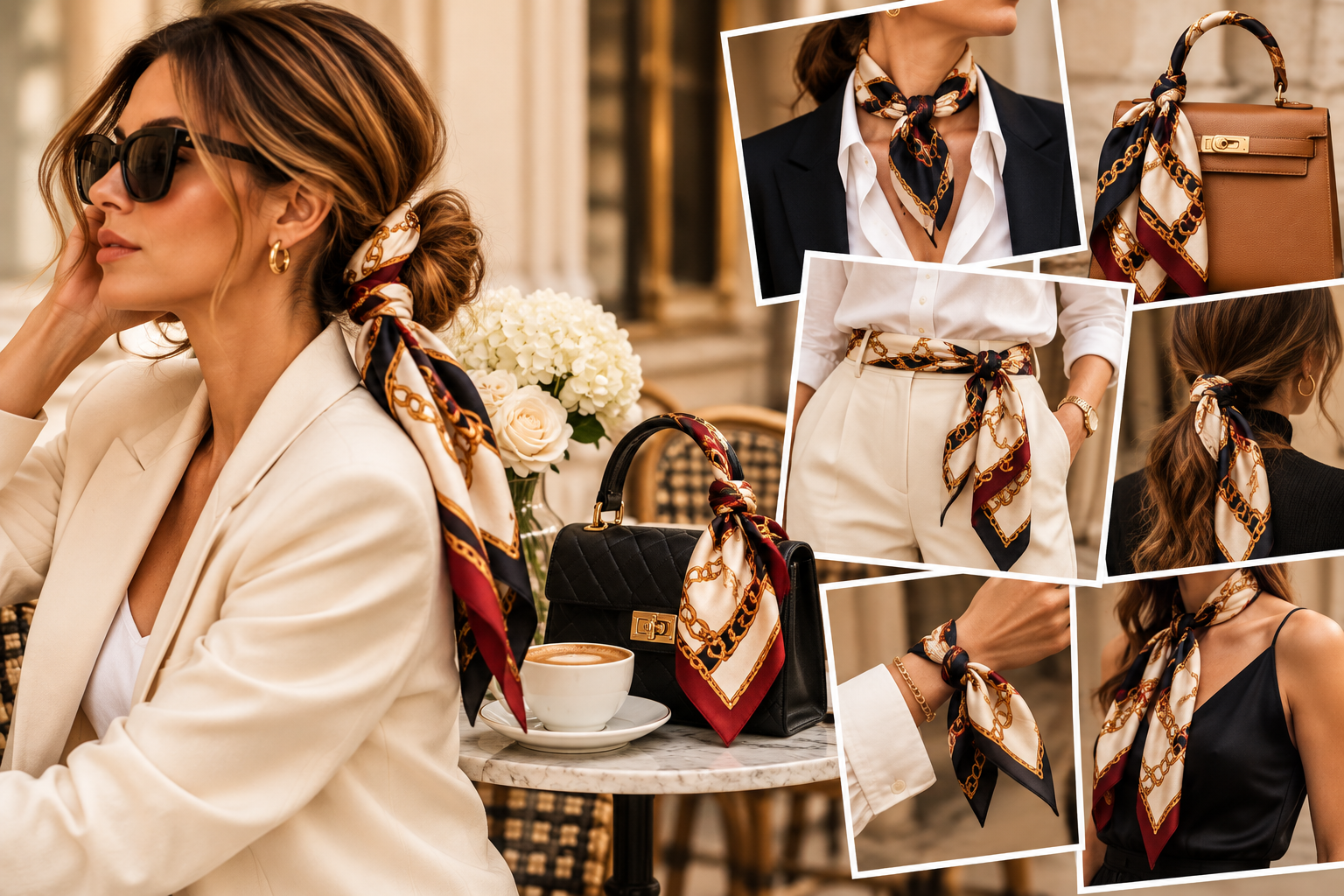
Few accessories can transform an outfit as effortlessly as a scarf. Draped around the neck, tied neatly beneath the collar of a shirt or worn as a subtle accent against a beautifully tailored coat, it can introduce colour, texture and personality without requiring an entirely new wardrobe.
A scarf can make a simple white shirt feel more considered, soften the structure of a blazer or bring an unexpected touch of elegance to everyday denim. And unlike many seasonal accessories, it rarely feels tied to a particular moment in fashion.
The secret is knowing which scarf to choose, how to work with its proportions and how to style it so that it feels like a natural extension of your outfit.
In this guide, we explore the timeless appeal of the scarf and the elegant ways to make it one of the most versatile pieces in your wardrobe.
Why Every Wardrobe Needs a Beautiful Scarf
A well-chosen scarf offers something that few accessories can: versatility without sacrificing elegance.
It can be the finishing touch to a minimalist outfit, the detail that brings together different colours or the statement piece that gives a familiar combination a completely different character.
Think of a camel coat, tailored trousers and simple leather boots. The addition of a silk scarf in a rich print introduces colour and individuality, making the entire look feel more personal.
The same principle applies to a white shirt and jeans, a little black dress or a beautifully cut blazer. A scarf can change the mood of an outfit while allowing the main pieces to remain exactly the same.
It is also an accessory that works across different occasions. A small silk square can bring polish to a daytime look, while a generously sized cashmere scarf adds softness and sophistication to winter dressing.
Rather than treating scarves as occasional accessories, consider them part of your everyday styling vocabulary.
Choose the Right Scarf for the Look You Want
Before deciding how to tie a scarf, consider its fabric, size and overall character. These details determine how it falls, how it sits against your clothes and which styling techniques will work best.
Silk: The Timeless Classic

A silk scarf is one of the most versatile pieces you can own. Its smooth finish, delicate drape and ability to carry beautiful prints make it particularly suited to elegant, polished outfits.
A square silk scarf works beautifully around the neck, beneath a shirt collar or tied to the handle of a structured handbag. Smaller designs feel delicate and understated, while larger squares offer more possibilities for draping and folding.
For a timeless look, choose a print that incorporates colours already present in your wardrobe. Cream, navy, burgundy, chocolate brown and muted gold are particularly easy to style with classic tailoring.
Cashmere and Wool: Softness for Cooler Days

When the weather calls for something warmer, a cashmere or wool scarf combines practicality with understated luxury.
These scarves tend to have more volume than silk, making them ideal for creating a soft, layered silhouette. A generous scarf in camel, grey, ivory or chocolate brown can complement a tailored coat without competing with its shape.
For a particularly refined effect, coordinate your scarf with your outerwear in a similar tonal family. Different textures will keep the outfit interesting even when the colours are closely matched.
Cotton and Linen: Effortless Everyday Elegance

Lightweight cotton and linen scarves are particularly useful during warmer months, when heavier fabrics can feel out of place.
Their relaxed texture works beautifully with linen shirts, cotton dresses, denim and lightweight tailoring. Choose stripes, understated geometric prints or soft, sun-washed colours for an accessory that feels polished without being overly formal.
In Dubai and other warm climates, a lightweight scarf can also be a practical alternative to heavier accessories, adding colour and interest without unnecessary bulk.
How to Choose a Scarf That Complements Your Wardrobe
The most useful scarf is not necessarily the most eye-catching one. It is the one that works with the clothes you already own.
Before buying a new design, consider the colours you wear most often. If your wardrobe is built around black, white, beige and navy, a scarf in burgundy, forest green or a sophisticated print can introduce variety while remaining easy to coordinate.
If you already wear plenty of colour, a neutral scarf can bring balance to a more expressive outfit.
It is also worth considering the scale of the print. Small, intricate patterns often feel subtle and classic, while large motifs create a stronger visual statement. Neither is inherently more elegant; the important thing is choosing a design that feels harmonious with your personal style.
Build a Small Scarf Collection
You do not need dozens of scarves to create variety. A carefully chosen collection of three or four pieces can cover most occasions.
- A neutral silk scarf: for everyday polish and understated styling.
- A printed silk square: for introducing colour or pattern.
- A larger wool or cashmere scarf: for layering over coats during cooler weather.
- A lightweight cotton or linen scarf: for relaxed outfits and warmer days.
The goal is to have a few accessories that serve different purposes rather than a collection of similar pieces that rarely leave the wardrobe.
DID YOU KNOW?
Scarves have long served both practical and decorative purposes, evolving from useful coverings into enduring fashion accessories. Their appeal lies in that combination: a beautiful scarf can provide warmth, introduce colour or complete an outfit, all while taking up very little space in your wardrobe.
The Art of Matching a Scarf to Your Outfit
A scarf does not need to match every element of your outfit. In fact, a little contrast often makes the styling more interesting.
The key is to create a sense of connection between the scarf and the rest of your look.
Repeat One Colour
One of the easiest ways to style a patterned scarf is to pick out a single colour from its design and repeat it elsewhere in your outfit.
A silk scarf featuring burgundy, cream and navy, for example, can look particularly elegant with a navy blazer and burgundy handbag. The colours do not need to match perfectly; a subtle relationship between them is enough.
Keep the Rest of the Outfit Simple
When your scarf features a bold print or vibrant colour, allow it to take centre stage.
A printed scarf paired with a white shirt, tailored trousers and understated accessories feels intentional. Adding several competing prints, statement jewellery and strong colours can make the overall look feel less cohesive.
This is especially useful when wearing a scarf as the main accent in an otherwise neutral outfit.
Play With Texture
A scarf can also add interest through texture rather than colour.
A soft cashmere scarf against a structured wool coat, or a glossy silk scarf paired with a matte cotton shirt, creates contrast without introducing another pattern.
This approach is particularly effective for tonal dressing, where an outfit relies on variations of one colour.
The Classic Neck Drape

Sometimes the most elegant way to wear a scarf is also the simplest.
Drape a long scarf around your neck, allowing both ends to fall naturally down the front of your outfit. The result is relaxed, polished and particularly flattering with a blazer, coat, fine-knit sweater or simple dress.
For a more structured appearance, keep the ends relatively even. For a softer, more effortless effect, let one side fall slightly longer than the other.
This style works especially well with scarves that have enough length to create a clean vertical line. It can visually elongate the silhouette and introduce movement without adding unnecessary volume.
The beauty of the classic drape is that it requires no complicated knot and works with both patterned and plain scarves.
The Effortless Loop

For a little more structure, try the effortless loop.
Fold a long scarf in half, place it around the back of your neck and pass the loose ends through the loop created at the folded end. Adjust the fabric until it sits comfortably, then allow the ends to fall naturally.
The result is neat without looking overly arranged.
A lightweight scarf creates a delicate finish, while a fuller wool or cashmere design offers warmth and a more substantial silhouette. With thicker scarves, keep the loop loose enough to avoid creating excessive bulk around the neck.
This is an especially useful styling technique for coats and jackets, where the scarf can sit neatly beneath the lapels or over the front of the garment.
STYLE TIP
Let the scarf determine the mood of the outfit. A silk square brings polish to simple tailoring, while a soft oversized scarf makes structured outerwear feel more relaxed. Start with the outfit you want to wear, then choose a scarf that complements its proportions and overall character.
Wear a Scarf With a Blazer

A blazer and scarf are a particularly natural pairing. The structure of the jacket gives the softness of the scarf a beautiful contrast, creating an outfit that feels considered without appearing overly formal.
For a classic approach, wear a small silk scarf around the neck with a white shirt and tailored blazer. Let the knot sit neatly at the front, or tuck the ends inside the jacket for a more discreet finish.
You can also wear a longer scarf beneath the lapels, allowing just enough of the fabric to show.
For inspiration on building polished outfits around pieces you already own, explore Back to Work in Style: The Fashion & Beauty Reset for a Chic September .
The same principles of proportion, thoughtful accessories and considered styling can help make everyday tailoring feel more individual.
Make a Simple Outfit Feel More Considered
One of the most useful qualities of a scarf is its ability to refresh familiar clothes.
A plain knit, straight-leg jeans and ballet flats can feel entirely different with the addition of a printed silk scarf. A simple black dress becomes more distinctive with a colourful square tied neatly at the neck. Even a white T-shirt can look more polished when styled with a scarf in a complementary shade.
This is particularly useful when you want to make more of a wardrobe you already own. Instead of relying on new clothes to create different looks, experiment with the accessories you have.
A scarf offers an easy way to introduce a new colour combination, bring attention to the neckline or create a more finished silhouette.
The same principle applies to other wardrobe staples: a small change in styling can give a familiar piece a completely different feel. Discover more ways to make your clothes work harder in How to Style One Dress Five Different Ways.
The Fancylicious Approach to Scarf Styling
The most elegant scarf styling rarely depends on an elaborate knot or a perfectly arranged fold.
It comes down to choosing the right fabric, understanding proportion and allowing the accessory to work naturally with the rest of your outfit.
Start with a few versatile designs, experiment with simple ways of wearing them and pay attention to how each scarf changes the mood of your clothes.
A scarf can do far more than sit beautifully around your neck. With a little creativity, this timeless accessory can become a hair detail, a refined handbag accent or an unexpected alternative to a traditional belt.
These styling ideas are particularly useful when you want to make familiar clothes feel new again. A single silk scarf can bring personality to a simple outfit, add softness to structured pieces or introduce a subtle touch of colour without changing your entire look.
The key is to experiment while keeping the overall effect intentional.
Wear a Scarf in Your Hair

One of the most beautiful ways to wear a scarf is in your hair. It introduces colour and movement while creating a look that feels feminine, polished and effortlessly chic.
Tie It Around a Ponytail
A silk scarf tied around a low ponytail is a simple way to elevate an everyday hairstyle.
Secure your hair with a discreet elastic, then tie the scarf around it, allowing the ends to fall naturally. A long, narrow scarf creates an elongated finish, while a small square folded into a band works beautifully for a more understated look.
This styling works particularly well with a crisp shirt, a simple knit or a relaxed summer dress.
Use It as a Headband
Fold a square scarf into a narrow band and position it across your hair, tying it underneath or at the back of your head.
For a refined result, keep the fabric smooth and the knot discreet. A small geometric print or a classic colour combination can add interest without overwhelming your outfit.
This is also a lovely way to style second-day hair while still looking considered.
Wrap It Around a Bun
For a more distinctive look, wrap a lightweight scarf around a low bun and secure it with a discreet knot.
This works especially well with a silk scarf that has a beautiful border or contrasting edges. Let a little of the fabric show rather than wrapping it so tightly that the scarf becomes the main focus.
Tie a Scarf to Your Handbag

A scarf tied to a handbag is one of the easiest ways to give an accessory a fresh appearance.
A narrow silk scarf or twilly can be wrapped around one handle, tied into a small bow or allowed to hang loosely from the side. The effect is particularly elegant on a structured leather bag in black, tan, cream or burgundy.
For a more coordinated look, choose a scarf that picks up one of the colours in your handbag or outfit.
If your bag is already embellished or features a distinctive design, keep the scarf simple. A small, thoughtful detail will usually have more impact than an elaborate arrangement.
This is also a useful styling trick when you want to refresh a handbag you have carried for years without investing in something new.
Use a Scarf as a Belt
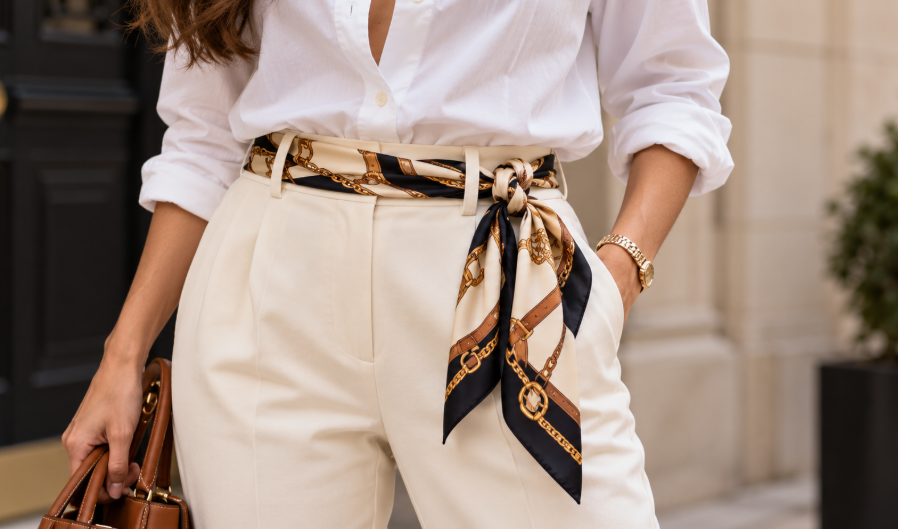
A scarf can make an unexpectedly elegant alternative to a traditional belt, particularly when worn with high-waisted trousers, jeans or a simple dress.
Choose a long, narrow scarf or fold a larger square into a slim band. Thread it through the belt loops of your trousers and tie it neatly at the front or slightly to one side.
The result introduces colour and softness to an otherwise structured outfit.
For everyday styling, a printed scarf works beautifully with neutral trousers and a simple shirt. If you prefer a more understated effect, choose a scarf in a tone close to your trousers.
The most important consideration is fabric and practicality. Lightweight silk works best for this purpose; avoid bulky knots that interrupt the line of your outfit or make the waistband uncomfortable.
Style a Scarf Around Your Wrist

For a subtle alternative to traditional jewellery, try tying a narrow silk scarf around your wrist.
Fold the fabric into a slim strip, wrap it comfortably around your wrist and secure it with a small knot. You can wear it alone or alongside delicate gold jewellery, provided the combination does not feel crowded.
This works particularly well with a simple outfit where the scarf introduces a small flash of colour.
Keep the fabric soft and the knot secure, but avoid tying it too tightly. The aim is to create a relaxed decorative detail rather than a bulky wrist accessory.
When combining a scarf with other accessories, balance is key. Our guide to How to Style Jewellery Without Overdoing It explores how to create a polished look with jewellery that complements rather than competes with your outfit.
Wear a Scarf With a Dress

A scarf can completely change the character of a dress, making it especially useful for occasions when you want to rewear a familiar piece in a different way.
With a simple black dress, a colourful silk scarf can introduce personality and soften the overall look. With a printed dress, a scarf in one of the existing colours can create a more coordinated finish.
For daytime occasions, try a small scarf tied loosely at the neck or worn in your hair. For a more polished evening look, choose a refined print and keep the remaining accessories relatively simple.
The scarf should complement the dress rather than compete with its neckline, pattern or silhouette.
Make a Scarf Part of Your Travel Wardrobe
A scarf is one of the most useful accessories to pack when travelling because it offers several styling possibilities without taking up much space.
A lightweight silk or cotton scarf can add colour to a simple airport outfit, bring polish to a daytime look or provide an extra layer when the air conditioning is cold.
A larger scarf can also work as a wrap over the shoulders, particularly when visiting places where more coverage is appropriate.
For a short trip, choose one scarf that works with several outfits rather than packing a different accessory for every look. A design that complements your travel wardrobe will make it easier to create different combinations with fewer pieces.
Sunglasses can play a similar role, bringing a distinctive finishing touch to even the simplest travel outfit. Discover our guide to sunglasses for every face shape for inspiration on choosing frames that complement your features.
If you’re building a more versatile wardrobe for travel and everyday dressing, our guide to The Chic Travel Capsule Wardrobe: What to Pack for a Stylish Long Weekend Away explores how carefully chosen clothing and accessories can create more outfit combinations with fewer pieces.
Choose the Right Scarf for the Occasion
The way you wear a scarf should feel appropriate to the setting, the rest of your outfit and the impression you want to create.
| Occasion | Scarf styling |
|---|---|
| Work | A small silk scarf with a shirt or tailored blazer |
| Weekend | A printed scarf with denim and a simple knit |
| Dinner | A refined silk scarf with a dress or elegant tailoring |
| Travel | A lightweight scarf that can also serve as a wrap |
| Cooler weather | A soft wool or cashmere scarf with a coat |
| Summer | A cotton or linen scarf with a relaxed outfit |
The same scarf can work across several of these occasions. Changing the way you tie it, or simply changing the outfit around it, can make it feel entirely different.
The Colours and Prints That Always Feel Elegant
While trends may influence the scarves that catch your eye, certain colours and patterns remain particularly versatile.
Classic neutrals such as ivory, camel, navy, black and chocolate brown work well with a wide range of outfits.
Traditional prints — including paisley, delicate florals, geometric motifs and understated stripes — can add character without feeling overly seasonal.
Rich accent colours such as burgundy, forest green, deep red and muted gold are useful when you want a scarf to become the focal point of a simple look.
If you are building a collection, begin with a design that complements the colours you wear most often. You can introduce bolder prints once you know which styles you reach for regularly.
Common Scarf-Styling Mistakes to Avoid
A scarf is a simple accessory, but a few small adjustments can make the difference between a look that feels effortless and one that feels overworked.
- Too many competing details: If your scarf has a bold print, let it be the main accent rather than combining it with several other statement accessories.
- The wrong proportions: A bulky scarf can overwhelm a delicate outfit, while a tiny square may feel out of place with substantial outerwear.
- Overly complicated knots: Elaborate arrangements can distract from the scarf itself. Start with simple folds and ties.
- Ignoring the fabric: A thick wool scarf and a delicate silk square behave differently. Choose a styling technique that suits the material.
- Matching everything too precisely: Repeating one colour is often enough. Your scarf does not need to match your shoes, handbag and clothing exactly.
The goal is not to make the scarf look perfectly arranged. It is to make it feel like it belongs.
Elegance is not about adding more. It is about knowing which detail makes the difference.
A beautiful scarf embodies this idea: one considered accessory can give a familiar outfit a completely different character.
How to Make a Scarf Feel Like Your Signature
Some women are known for their love of beautiful handbags, others for their jewellery or their perfectly tailored coats. A scarf can become just as recognisable a part of your personal style.
Perhaps you favour silk squares tied neatly at the neck. Perhaps you prefer oversized cashmere scarves in neutral shades, or colourful prints that bring life to simple outfits.
You do not need to follow every new way of wearing one. Instead, notice which styles make you feel most comfortable and confident, then return to them.
A signature approach does not have to be complicated. It simply needs to feel consistent with the way you dress.
EDITOR’S NOTE
A scarf is a small accessory with remarkable styling potential. Whether you wear it traditionally around your neck, tie it into your hair or use it to refresh a favourite handbag, the most elegant approach is to make it feel natural to you.
Start with one beautiful design, experiment with a few different ways of wearing it and let this timeless accessory bring a little more personality to your everyday wardrobe.
From classic silk squares to soft winter layers, a scarf proves that sometimes the smallest details make the biggest difference.
The Fancylicious Scarf Edit
If you are choosing a scarf to add to your wardrobe, think beyond the individual design and consider how you will wear it.
A beautiful silk square can work around your neck, in your hair or on your handbag. A long, lightweight scarf offers more freedom for draping and tying. A cashmere design becomes a dependable companion for cooler days and travel.
Look for quality fabric, colours you genuinely enjoy wearing and a design that complements your existing clothes.
Most importantly, choose a scarf that encourages you to experiment. The best accessories are not the ones that remain carefully folded in a drawer, but the ones you find yourself reaching for again and again.