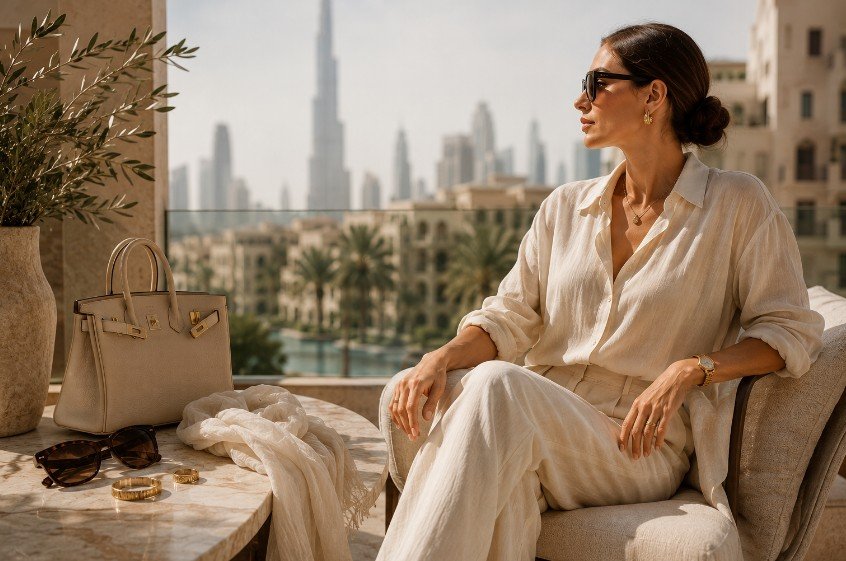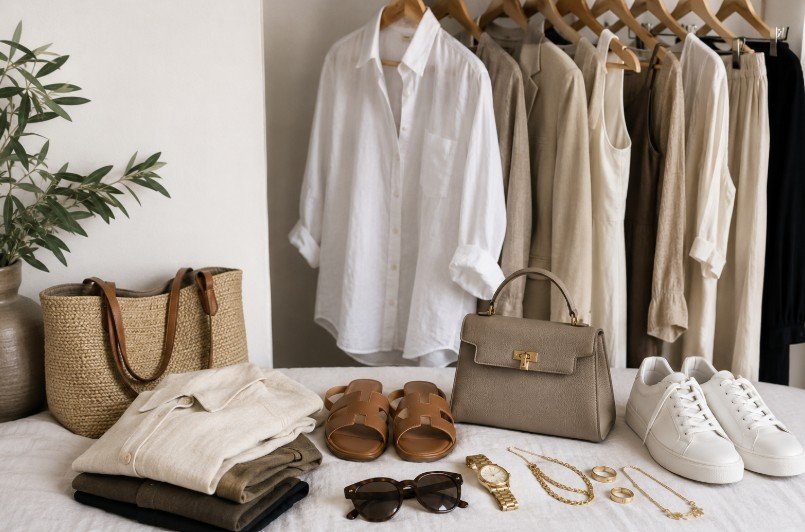
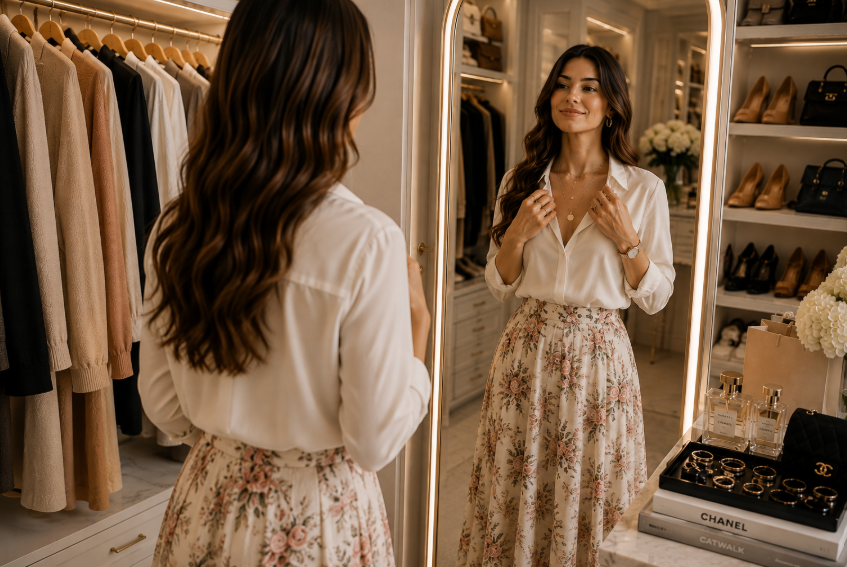
Jewellery can completely transform an outfit.
A simple white shirt can suddenly feel more polished with a delicate chain. A black dress can become evening-ready with sculptural earrings. Even your favourite jeans and blazer combination can look considerably more refined with the right watch, rings or bracelet.
But there is a fine line between beautifully accessorised and visually overwhelmed.
The secret isn’t owning less jewellery. It’s knowing which pieces deserve attention, how to balance them and when to stop.
Because the most elegant jewellery styling often has very little to do with how much you wear — and everything to do with how intentionally you wear it.
Start With One Focal Point
Before choosing your jewellery, decide what you want people to notice first.
This is perhaps the simplest rule for avoiding an over-accessorised look.
If you’re wearing dramatic chandelier earrings, they can be the focal point. Your necklace can be delicate, or you can skip it altogether.
If you’ve chosen a bold statement necklace, keep your earrings smaller.
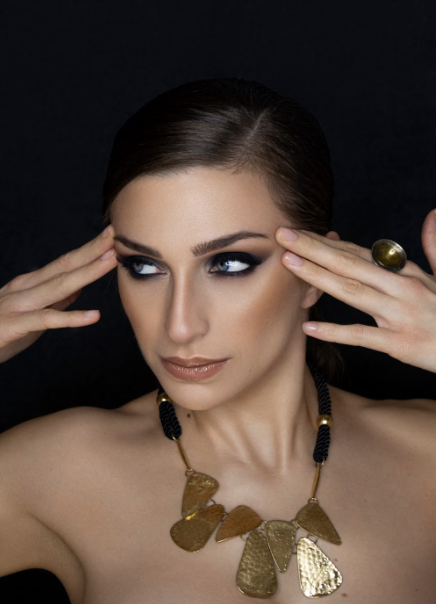
And if you’re wearing a substantial cocktail ring, there is no need to cover every finger with additional pieces.
Think of your jewellery as creating a visual hierarchy.
One piece leads. The others support it.
This is particularly useful when you’re wearing clothing that already has strong details. A printed dress, embellished neckline or dramatic sleeve may need very little jewellery at all.
The same principle applies to the rest of your outfit. Our guide to The Ultimate Guide to Outfit Proportions: How to Balance Any Look explores the importance of creating visual balance — something that applies just as beautifully to accessories.
DID YOU KNOW?
Jewellery doesn’t have to match perfectly to look elegant. What matters more is that the pieces share something visually — such as a similar finish, shape, scale or overall mood.
The Art of Layering Necklaces
Layered necklaces can look effortlessly chic, but they can also become chaotic very quickly.
The easiest way to make layering look intentional is to create variation.
Instead of wearing three necklaces that sit at exactly the same point, choose different lengths so each chain has room to be seen.
You can combine:
- A short delicate chain
- A slightly longer pendant
- A fine necklace with a subtle charm
The thickness of the chains can vary too. A fine chain alongside a slightly more substantial one creates interest without making the neckline feel heavy.
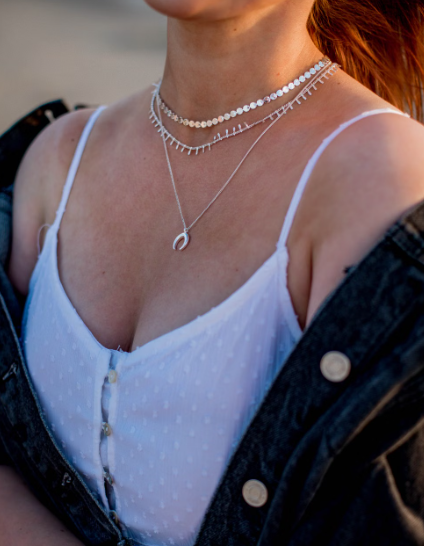
Your clothing matters here as well.
A simple crew-neck T-shirt can provide an excellent backdrop for layered necklaces, while a heavily embellished blouse may already have enough visual interest around the neckline.
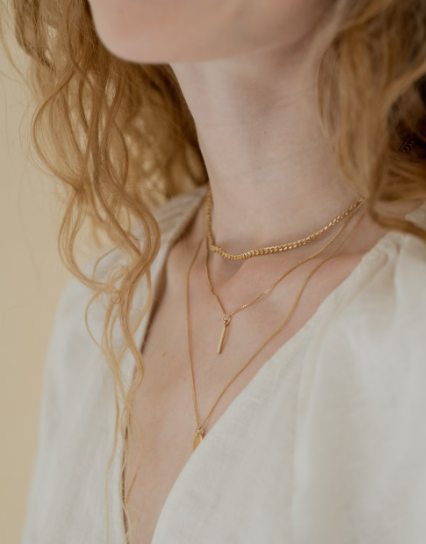
With a V-neck, a pendant that follows the shape of the neckline can look particularly elegant.
And when wearing a high neckline, you may find that earrings or bracelets create a more balanced result than adding several necklaces.
The goal isn’t to show off every necklace you own.
It’s to make the layers look as though they belong together.
When Earrings Should Take Centre Stage
There are days when earrings deserve to be the entire jewellery story.
Oversized hoops, sculptural gold earrings, chandelier styles or colourful statement earrings can instantly elevate a simple outfit.
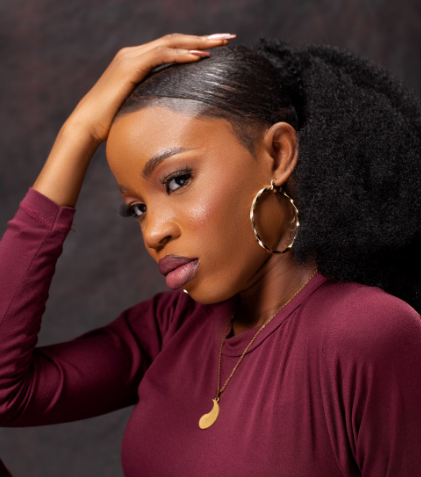
When the earrings are dramatic, let them breathe.
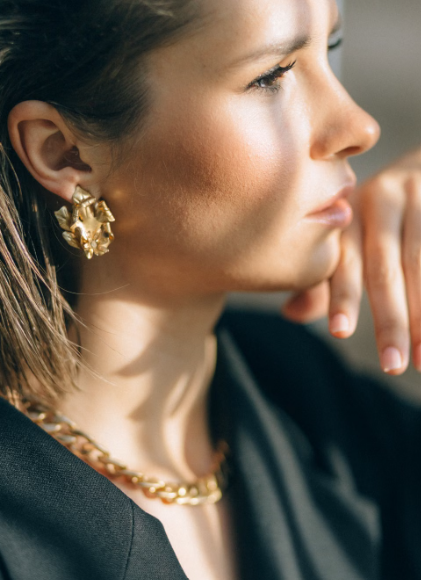
A sleek hairstyle can make them even more noticeable, while a simple necklace — or no necklace at all — prevents the upper half of your outfit from becoming too busy.

This is especially effective with a minimalist outfit.
Imagine a black sleeveless dress, sleek hair and one pair of architectural gold earrings.
You don’t necessarily need anything else.
The jewellery becomes the detail that gives the entire outfit personality.
And this is where restraint can actually make a look feel more luxurious. The goal isn’t for every accessory to compete for attention.
Sometimes one exceptional piece says more than five ordinary ones.
STYLE TIP
If you’re wearing statement earrings, look in the mirror before adding a necklace. If the earrings already frame your face beautifully, leaving the neckline bare can make the entire look feel more sophisticated.
How to Stack Rings Without Making Your Hands Look Busy
Ring stacking is another area where restraint makes a difference.
Instead of putting several rings on every finger, start with one piece that you particularly love and build around it.
You could combine:
One statement ring + two delicate bands
or:
Two slim rings on one hand + a watch or bracelet on the other.
Leaving some fingers bare creates negative space and makes the jewellery easier to appreciate.
You can also play with proportions.
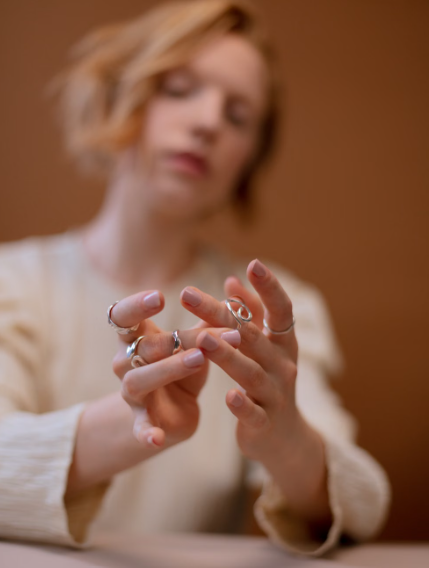
A chunky ring paired with several equally chunky pieces can quickly feel heavy. Mixing a more substantial ring with delicate bands usually creates a softer result.
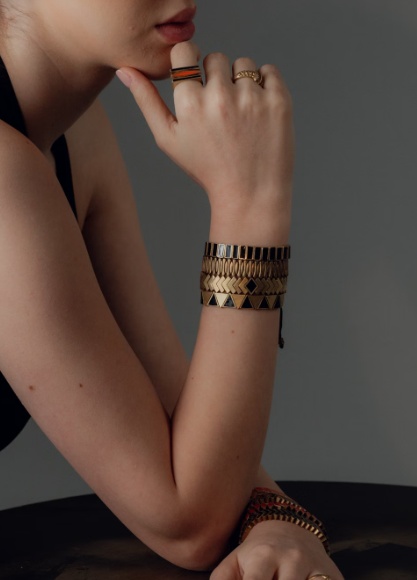
And don’t feel that both hands need to look identical.
An intentionally asymmetrical arrangement can feel much more modern than trying to create a perfectly matching set.
Mixing Gold and Silver Without Looking Random
For years, gold and silver were often treated as though they had to be kept completely separate.
That rule is much less relevant today.
Mixed metals can look incredibly sophisticated when they appear intentional.
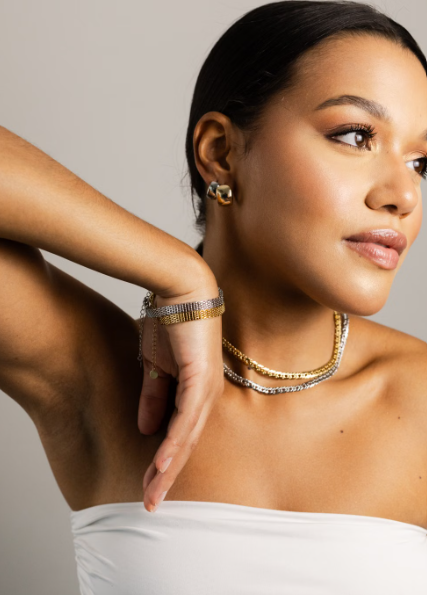
One easy way to begin is with a bridge piece that already combines different metals. This creates a visual connection between the two finishes.
Another approach is to choose one dominant metal and use the second as an accent.
For example:
Mostly gold jewellery + one silver watch
or:
Mostly silver jewellery + a small gold ring.
You can also repeat the combination elsewhere in your outfit.
A gold-and-silver watch, a mixed-metal bracelet or even hardware on your handbag can subtly connect the different finishes.
The important thing is consistency.
If every single piece is a completely different colour, finish and style, the result can feel accidental rather than curated.
Jewellery Should Work With Your Clothes
The most beautiful jewellery styling starts with the outfit rather than the jewellery box.
Before putting on your accessories, consider what your clothing is already doing.
A minimalist outfit gives jewellery more freedom.
A patterned dress may call for simpler pieces.
A statement neckline may eliminate the need for a necklace.
A dramatic sleeve may make a bracelet less important.
And heavily embellished eveningwear often looks more elegant when paired with one carefully selected piece rather than several competing accessories.
When wearing printed clothing, the right jewellery can elevate the look without competing with the pattern. Discover how to balance statement prints with elegant accessories in our guide to how to wear prints elegantly without looking overdressed.
This is one of the easiest ways to avoid the feeling that you have simply added jewellery on top of an outfit.
Instead, the jewellery should feel like it was part of the outfit’s original design.
Jewellery is only one part of creating a harmonious outfit. The colours you choose for your clothing can have an equally important effect, so explore How to Mix Colours in an Outfit: An Elegant Guide to Colour Combinations for ideas on creating a balanced colour palette.
The Three-Piece Formula
If you’re ever unsure where to begin, try the three-piece formula.
Choose:
Earrings + necklace + ring
or:
Earrings + watch + bracelet
or:
Necklace + bracelet + ring
Three doesn’t mean you must stop at exactly three pieces.
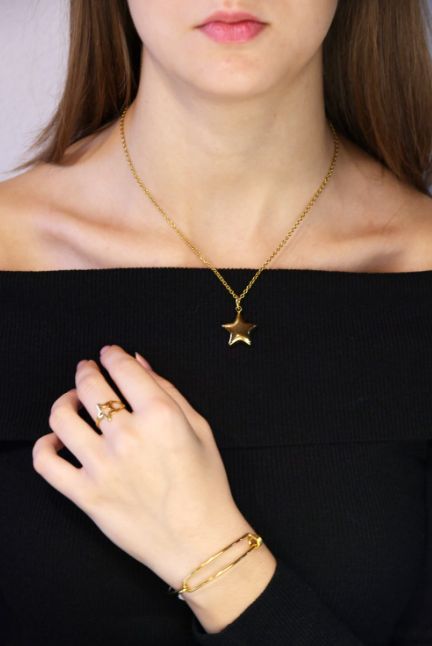
It’s simply a useful starting point for creating balance.
From there, look at yourself in the mirror.
Does the outfit already feel complete?
If yes, stop.
If something still feels missing, add one piece intentionally rather than continuing to layer accessories automatically.
The most polished looks often come from knowing when the outfit is finished.
The beauty of jewellery is that it can say something about your personality without changing the entire outfit.
A delicate chain can make a simple shirt feel more feminine. A sculptural cuff can bring structure to a minimalist look. A pair of pearls can add softness to tailoring, while a vintage ring can make an otherwise contemporary outfit feel more personal.
The trick is to make those choices feel intentional rather than excessive.
Let Your Outfit Decide How Much Jewellery You Need
One of the easiest ways to avoid over-accessorising is to look at your clothes before opening your jewellery box.
If you’re wearing a bold print, intricate embroidery or a dramatic silhouette, jewellery can become the supporting character rather than the main attraction.
A simple black dress, on the other hand, gives you much more freedom.
You might choose sculptural earrings, a cuff or a statement necklace and allow that single piece to transform the entire look.
This is also why jewellery can be such an effective tool when you want to make an outfit look more expensive without actually changing the clothes. A carefully chosen accessory can add polish and personality without requiring a complete wardrobe overhaul.
For more ideas on creating an elevated look through thoughtful styling rather than excessive shopping, see How to Look Expensive on a Budget: 12 Styling Rules That Actually Work.
Match Jewellery to Your Neckline
Your neckline can tell you a lot about which jewellery will work best.
V-neck
A delicate pendant or necklace that follows the V shape can create a naturally balanced effect.
Crew neck
A shorter necklace can work beautifully, although statement earrings can be an even cleaner option.
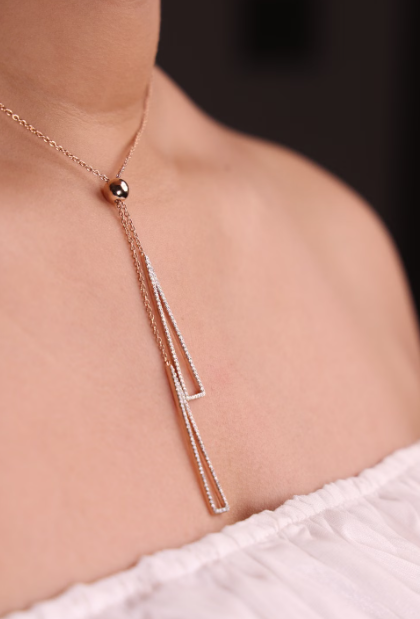
Strapless or off-the-shoulder
This is an opportunity for a beautiful necklace or a pair of striking earrings, depending on the overall mood.
High neckline
Don’t feel obliged to add a necklace. Earrings, rings, a bracelet or watch can provide enough interest.
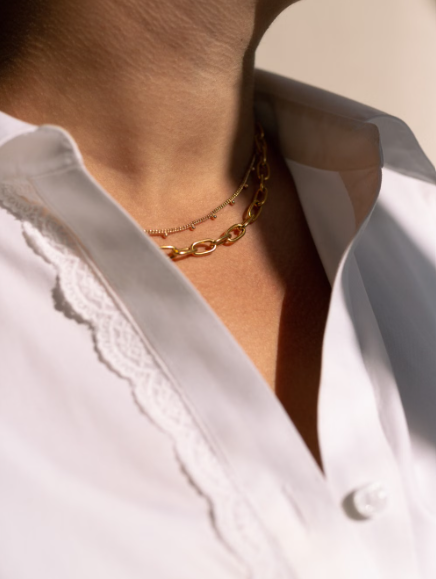
Open shirt collar
A fine chain or two delicate layers can sit naturally against the skin, particularly when the rest of the outfit is simple.
The key is to avoid creating competing lines.
Your jewellery should work with the neckline rather than fight against it.
When Your Clothes Are Already Making a Statement
There are certain outfits that simply don’t need much jewellery.
A sequinned dress.
A dramatic floral print.
A heavily embellished top.
A bold architectural sleeve.
A statement belt.
In these situations, try choosing one quiet piece rather than adding several more details.
A pair of small gold hoops might be enough.
Or perhaps one elegant ring.
This is where knowing when to stop becomes part of personal style.
If everything is competing for attention, nothing becomes the focal point.
And if you’re trying to create a more polished overall appearance, our guide to Fashion Mistakes That Can Make an Outfit Look Less Polished explores some of the small styling decisions that can make a surprisingly big difference.
Jewellery and Handbags Should Feel Like They Belong Together
Your jewellery doesn’t need to match your handbag perfectly, but there should ideally be some connection between the accessories.
For example, if your handbag has gold hardware, gold jewellery can create a subtle sense of continuity.
If you’re carrying a minimalist structured bag, delicate jewellery can reinforce that refined aesthetic.
And if your outfit already includes a bold statement bag, you may want to keep your jewellery quieter.
This doesn’t mean everything needs to be coordinated.
It simply means the accessories should look as though they were chosen together rather than collected at the last minute.
If you’re interested in creating that kind of balance between your accessories and clothing, our guide to How to Choose the Right Handbag for Your Outfit is a natural companion.
A carefully chosen classic can quietly elevate an entire look. See our guide to designer handbags that never go out of style for eight enduring styles worth knowing.
The Difference Between Statement and Excess
A statement piece is not the same thing as an excessive look.
The difference usually comes down to what else is happening around it.
A huge pair of earrings can look incredibly elegant with a simple dress, slicked-back hair and minimal accessories.
The same earrings combined with a statement necklace, layered bracelets, several rings and an embellished outfit may simply become too much.
So don’t be afraid of dramatic jewellery.
Instead, give it space.
That negative space is what allows a beautiful piece to actually be noticed.
Jewellery Can Change the Mood of the Same Outfit
One of the best reasons to experiment with jewellery is that you can completely change the feeling of an outfit without changing the clothes.
Take a simple white shirt and tailored trousers.
Add:
Pearl earrings + delicate watch → classic and feminine.
Sculptural gold earrings + rings → modern and sophisticated.
Layered chains + hoops → relaxed and contemporary.
Vintage brooch + delicate earrings → elegant and unexpected.
The clothes remain exactly the same.
The jewellery changes the story.
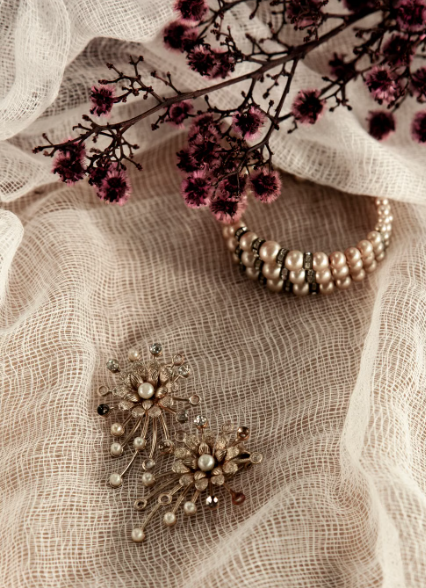
This is one reason accessories deserve more attention when building a versatile wardrobe. You can create completely different looks from the pieces you already own simply by changing the finishing details.
Build Your Own Jewellery Uniform
If you find yourself repeatedly wondering what jewellery to wear, create a personal jewellery uniform.
Perhaps yours is:
Small gold hoops + fine necklace + watch
Or:
Pearl earrings + delicate bracelet + one ring
Or:
Statement earrings + no necklace + cocktail ring
There is no correct formula.
The best combination is the one that feels natural enough that you can wear it without thinking.

Then, when you have a special occasion, you can deliberately break your usual formula and make one dramatic piece the centre of attention.
A signature combination can also make your personal style feel more recognisable. The goal isn’t to wear the same jewellery every day, but to understand which proportions, metals and shapes consistently make you feel your best.
When in Doubt, Take One Piece Off
There is a reason the idea of removing one accessory has remained such a useful styling principle.
When you’re ready to leave the house, take a final look in the mirror.
Ask yourself:
What is the first thing I notice?
If the answer is your face, your outfit or one beautiful piece of jewellery, you’re probably on the right track.
If your eyes are moving from earrings to necklace to rings to bracelets to handbag hardware without knowing where to settle, remove something.
Elegance often comes from editing rather than adding.
Context is everything; where we’re going, how we feel. Keep it to 2–3 accessories, less is more.
Jewellery Should Feel Like You
The most important rule is also the simplest: don’t wear jewellery just because you think you are supposed to.
If you love delicate pieces, embrace them.
If you prefer bold cuffs, wear one spectacular cuff rather than several pieces that don’t feel like you.
If you love mixing metals, mix them.
If pearls make you feel elegant, make them part of your signature.
Personal style isn’t about following a perfect set of rules. It’s about understanding what works for you and then using those principles to make your choices feel deliberate.
Jewellery should never overwhelm the woman wearing it.
It should make her more noticeable.
The same principle applies when dressing for a wedding, where accessories should complement the occasion and the outfit rather than overwhelm it. For more occasion-specific inspiration, see How to Dress as a Wedding Guest: Elegant Outfit Ideas for Every Dress Code.
EDITOR’S NOTE
The most elegant jewellery is rarely the jewellery that gets noticed first. It is the detail that makes the entire outfit feel complete.
And perhaps that’s the best way to think about accessorizing: choose less, choose well and give every beautiful piece enough space to shine.