There are places you visit because they are famous.
And then there are places that make you stop the moment you see them.
The Sheikh Zayed Grand Mosque belongs firmly in the second category.
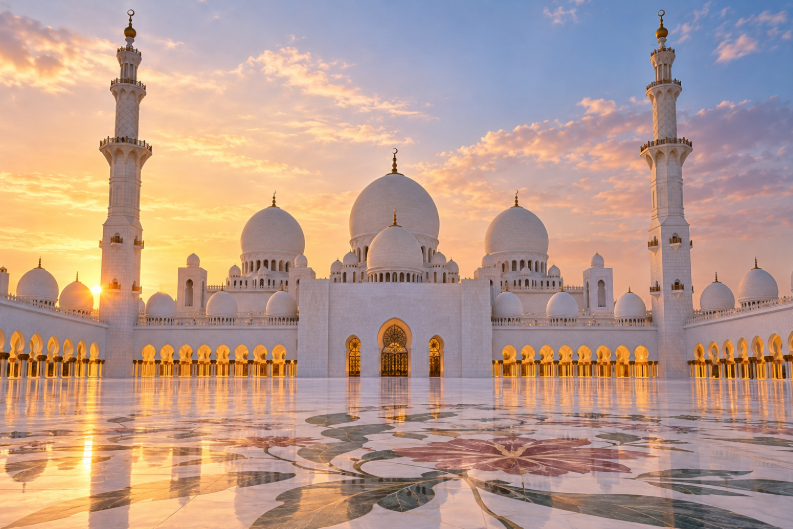
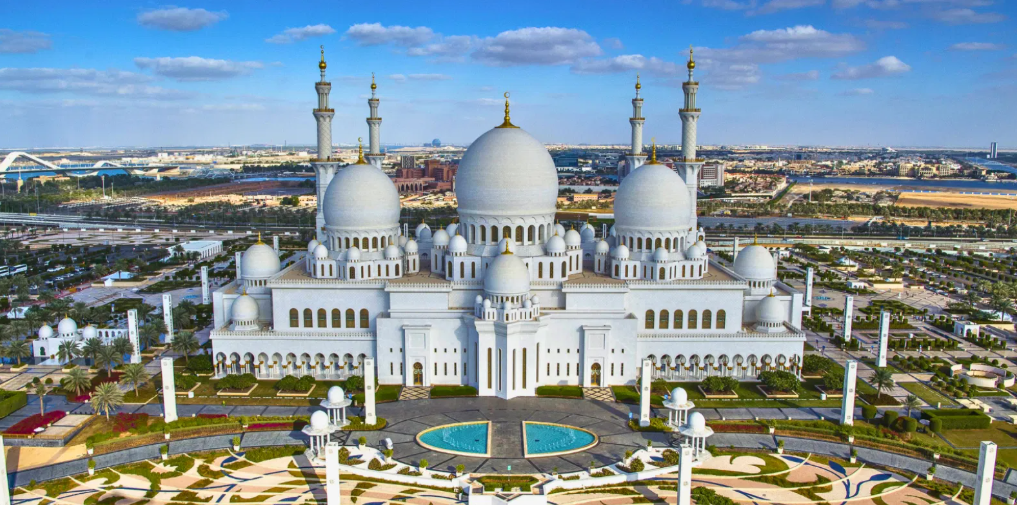
Rising in Abu Dhabi in brilliant white marble, with gleaming domes, reflective pools and an extraordinary floral courtyard, it is the largest mosque in the United Arab Emirates and one of the country’s most recognisable architectural landmarks.
But its beauty is only part of the story.
Behind the polished marble and spectacular proportions is a much more fascinating idea: a building conceived to bring together the cultural diversity of the Islamic world with historical and modern values of architecture and art.
That vision came from Sheikh Zayed bin Sultan Al Nahyan, who launched the project and wanted the mosque to become an expression of unity through architecture. Construction began in the 1990s and the mosque was inaugurated in December 2007. Sheikh Zayed died in 2004 and was buried in the mosque’s courtyard.
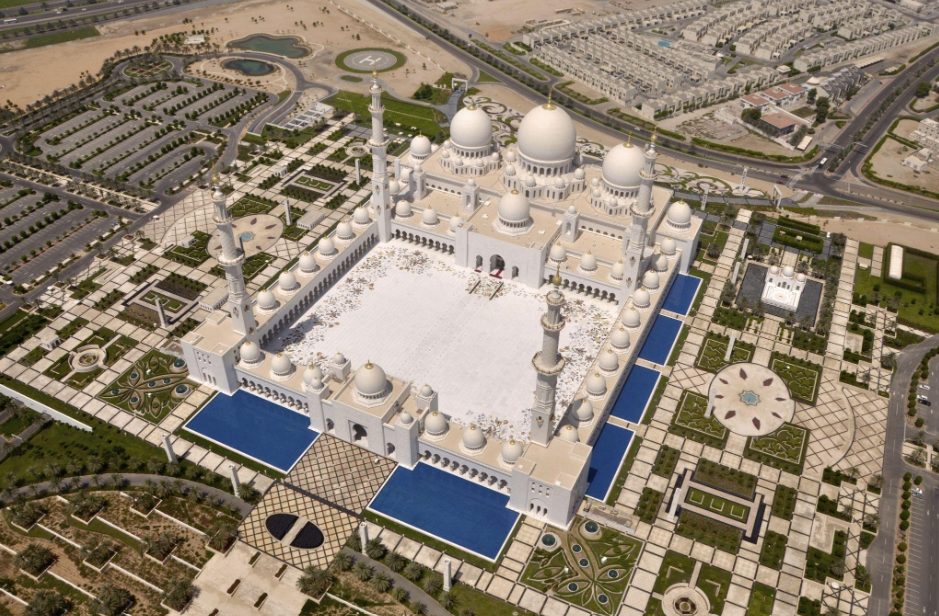
The complex measures approximately 420 metres by 290 metres, covers more than 12 hectares excluding exterior landscaping and parking, and can accommodate more than 41,000 worshippers.
The result is far more than an enormous place of worship.
It is a study in marble, light, geometry, craftsmanship and cultural connection.
And like many of the world’s most remarkable architectural destinations, it becomes even more interesting when you look beyond the photograph.
If you love discovering places where architecture and culture become part of the experience, our The Most Beautiful Museums in the World: Where Art, Architecture and Beauty Come Together is a natural companion read.
The Vision Behind Sheikh Zayed Grand Mosque
The mosque begins with a vision rather than a building.
Sheikh Zayed wanted to establish a structure that would unite the cultural diversity of the Islamic world with historical and modern values of architecture and art. That ambition is visible throughout the finished mosque, where different architectural influences, materials and artistic traditions coexist within one enormous complex.
The project was built under Sheikh Zayed’s guidance and supervision, with the completed mosque becoming both a place of worship and an architectural statement.
Its design deliberately avoids belonging to just one architectural tradition.
Instead, it draws from several.
That becomes particularly clear when you look at the people responsible for turning the original vision into the finished building.
Who Designed Sheikh Zayed Grand Mosque?
The mosque’s architect was Yusef Abdelki, a Syrian architect. Wikipedia identifies the project as being designed under Abdelki’s management, with three other Syrian architectural designers — Basem Barghouti, Moataz Al-Halabi and Imad Malas — helping to complete the design and develop it.
Abdelki drew inspiration from several important architectural sources.
One was the Abu al-Abbas al-Mursi Mosque in Alexandria, designed by Italian architect Mario Rossi in the 1920s. Another was the Badshahi Mosque in Lahore, Pakistan, alongside Persian, Mughal and Indo-Islamic architectural traditions. The dome layout and floor plan were particularly inspired by the Badshahi Mosque.
The architectural language is therefore deliberately eclectic.
The archways are strongly Moorish, while the minarets have a classical Arab character.
DID YOU KNOW?
The Sheikh Zayed Grand Mosque brings together materials and craftsmanship from countries across the world — a deliberate reflection of Sheikh Zayed’s vision of unity, tolerance and cultural connection.
A Monument in White Marble
Perhaps the first thing you notice is the colour.
White dominates the Sheikh Zayed Grand Mosque, giving the architecture its almost luminous quality.
But the marble isn’t simply a backdrop.
Different varieties were selected for different parts of the complex.
Sivec marble from Prilep in North Macedonia was used extensively for the external cladding, including the minarets. More than 115,000 square metres of external marble cladding was used across the mosque. Lasa marble from Laas in South Tyrol, Italy, was used for the internal elevations, while Makrana marble from India was used in the annexes and offices. Acquabianca and Bianco P marble also came from Italy.
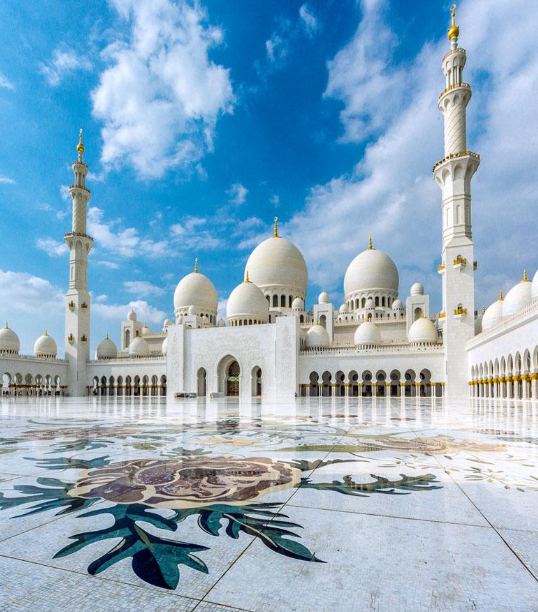
The white surfaces are enhanced with precious and semi-precious materials including lapis lazuli, carnelian, amethyst, abalone shell and mother-of-pearl.
This combination is part of what gives the mosque its distinctive visual richness.
From a distance, the architecture appears almost monochromatic.
Look closer, however, and the surfaces reveal colour, texture and intricate craftsmanship.
The Courtyard: A Garden in Marble
The mosque’s vast courtyard, or Sahan, is one of its most extraordinary features.
Measuring approximately 17,000 square metres, it is considered the largest example of marble mosaic in the world.
Look down and you’ll find enormous flowers unfolding across the marble surface.
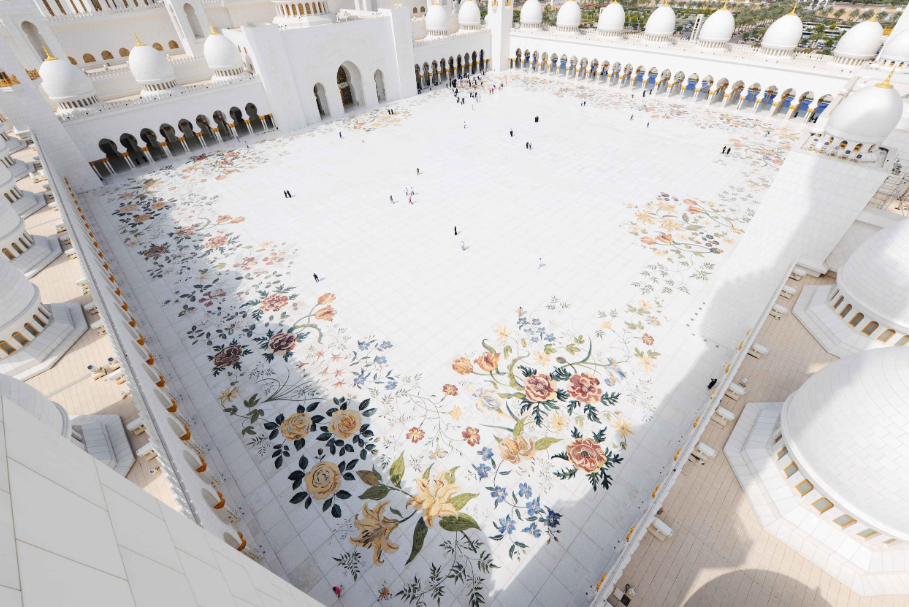
The intricate floral mosaics were designed by British artist Kevin Dean, who chose flowers associated with the Middle East, including tulips, lilies and irises. Coloured marble inlays create elaborate floral patterns that curl from the edges towards the centre of the courtyard.
The effect is extraordinary.
The architecture above you is monumental and geometric.
Under your feet, the marble becomes a garden.
That contrast is one of the most beautiful details of the entire complex.
TIP
When visiting the Sheikh Zayed Grand Mosque, don’t photograph everything from the same angle. Look down as well as up. The floral marble mosaics of the courtyard deserve as much attention as the domes and minarets above you. Try one wide photograph to capture the scale, followed by close-up images of the individual floral details.
The 82 Domes
Then there are the domes.
The mosque has 82 domes in seven different sizes, with the largest positioned above the main prayer hall. Its outer diameter is approximately 32.2 metres, while its outer height reaches around 85 metres.
Their design combines several architectural influences, with the overall dome layout and floor plan drawing particular inspiration from the Badshahi Mosque in Lahore.
The domes create a visual rhythm across the complex.
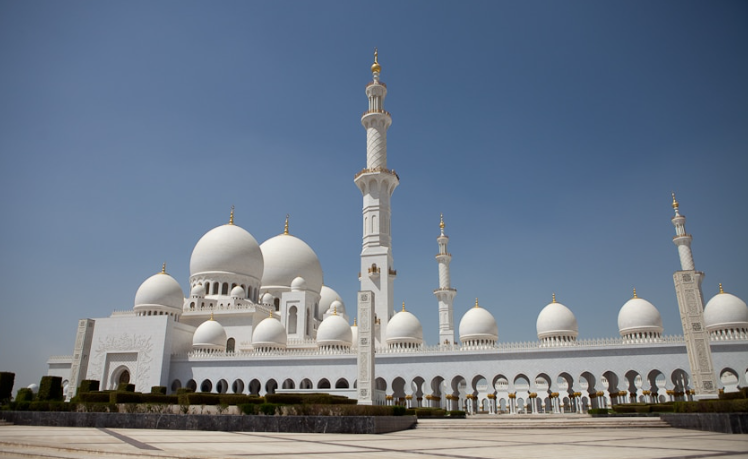
Repeated at different scales, they establish symmetry while preventing the enormous building from feeling visually static.
They are also one of the clearest examples of how the mosque combines historical Islamic architectural references with a contemporary monumental structure.
Four Minarets and a Distinctive Skyline
Four minarets stand at the corners of the courtyard, rising approximately 107 metres into the Abu Dhabi skyline.
Their classical Arab character contrasts with the Moorish archways and the Persian, Mughal and Indo-Islamic influences found elsewhere in the mosque.
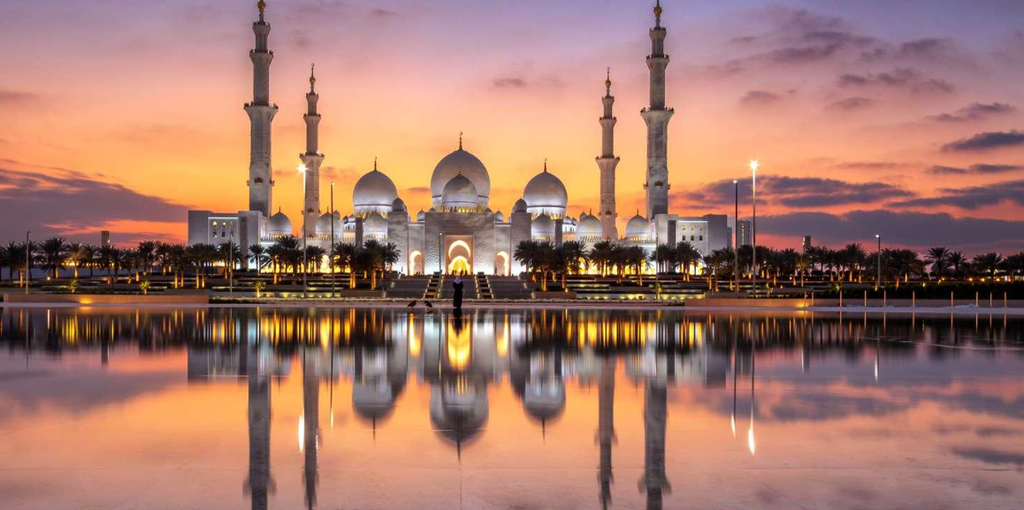
This mixture is one of the building’s defining characteristics.
It doesn’t attempt to reproduce a single historical style.
Instead, several traditions are brought together within one coherent architectural composition.
And from a distance, the combination of four minarets, 82 domes and vast white marble surfaces gives the Sheikh Zayed Grand Mosque its unmistakable silhouette.
More Than 1,000 Columns
The mosque contains more than 1,000 columns, but one of the most remarkable collections can be found inside the main prayer hall.
There are 96 columns in the main prayer hall, each clad in marble and decorated with mother-of-pearl inlay.
Their decoration continues the floral language seen elsewhere throughout the mosque.
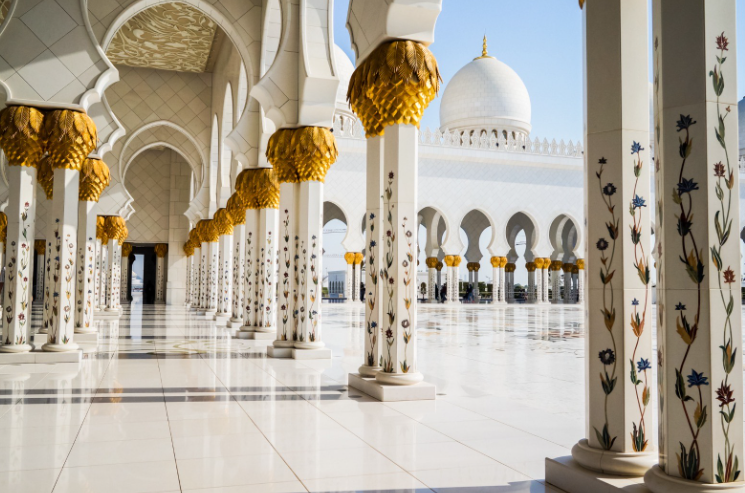
Instead of allowing the enormous interior to feel cold or purely monumental, the columns introduce delicate organic forms.
The contrast is striking.
The architecture is enormous.
The craftsmanship is intimate.
And the closer you look, the more details emerge.
The World’s Largest Hand-Knotted Carpet
One of the most famous objects inside the mosque is beneath the feet of visitors.
The main prayer hall contains an enormous hand-knotted carpet measuring approximately 5,627 square metres.
The carpet was designed by Iranian artist Ali Khaliqi and made by approximately 1,200 to 1,300 carpet knotters. It weighs around 35 tonnes and contains approximately 2.268 billion knots.
The wool originated in New Zealand and Iran, and the carpet was produced by Iran’s Carpet Company. It took approximately two years to complete.
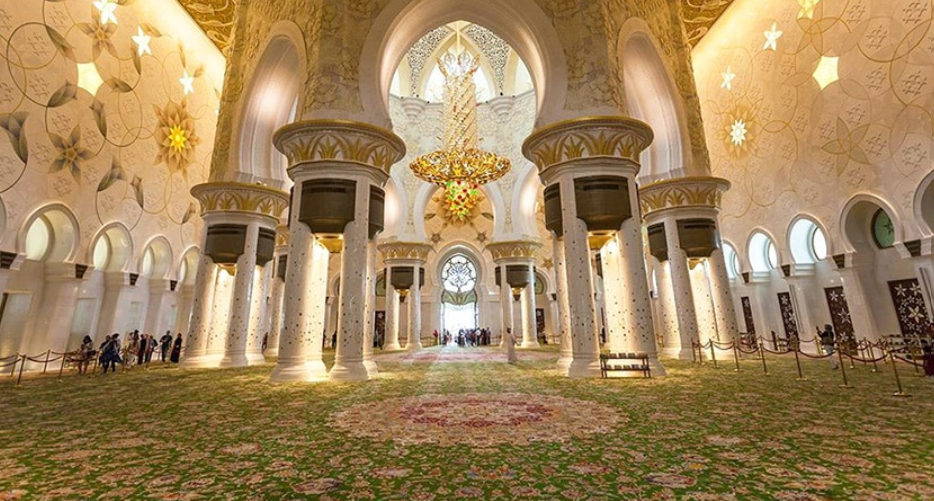
Imagine the craftsmanship involved.
A single carpet stretches across a space large enough to feel architectural in its own right.
Yet its purpose remains deeply functional: it forms the floor of the main prayer hall.
That combination of art and function is one of the recurring themes of the mosque.
The Chandeliers: Light, Crystal & Scale
Then look up.
The mosque contains seven imported chandeliers produced by Faustig in Munich, Germany, incorporating millions of Swarovski crystals.
The largest is particularly spectacular.
It measures approximately 10 metres in diameter and 15 metres high, making it one of the most imposing chandeliers in a mosque.
The chandeliers contribute to the mosque’s carefully considered relationship between architecture and light.
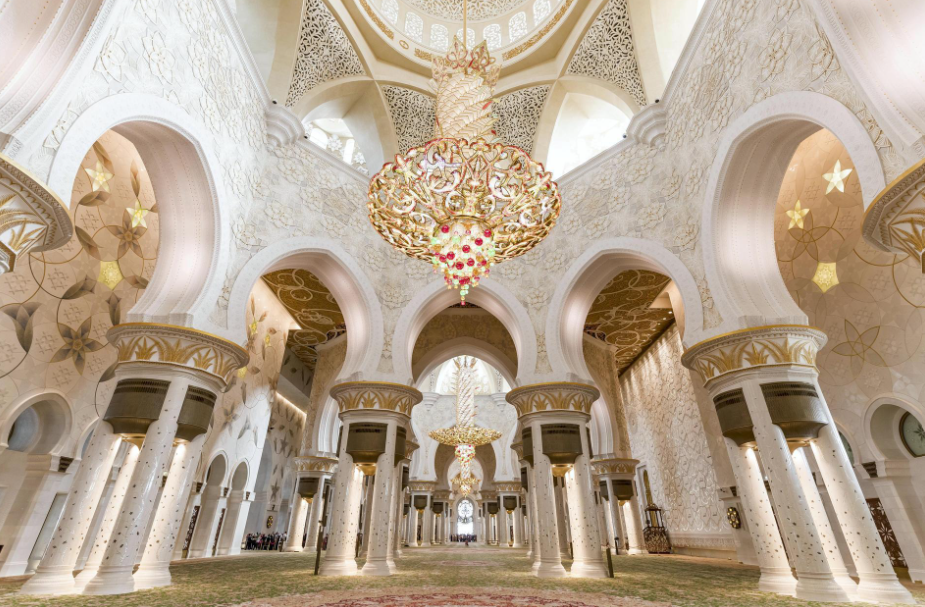
During the day, natural light interacts with the marble, glass and reflective surfaces.
After sunset, artificial illumination transforms the atmosphere.
The same architecture can therefore feel completely different depending on the time of day.
A building speaks of its time and place while aspiring to timelessness.
That idea feels particularly appropriate at Sheikh Zayed Grand Mosque.
The building is unmistakably contemporary, completed in the 21st century, yet its visual language draws from centuries of Islamic architecture and craftsmanship.
It doesn’t simply reproduce the past.
It brings historical influences into a modern architectural composition.
The Qibla Wall and the 99 Names of Allah
Among the quieter details inside the mosque is the Qibla wall, which indicates the direction of prayer towards the Kaaba in Mecca.
The wall features the 99 names or attributes of Allah, written in traditional Kufic calligraphy. The design was created by prominent UAE calligrapher Mohammed Mandi Al Tamimi, while subtle fibre-optic lighting is integrated into the wall.
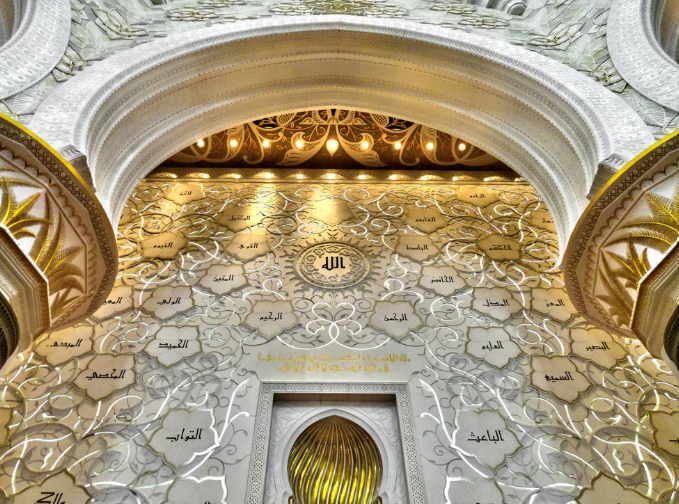
Three calligraphic styles are used throughout the mosque:
- Naskhi
- Thuluth
- Kufic
The calligraphy was drafted by Mohammed Mandi Al Tamimi of the UAE, Farouk Haddad of Syria and Mohammed Allam of Jordan.
The result is a quieter form of ornamentation than the enormous domes or chandeliers, but one that rewards close attention.
When the Mosque Changes After Dark
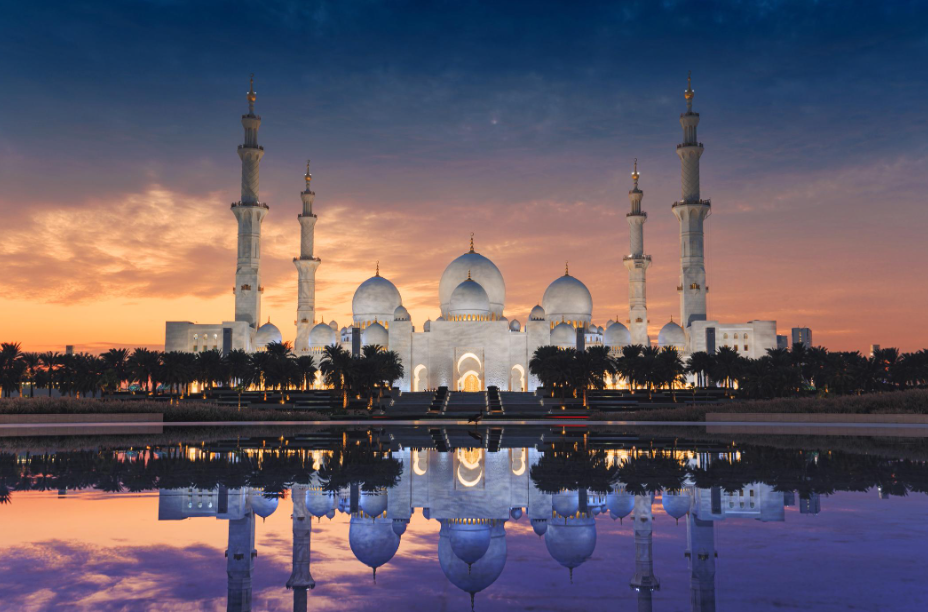
One of the most beautiful aspects of Sheikh Zayed Grand Mosque is that its relationship with light doesn’t end when the sun goes down.
The mosque has a distinctive lighting system designed by Speirs and Major Associates, created to reflect the phases of the moon.
Bluish-grey cloud-like projections appear across the exterior walls.
Their intensity changes according to the lunar cycle, creating an atmosphere completely different from the brilliant white appearance of the mosque during the day.
Meanwhile, the pools along the arcades reflect the illuminated columns.
The architecture seems to double itself in the water.
Daylight reveals the marble and craftsmanship.
Night reveals the relationship between light, reflection and architecture.
If you enjoy beautiful spaces where architecture becomes part of the experience, our The Most Beautiful Cafés in the World: Where Coffee Meets Architecture & Design and The Most Beautiful Libraries in the World: A Journey Through Extraordinary Spaces — two very different settings that show how design can transform places we visit into memorable experiences.
The Details Most Visitors Miss
The obvious features are impossible to miss.
The domes.
The minarets.
The white marble.
The courtyard.
The chandeliers.
But some of the most interesting details only reveal themselves when you slow down.
Look at the mother-of-pearl on the columns.
Look at the precious stones embedded into the marble.
Look at the calligraphy around the Qibla wall.
Look at the way the pools mirror the columns.
Look at how the floral patterns continue the relationship between architecture and nature.
And then look at the building as a whole.
From close up, it is incredibly intricate.
From a distance, it becomes incredibly calm.
That contrast is part of its magic.
EDITOR’S NOTE
The Sheikh Zayed Grand Mosque is one of those rare places where the details are just as impressive as the overall spectacle. It’s tempting to arrive with a camera and immediately start photographing the domes and façades, but the real pleasure comes from slowing down and noticing the craftsmanship: the marble, flowers, calligraphy, reflections and tiny decorative elements that make the monumental architecture feel surprisingly personal.
The Fancylicious Takeaway
The Sheikh Zayed Grand Mosque is spectacular, but its true fascination lies beneath the obvious grandeur.
It is a monument built from contrasts:
–ancient traditions and contemporary architecture
–monumental scale and microscopic detail
–local identity and international craftsmanship
–white marble and vivid colour
–daylight and moon-inspired illumination
Its architect, Yusef Abdelki, and the Syrian design team created a building informed by Moorish, Arab, Persian, Mughal and Indo-Islamic traditions. Artists, craftsmen and materials from numerous countries then helped transform that design into the finished monument.
That is what makes Sheikh Zayed Grand Mosque much more than a beautiful photograph.
It is a story written in marble, light, art and architecture.
And once you know that story, looking at the mosque feels completely different.
You stop seeing only a landmark, You start seeing the details.