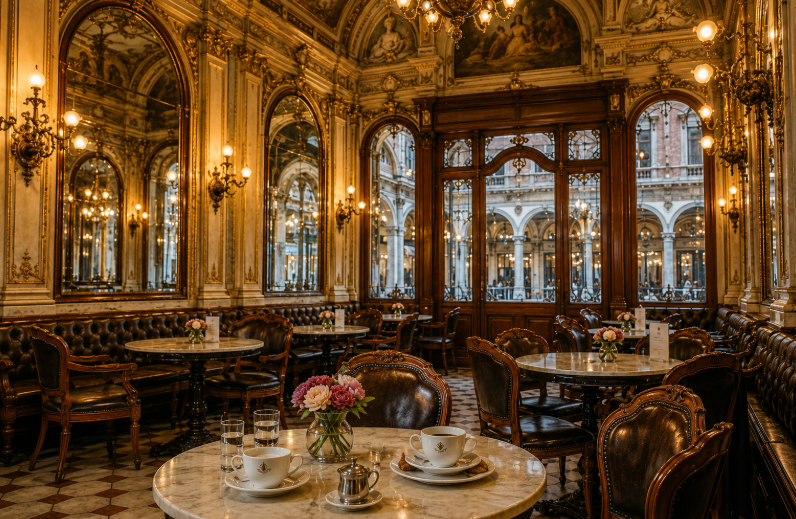
There are cafés where you simply stop for coffee, and then there are cafés where the setting becomes part of the experience.
Across the world, some coffeehouses have become destinations in their own right, celebrated not only for what is served at the table but for their architecture, interiors, history and atmosphere. Some have welcomed writers and artists for generations; others are remarkable examples of Art Nouveau, Belle Époque or contemporary design.
A beautiful café can tell you something about the city around it.
It can reveal how a culture approaches hospitality, how architecture shapes everyday life and how something as simple as coffee can become a ritual.
From a centuries-old Venetian institution to grand European coffeehouses and elegant spaces across South America and North Africa, these are some of the most beautiful cafés in the world — each selected from a different country.
1. Caffè Florian — Venice, Italy
Few cafés have a history as extraordinary as Caffè Florian.
Located beneath the Procuratie Nuove in Piazza San Marco, it opened on 29 December 1720, making it Italy’s oldest coffeehouse. More than three centuries later, it remains one of Venice’s most distinctive places to experience coffee and the city’s remarkable history.
But its beauty goes far beyond its age.
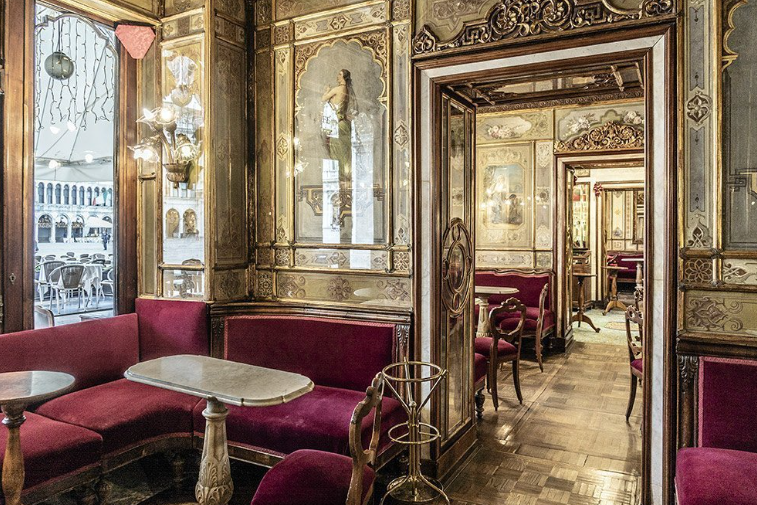
The café’s interiors contain a collection of richly decorated rooms, including the Senate Room, Chinese Room, Oriental Room, Room of Illustrious Men, Room of Seasons and Liberty Room. The rooms were decorated and redecorated over different periods, creating an atmosphere that feels more like an intimate historic salon than an ordinary café.
The Senate Room is particularly significant: its decoration is associated with the origins of what would later become the Venice Biennale.
What makes Florian especially fascinating is the way its history remains connected to everyday café culture. Venetian nobles, artists, intellectuals and travellers have all passed through its rooms, making it a place where architecture and social history meet.
The Fancylicious detail:
If you love interiors with layers of history, Caffè Florian is a reminder that the most beautiful spaces don’t always need to be modern to feel extraordinary.
And if historic interiors inspire you, our guide to The Most Beautiful Museums in the World: Where Art, Architecture and Beauty Come Together explores more spaces where architecture becomes part of the cultural experience.
2. Café Central — Vienna, Austria
Vienna has a particularly rich café culture, and Café Central is one of its most recognisable expressions.
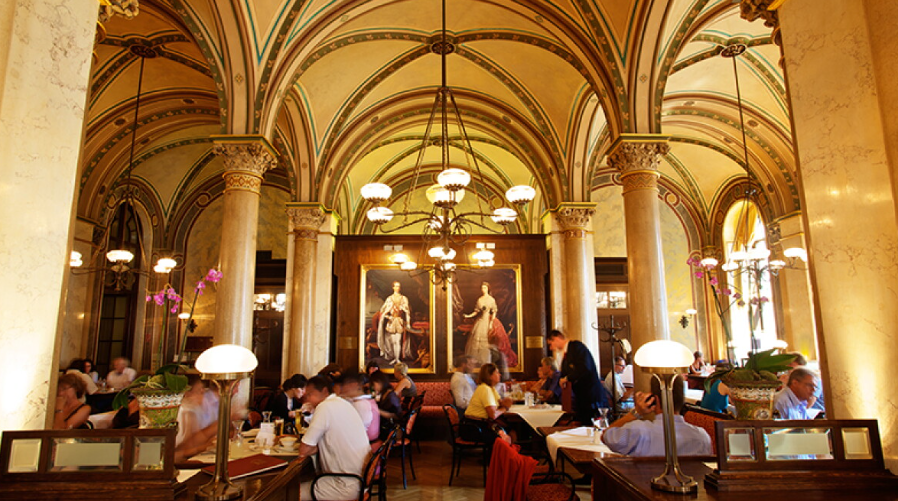
Located in the historic Palais Ferstel, the café is defined by its grand architecture, high vaulted ceilings, columns and elegant interior details.
Rather than feeling like a contemporary coffee shop, Café Central has the atmosphere of a historic Viennese salon.
That sense of history is central to its appeal. Vienna’s coffeehouses have traditionally functioned as places to read, write, meet friends and spend time without feeling hurried.
Café Central embodies that tradition beautifully.
Its grand interior also demonstrates why cafés can be fascinating architectural destinations in their own right. The experience isn’t simply about sitting down for coffee; it’s about being surrounded by a particular period of European design.
The Fancylicious detail:
The most beautiful café interiors often give you a reason to look around before you even look at the menu. At Café Central, the architecture provides much of the atmosphere.
3. New York Café — Budapest, Hungary
If the phrase “beautiful café” makes you imagine chandeliers, marble, frescoes and elaborate architectural details, Budapest’s New York Café may be exactly what you have in mind.
The café is famous for its extraordinarily ornate interior, where gilded details, dramatic ceiling decorations, columns and luxurious furnishings create an almost palatial atmosphere.
It is one of those places where the architecture immediately becomes part of the experience.
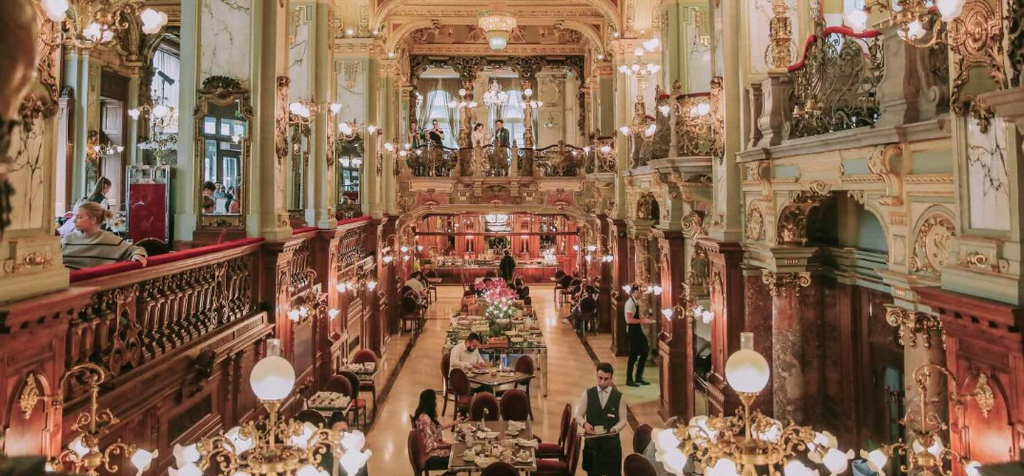
Rather than following the minimalist trend that dominates many contemporary cafés, New York Café embraces decoration — and does so unapologetically.
The result is theatrical, romantic and unmistakably grand.
It is also a useful reminder that café design doesn’t have to be restrained to be elegant.
The Fancylicious detail:
When a room already has extraordinary architectural details, the best styling choice is often to let those details speak for themselves rather than competing with them.
4. Café Majestic — Porto, Portugal
Porto’s Café Majestic is another beautiful example of the café as an architectural landmark.
Located on Rua de Santa Catarina, the café is known for its Belle Époque atmosphere and richly decorated interior.
Mirrors, carved wood, ornamental details and elegant furnishings create a distinctly historic setting.
It is easy to imagine the café as a meeting place from another era — which is precisely what makes it so appealing today.
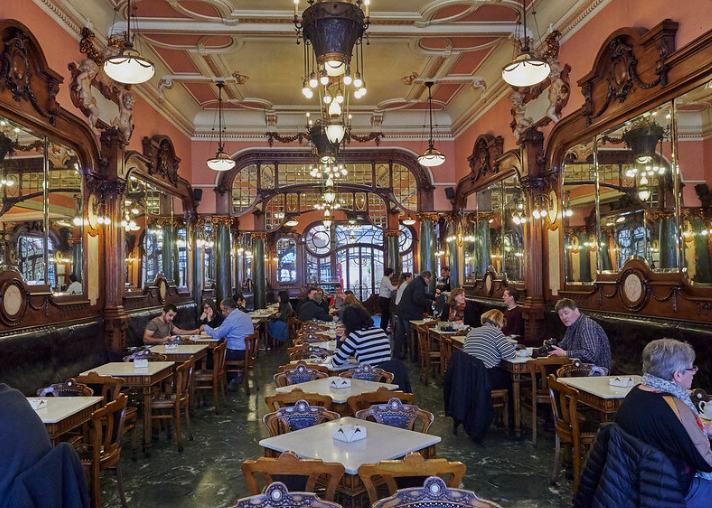
Café Majestic demonstrates how a café can preserve a city’s architectural character while remaining part of contemporary life.
And Porto itself adds another layer to the experience. The city’s combination of historic architecture, tiled façades and atmospheric streets makes the journey to the café almost as enjoyable as sitting inside it.
The Fancylicious detail:
Sometimes the beauty of a café begins before you walk through the door. Its relationship with the surrounding street and neighbourhood can be just as important as the interior.
5. Café de Flore — Paris, France
Some cafés are famous primarily for their architecture. Café de Flore is equally famous for the cultural life that has unfolded around its tables.
Situated on Boulevard Saint-Germain in Paris, Café de Flore dates back to the late nineteenth century. Its official history describes its longstanding connection with literature, art and avant-garde movements, including Dadaism, Surrealism and Existentialism.
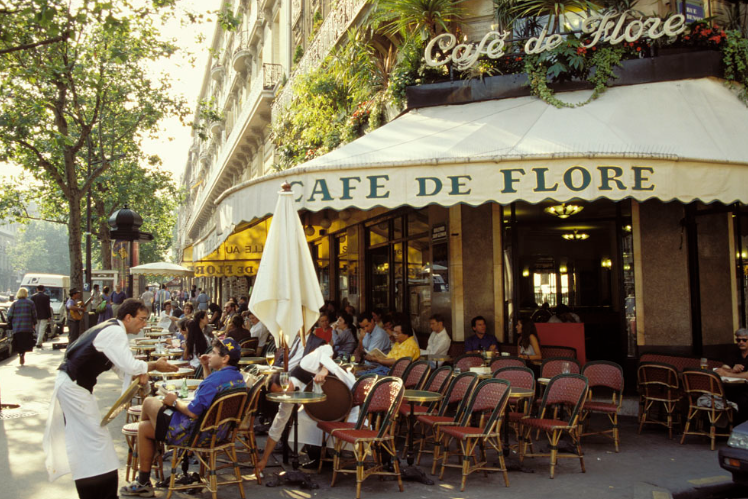
Writers, artists, photographers, filmmakers and fashion figures have all contributed to its mythology.
That makes Café de Flore beautiful in a slightly different way.
Its appeal isn’t based solely on ornate architecture. It comes from the combination of place, atmosphere and cultural memory.
The classic Parisian café setting — terrace tables, distinctive seating and the rhythm of Saint-Germain-des-Prés — has become part of the visual language of Paris itself.
And the café remains active today, welcoming visitors throughout the week.
The Fancylicious detail:
A truly iconic café doesn’t simply photograph beautifully. It develops a personality of its own.
DID YOU KNOW?
Café de Flore’s artistic history stretches across literature, painting, photography, cinema and fashion. Its official history notes connections with figures ranging from Picasso and Giacometti to Yves Saint Laurent, Givenchy and numerous writers and filmmakers.
6. Café Tortoni — Buenos Aires, Argentina
In Buenos Aires, Café Tortoni offers another interpretation of the historic café.
Founded in 1858, it is the oldest café in Buenos Aires and has long been associated with the city’s cultural life. The city’s official tourism site highlights its marble tables and historically rich walls, as well as its connections to major literary and musical figures.
Its atmosphere reflects the European influences that shaped Buenos Aires while remaining distinctly porteño.
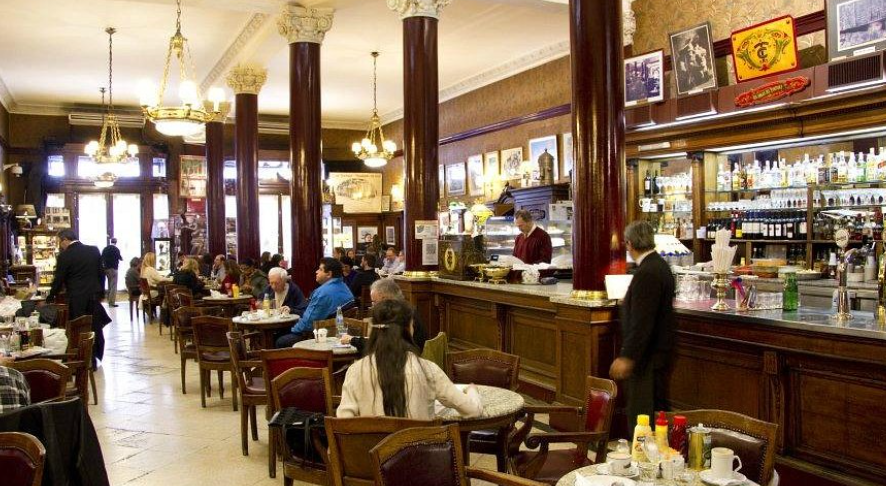
Inside, the café feels intimate and historic rather than overwhelmingly grand. That contrast is part of its charm.
Café Tortoni is a reminder that beauty doesn’t necessarily mean extravagance.
Sometimes it’s found in aged marble, dark wood, historic photographs and the patina of time.
The café continues to welcome visitors today, and its official website describes it as the oldest café in Buenos Aires, founded in 1858.
The Fancylicious detail:
Don’t underestimate the beauty of patina. A space that shows its history can feel much more atmospheric than one that looks brand new.
7. Confeitaria Colombo — Rio de Janeiro, Brazil
In Rio de Janeiro, Confeitaria Colombo offers a very different kind of café beauty.
Founded in 1894, the historic confectionery is one of the city’s most recognisable cultural landmarks. Its Belle Époque interiors feature ornate decoration, large mirrors, stained glass and elegant furnishings that reflect the European influences that shaped Rio’s cultural life.
But the experience isn’t simply about admiring the architecture.
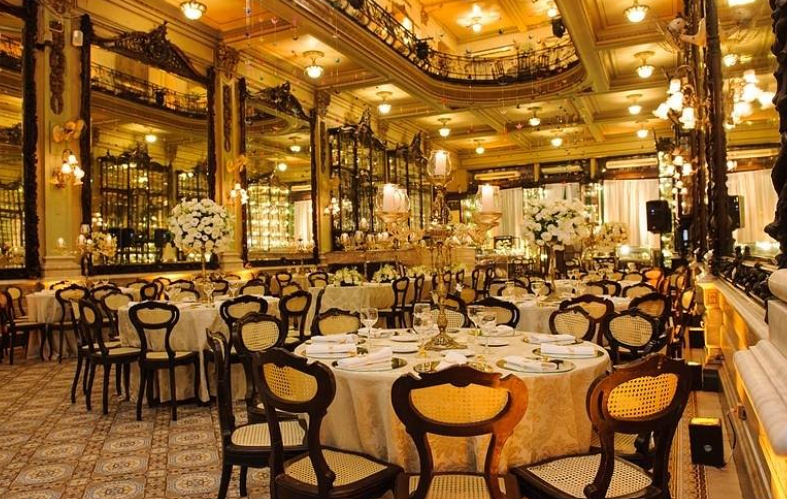
Confeitaria Colombo remains part of Rio’s café and pastry culture, making it possible to experience its history while enjoying the rituals that have made cafés such enduring social spaces.
The combination of architecture, food and history is what makes it particularly compelling for this list.
The Fancylicious detail:
A historic café becomes even more special when its original character isn’t simply preserved as decoration but remains part of everyday life.
8. The Wolseley — London, United Kingdom
London’s café culture has its own distinctive character, and The Wolseley brings a distinctly grand European sensibility to the city.
Located on Piccadilly, the restaurant occupies a former car showroom whose architecture was transformed into an elegant dining space. Its dramatic proportions, marble surfaces, columns, arches and carefully considered lighting create the atmosphere of an old-world European café.
The interior is particularly beautiful because of its sense of scale.
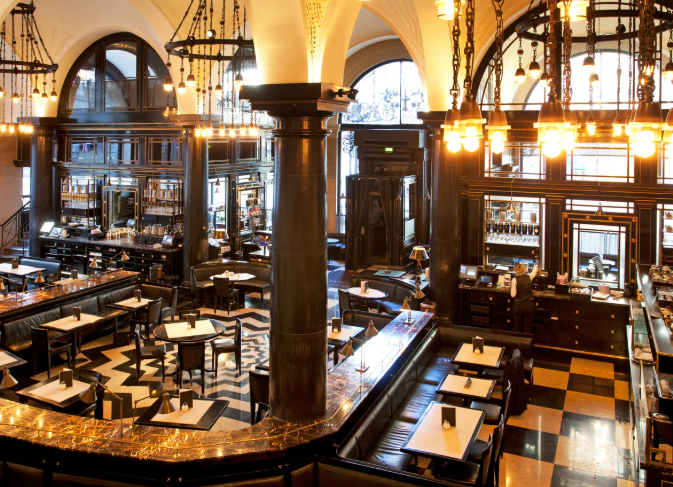
Rather than relying on an abundance of decorative objects, the design allows the architecture itself to provide the drama.
It’s a setting that feels equally appropriate for breakfast, afternoon tea or an elegant coffee break.
And that versatility is part of its appeal: the space feels luxurious without requiring a special occasion.
The Fancylicious detail:
One of the secrets of sophisticated interiors is knowing when to let architecture do the decorating. Strong proportions and beautiful materials can create impact without excessive ornament.
STYLE TIP
When choosing a beautiful café to visit, look beyond the individual decorative details and notice how the entire space works together. The most memorable interiors usually have a consistent visual language — from the architecture and lighting to the furniture, colours and table settings.
9. Bacha Coffee — Marrakech, Morocco
Marrakech introduces an entirely different visual language to our café journey.
Bacha Coffee is housed within the historic Dar El Bacha Palace, creating an experience where coffee culture meets Moroccan architecture and decorative artistry.
The setting is filled with intricate details, rich colours, traditional craftsmanship and an unmistakable sense of place.
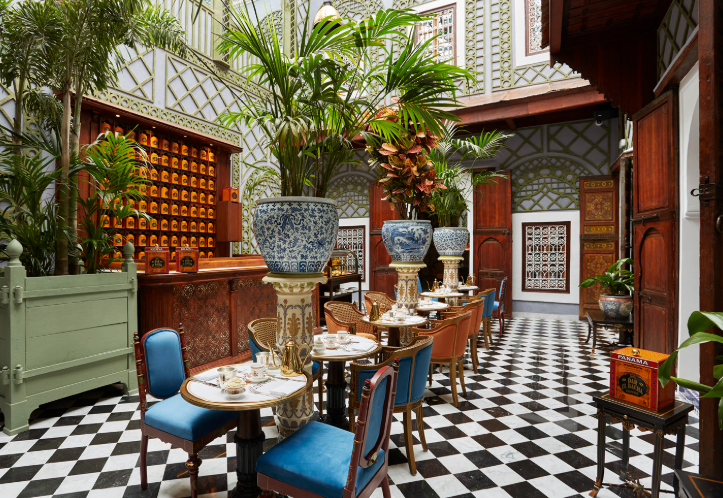
Here, the beauty isn’t based on the restrained elegance of a Parisian café or the grand European interiors of Budapest and Vienna.
Instead, it comes from pattern, colour, craftsmanship and atmosphere.
The setting also makes Bacha Coffee particularly interesting from a design perspective. Moroccan interiors demonstrate how repetition, symmetry and intricate decoration can create a remarkably cohesive visual experience.
And, naturally, coffee remains at the centre of the experience, with Bacha Coffee presenting an extensive selection of coffees from around the world.
The Fancylicious detail:
Don’t be afraid of pattern. When colours, motifs and materials share a coherent visual language, even highly decorative interiors can feel sophisticated rather than overwhelming.
10. Crew Collective & Café — Montréal, Canada
For our final destination, we move away from ornate historic European interiors and into something much more architectural.
Crew Collective & Café occupies the former Royal Bank of Canada building in Montréal’s Old Port, combining historic architecture with a contemporary café environment.
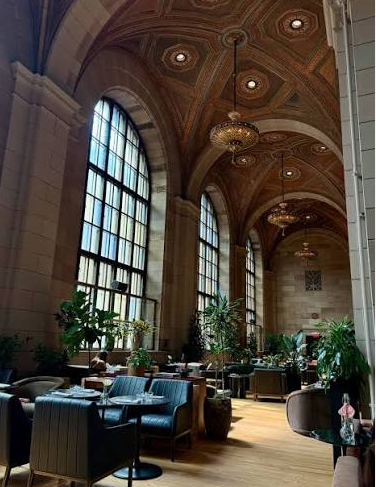
The space is known for its impressive vaulted ceilings, monumental columns, marble details and dramatic proportions, while contemporary furniture and workspaces give the historic setting a modern purpose.
That contrast is what makes it so interesting.
Rather than attempting to recreate the atmosphere of a nineteenth-century coffeehouse, the café allows its architecture to remain prominent while introducing a more contemporary way of using the space.
It demonstrates how historic buildings can be adapted without losing their character.
The Fancylicious detail:
The most interesting interiors aren’t always those that perfectly match one design era. Sometimes the contrast between historic architecture and contemporary furniture creates the most memorable atmosphere.
11. What Makes a Café Truly Beautiful?
After visiting ten cafés across ten countries, a pattern begins to emerge.
There isn’t one definition of beauty.
Caffè Florian is beautiful because of its centuries of history and extraordinary rooms.
Café Central represents the elegance of Viennese coffeehouse culture.
New York Café embraces theatrical grandeur.
Café Majestic captures the romance of Belle Époque Porto.
Café de Flore demonstrates the power of cultural history and Parisian atmosphere.
Café Tortoni celebrates patina, heritage and Buenos Aires’ artistic traditions.
Confeitaria Colombo combines architecture and Brazilian café culture.
The Wolseley shows how scale and materials can create timeless sophistication.
Bacha Coffee celebrates Moroccan craftsmanship and decorative richness.
And Crew Collective & Café demonstrates how historic architecture can be given a contemporary life.
What connects them isn’t a particular colour palette, furniture style or architectural period.
It’s character.
12. Why Cafés Have Become Design Destinations
There is something fascinating about the way cafés occupy the space between private and public life.
A museum asks you to look.
A library invites you to read.
A restaurant encourages you to eat.
But a café allows you to linger.
You can read, write, work, meet someone, watch the street or simply sit with a coffee and do nothing at all.
That flexibility makes café design particularly important.
The most memorable spaces understand that people aren’t simply looking for somewhere to drink coffee. They’re looking for an atmosphere in which to spend time.
This is also why some cafés become destinations in their own right.
If you enjoy discovering beautiful spaces designed around reading, architecture and atmosphere, our guide to The Most Beautiful Libraries in the World: A Journey Through Extraordinary Spaces explores another type of environment where architecture shapes the experience.
Coffee is a beverage that puts one to sleep when not drank.
Beautiful architecture isn’t limited to cafés and cultural spaces. For another extraordinary example of design shaping an entire experience, discover Sheikh Zayed Grand Mosque: The Story, Design & Secrets Behind Abu Dhabi’s Icon.
13. The Beauty of the Café Ritual
Part of what makes these places so appealing is the ritual itself.
Choosing a table.
Ordering something beautiful.
Watching coffee being prepared.
Taking your time.
Looking around at the architecture.
Perhaps opening a book or simply watching the world outside.
In a fast-moving world, cafés offer something increasingly valuable: permission to slow down.
And that is perhaps why beautiful cafés continue to fascinate us even when coffee itself has become something we can prepare almost anywhere.
The setting transforms an ordinary drink into an experience.
14. How to Bring the Café Aesthetic Home
You don’t need a historic Venetian interior or a grand Budapest coffeehouse to bring some of this atmosphere into your own home.
Start with the elements that make these spaces feel special:
Beautiful lighting creates warmth and intimacy.
A considered colour palette prevents the room from feeling chaotic.
Interesting materials such as marble, brass, wood and glass add depth.
Books and magazines give the space personality.
Flowers or greenery introduce softness.
And perhaps most importantly, create somewhere you actually want to sit.
A comfortable chair, a small side table and a beautiful cup can transform an ordinary corner into a personal café-inspired retreat.
If you’re particularly drawn to creating a cozy space for reading, our guide to How to Create a Cozy Reading Corner at Home offers more ideas for combining comfort, books and atmosphere at home.
EDITOR’S NOTE
The most beautiful cafés remind us that everyday experiences deserve beautiful surroundings. You don’t need an extraordinary building to create that feeling at home. A beautiful cup, warm lighting, a favourite book and a comfortable place to sit can transform an ordinary coffee into a small daily ritual worth looking forward to.
Final Thoughts
The world’s most beautiful cafés aren’t beautiful for exactly the same reasons.
Some are historic.
Some are theatrical.
Some are architectural masterpieces.
Others are beautiful because of the stories, people and cultural traditions that have accumulated around their tables.
But all of them demonstrate the same idea: a café can be much more than a place to drink coffee.
It can be a meeting place, a cultural institution, a design destination or simply a beautiful corner of the city in which to pause.
From Venice to Montréal, these ten cafés show how different cultures have interpreted the simple pleasure of sitting down for coffee — and how architecture, design and atmosphere can turn that everyday ritual into something unforgettable.
And perhaps that’s the real beauty of the café.
It gives us a reason to slow down.