There is something quietly captivating about crystals. Their colours, intricate formations and natural imperfections have fascinated people for centuries, inspiring everything from treasured jewellery and decorative objects to spiritual practices and personal rituals. Some are drawn to the luminous violet of amethyst, others to the soft blush of rose quartz or the golden warmth of citrine. Beyond their visual appeal, these stones carry layers of symbolism that continue to resonate in contemporary life.
Today, crystals occupy an interesting place between ancient traditions and modern wellness culture. They appear in meditation spaces, on bedside tables, in carefully styled interiors and as meaningful additions to everyday jewellery. For some, they represent spiritual beliefs or personal intentions; for others, they are simply beautiful reminders to pause and reconnect with themselves.
But what does the power of crystals really mean? Exploring their history, symbolism and place in modern life reveals why these natural formations continue to hold our attention — and how we can appreciate them without confusing traditional beliefs with scientific evidence.
1. Why Crystals Continue to Fascinate Us
Crystals have a long and varied cultural history. Across different societies, particular stones have been valued for their beauty, rarity, practical uses and symbolic associations. They have appeared in ornaments, ceremonial objects, amulets and jewellery, with their meanings shaped by the traditions and beliefs of the people who used them.
Their appeal is easy to understand. Each stone has its own combination of colour, transparency, texture and structure. Some appear almost glass-like, while others contain intricate bands, inclusions or shimmering surfaces. Even within the same mineral variety, no two natural specimens are necessarily identical.
This individuality has helped crystals become more than decorative objects. Throughout history, people have attached meanings to stones, associating particular colours and minerals with qualities such as love, wisdom, prosperity or protection. These associations vary between cultures and spiritual traditions rather than forming one universal system of belief.
The word crystal itself has ancient roots. It derives from the Greek krystallos, a term associated with ice. Clear quartz was once believed by some ancient Greeks to be permanently frozen water, reflecting how its transparent appearance captured the imagination.
In contemporary life, crystals have also become part of a wider interest in mindful living and personal expression. Their enduring appeal lies in this combination of natural beauty, cultural history and the meanings people continue to find in them.
Colour has long played a powerful role in the way we interpret the world around us. Our guide to lucky colours around the world and what they symbolise explores how different cultures associate particular shades with luck, prosperity and protection.
DID YOU KNOW?
Clear quartz is made of silicon dioxide, the same chemical compound found in several other familiar forms of quartz. Its transparency and geometric crystal structure have helped make it one of the most recognisable minerals in the world.
2. The Spiritual Meaning of Crystals
Within crystal traditions, stones are often selected according to the qualities they are believed to symbolise. Some are associated with love and compassion, others with clarity, abundance, grounding or spiritual reflection. These meanings can offer a framework for personal rituals, although they are not established scientific properties of the minerals.
For those who enjoy a spiritual approach, a stone may represent a particular intention or quality they wish to reflect on. Rose quartz, for example, is commonly connected with love, while amethyst is associated with spiritual reflection. Citrine is often linked with optimism and abundance.
These associations are not identical across every tradition. Some meanings have developed through historical and cultural practices, while others have become popular through contemporary crystal guides and wellness communities. Understanding this variety makes exploring crystal symbolism more interesting than treating each stone as though it has one fixed, universal meaning.
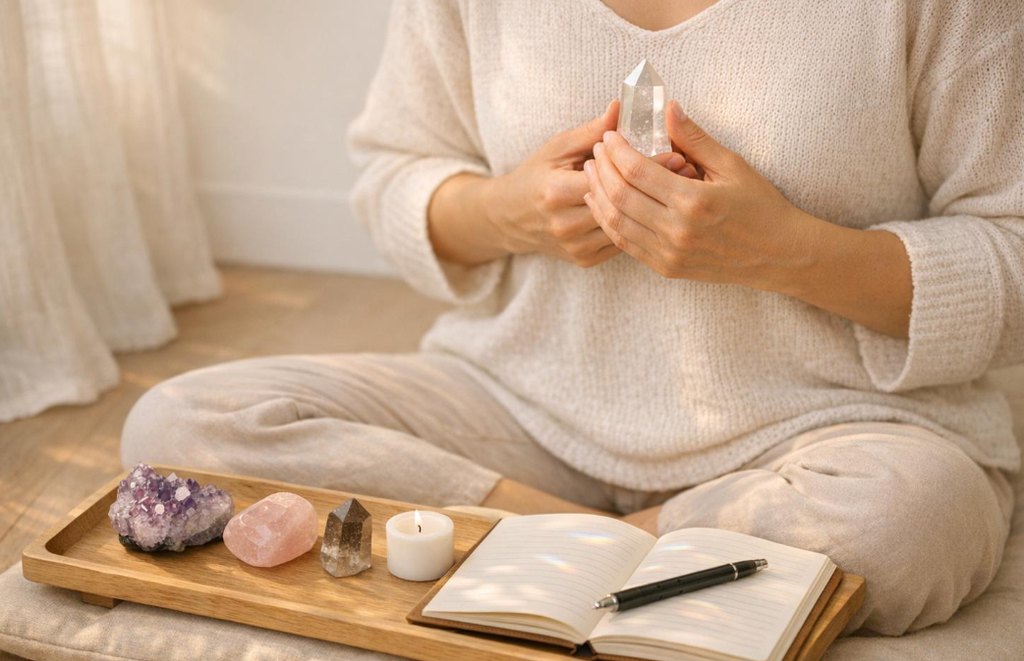
Crystals may also be incorporated into spiritual practices as objects of focus. A person might hold a stone during meditation, place it beside a journal or choose one to mark a personal milestone. The significance lies in the individual’s beliefs and the meaning they attach to the practice.
Approaching these traditions with curiosity allows room for their cultural and personal significance without assuming that symbolic associations establish a stone’s ability to influence health, emotions or external events.
Crystals are just one example of how objects can carry meanings that extend beyond their physical form. Explore more cultural traditions in our guide to good luck symbols around the world and the stories behind them.
3. Five Popular Crystals and Their Meanings
From delicate pink stones to richly coloured minerals, certain crystals have become especially familiar in contemporary wellness and lifestyle settings. Understanding their commonly associated meanings is a useful starting point if you are curious about their symbolism.
Amethyst: Calm and Spiritual Reflection
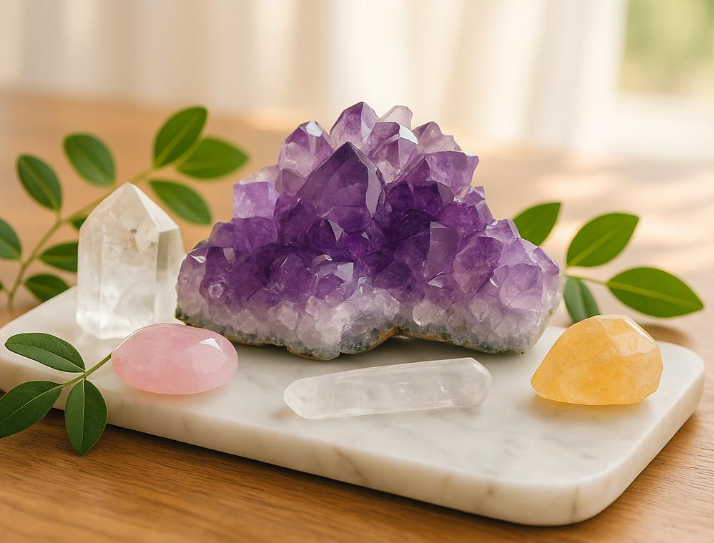
Recognisable by its shades of violet and purple, amethyst is a variety of quartz that has been valued in jewellery and decorative objects for centuries. Its distinctive colour makes it one of the most immediately recognisable crystals.
In modern crystal traditions, amethyst is often associated with calm, intuition and spiritual reflection. Some people keep it in a meditation space or beside a journal as a reminder to make room for quiet thought.
Its appeal also extends beyond symbolism. The rich purple tones can bring depth to a collection of natural stones, while a polished amethyst cluster can make a striking decorative accent.
Rose Quartz: Love and Compassion
Rose quartz is known for its soft pink colour, which ranges from pale blush to a deeper, cloudy rose. Its gentle appearance has made it a popular choice for jewellery, decorative pieces and personal crystal collections.
Traditionally, rose quartz is associated with love, compassion and emotional openness. Its symbolism is often interpreted broadly, encompassing romantic relationships, friendship, self-kindness and the importance of treating others with care.
For someone who appreciates meaningful objects, rose quartz can serve as a personal reminder of these values. Its significance is individual, shaped by the associations its owner chooses to embrace.
Citrine: Optimism and Abundance
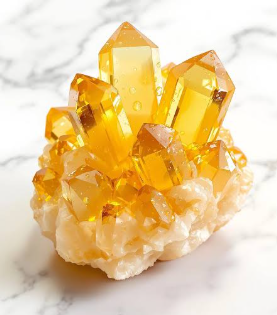
Citrine is a yellow to golden variety of quartz whose warm colour brings to mind sunshine and autumn light. Depending on the specimen, its appearance can range from pale yellow to rich amber.
Within modern crystal traditions, citrine is commonly associated with optimism, confidence, creativity and abundance. It is sometimes chosen to represent a fresh start, an ambition or a more positive outlook.
A small citrine specimen can also be an attractive addition to a desk or shelf, particularly in interiors that feature warm neutrals, natural wood and golden accents. Its symbolic associations may provide a personal prompt to focus on opportunities and goals, rather than a guarantee of prosperity or success.
Clear Quartz: Clarity and Intention
Clear quartz is prized for its transparency and versatility. It can appear almost colourless, with natural inclusions and internal formations that give individual pieces their character.
In contemporary crystal practices, clear quartz is often linked with clarity, focus and intention. Some traditions also describe it as an amplifying stone, although claims about its ability to amplify spiritual energy are not scientifically established.
Its understated appearance makes it easy to incorporate into a collection, whether displayed as a natural point, a polished stone or a decorative cluster. For someone who values simplicity, clear quartz can symbolise the act of clearing away distractions and concentrating on what matters.
Black Tourmaline: Protection and Grounding
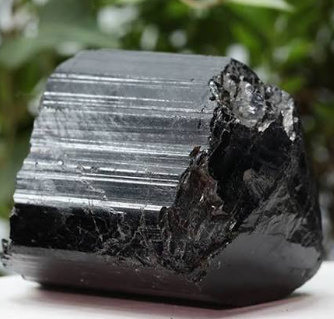
Black tourmaline is a dark mineral that often appears in elongated, ridged crystals. Its deep colour and distinctive texture create a striking contrast with lighter stones such as rose quartz and clear quartz.
In crystal traditions, black tourmaline is frequently associated with protection, grounding and boundaries. People who choose it for these reasons may use it as a symbolic reminder to remain centred or to be more mindful of the environments and commitments they take on.
These associations belong to spiritual belief rather than demonstrated protective effects. Nevertheless, the stone’s tactile quality and dramatic appearance can make it a meaningful object for someone who values its symbolism.
If you enjoy exploring the stories and symbolism attached to gemstones, our guide to the hidden meaning of birthstones offers another perspective on the cultural significance of precious and semi-precious stones.
4. Crystals in Modern Wellness Rituals
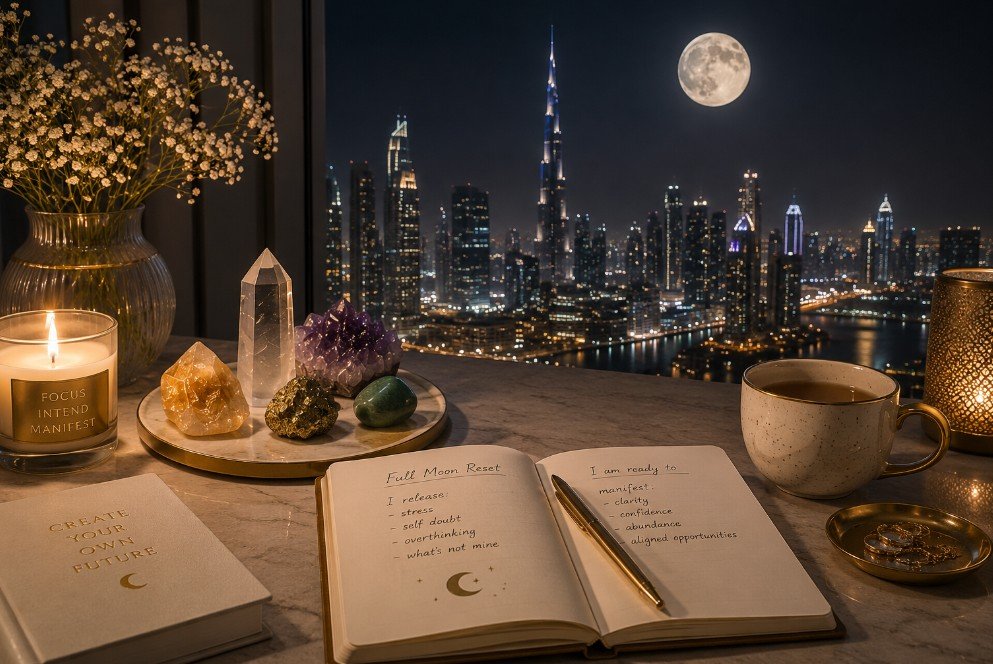
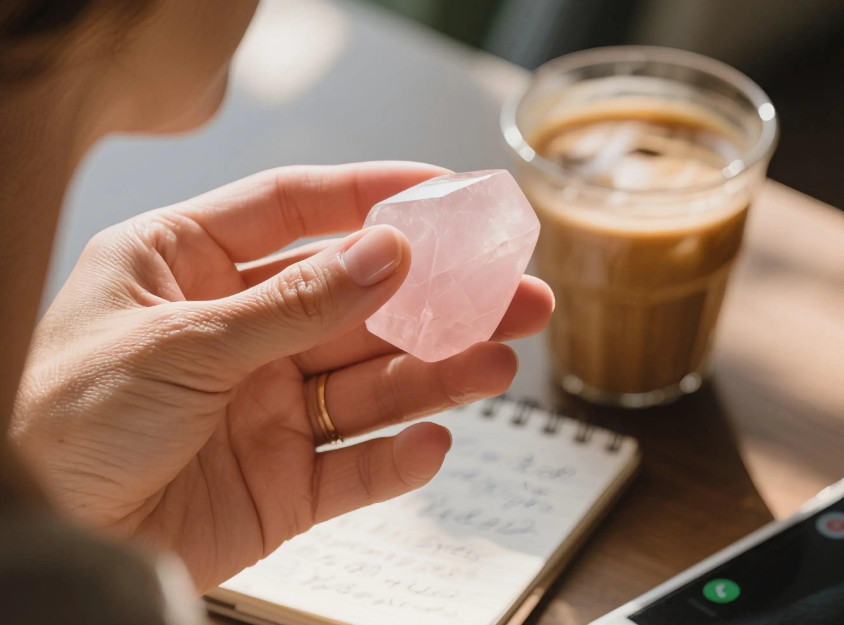
Crystals can be incorporated into simple wellness rituals as visual reminders to pause and make space for reflection. Rather than treating them as solutions to everyday stress, consider how a familiar object might help you establish a routine that feels grounding and intentional.
You might place a favourite stone beside your journal and spend five minutes writing before the day begins, or keep one near your meditation space as a cue to put your phone aside. The crystal becomes part of the ritual, while the time you dedicate to reflection is what creates the opportunity to slow down.
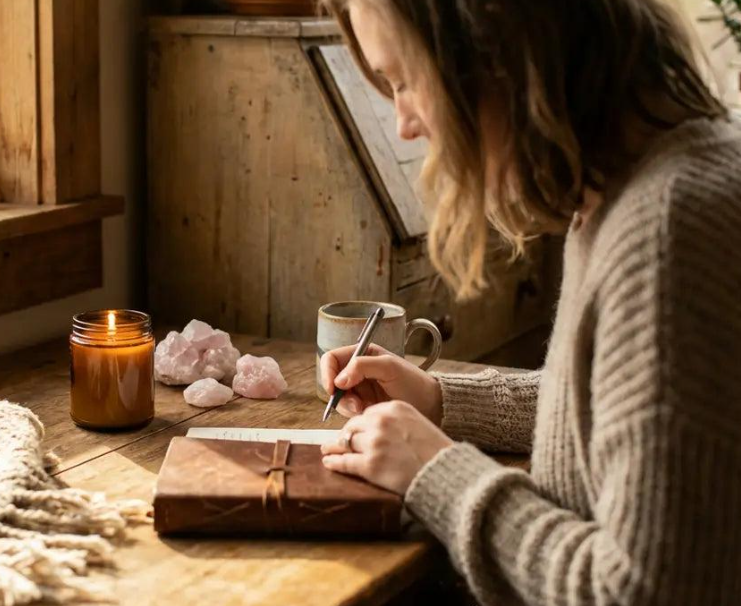
Another approach is to choose a personal intention at the beginning of the week. This could be making more time for family, approaching a project with greater focus or being more deliberate about rest. Keeping a meaningful object nearby can serve as a visual prompt to revisit that intention.
There is no need for elaborate ceremonies or a large collection. A few quiet minutes, a comfortable setting and a routine you can realistically maintain are enough to create a moment of pause.
The appeal of these practices is personal. Some people enjoy the spiritual associations, while others simply appreciate having a tangible reminder of something important to them.
Knowing yourself is the beginning of all wisdom.
The sentiment offers a fitting reminder that personal rituals are most meaningful when they encourage reflection rather than promise extraordinary results.
5. Crystals in Jewellery and Personal Style
Crystals have long been appreciated for their colour, brilliance and natural variation, making them enduring elements of jewellery design. From amethyst pendants to citrine rings and rose quartz earrings, different stones can introduce colour and individuality to an otherwise understated outfit.
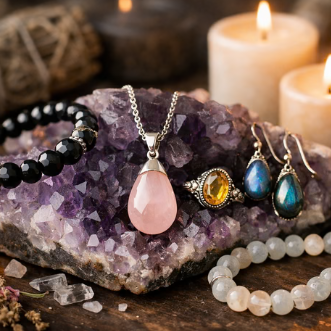
When choosing crystal jewellery, begin with the aesthetic you enjoy. Amethyst can provide a rich violet accent against neutral clothing, while rose quartz offers a softer blush tone. Clear quartz suits those who prefer a more restrained appearance, and darker stones can add contrast to silver or gold settings.
You can also think about symbolism when selecting a piece. A stone associated with a personal milestone or quality you admire may make a necklace or ring feel more significant than an accessory chosen purely for appearance. That meaning is individual, however, and does not need to be shared by everyone who sees it.
The setting deserves consideration, too. A simple pendant allows the stone to take centre stage, while a cluster of smaller crystals can create a more decorative effect. For everyday wear, look at the quality of the setting, how securely the stone is held and whether the piece is comfortable enough to wear regularly.
A thoughtful approach to crystal jewellery combines personal significance with a design you genuinely love. You do not need to follow spiritual traditions to appreciate the craftsmanship, colour or individuality of a gemstone.
6. Bringing Crystals into Your Home
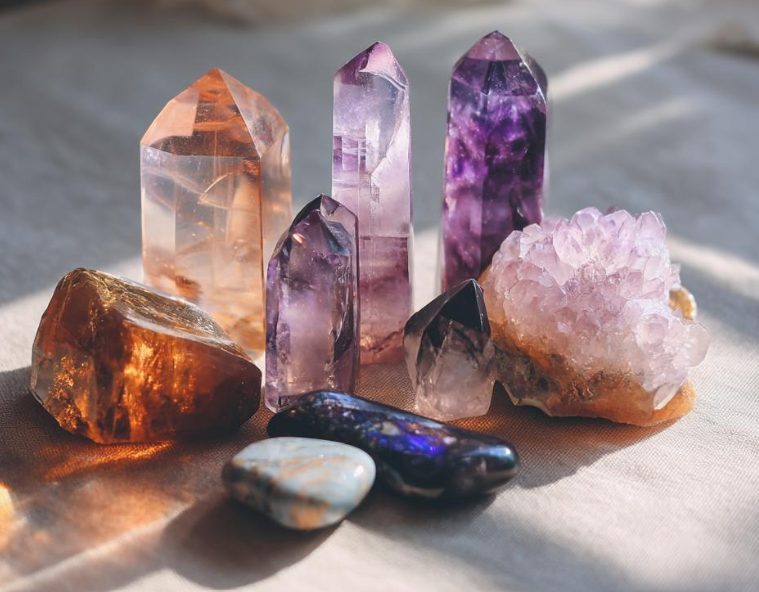
Crystals can also be incorporated into interiors as decorative objects, adding natural colour, texture and sculptural interest. Their appeal lies partly in their individuality: a rough mineral cluster, a polished sphere and a sharply formed crystal point can each create a very different impression.
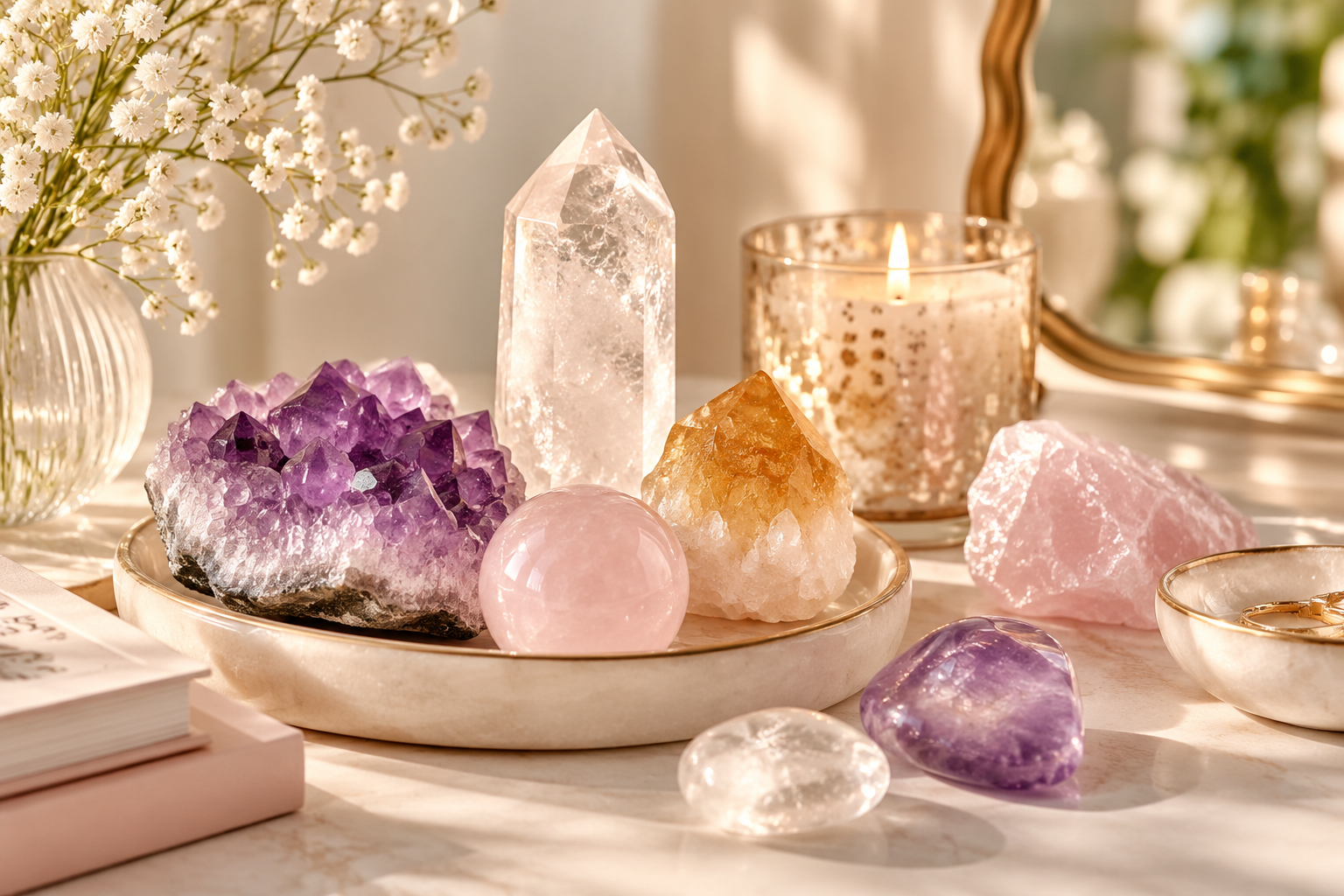
For a calm, understated arrangement, place one or two stones on a bedside table, bookshelf or dressing table. Clear quartz can complement a minimalist setting, while amethyst introduces depth to a neutral palette. Rose quartz works well with soft pinks, cream and warm metallic finishes, and citrine can add a golden accent to a display of natural materials.
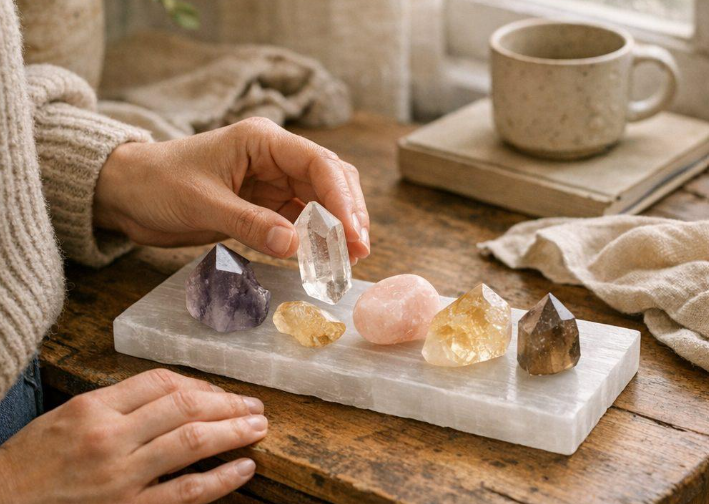
Grouping several stones together can create a more deliberate focal point. Vary their sizes and shapes, but leave enough space around the arrangement for each piece to be appreciated. A small ceramic dish or stone tray can help organise polished crystals, while larger specimens often look best displayed individually.
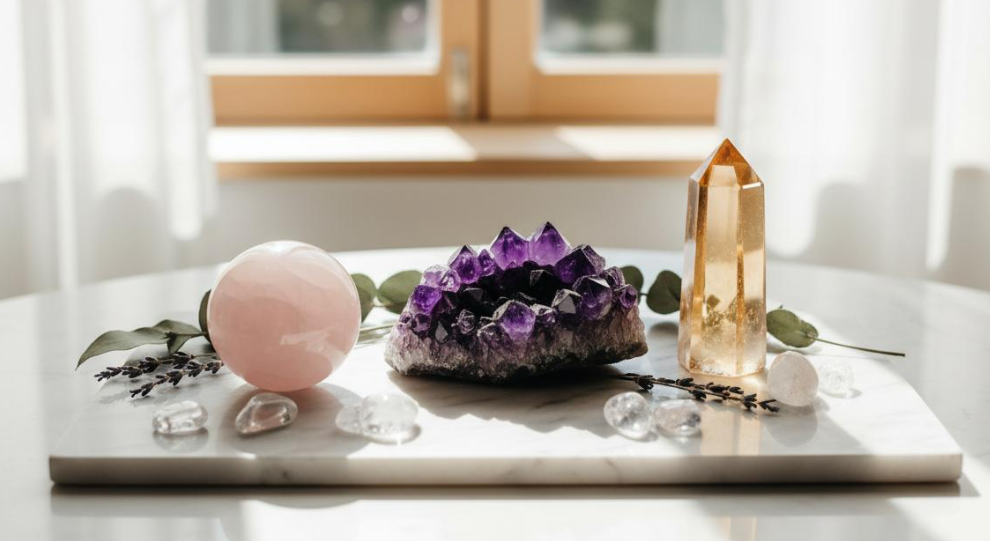
Lighting can change how a crystal appears. Natural daylight may reveal internal formations and variations in colour, while softer evening illumination can create an intimate atmosphere. Avoid prolonged direct sunlight for specimens that may fade, and choose a stable surface where heavier pieces cannot be knocked over easily.
If you enjoy styling small surfaces throughout your home, our guide to how to style a beautiful bedside table offers more inspiration for combining decorative objects with practical essentials.
Crystals can also sit alongside candles, ceramics, books and treasured objects without requiring an entire room to follow a particular spiritual aesthetic. For ideas on using fragrance and ambient lighting to shape the atmosphere of a space, explore the most-loved candles for every home.
The aim is to let crystals complement the interior rather than dictate it. One distinctive specimen can be enough to introduce an interesting natural detail.
STYLE TIP
For an elegant display, arrange two or three crystals on a small decorative tray alongside a favourite candle or a jewellery dish. Vary their shapes and heights, leaving enough space for each piece to stand out. The result feels considered and personal, without overwhelming your décor.
7. What Does Science Say About Crystal Healing?
Crystal healing is often presented as a way to influence physical health, emotional wellbeing or a person’s energy. However, current scientific evidence does not establish that crystals possess special healing powers or can treat medical conditions.
Research examining crystal healing has not demonstrated a reliable effect beyond placebo responses. A study investigating claims about rose quartz and anxiety, for example, found that the reported effects were consistent with participants’ expectations rather than a specific effect of the crystal itself.
This distinction matters. Someone may find a crystal comforting or associate it with a meaningful ritual, but that personal experience does not prove that the stone produces a therapeutic effect.
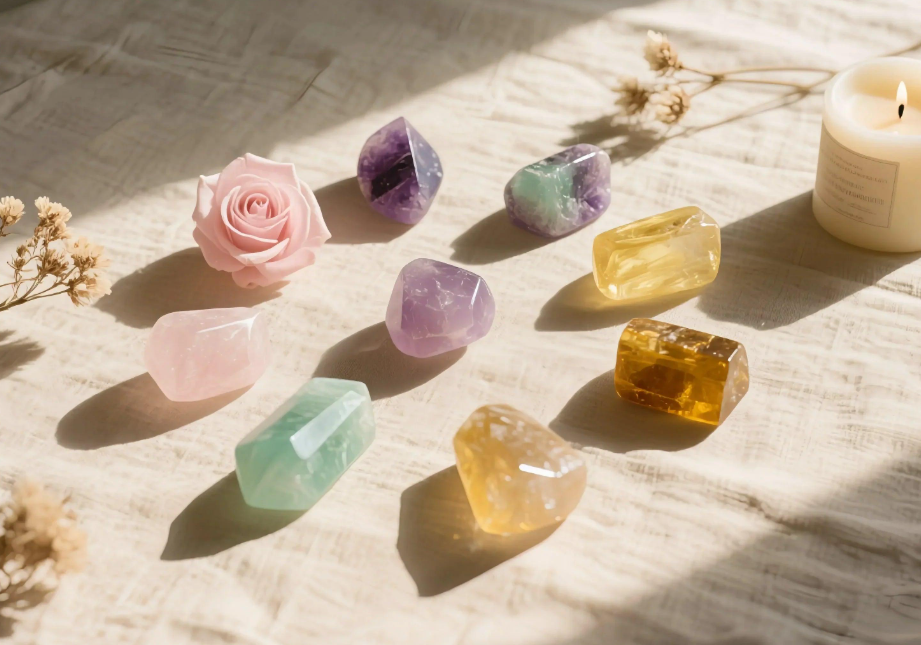
There are several reasons people may value these practices. A familiar object can prompt reflection, meditation may offer a dedicated opportunity to pause, and a consistent ritual can provide structure to a day. These experiences should be understood on their own terms rather than used as evidence of a crystal’s healing ability.
Crystals should never replace medical advice, prescribed treatment or evidence-based care. Anyone experiencing persistent physical or psychological symptoms should seek appropriate professional support rather than relying on a stone as a remedy.
A balanced perspective allows room for curiosity, cultural traditions and personal symbolism while remaining clear about the limits of scientific evidence. Crystals can be appreciated for their natural beauty and the meanings people attach to them without making claims they cannot substantiate.
8. Choosing and Caring for Your Crystals
Whether you are beginning a collection or adding to one you already own, choosing crystals thoughtfully can make the experience more rewarding.
Start by considering what draws you to a particular stone. You may appreciate its natural colour, be interested in its geological characteristics or feel connected to the symbolism associated with it. If you are buying a more expensive specimen, ask the seller about its identity, origin and any treatments that may affect its appearance or value.
Care deserves equal attention. Not all minerals respond to water, sunlight or cleaning products in the same way. Some can deteriorate when wet, while others are sensitive to strong light or physical handling. Before cleaning a specimen, identify the mineral and check its specific care requirements.
For an unidentified piece, a cautious starting point is to remove dust gently with a soft, dry brush and avoid soaking it or applying household cleaners. Keep delicate pieces secure, prevent them from knocking against harder objects and seek reliable care guidance before using water or other cleaning methods.
You may also encounter spiritual traditions involving moonlight, sound or other rituals described as ways to cleanse or recharge crystals. These practices have symbolic significance for some people, but they are not scientifically established methods of restoring a mineral’s energy. If you choose to follow them, make sure the practice does not expose your specimen to conditions that could damage it.
Thoughtful care helps preserve a crystal’s natural appearance and any personal significance it holds.
9. Finding Your Own Meaning in Crystals
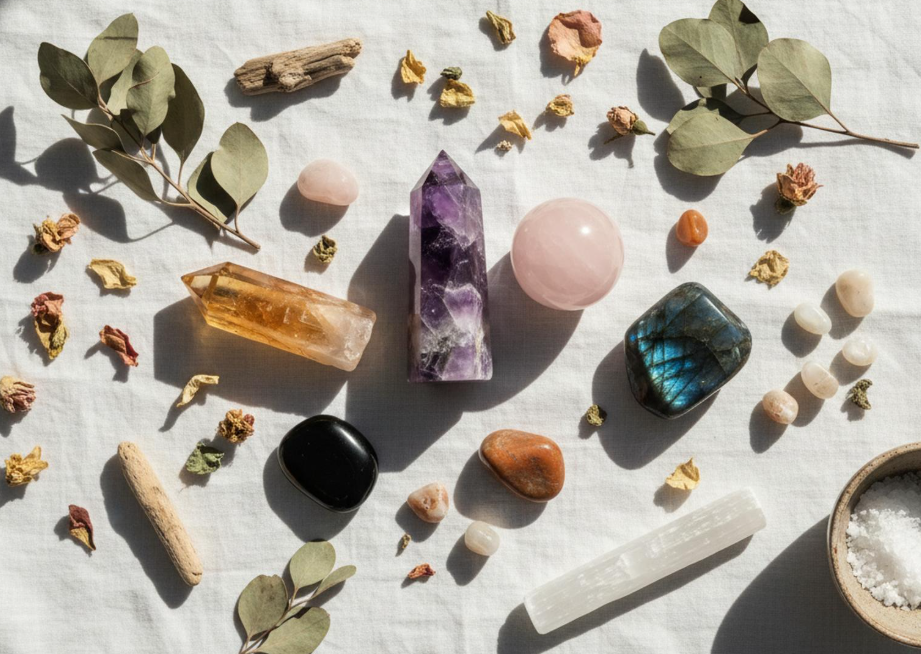
Choosing a crystal can be a personal experience. You might be drawn to a particular colour, the natural patterns within a stone or the memories associated with a piece of jewellery. There is no single way to appreciate these details, and your reasons may be entirely different from someone else’s.
If you are exploring crystals for the first time, start with curiosity rather than a long list of rules. Notice which stones appeal to you, learn about their cultural associations and consider whether a particular piece holds a meaning that resonates with your own life.
You could keep a small crystal on your desk as a reminder of a personal goal, carry one as a sentimental keepsake or simply enjoy its natural beauty. The significance you attach to it is yours to define.
EDITOR’S NOTE
At Fancylicious, we believe the beauty of a meaningful object lies in the way it becomes part of your personal story. Whether displayed as a natural treasure, worn as jewellery or kept as a quiet reminder of an intention, a crystal can hold a special place in your everyday world without needing to promise anything extraordinary.
Final Thoughts: A Little Beauty, A Little Meaning
Perhaps the enduring appeal of crystals lies in the meeting of nature, beauty and human imagination. Formed over time beneath the Earth’s surface, each stone carries its own colours, textures and distinctive patterns — a reminder of the remarkable details found in the natural world.
Whether you appreciate crystals for their symbolism, collect them for their beauty or simply enjoy learning about the traditions surrounding them, there is room to discover something that speaks to you.
Sometimes, the simplest pleasures are the most meaningful: a beautiful object, a story worth discovering and a small moment of appreciation in an otherwise ordinary day.