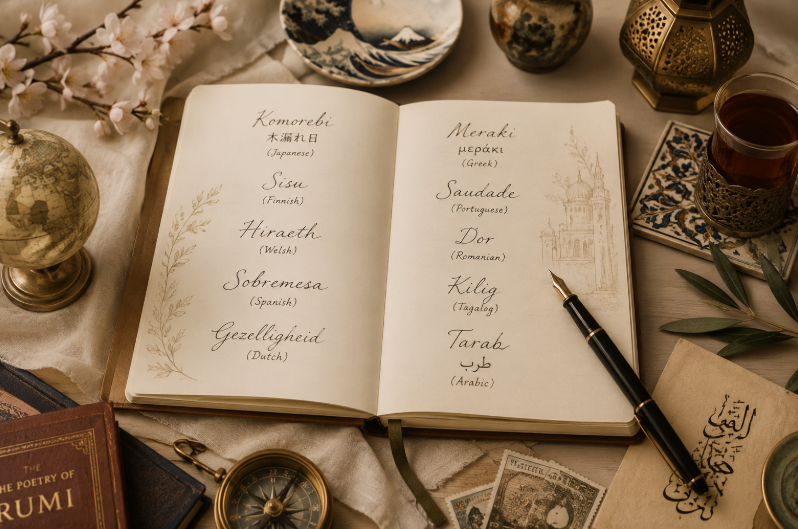
Every language has words that seem to capture an entire feeling, experience or moment in a way that another language simply can’t reproduce with one word.
English can certainly explain these ideas. But sometimes it takes a sentence — or an entire paragraph — to describe something that another language expresses beautifully and effortlessly.
From the Japanese word for sunlight filtering through leaves to a Portuguese word for a particularly bittersweet kind of longing, these expressions reveal something fascinating about the cultures that created them.
They also remind us that the way we experience the world can influence the way we describe it.
1. Komorebi — Japanese
The beauty of sunlight filtering through trees
Komorebi (木漏れ日) describes sunlight filtering through the leaves and branches of trees.
It sounds simple, but there is something wonderfully specific about having a single word for this particular moment in nature: walking beneath trees and noticing the shifting patterns of light and shadow created by the leaves.
It isn’t simply “sunlight” or “dappled light.” The Japanese word captures the phenomenon itself.
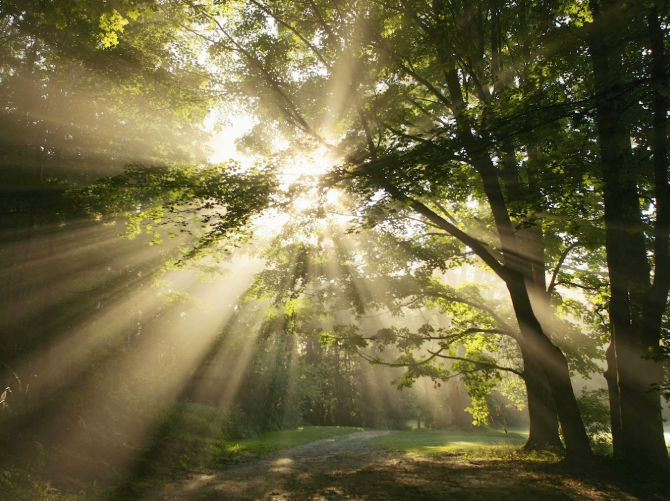
And perhaps that’s what makes it so beautiful: you have to notice the moment before you can name it.
DID YOU KNOW?
Komorebi isn’t simply a poetic Japanese philosophy about appreciating nature. It refers quite specifically to sunlight filtering through foliage — a tiny natural phenomenon that Japanese has a word to describe.
There is a lovely connection here to the idea behind Good Luck Symbols Around the World and the Stories Behind Them, another Fancylicious Discover exploration of how different cultures attach meaning to everyday experiences.
2. Sisu — Finnish
Strength when things become difficult
Sisu is a Finnish word associated with determination, courage and perseverance when faced with adversity.
But translating it simply as “grit” doesn’t quite capture its cultural weight.
Sisu is often associated with continuing when circumstances are difficult and finding an inner reserve of strength when you might otherwise feel that you have nothing left to give.
It isn’t necessarily about being fearless.
Instead, it’s about finding the resolve to keep going despite fear, difficulty or exhaustion.
That makes sisu feel less like an abstract personality trait and more like a quality revealed through challenging circumstances.
3. Hiraeth — Welsh
Longing for something distant or lost
Few words carry as much emotional complexity as hiraeth.
The Welsh word can describe a profound sense of longing, yearning or nostalgia connected to somewhere, something or even a time that is absent.
It is often translated as “homesickness,” but that doesn’t fully capture its range.
Hiraeth can involve longing for a place that is far away, a past that cannot be recovered, or something that may no longer exist in the form you remember.
There can be an element of grief and nostalgia intertwined with longing.
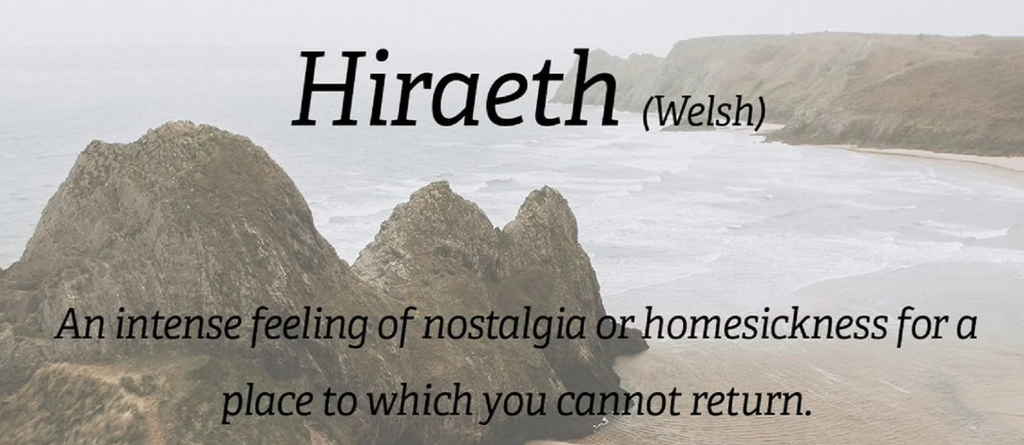
That makes it particularly difficult to reduce to one English equivalent.
The limits of my language mean the limits of my world.
The quote of Ludwig Wittgenstein feels particularly appropriate here. Language doesn’t necessarily limit what we can feel, but it can change how precisely we can name and communicate those feelings.
4. Sobremesa — Spanish
The conversation that continues after the meal
Some of the most beautiful words aren’t about grand emotions at all.
Sobremesa describes the time spent lingering at the table after a meal, usually talking and enjoying each other’s company.
There is no rush to clear everything away and leave.
The meal has technically finished, but the social experience hasn’t.

It captures something that many cultures experience but that English doesn’t have a single everyday word for: that unhurried period when dinner is over but nobody really wants the evening to end yet.
And perhaps that is precisely why sobremesa feels so appealing.
It gives a name to the idea that sometimes the best part of a meal happens after the food is finished.
This also connects beautifully with Fancylicious’ The Art of Setting a Beautiful Table: Simple Ways to Make Every Meal Feel Special — because a beautiful table isn’t only about how it looks, but about the moments that happen around it.
5. Gezelligheid — Dutch
The warmth of being together
Gezelligheid is one of those words that is often translated as “coziness,” but that English equivalent is only part of the story.
It can describe a warm, comfortable atmosphere, pleasant company, conviviality or simply the feeling of enjoying time with people you like.
A cosy room can be gezellig.
So can an intimate dinner with friends, an evening spent talking or a gathering where everyone feels comfortable and welcome.
The important element is togetherness.

It isn’t necessarily about luxury or extravagance. In fact, its appeal lies partly in appreciating ordinary moments that feel warm and meaningful.
Why These Words Matter
What makes these expressions fascinating isn’t simply that English doesn’t have an exact one-word equivalent.
It’s that each one encourages us to notice something more carefully.
Komorebi asks us to notice light.
Sisu gives language to resilience.
Hiraeth gives shape to complicated longing.
Sobremesa celebrates lingering.
Gezelligheid recognises the pleasure of togetherness.
TIP
Borrow the idea behind these words rather than trying to translate them literally. Notice the evening light, linger over dinner, create a cosy gathering or simply give yourself permission to appreciate a small beautiful moment.
The first five words showed how languages can capture light, resilience, longing, lingering and togetherness with remarkable precision.
But the idea becomes even more fascinating when we move into words describing passion, nostalgia, romantic excitement and the powerful emotions created by music.
6. Meraki — Greek
Putting passion and care into what you do
Meraki (μεράκι) is often described as doing something with soul, creativity and love.
That popular interpretation captures something important about the word, but its meaning is more nuanced than the familiar social-media definition of simply “putting your soul into everything.”
In modern Greek usage, meraki can describe the passion, enthusiasm or special care someone puts into something.

It could be cooking a meal with particular attention, creating something by hand, working on a creative project or taking pride in something you’ve made.
What makes the word beautiful is that it isn’t really about the finished result.
It’s about the feeling and care invested in the process.
For a lifestyle built around thoughtful details, that’s an idea worth remembering.
7. Saudade — Portuguese
A bittersweet longing for someone or something absent
Saudade is one of the most famous examples of a word that English struggles to capture in a single equivalent.
It describes a profound feeling of longing, nostalgia or melancholy connected to someone or something absent.

But saudade isn’t simply “I miss you.”
It can contain several emotions at once: affection, nostalgia, sadness, longing and the awareness that something is no longer present.
You might feel saudade for a person, a place, a period of your life or something that cannot quite be recovered.
That mixture of love and absence is what makes the word so difficult to translate neatly.
8. Dor — Romanian
A deep feeling of longing
Romanian gives us another beautiful word for longing: dor.
It can describe missing someone or something intensely, with shades of yearning, nostalgia or wistfulness depending on the context.

English has plenty of related words — longing, yearning, homesickness, missing — but none quite packages all of these emotional possibilities into one everyday word.
And unlike a simple statement such as “I miss you,” dor can carry a more profound emotional weight.
It reminds us that absence itself can become an emotion.
9. Kilig — Filipino
The butterflies of romantic excitement
Kilig is a Tagalog word describing the giddy, fluttering excitement associated particularly with romance.
Think of the feeling when someone you like sends you a message, gives you unexpected attention or does something that makes your stomach suddenly feel full of butterflies.
“Infatuation,” “excitement” and “butterflies” all come close, but none quite captures the particular emotional reaction expressed by kilig.

It is a wonderfully specific word for a feeling that almost everyone recognises.
And unlike some of the more philosophical words on this list, kilig is delightfully lighthearted.
Sometimes language doesn’t need to describe a profound existential experience.
Sometimes it simply needs a word for that ridiculously happy feeling someone gives you.
10. Tarab — Arabic
When music completely transports you
Tarab (طرب) is perhaps one of the most beautiful additions to this list — particularly for a Fancylicious audience in Dubai.
The Arabic word is associated with an intense emotional response to music, singing and poetry.
But saying that tarab simply means “being moved by music” doesn’t quite do it justice.
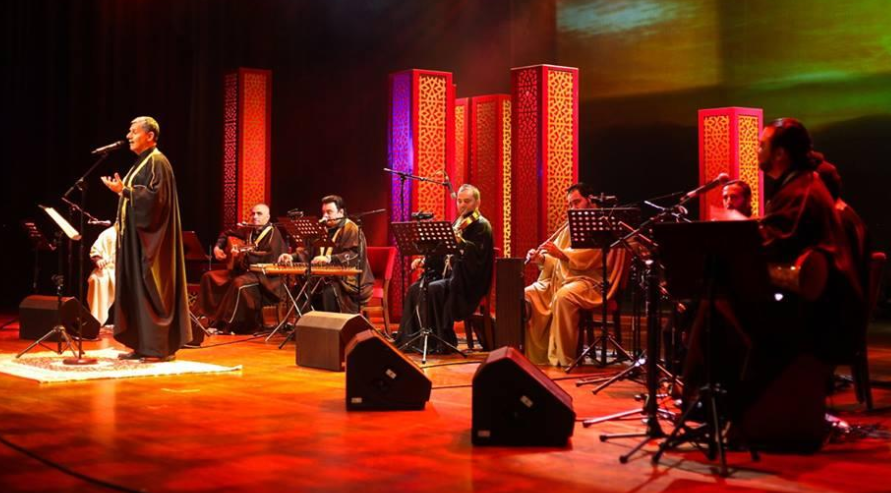
It can describe a state in which a performance becomes deeply absorbing and emotionally overwhelming, producing feelings such as joy, longing, nostalgia, excitement or even tears.
The listener isn’t simply enjoying a song.
They are emotionally transported by it.
Tarab has an important place in Arab musical traditions, particularly classical Arabic singing, where the interaction between performer, music, poetry and audience can become part of the experience itself.
This is what makes it such a fascinating example of linguistic and cultural nuance: English can describe every part of the experience, but there isn’t one everyday English word that captures the entire idea.
What These Words Teach Us About Language
Perhaps the most fascinating thing about “untranslatable” words is that they aren’t actually impossible to explain.
We can describe komorebi.
We can explain saudade.
We can talk about sobremesa.
We can describe the feeling of tarab.
What we don’t always have is one word that carries the same emotional and cultural weight.
And that’s where language becomes particularly interesting.
A language develops vocabulary around experiences that matter to the people who speak it. Sometimes that means a very specific natural phenomenon gets its own word. Sometimes it’s a social tradition, an emotional state or a cultural practice.
These words therefore tell us something about more than vocabulary.
They tell us what different cultures have chosen to notice and name.

How to Bring These Ideas Into Everyday Life
You don’t need to learn another language to appreciate the concepts behind these words.
You can simply start noticing them.
Take a moment to watch sunlight move through the trees.
Stay at the table a little longer after dinner.
Put genuine care into something you’re creating.
Allow yourself to enjoy music without doing anything else.
Call a friend and make time for an unhurried conversation.
Or recognise that feeling of longing when an old memory unexpectedly returns.
These aren’t new experiences.
The words simply give them a sharper outline.
Perhaps that’s why these expressions are so fascinating. They show us that changing the word we use can sometimes change the way we notice the experience itself.
EDITOR’S NOTE
The most beautiful “untranslatable” words aren’t necessarily the strangest ones. They’re the words that make you recognise a feeling, habit or moment you’ve experienced yourself — but never quite knew how to name.
Language isn’t the only way cultures give meaning to everyday experiences. Colour can carry its own vocabulary of tradition, symbolism and belief — something explored in our guide to lucky colours around the world. Rituals can do the same, turning a simple gesture into something filled with history, hope and symbolism. Explore Why Do We Toss Coins Into Fountains? The Stories Behind Everyday Traditions for another fascinating example of an ordinary act becoming a cultural tradition.
A World Full of Words We Haven’t Yet Learned
There will always be more examples.
Every language contains expressions shaped by its history, geography, traditions and everyday life — some of which have straightforward English equivalents, and others that require a much longer explanation.
And perhaps that is the real beauty of exploring them.
We don’t have to decide that one language is richer than another.
Instead, we can appreciate that different languages offer different windows onto the same human experience.
From komorebi to tarab, these words invite us to slow down, notice more and occasionally give a name to something we may have felt all along.
Flowers have their own symbolic vocabulary too, and the Victorian tradition of floriography turned individual blooms into a language of their own. Explore Birth Flowers and Their Meanings to discover the stories behind each month’s flower.
Language is only one way to discover how different cultures see the world. For another kind of cultural journey, explore The Most Beautiful Museums in the World, featuring extraordinary spaces where art, architecture and history meet.