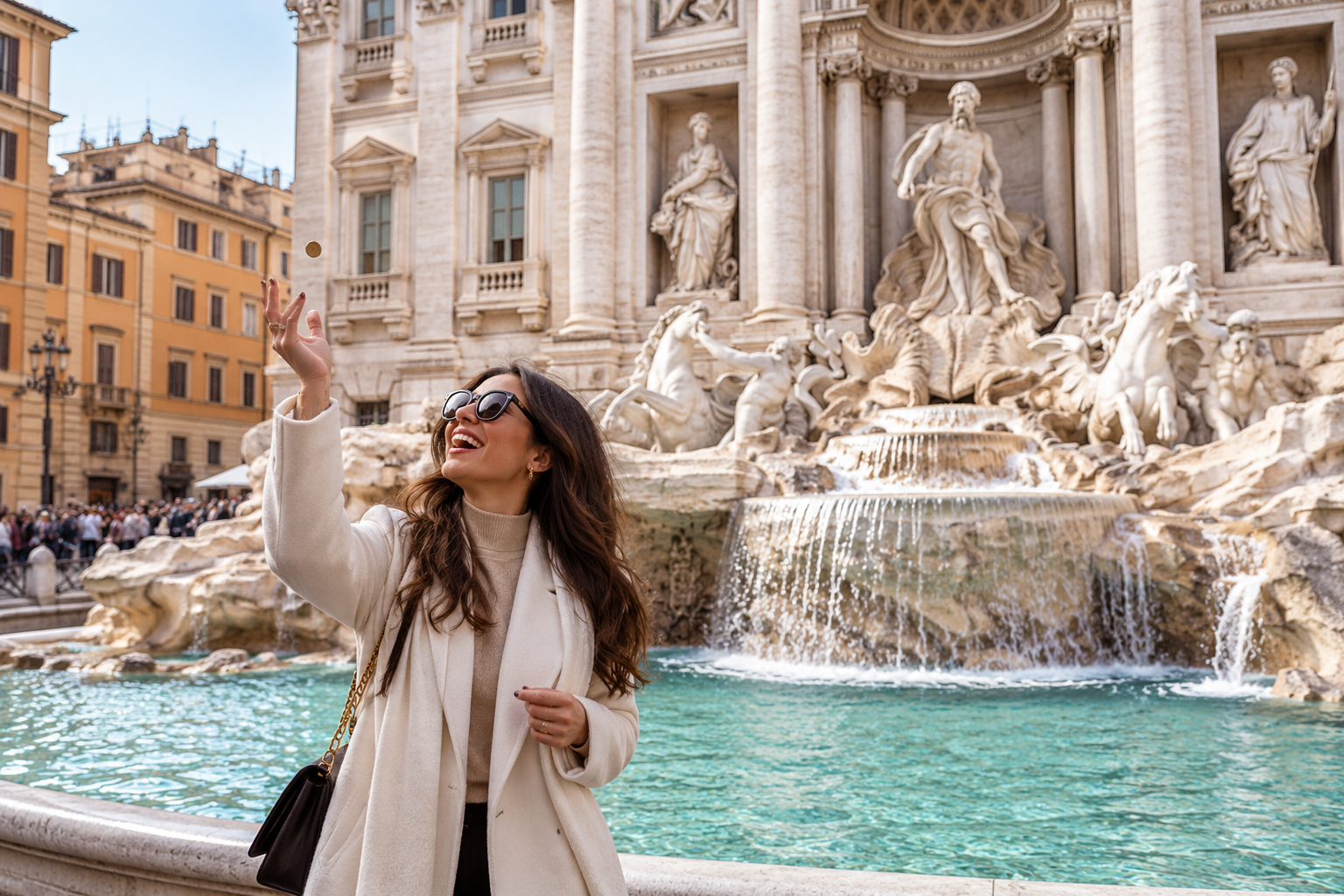
Have you ever stood beside a fountain, made a quiet wish and tossed a coin into the water without really thinking about where the tradition came from?
It is such a familiar gesture that it can feel almost instinctive. A coin disappears beneath the surface, a wish is made, and for a moment, an ordinary fountain becomes something more symbolic. Perhaps the wish is for good luck, a safe journey, a return to a beloved city or simply something personal that you would rather leave unspoken.
The custom is especially associated with famous fountains such as Rome’s Trevi Fountain, but the story behind it reaches much further back. Archaeological evidence shows that coins and other objects were deliberately deposited in sacred springs, wells and other watery places in the ancient world. What we cannot establish is one single moment when the modern fountain tradition began; instead, today’s ritual appears to sit within a much older history of treating water as a place where offerings, hopes and prayers could be expressed.
And that makes the simple act of tossing a coin far more fascinating than it first appears.
1. Where Did the Tradition Begin?
There is no single fountain, person or civilisation that can be identified as the definitive beginning of coin tossing. The practice developed from much older traditions in which water itself was considered meaningful, powerful or sacred.
Springs, wells and rivers were essential sources of life, but they could also be mysterious places. A spring emerging from the earth, a deep well disappearing into darkness or a river constantly moving towards an unknown destination naturally invited symbolic interpretations. In parts of ancient Europe, watery places became associated with healing, deities and supernatural forces, and archaeological discoveries show that people sometimes deliberately placed objects into them as offerings.
Coins are particularly interesting because they were not simply random objects. Archaeological evidence from Roman Britain, for example, includes substantial deposits of coins in watery contexts associated with ritual activity. At some sites, coins appear alongside other votive objects, suggesting that at least some were deliberately deposited rather than accidentally lost.
The meaning of an offering could vary. It might have been connected with healing, gratitude, protection, good fortune or a request for divine favour. This is why it is useful to be cautious about saying that ancient people were simply “making wishes” in exactly the same way modern tourists do. The underlying idea of giving something in connection with a hope or request is much older than the modern fountain ritual itself.
For more fascinating examples of how cultures have used objects and symbols to express hopes for good fortune, see our guide to Good Luck Symbols Around the World and the Stories Behind Them.
DID YOU KNOW?
Water has carried symbolic meaning across cultures for thousands of years, often representing life, renewal, purification or connection with the sacred. That helps explain why springs, wells, rivers and fountains have so often become places where people leave offerings, make wishes or perform small rituals.
2. Why a Coin?
So why did the humble coin become the object of choice?
Part of the answer lies in what a coin represents. It has value, it can be given away, and once it disappears into the water, it cannot easily be retrieved. The act therefore transforms an ordinary piece of money into a small offering.
In ancient watery sites, coins were not necessarily chosen because people believed the metal itself possessed magical powers. Archaeologists interpret deposits according to their context, and the significance could differ from one location to another. At some sacred springs, coins were deposited alongside figurines, jewellery and other objects, suggesting broader ritual practices rather than a single universal belief.
There is also something psychologically appealing about giving something away in exchange for a hope. A coin is small enough to part with easily, yet valuable enough to make the gesture feel deliberate. Once it leaves your hand and sinks beneath the surface, the wish becomes symbolic rather than practical: you have done your small part, and now the outcome is beyond your control.
That may be one reason the tradition has survived so successfully. The coin is not really the important part. The gesture is.
3. From Sacred Springs to Wishing Wells
Over centuries, the connection between water and wishes evolved into the traditions we recognise today.
The European wishing well is one of the clearest examples. Wells and springs could become associated with healing, blessings, saints, local legends or supernatural powers, and visitors sometimes left offerings at these places. In later traditions, the original religious or sacred context could become less important, while the idea of making a wish remained.
This is also why it is difficult to draw a perfectly straight line from an ancient sacred spring to today’s tourist fountain. Similar practices appeared in different places and changed over time. Some ancient sites involved formal religious offerings; later customs could be connected with folklore, local superstition or personal wishes.
The common thread was the symbolic relationship between water and hope.
Water disappears, flows, reflects light and cannot be held permanently in the hand. A person can therefore attach almost any meaning to it: letting go of something, asking for something, beginning again or trusting that a wish might somehow find its way into the future.
The same fascination with symbolism can be found in other everyday traditions. Our article on Lucky Colours Around the World and What They Symbolise explores how ordinary colours can similarly carry ideas of prosperity, protection, renewal and hope across different cultures.
TIP
The next time you make a wish at a fountain, take a moment to notice the setting around you. The architecture, water, surrounding symbols and history of the place can be part of the ritual too — turning a simple coin toss into a small moment of connection with the destination.
4. How the Fountain Became Part of the Ritual
The modern fountain is different from the natural spring or sacred well, but it preserves one important characteristic: water becomes a public stage for a symbolic gesture.
As fountains became prominent architectural features in European cities, they were no longer simply sources of water. Monumental fountains could represent abundance, beauty, mythology, civic identity and the relationship between a city and its water supply.
Rome is perhaps the most famous example. The city’s history has been deeply connected with water, from the ancient aqueducts to the monumental fountains that later became defining features of its streets and piazzas. The Trevi Fountain itself is the monumental terminal display of the ancient Aqua Virgo aqueduct, which still supplies water to the fountain today.
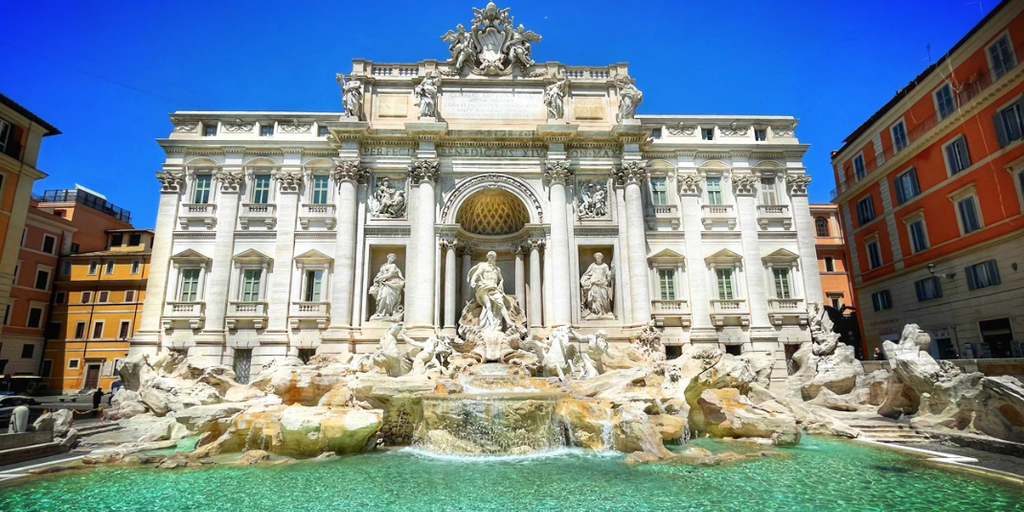
At this point, the fountain is no longer simply somewhere to collect or admire water. It becomes part of the experience of visiting a place.
And nowhere is that transformation more famous than at the Trevi Fountain.
The familiar custom says that throwing a coin into the fountain will ensure that you return to Rome. Turismo Roma itself describes the tradition in these terms, while popular versions of the ritual have developed additional meanings around throwing a second or third coin.
But why did one particular fountain in Rome become so closely associated with the coin toss?
That’s where the story becomes even more interesting.
5. The Trevi Fountain: The Coin Toss That Became a Global Ritual
If one fountain has come to define the modern tradition of tossing coins into water, it is undoubtedly Rome’s Trevi Fountain.
The monumental fountain stands at the end of the Aqua Virgo aqueduct, an ancient water system that dates back to 19 BC. The fountain itself was completed in the 18th century and became one of Rome’s most recognisable landmarks.
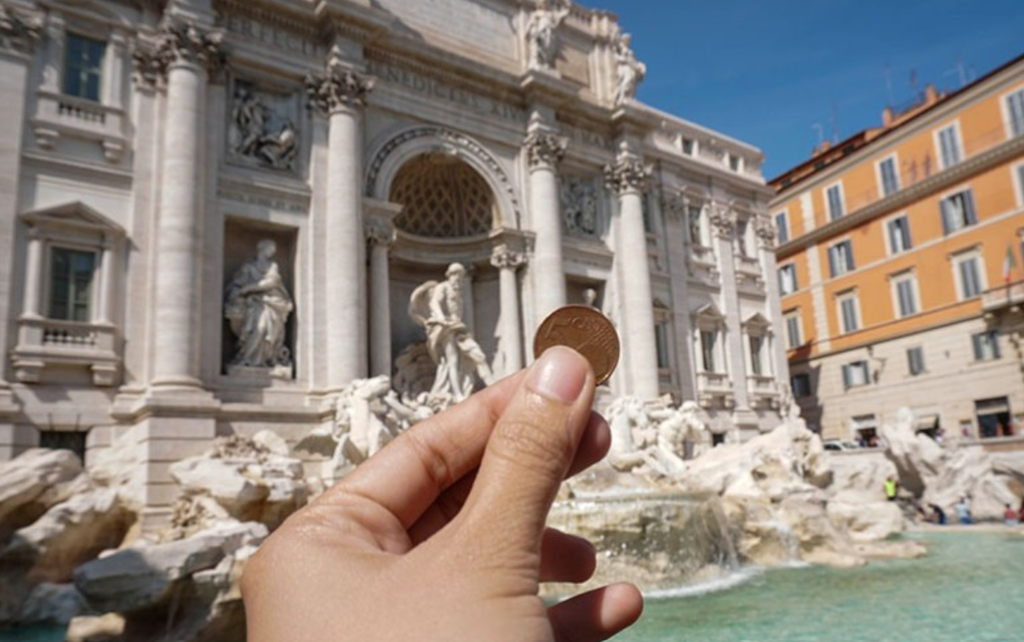
Today, visitors arrive from around the world to admire its dramatic Baroque architecture, but many also participate in a ritual that has become almost inseparable from the fountain itself: turning away from the water and throwing a coin over the shoulder.
The popular belief is simple: throw one coin into the Trevi Fountain and you will return to Rome.
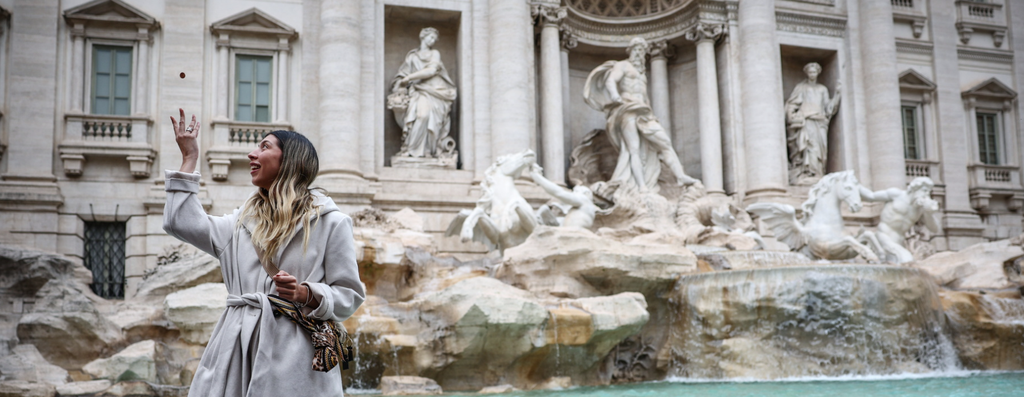
It is a wonderfully romantic idea. Rather than asking for wealth or a dramatic stroke of luck, the wish is about returning — leaving part of yourself behind in the city so that, perhaps one day, you will have a reason to come back.
Over time, popular culture has helped turn the gesture into an international tradition, with films, photographs and countless travel stories reinforcing its place in the imagination of visitors.
6. Why Do People Throw One, Two or Three Coins?
You may have heard that the number of coins thrown into the Trevi Fountain has different meanings.
The most widely repeated version says:
- One coin — you will return to Rome.
- Two coins — you will return and fall in love.
- Three coins — you will return, fall in love and marry.
These interpretations are part of the modern folklore surrounding the fountain rather than an ancient Roman rule. In other words, there is no need to treat the three-coin ritual as an archaeological tradition passed down unchanged from antiquity.
That distinction actually makes the custom more interesting.
Like many traditions, it has evolved through storytelling, tourism and popular culture. A simple gesture became a ritual with its own set of meanings, and those meanings became increasingly familiar as generations of visitors repeated them.
This is one of the reasons everyday traditions are so fascinating: they do not always remain fixed. People inherit them, reinterpret them and sometimes add new layers of meaning without even realising it.
7. What Happens to the Coins?
There is another reason the Trevi Fountain tradition is unusual: the coins don’t simply remain at the bottom of the fountain forever.
The money is periodically collected and has been used for charitable purposes. Rome’s municipal authorities have long worked with Caritas Roma, the city’s Catholic charitable organisation, in connection with the collection and use of the coins. The money has supported charitable initiatives including assistance for people experiencing poverty and other vulnerable groups.
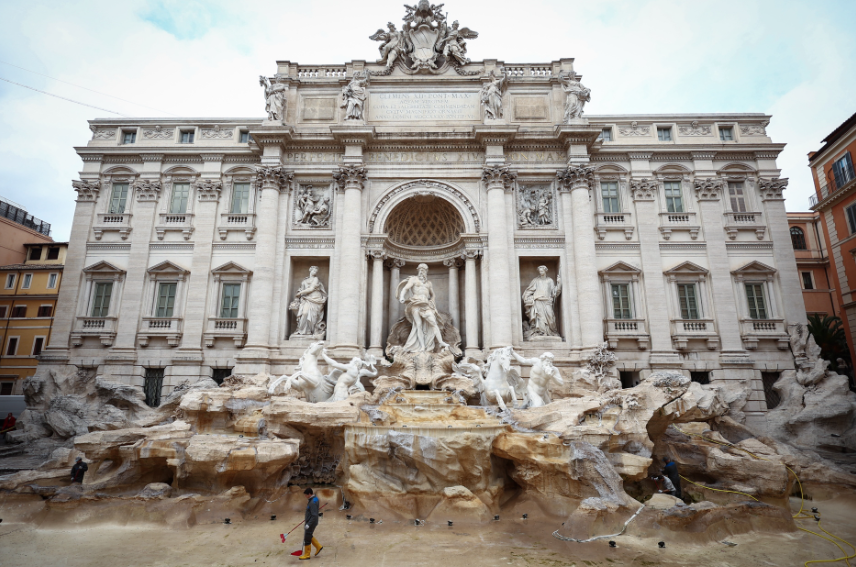
That gives the ritual an unexpected second life.
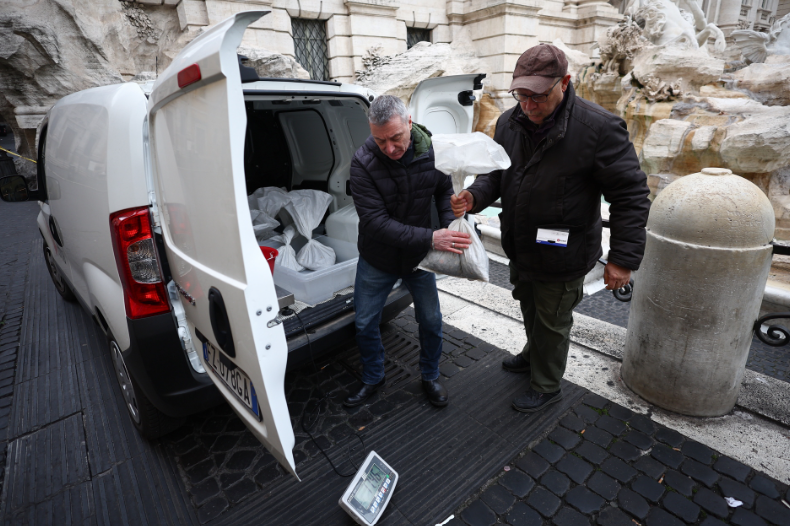
A visitor may toss a coin into the water because they hope to return to Rome, find love or simply make a personal wish. Once collected, however, that small symbolic gesture can contribute to something practical.
The coin therefore moves through two very different worlds: first, the world of personal wishes; then, the world of charitable giving.
It is a fitting continuation of the older idea of an offering. The meaning may have changed, but the act of giving something away remains at the centre of the ritual.
8. Why Do We Still Make Wishes?
Perhaps the most interesting question isn’t why people started tossing coins into fountains, but why we still do it.
After all, most modern travellers understand that a coin cannot literally determine whether they will return to Rome or whether a particular wish will come true. Yet knowing this doesn’t necessarily make the ritual meaningless.
Small rituals can give people a sense of participation in moments that otherwise feel uncertain. A journey, a new relationship, a major decision or a personal hope can all feel easier to express through a symbolic gesture.
There is also something satisfying about physically marking a moment.
You arrive somewhere beautiful. You stop. You make a wish. You throw the coin. Then you walk away.
The action creates a tiny memory within the larger experience of travel.
This is part of the same fascination with symbolism explored in our article on The Hidden Meaning of Birthstones: What Your Gemstone Symbolizes, where an ordinary gemstone becomes meaningful because of the stories and associations people attach to it.
Tradition is not the worship of ashes, but the preservation of fire.
The quote is particularly fitting here because traditions survive not because every detail remains unchanged, but because people continue to find meaning in the ritual and pass it forward.
9. From Ancient Offerings to Modern Travel Rituals
The journey from ancient watery offerings to today’s tourist coin toss is not a perfectly documented straight line.
It is better understood as a continuing human fascination with water, symbolism and ritual.
Ancient communities deposited objects in springs and wells for reasons that could include religious devotion, healing or communication with supernatural powers. Later folklore developed around wishing wells and magical waters. Monumental fountains eventually became important parts of city landscapes. And destinations such as the Trevi Fountain transformed these older ideas into modern travel rituals.
The details changed, but one idea remained remarkably persistent: people like to attach meaning to places.
A fountain becomes more than architecture. A coin becomes more than money. A wish becomes more than a thought.
Together, they create a tiny ritual that connects a person with a particular place and moment.
10. Why These Little Traditions Matter
The coin toss may seem insignificant, but everyday traditions often tell us something about the way people experience the world.
We light candles for birthdays. We make wishes when we see shooting stars. We carry lucky objects, choose meaningful colours and give symbolic gifts. These gestures do not necessarily require absolute belief to feel meaningful.
Sometimes the value is simply in the moment of intention.
A coin disappearing beneath the water can represent hope. It can mark the end of a journey or the beginning of another. It can express a desire to return somewhere beautiful. Or it can simply become a charming memory of a holiday.
And perhaps that is why the tradition has endured.
The ritual doesn’t need to promise that a wish will come true. It only needs to give the wish somewhere to go.
For more examples of the stories and meanings attached to familiar customs and symbols, explore Beautiful Words From Around the World That English Can’t Quite Translate.
EDITOR’S NOTE
Traditions evolve over time, and their modern meanings do not always reflect their earliest origins. The coin toss is best understood as a living ritual shaped by history, folklore, tourism and personal belief.
A Final Thought
The next time you see someone toss a coin into a fountain, it may be tempting to see nothing more than a tourist tradition. But beneath that small gesture is a much older human instinct: the desire to turn a hope into something tangible.
From ancient offerings at sacred waters to wishing wells and the famous ritual at Rome’s Trevi Fountain, people have repeatedly found ways to connect water with hope, fortune, memory and possibility.
Perhaps that is why these traditions continue to charm us. They give us permission to pause for a moment, make a wish and imagine that something we cannot control might still have a beautiful ending.
And whether the coin brings you back to Rome, leads to a new chapter somewhere else or simply becomes part of a wonderful travel memory, the ritual has already accomplished something.
It has made you stop and hope.