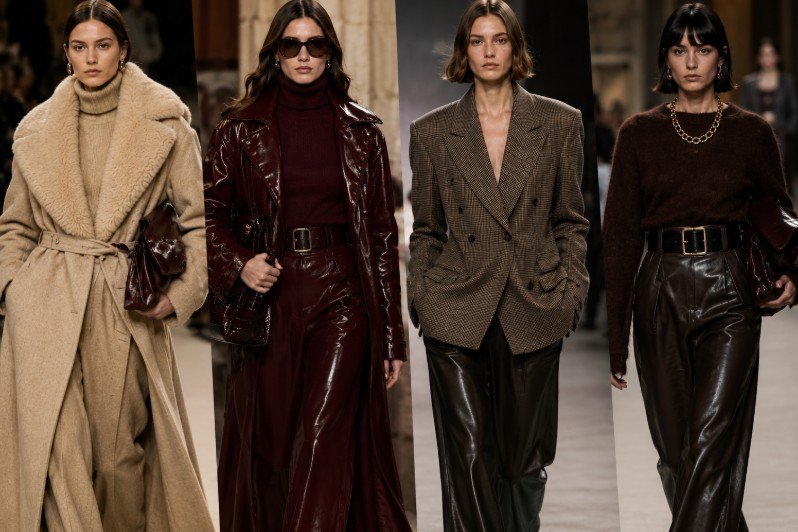
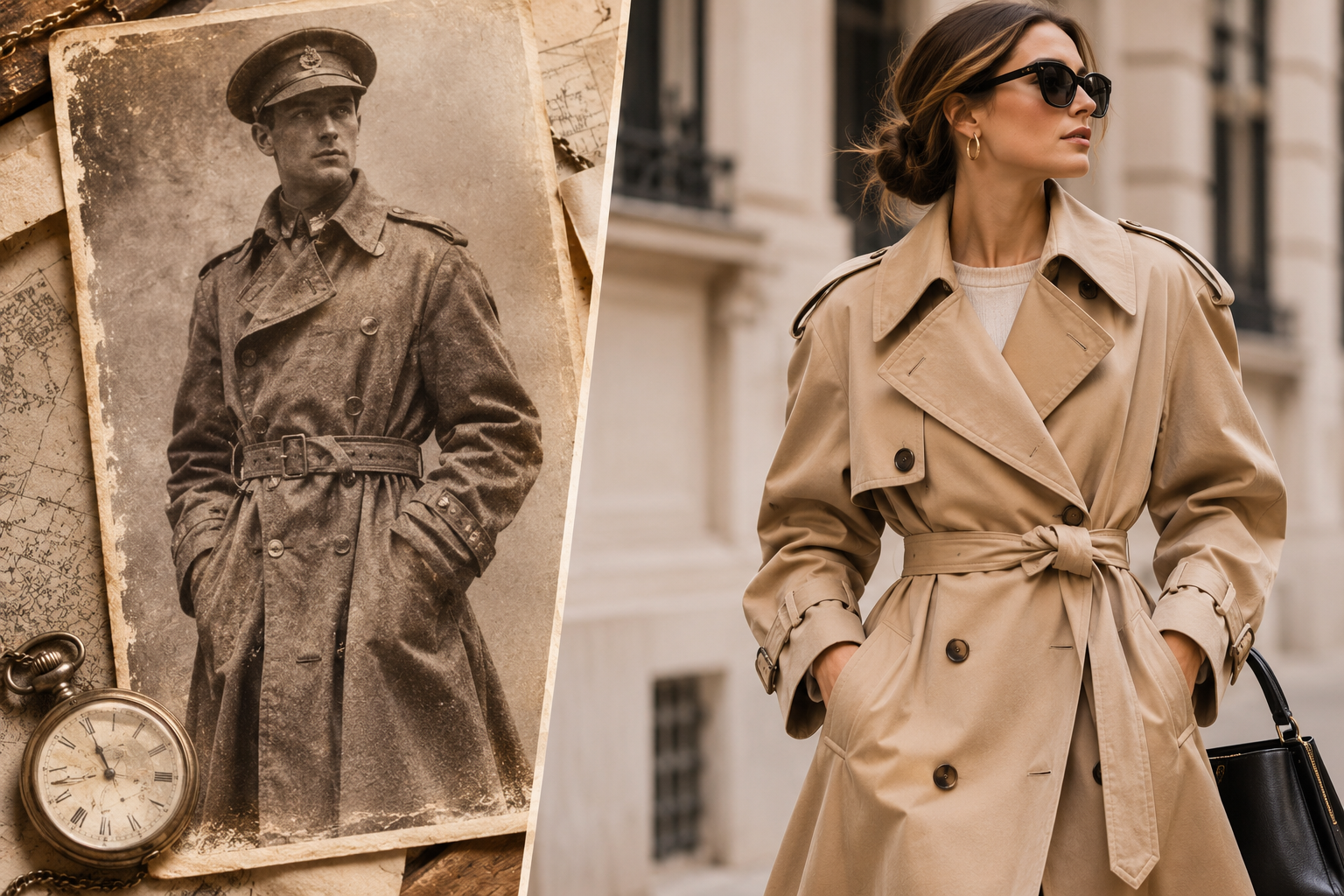
From its origins in weather-resistant outerwear to the battlefields of the First World War, the glamour of classic cinema and the modern designer wardrobe, discover how the trench coat became one of fashion’s most enduring pieces.
Some garments capture a moment in fashion. Others become part of its history.
The trench coat belongs firmly in the second category. Recognisable for its structured shoulders, double-breasted front and belted waist, it has moved through more than a century of changing styles without losing its distinctive character.
Originally associated with practical outerwear and military life, the trench gradually found its way into everyday wardrobes, film history and the collections of some of the world’s most influential fashion houses.
Its appeal lies in the balance between structure and ease. It can lend definition to a simple outfit, bring polish to casual clothing or provide an elegant final layer over eveningwear. Yet its reputation was not created by fashion alone. It was shaped by textile innovation, the demands of military service, popular culture and generations of designers who found new ways to interpret its familiar silhouette.
To understand why the trench coat remains relevant today, it helps to return to the beginning.
Before the Trench: The Evolution of Weather-Resistant Outerwear
Long before the trench coat became a fashion staple, the challenge was a practical one: how could clothing protect the wearer from rain without becoming heavy, uncomfortable or restrictive?
During the nineteenth century, advances in water-resistant textiles helped transform outerwear. In 1823, Scottish inventor Charles Macintosh patented a method of producing water-resistant fabric using rubber between layers of cloth. Although effective against rain, early rubberised garments could feel stiff and uncomfortable, particularly in warmer conditions.
Other manufacturers continued experimenting with materials and construction. In 1851, John Emary established a London tailoring business that would later become known as Aquascutum, a name derived from Latin words associated with water and protection. The company developed a reputation for weather-resistant clothing and supplied coats for military use.

Meanwhile, Thomas Burberry established his own clothing business in Basingstoke, England, in 1856. His focus on protecting people from the British climate would eventually lead to one of the most important textile innovations in the history of modern outerwear.
Neither company created the trench coat in isolation from everything that came before it. Rather, the garment emerged from a wider history of rainwear, tailoring and experimentation.
The foundations of the trench were already taking shape: clothing designed to withstand the elements, accommodate movement and retain a considered appearance.

Thomas Burberry and the Innovation of Gabardine
One of the most significant developments in the trench coat’s story came in 1879, when Thomas Burberry introduced gabardine, a tightly woven fabric designed to be weather-resistant while remaining breathable.
Unlike traditional rubberised rainwear, gabardine offered greater comfort and flexibility. Its construction helped repel water without entirely sacrificing ventilation, making it suitable for outdoor activities and demanding conditions.
The fabric was patented in 1888 and became central to Burberry’s approach to outerwear. It was used for garments designed for travellers, explorers and people who needed reliable protection from unpredictable weather.
Another important milestone arrived in 1912, when Burberry patented the Tielocken coat. Fastened with a belt-like strap and buckle rather than relying on a conventional arrangement of buttons, the design is widely regarded as a forerunner of the Burberry trench coat.
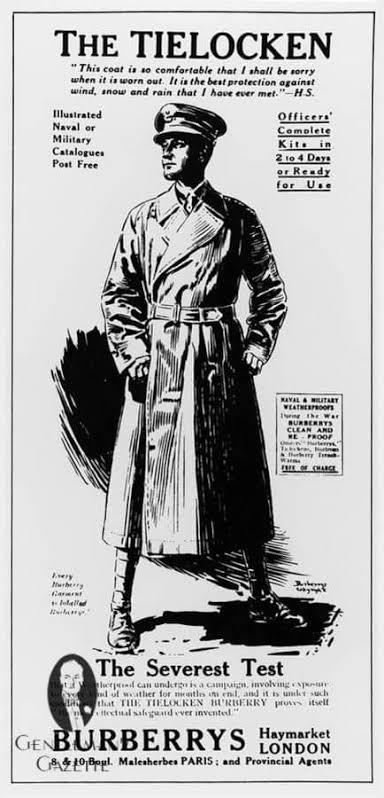
The Tielocken established several ideas that would become familiar in later trench designs: a streamlined shape, a defined waist and practical fastening details
It is important, however, to distinguish between this documented predecessor and the trench coat as it developed during the First World War. The modern trench emerged through a series of adaptations rather than a single, universally agreed moment of invention.
Burberry‘s textile innovation and early coat designs were influential, but the history also includes the wider contribution of established rainwear makers, including Aquascutum.
DID YOU KNOW?
The trench coat evolved through decades of innovation in weather-resistant clothing. Burberry’s 1912 Tielocken coat was an important precursor, but the familiar trench design developed through a wider history of military needs and outerwear craftsmanship.
From Military Function to the First World War
The First World War gave the trench coat its name and helped establish the design that remains familiar today.
British military personnel needed outerwear that could withstand wet weather, provide warmth and allow movement in difficult conditions. Officers required garments suitable for long periods outdoors, including service in the muddy trenches of the Western Front.
Existing weather-resistant coats provided a starting point. During the war, military requirements helped shape more specialised designs, with Burberry among the companies producing coats for armed forces personnel. Aquascutum also had a history of supplying weather-resistant clothing for military use.
The practical demands of service influenced the trench’s construction. Its length offered protection against the elements, while the belt allowed the wearer to adjust the fit. The collar could be raised in poor weather, and the sleeves and cuffs could be secured for additional protection.
Other features served specific purposes. Epaulettes could display rank insignia, while D-rings offered attachment points for equipment. Additional protective panels helped manage rain running down the garment.
These were not originally decorative flourishes. They reflected the conditions for which the coat was designed.
Over time, however, details developed for utility became part of the trench coat’s visual identity. What began as functional outerwear acquired a distinctive appearance that would eventually be recognised far beyond its military origins.
The Details That Define a Classic Trench Coat
A traditional trench coat is defined by a combination of construction details rather than one single feature. Although contemporary versions vary considerably, several elements remain closely associated with the classic design.
The double-breasted front creates the familiar overlapping closure. It contributes to the coat’s structured appearance and provides an additional layer of fabric across the front.
The belted waist allows the silhouette to be adjusted. Worn loosely, the coat feels relaxed; tied neatly, it creates a more defined shape.
The epaulettes sit at the shoulders. Historically associated with military insignia, they remain a recognisable feature in many traditional designs.
The storm shield is a protective panel across the upper back, designed to help direct rain away from the body. Some coats also feature a gun flap, another detail associated with military construction.
The adjustable cuffs can be tightened to help protect the wrists from wind and rain. D-rings, found on some historical designs, were intended for attaching equipment.
The collar and lapels can be worn open for a softer appearance or fastened higher when the weather calls for greater coverage.
Fabric also plays an important role. Traditional gabardine remains closely associated with the heritage trench, but modern interpretations may use cotton twill, lighter blends, leather or other materials that change the coat’s weight, texture and overall character.

Not every trench includes every traditional detail. Contemporary designers frequently simplify, exaggerate or remove elements to suit a particular aesthetic.
Yet the combination of a structured upper body, a defined waist and a long, protective silhouette continues to make the trench instantly recognisable.
From Military Practicality to Everyday Fashion
After the First World War, the trench coat gradually moved beyond its original military setting. Its practical construction made it useful in civilian life, while its tailored shape gave it an appeal that extended beyond purely functional clothing.
The transition was not immediate, nor was it the result of one defining moment. As military clothing entered everyday wardrobes, the trench became associated with travel, city life and a more modern approach to dressing.
Its design offered a useful balance: more substantial than a lightweight jacket, but less formal than many traditional overcoats. It could be worn over tailoring, dresses and casual separates without requiring a completely different wardrobe for each occasion.
The trench also benefited from its adaptability. A classic beige version could complement almost any colour palette, while darker variations offered a more understated alternative. The belt could be tied, buckled or left loose, changing the overall impression without altering the garment itself.
Today, its usefulness extends beyond the climates for which heavier traditional coats were designed. Lightweight versions can work as transitional layers, while more substantial fabrics offer greater coverage in cooler weather.
For readers building a wardrobe around versatile pieces, our guide to 10 Essential Wardrobe Pieces Every Woman Needs in Dubai explores the foundations of a practical, considered wardrobe.
The trench coat’s civilian appeal grew from its ability to serve a purpose while still looking composed. That combination would become essential to its later success in popular culture.
STYLE TIP
For an effortless daytime look, layer a classic trench over a simple top, straight-leg trousers and loafers. Leave the coat open for a relaxed line, or tie the belt loosely at the back to define the waist without making the outfit feel too formal.
Hollywood and the Trench Coat’s Cinematic Appeal
The trench coat’s military associations gave it a recognisable shape, but cinema helped transform that shape into a powerful cultural image.
In classic Hollywood, the coat became closely associated with mystery, authority and understated sophistication. Film noir, in particular, frequently used practical outerwear to establish atmosphere. A long coat, a raised collar and a shadowed silhouette could suggest a character’s profession, temperament or circumstances before a word was spoken.
Humphrey Bogart‘s screen image helped cement this association. In The Maltese Falcon (1941) and Casablanca (1942), the wider visual language of classic cinema placed tailored outerwear within stories of intrigue, romance and moral complexity. The trench became part of a cinematic vocabulary that audiences could instantly recognise.

Its appeal was not limited to male characters. Audrey Hepburn‘s style helped popularise a different vision of elegance: pared-back, graceful and seemingly effortless. Although Breakfast at Tiffany’s (1961) is more strongly associated with Hepburn’s little black dress and refined accessories, her broader screen wardrobe contributed to the enduring appeal of understated, carefully chosen clothing.

The trench’s cinematic image evolved beyond any single film or actor. Detectives, romantic leads and urban protagonists all helped reinforce its association with confidence and independence.
Unlike a costume tied to one particular period, the coat could move between settings without losing its meaning. It looked appropriate in black-and-white cinema and continued to feel relevant as film and fashion changed.
Its screen presence also demonstrated something important about design: a garment can become iconic not only because of how it is made, but because of the stories audiences associate with it.
Burberry, Aquascutum and the Importance of Heritage
The trench coat’s heritage is closely connected with British outerwear, particularly the histories of Burberry and Aquascutum.
Burberry‘s contribution is documented through its development of gabardine in 1879, the patenting of the Tielocken coat in 1912 and the production of military trench coats during the First World War. These milestones helped establish the house’s long-standing association with protective outerwear.
Aquascutum also played a significant role in the development of weather-resistant clothing. Its history reaches back to 1851, when John Emary established the business that later adopted the Aquascutum name. The company developed expertise in rainwear and supplied coats for military personnel.
The precise question of which house invented the trench coat remains difficult to settle definitively. Historical accounts indicate that both companies adapted existing outerwear traditions to meet changing requirements. The garment evolved through multiple designs and practical adjustments, making claims of a single, undisputed inventor misleading.
That distinction matters because the trench coat’s heritage is richer than a simple rivalry between two labels. It reflects a period of experimentation in textile technology, tailoring and military clothing.
Burberry subsequently made the trench a central part of its identity. The house’s heritage designs and later collections have continued to reinterpret the familiar form, while the company’s signature check lining became another recognisable element of its outerwear.
The broader legacy is visible in the way designers approach the trench today. Its history provides a foundation, but it does not require every modern version to reproduce an archival design exactly.
A classic trench can be appreciated as a piece of fashion history while still being worn in a way that feels entirely contemporary.
How Contemporary Designers Reinterpret the Trench
The trench coat has remained relevant partly because designers can change its proportions, fabric and styling without abandoning the qualities that make it recognisable.
Some houses stay close to the traditional model. Others use the familiar silhouette as a starting point for experimentation.
The trench also fits into the wider conversation around seasonal outerwear and texture, explored in our guide to the fashion trends defining Autumn/Winter 2026.

Burberry: Heritage Reworked
Burberry continues to revisit its trench designs through seasonal collections. Traditional gabardine, double-breasted fronts, belts and shoulder details provide a recognisable foundation, while changes in proportion, colour and styling keep the coat connected to contemporary fashion.

The result is an ongoing conversation between archival design and modern dressing rather than a fixed reproduction of the past.
Saint Laurent: Sharper Proportions
Saint Laurent‘s Spring/Summer 2024 ready-to-wear runway included an olive-green cotton trench with pronounced shoulders, a defined waist and a structured collar. The look demonstrated how a traditional outerwear shape can become more assertive through proportion and styling.
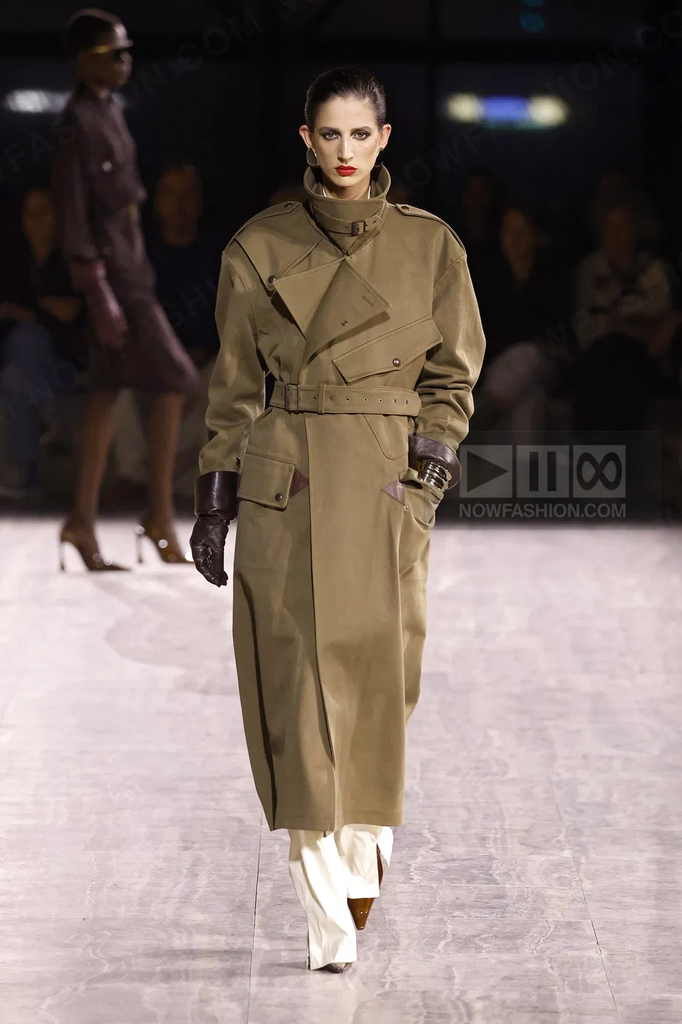
The emphasis was not on removing the trench’s familiar identity, but on sharpening it.
Gucci: A More Expressive Material
Gucci‘s Fall/Winter 2024 menswear collection offered a more unconventional interpretation through a red leather trench coat documented in runway coverage. The material and colour shifted the coat away from its traditional associations with beige cotton gabardine, demonstrating how dramatically the same broad silhouette can change in character.

Max Mara: A Modern Wardrobe Classic
Max Mara‘s outerwear collections offer another perspective on the trench as a wardrobe staple. The house is known for its considered approach to coats and tailoring, and its contemporary trench designs sit naturally within that broader focus on clean lines and versatile outerwear.

Rather than treating the trench solely as a historical reference, these interpretations present it as a practical design that can be adapted to different wardrobes and personal styles.
Together, such examples show why the trench continues to appear in luxury fashion. Its identity is strong enough to withstand experimentation, whether that means a sharper shoulder, a different material or a more relaxed proportion.
EDITOR’S NOTE
Whether you prefer a heritage-inspired trench in classic beige or a more contemporary version with an unexpected colour or silhouette, choose one that works with the way you actually dress. The most rewarding wardrobe pieces are those whose history adds interest without limiting how you wear them today.
How to Style a Trench Coat Today
The trench coat’s greatest styling advantage is its ability to work with pieces that already exist in a wardrobe. The key is to consider the occasion, proportions and fabric rather than treating the coat as an outfit in itself.

The Everyday City Look
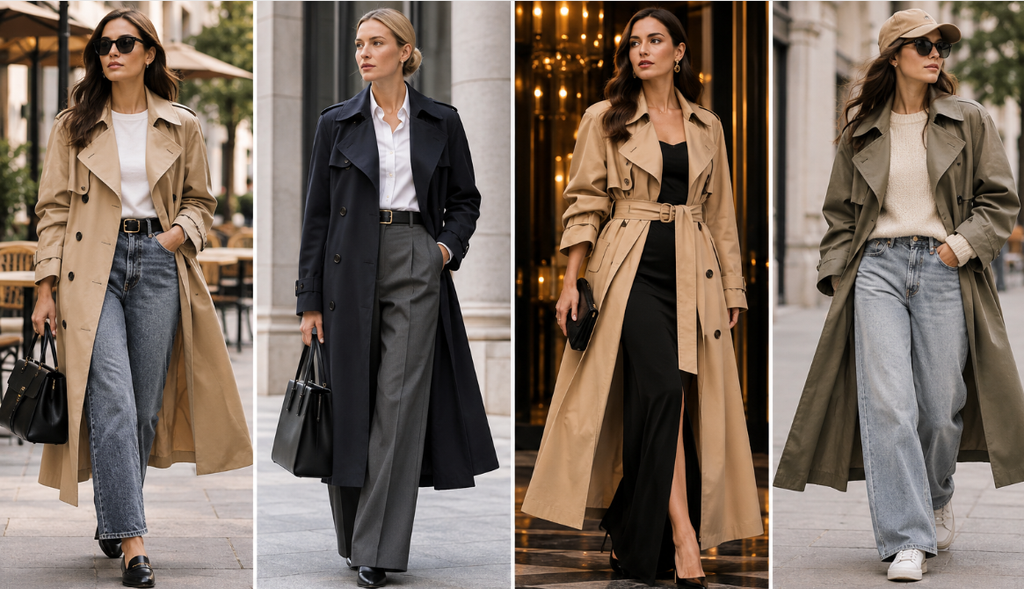
For daytime dressing, pair a classic beige trench with straight-leg denim, a white shirt or fine knit and loafers. A structured handbag adds definition, while simple jewellery keeps the look polished without making it feel overworked.
This combination works because the coat brings structure to familiar, relaxed pieces. There is no need for elaborate layering or multiple statement accessories.
The Tailored Workwear Look
A trench can sit comfortably over tailored trousers, a shirt and a blazer, provided the outer coat has enough room to accommodate the layers beneath it.
Choose a length that works with the proportions of your outfit. A longer trench creates a continuous vertical line, while a shorter style can feel more modern and less formal.
Neutral shades such as camel, navy, charcoal and beige make the coat easy to coordinate with existing workwear.
The Evening Look
For an evening outfit, wear the trench over a streamlined dress or tailored separates. A darker coat can create a more dramatic finish, while a classic beige version offers contrast against black, burgundy or deep chocolate tones.
The accessories should support the overall look rather than compete with it. A refined handbag, elegant shoes and a carefully chosen piece of jewellery are often enough.
The Relaxed Weekend Look
For a more casual approach, try a trench with a fine knit, relaxed denim and clean trainers. The contrast between the coat’s tailored structure and the informality of the rest of the outfit keeps the result from feeling too formal.
A loosely tied belt can soften the silhouette, while leaving the coat open creates a more relaxed line.
Getting the Proportions Right
Length and volume can make a considerable difference to how a trench looks. A voluminous coat can work beautifully with slimmer pieces underneath, while a more fitted design may balance wider trousers or a fuller skirt.
There is no single formula that suits everyone. The aim is to create a silhouette that feels intentional and comfortable.
Thoughtful styling can make even simple wardrobe staples feel more refined; our guide to how to look expensive on a budget explores the role of fit, fabric and finishing touches.
For more guidance, our article on The Ultimate Guide to Outfit Proportions explores how length, volume and balance can change the effect of an outfit.
A true classic never stands still; it carries its history into every new silhouette.
Why the Trench Coat Remains a Fashion Icon
More than a century after its military associations took shape, the trench coat continues to occupy a distinctive place in fashion.
Its history is part of its appeal, but history alone does not explain its longevity. The design also offers a practical combination of coverage, structure and adaptability. It can be worn with tailoring or denim, adapted to different seasons and reinterpreted through changes in colour, fabric and proportion.
Its cultural associations have evolved, too. Military utility gave way to civilian wear; cinema added drama and character; and designers introduced new interpretations that expanded the coat’s possibilities.
Yet the underlying design remains familiar. The belt, the collar, the double-breasted front and the long silhouette still provide a foundation for both traditional and contemporary versions.
That continuity makes the trench an interesting example of how fashion history works. A garment does not have to remain unchanged to retain its identity.
Sometimes, its relevance depends on the opposite: the ability to adapt while preserving what makes it distinctive.