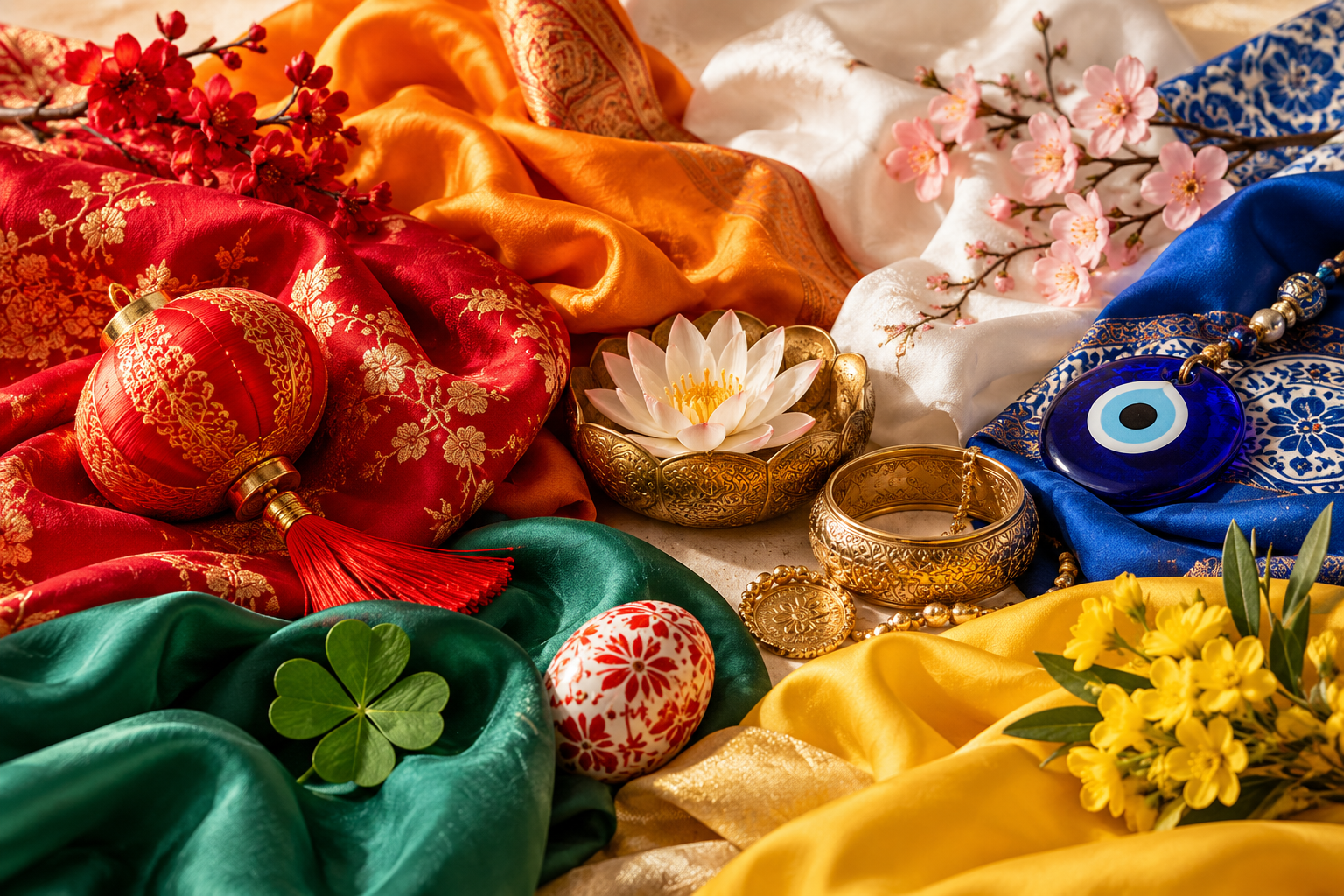
Colour is one of the most fascinating ways cultures express meaning.
A particular shade can represent wealth in one country, spiritual devotion in another and protection somewhere else. It can become part of a wedding ceremony, a New Year ritual, a religious tradition or a piece of folklore passed from one generation to the next.
And while we often talk about “lucky colours,” the idea of luck is not the same everywhere.
Sometimes luck means prosperity. Sometimes it means protection from misfortune. It can mean a successful new beginning, perseverance towards a goal or simply the hope of a happier year ahead.
That is what makes colour symbolism so fascinating.
From the red celebrations of China to the yellow New Year’s traditions of Colombia, these customs reveal how differently cultures around the world give meaning to colour.
They also belong to a much wider world of cultural symbolism. If you enjoy discovering the stories behind traditional symbols, explore Good Luck Symbols Around the World and the Stories Behind Them, another Fancylicious guide to the objects, charms and traditions associated with fortune and protection.
In this guide, we travel across ten countries to discover colours associated with luck, prosperity, protection, spirituality, celebration and renewal — and the stories behind them.
Why Do Certain Colours Become Lucky?
Colour symbolism rarely appears without a cultural history behind it.
Religious beliefs, folklore, mythology, historical events, natural resources and traditional celebrations can all influence how a society understands a particular shade.
Sometimes the association is very direct. Red in China, for example, is closely connected with good fortune and prosperity. In Italy, wearing red at New Year is a recognised good-luck tradition.
In other cases, the connection is more nuanced. A colour may represent protection rather than attract luck, or it may symbolise spiritual purity rather than material prosperity.
That distinction matters.
The countries in this article therefore aren’t presented as having one universally accepted “lucky colour.” Instead, each example explores a specific cultural tradition and explains what the colour represents within that context.
DID YOU KNOW?
Colour symbolism can be influenced by history, religion, nature and even ancient beliefs about the elements. That is why the same shade can represent prosperity in one tradition, protection in another and renewal somewhere else — its meaning is shaped by the culture surrounding it.
1. China — Red for Happiness, Wealth and Good Fortune
Few colour traditions are as recognisable as China’s relationship with red.
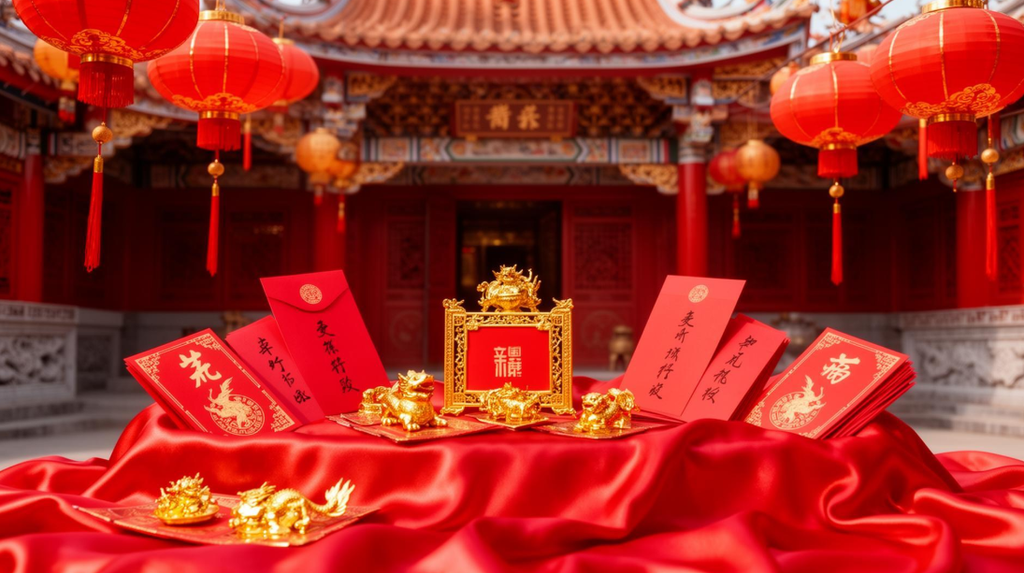
During Lunar New Year, red appears everywhere: in lanterns, decorations, paper couplets, gift envelopes and festive displays.
The colour is associated with happiness, prosperity and good fortune, making it an important part of celebrations intended to welcome a positive year ahead.
One of the best-known traditions is the hongbao, or red envelope. Traditionally containing money, these envelopes are given to children and younger family members during the New Year celebrations. The gift expresses affection and carries wishes for happiness, safety and good fortune.
Red is also prominent during Chinese weddings and other important celebrations.
Its pairing with gold is particularly striking. Gold reinforces associations with wealth and abundance, while red creates the celebratory energy.
There is also an interesting historical layer to the tradition. Red has long been associated with positive and auspicious ideas in Chinese culture, helping explain why it became so deeply embedded in festive rituals.
For China, therefore, red genuinely belongs in an article about lucky colours: good fortune and prosperity are central to its celebratory symbolism.
2. India — Saffron for Spirituality, Sacrifice and Renunciation
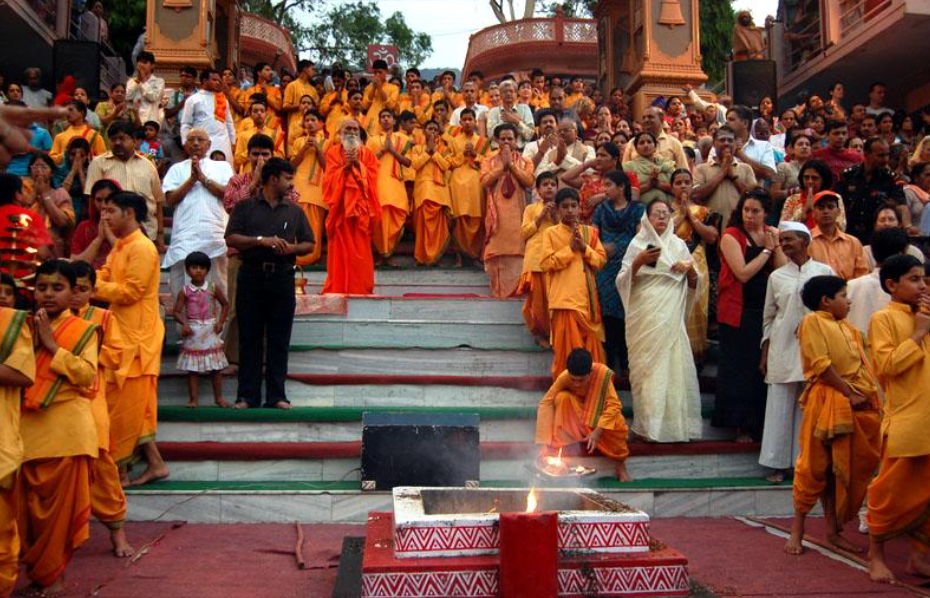
India’s colour traditions are extraordinarily diverse, and saffron has a particularly deep connection with Hindu religious culture.
The warm orange-gold shade is traditionally associated with purity, sacrifice and renunciation. Hindu ascetics and monks have worn saffron or ochre robes as an expression of leaving worldly attachments behind and dedicating themselves to spiritual life.
Its symbolism is also connected with fire.
Fire has an important place in Hindu religious traditions, and saffron’s resemblance to flames contributes to associations with purification and sacrifice.
This gives India a very different interpretation of meaningful colour from China.
Saffron is not primarily about attracting money or material success. Instead, its importance lies in spiritual aspiration, purification and devotion.
The colour can be seen throughout India’s religious landscape, from the clothing of spiritual figures to ceremonial settings and temple traditions.
India is, of course, home to numerous religions, regions and communities, so saffron should not be presented as representing every Indian tradition.
What makes it relevant here is the specific Hindu association between saffron and spiritual purpose, sacrifice and renunciation.
3. Ireland — Green, the Shamrock and Good Fortune

Green is perhaps the colour most immediately associated with Ireland.
It is closely connected with Irish identity, the country’s landscape and the celebrations surrounding St Patrick’s Day.
Ireland’s official tourism information notes that wearing green on St Patrick’s Day is part of the country’s tradition — and, according to the associated superstition, not wearing green can bring bad luck. The same source connects the colour with the shamrock and Ireland’s lush landscapes.
The shamrock has a particularly important cultural connection with St Patrick. Irish tradition associates the three-leaf shamrock with his explanation of the Holy Trinity.
Then there is the four-leaf clover.
Unlike the three-leaf shamrock, the four-leaf clover became associated with good fortune because of its rarity. Finding one has traditionally been regarded as lucky.
The two symbols are often grouped together in popular culture, strengthening the association between green and Irish luck.
What makes Ireland especially interesting is the way national identity, landscape, folklore and superstition have all contributed to the colour’s meaning.
Green is not simply a national shade. It has become part of the visual language of Irish celebration and good fortune.
4. Thailand — Green and the Auspicious Colours of the Week
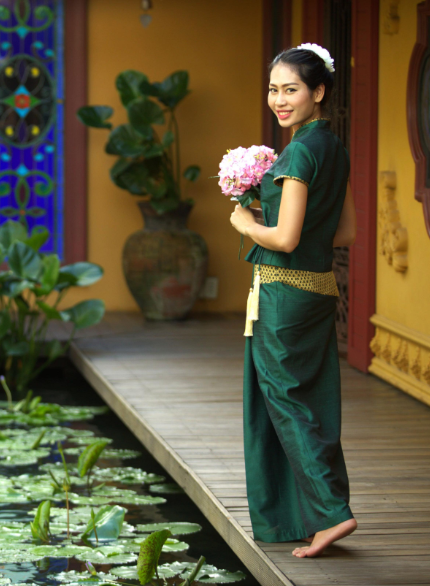
Thailand offers one of the most intriguing examples of colour being connected with time and personal identity.
Traditional Thai beliefs associate particular colours with the days of the week.
According to the Thailand Foundation, green is the auspicious colour associated with Wednesday, while each day has its own corresponding colour. The tradition is connected with Hindu-influenced beliefs about the gods associated with the days.
The tradition can influence clothing choices. Some people choose to wear the colour associated with the day, while another system connects colours with the day on which a person was born.
This makes Thai colour symbolism quite different from the idea of having one lucky shade.
Here, the meaning depends on when.
Green is auspicious within the Wednesday tradition, while a person’s birthday can create another set of colour associations.
The practice demonstrates how colour can become part of everyday life rather than being reserved for festivals or major ceremonies.
It also shows how ideas of luck can intersect with astrology and traditional beliefs.
In Thailand, colour can become a small daily ritual — a way of choosing what to wear while acknowledging a cultural system that connects the calendar with auspiciousness.
5. Japan — White for Purity, New Beginnings and Perseverance
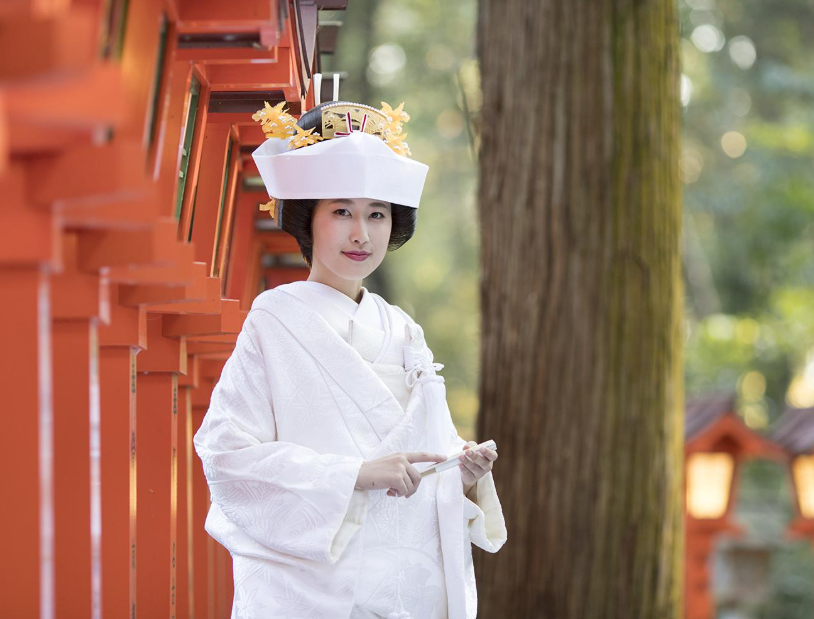
Japan is a particularly beautiful example of how a colour can represent a new beginning.
In traditional Japanese weddings, the bride may wear a shiromuku, a formal white kimono. Japan’s government describes white in this context as a sacred and pure colour, while shiromuku literally refers to its pure-white appearance.
White therefore has a powerful ceremonial association with purity and the beginning of married life.
But Japan also has a direct connection between colour and good fortune through Daruma.
Daruma dolls are traditional good-luck charms associated with wishes, determination and perseverance. The Japan National Tourism Organization explains that different Daruma colours represent different kinds of luck: white can represent support for perseverance, while gold or yellow can represent wealth and prosperity.
This makes white especially interesting.
It can represent purity in a wedding ceremony and perseverance in the pursuit of a goal.
Rather than simply labelling white as “lucky,” it is more accurate — and more interesting — to look at the specific traditions through which the colour acquires meaning.
Bringing Lucky Colours Into Everyday Style
The beauty of these traditions is that they can inspire modern style without requiring a literal interpretation.
Red can bring the energy of celebration to a neutral wardrobe. Saffron can introduce warmth through a silk blouse or scarf. Green can offer a subtle reference to Irish folklore, while white can evoke the understated elegance of Japanese ceremonial dress.
The key is to take inspiration rather than imitate a traditional costume.
One carefully chosen accessory can be enough to introduce a meaningful colour into an otherwise contemporary look. For another timeless way to bring colour into an outfit, explore How to Style a Scarf: Elegant Ways to Wear This Timeless Accessory
STYLE TIP
Try choosing one culturally meaningful colour as an accent rather than building an entire outfit around it. A silk scarf, handbag, jewellery detail or pair of shoes can introduce colour in a subtle, sophisticated way.
6. Ghana — Gold for Royalty, Wealth and Spiritual Purity
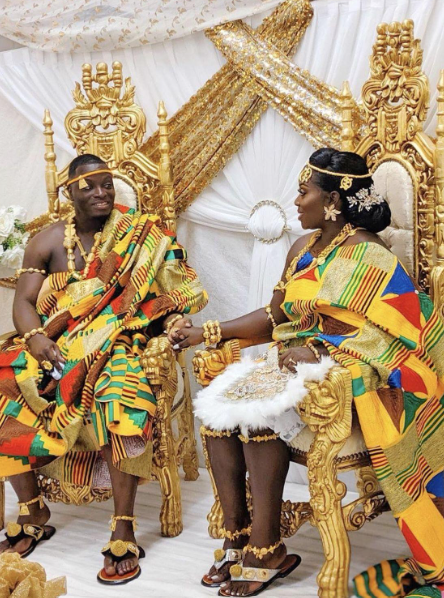
Ghana provides one of the strongest examples of colour being connected with wealth and status.
Gold has profound historical and cultural importance in Ghana, particularly among the Ashanti.
The country’s National Commission on Culture explains that gold in Kente symbolism signifies royalty, wealth and spiritual purity. Kente became a royal textile associated with kings, queens and high-ranking leaders and was worn during important ceremonies and festivals.
Gold also has a much deeper historical significance in Ghana. The National Commission on Culture describes gold as a cultural cornerstone and explains that the Ashanti regard it as a symbol of power, purity and continuity.
This makes gold far more than a decorative colour.
It communicates authority, prosperity and heritage.
Kente is particularly fascinating because its colours and patterns form a kind of visual language. Different shades carry different meanings, while combinations of colours and motifs can communicate values and historical messages.
Gold therefore fits naturally into our exploration of colours associated with prosperity.
But Ghana adds another dimension: wealth is intertwined with royalty, spirituality and cultural identity.
7. Türkiye — Blue for Protection Against the Evil Eye
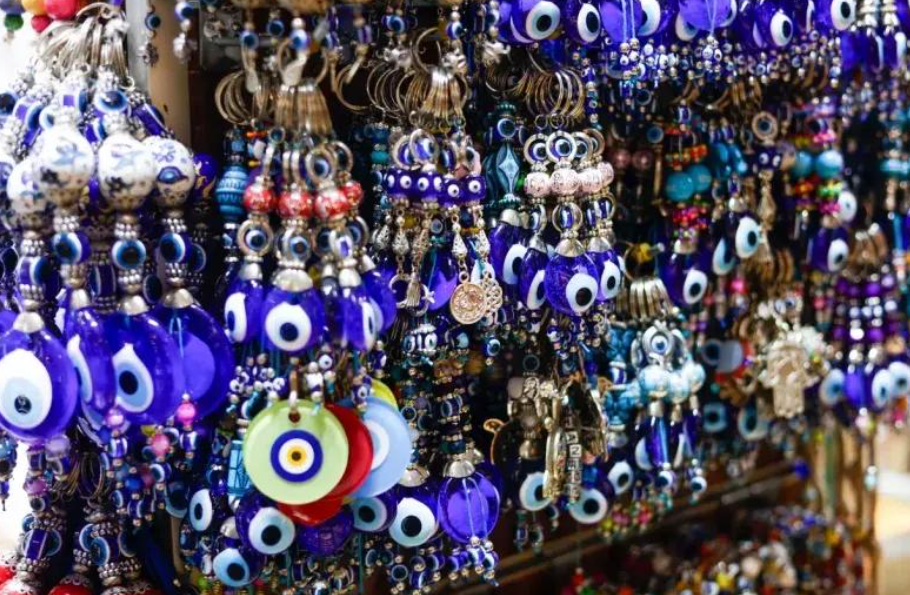
In Türkiye, blue is closely associated with one of the country’s most recognisable protective symbols: the nazar boncuğu, commonly known as the evil-eye bead.
The familiar glass ornament features a blue eye-like design and can be found hanging in homes, shops and workplaces, as well as in jewellery and decorative objects.
GoTürkiye describes the blue nazar as one of the country’s most recognisable cultural icons and explains that it is used to ward off evil.
This makes Türkiye’s blue tradition particularly interesting.
Blue is not being presented as a colour that attracts money or guarantees success.
Its role is protective.
The underlying belief is that the evil eye can bring misfortune, while the nazar is intended to help protect against it.
The broader evil-eye tradition extends across several cultures in the Mediterranean and Middle East, but the Turkish blue-glass nazar has become one of its most distinctive visual forms.
It is a perfect example of how a colour can be connected with luck indirectly — not by attracting good fortune, but by helping to ward off bad fortune.
8. Colombia — Yellow for Wealth and Prosperity at New Year
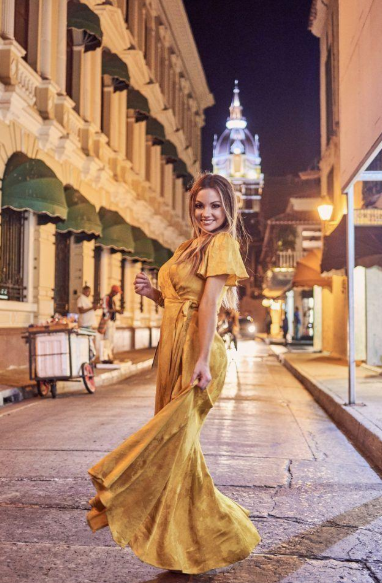
Colombia gives us one of the clearest examples of a colour being used specifically to attract prosperity at New Year.
According to Colombia Country Brand, December 31 is filled with superstitions and traditions intended to encourage positive change in the year ahead.
Among them is the custom of wearing yellow underwear to attract wealth. Other New Year’s traditions include eating twelve grapes while making wishes, carrying a suitcase to encourage travel and using lentils as a symbol of abundance.
Yellow’s association with prosperity fits naturally into this wider collection of rituals.
What makes the tradition especially charming is its personal nature.
Rather than decorating an entire home in yellow, the custom can involve something as simple — and playful — as what someone chooses to wear on New Year’s Eve.
The message is straightforward:
begin the year surrounded by symbols of abundance and hope for prosperity.
9. Greece — Red for Resurrection and Renewal
Greece gives red another completely different cultural story.
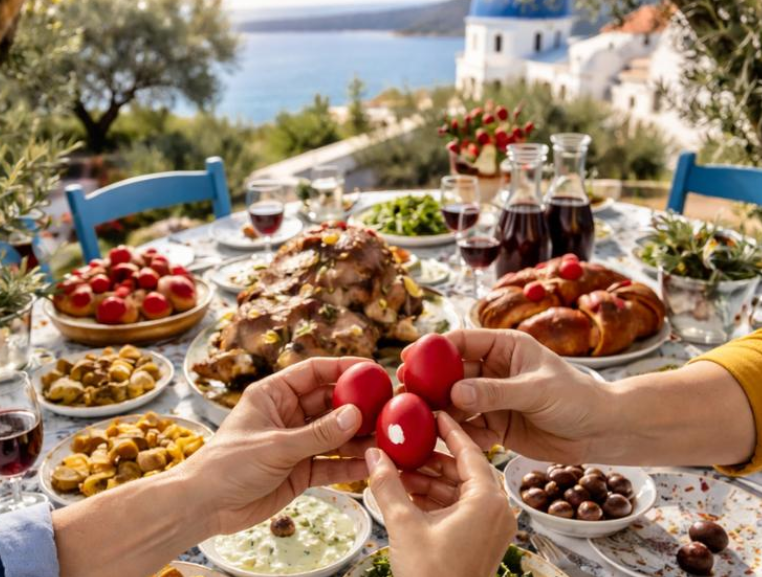
During Greek Orthodox Easter, families traditionally dye eggs red, particularly on Holy Thursday.
The colour is connected with the religious meaning of Easter and the renewal associated with the Resurrection. Greece’s official tourism organisation describes red Easter eggs as a symbol of the perpetual rebirth of life and nature.
The eggs are also part of the Easter celebration itself, appearing on the festive table and forming part of traditional customs surrounding the holiday.
What makes the Greek example so interesting is its contrast with China.
Both cultures use red during major celebrations, but the stories are completely different.
In China, red is associated with happiness, wealth and good fortune.
In Greece, the red Easter egg expresses renewal, resurrection and the continuation of life.
The same colour can therefore carry entirely different cultural narratives.
10. Italy — Red for Good Luck at New Year
Italy brings the idea of the lucky colour back to a very familiar shade: red.
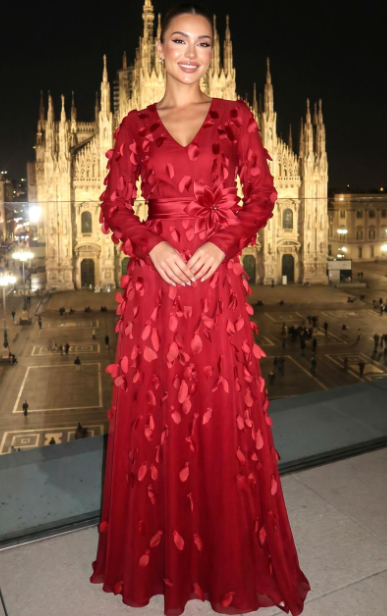
According to Italia.it, the official tourism website of Italy, red is the colour of the festive season, particularly at New Year. Wearing red is traditionally believed to bring good luck.
The tradition is especially associated with red underwear, which has become one of Italy’s most recognisable New Year’s superstitions.
Italia.it also connects the tradition with much older ideas of prosperity: in ancient Rome, red clothing on New Year’s Day was associated with prosperity. Later traditions developed around red garments and underwear as a way of warding off bad luck and welcoming positive influences.
Italy’s New Year traditions also include lentils, pomegranates and other foods associated with abundance and good fortune, reinforcing the broader idea of beginning the year with symbols of prosperity.
This makes Italy an especially fitting final country for our journey.
Here, red brings together luck, prosperity, protection and a new beginning — with a distinctly Italian sense of style.
How to Choose a Colour With Personal Meaning
After travelling through ten countries, one thing becomes clear:
There is no single universal lucky colour.
Red can represent prosperity and good fortune in China, renewal in Greece and New Year’s luck in Italy.
Saffron can represent spiritual renunciation in India.
Green can be connected with Irish folklore, while its significance in Thailand depends on the day of the week.
White in Japan can represent purity and a new beginning, while gold in Ghana communicates wealth, royalty and spiritual purity.
Blue in Türkiye is associated with protection, while yellow in Colombia is connected with hopes for wealth and prosperity at New Year.
The meaning depends on the culture and the context.
But there is also room for personal meaning.
Perhaps red makes you feel confident. Green reminds you of nature. Gold represents achievement. White feels like a fresh start. Blue makes you feel protected.
A colour can carry centuries of tradition and still become something entirely personal.
This idea of personal symbolism also connects beautifully with other Fancylicious Discover features. If you enjoy exploring the meanings attached to objects and natural elements, discover The Hidden Meaning of Birthstones: What Your Gemstone Symbolizes and Birth Flowers and Their Meanings: The Hidden Symbolism Behind Every Month.
Sometimes, the meaning of a colour lies not only in the traditions it carries, but in the memories, hopes and personal significance we choose to give it.
A World of Colour, A World of Meaning
From China’s red Lunar New Year decorations and India’s saffron traditions to Ireland’s green folklore, Thailand’s auspicious weekday colours and Japan’s white wedding traditions, colour reveals an extraordinary diversity of cultural beliefs.
Ghana’s gold speaks of royalty and wealth. Türkiye’s blue nazar is associated with protection. Colombia’s yellow New Year tradition expresses hopes for prosperity. Greece’s red Easter eggs represent renewal, while Italy’s red New Year tradition is associated with good fortune.
Together, these traditions reveal something important:
“Lucky” does not mean the same thing everywhere.
For one culture, good fortune might mean financial prosperity. For another, it might mean protection from misfortune. It could mean a successful marriage, spiritual fulfilment, perseverance toward a goal or simply the renewal of life.
And sometimes a colour becomes meaningful because it is part of a tradition that has been repeated for generations.
The idea itself connects naturally with the wider world of cultural language and symbolism. Just as colours can carry meanings that do not translate perfectly from one culture to another, languages can contain words for experiences that another language expresses differently. For another exploration of these cultural nuances, see Beautiful Words From Around the World That English Can’t Quite Translate.
EDITOR’S NOTE
The purpose of exploring these traditions is therefore not to create a definitive list of colours that are “lucky,” but to understand the stories and beliefs that have given them meaning. Because colour is rarely just decoration. It can carry history, faith, identity, memory and hope.
Colour is only one way cultures express hopes for prosperity, protection and good fortune. Everyday rituals can carry similar meanings, from wearing a particular shade to making a wish at a fountain. Discover the fascinating story behind this tradition in Why Do We Toss Coins Into Fountains? The Stories Behind Everyday Traditions.
Final Thoughts
From the red celebrations of China and Italy to India’s spiritual saffron, Ireland’s lucky green, Japan’s ceremonial white, Ghana’s golden heritage, Türkiye’s protective blue and Colombia’s yellow New Year tradition, the world’s colours reveal just how differently people express hope, prosperity and positive beginnings.
Some traditions focus on attracting good fortune, others on protecting against misfortune, while others connect colour with spirituality, renewal, celebration or personal aspirations.
What makes these customs so fascinating is that the meaning of a colour is never completely fixed: it is shaped by history, culture, belief and the occasion in which it appears.
Whether you follow a traditional custom or simply choose a shade because it has a personal significance for you, colour can become a small but beautiful way of carrying a story with you — a reminder of where a tradition came from, what it represents and perhaps even what you hope the future will bring.