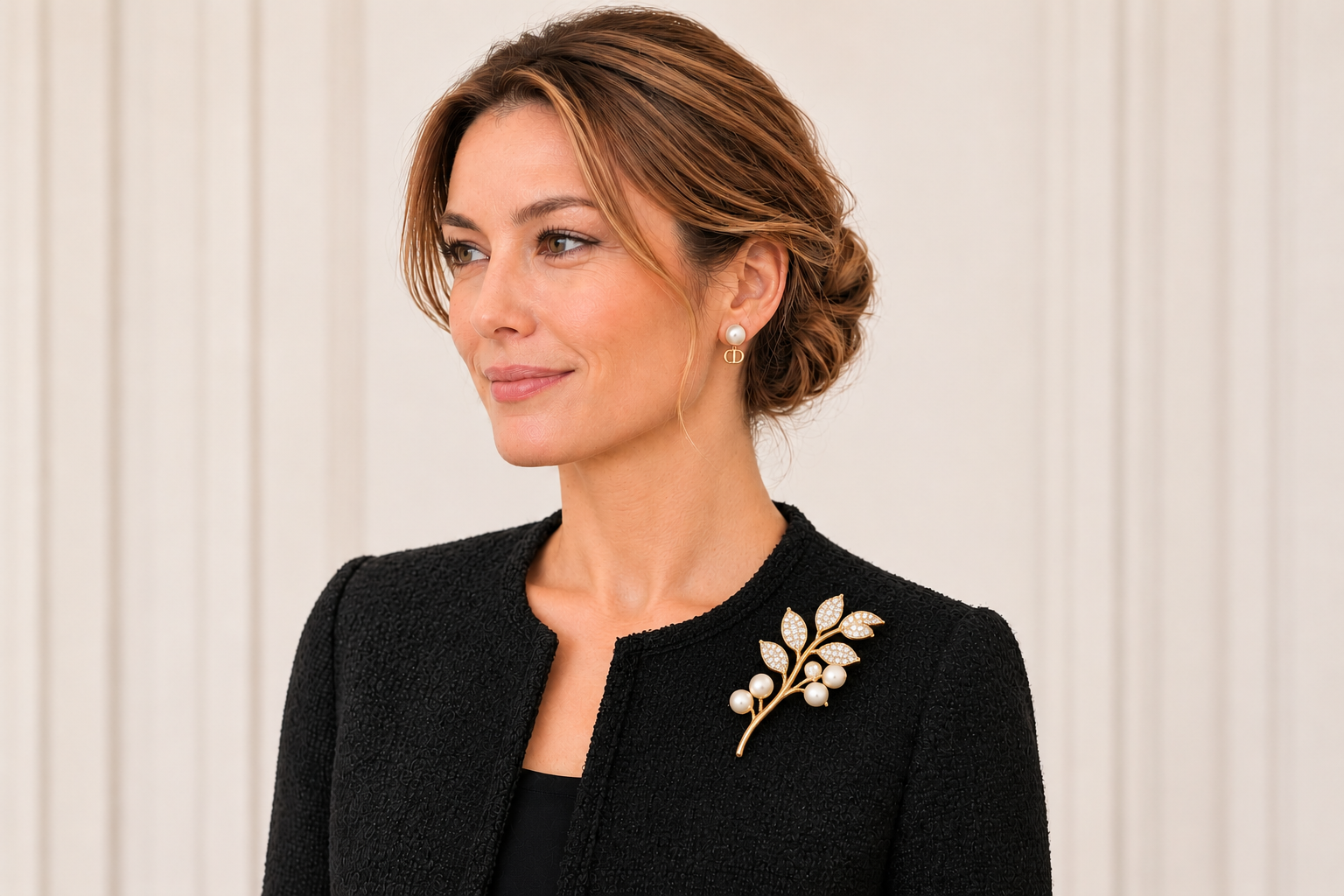
A single decorative pin can turn a familiar blazer into something memorable, give a classic coat a more personal identity or introduce an unexpected detail to an otherwise understated outfit. The brooch has always possessed this particular charm, yet for years it occupied a relatively quiet place in the modern wardrobe. Now, this traditional accessory is finding new relevance through contemporary designer interpretations and a growing appreciation for individual styling.
Once associated primarily with heirloom jewellery and formal dressing, brooches are being reconsidered as versatile accessories that can complement everything from structured tailoring to relaxed knitwear. Their appeal lies in the combination of craftsmanship, decorative detail and the freedom to wear them in ways that feel entirely personal.
Whether featuring delicate crystals, sculptural metalwork or playful motifs, the modern brooch offers an alternative to more familiar jewellery choices. It is a small detail with the potential to change the character of an entire look.
A Brief History of the Brooch
Long before becoming a decorative jewellery piece, the brooch served a practical purpose. Its earliest predecessors, known as fibulae, were metal fastening devices used to secure garments in place. Ancient examples were made from materials including bronze, silver and gold, with designs ranging from relatively simple pins to elaborate ornamental constructions.
These early fasteners were particularly interesting because functionality and decoration often existed together. Their visible placement on garments allowed artisans to introduce intricate details, making the fastening itself part of the overall appearance.
As clothing construction evolved and buttons became more widely used, the brooch gradually moved away from its original practical role. It developed into an independent decorative accessory, increasingly valued for its artistic qualities and symbolic significance.
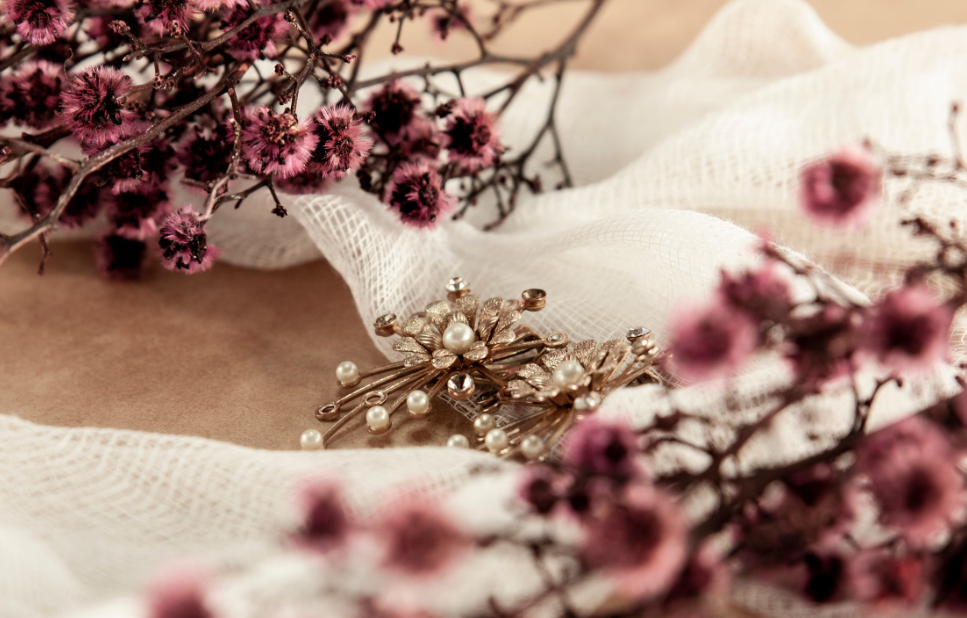
Throughout the following centuries, brooches reflected changing tastes in jewellery and fashion. Victorian designs frequently incorporated sentimental motifs, floral details and intricate craftsmanship, while the Art Deco period introduced more geometric compositions, contrasting materials and striking decorative shapes.
Brooches also became treasured personal objects. They were exchanged as meaningful gifts, passed between generations and worn to communicate everything from family connections to individual taste.
Today, the accessory continues to draw inspiration from this heritage. Contemporary interpretations may look very different from their historical predecessors, but the combination of design, symbolism and personal expression remains central to their appeal.
For a fascinating look at how garment fasteners developed into decorative jewellery, the Pforzheim Jewellery Museum’s history of fibulae and brooches offers an interesting historical perspective.
DID YOU KNOW?
The word brooch comes from the Old French broche, meaning a pointed instrument or pin. Its name reflects the accessory’s original function as a fastening device, long before it became a decorative jewellery statement.
Why the Brooch Is Making a Comeback
Fashion regularly revisits its archives, but the renewed interest in brooches reflects something more interesting than simple nostalgia. It highlights a desire to make familiar wardrobe pieces feel individual through carefully chosen details.
One reason for the accessory’s appeal is its versatility. Unlike jewellery that is traditionally worn in a specific position, a brooch offers considerably more freedom. It can be attached to a lapel, placed near a neckline or used to introduce an unexpected decorative element to an otherwise simple garment.
There is also a growing appreciation for accessories that communicate personality. In a wardrobe built around classic tailoring, neutral colours and versatile silhouettes, a distinctive brooch can provide contrast without requiring an entirely new outfit.
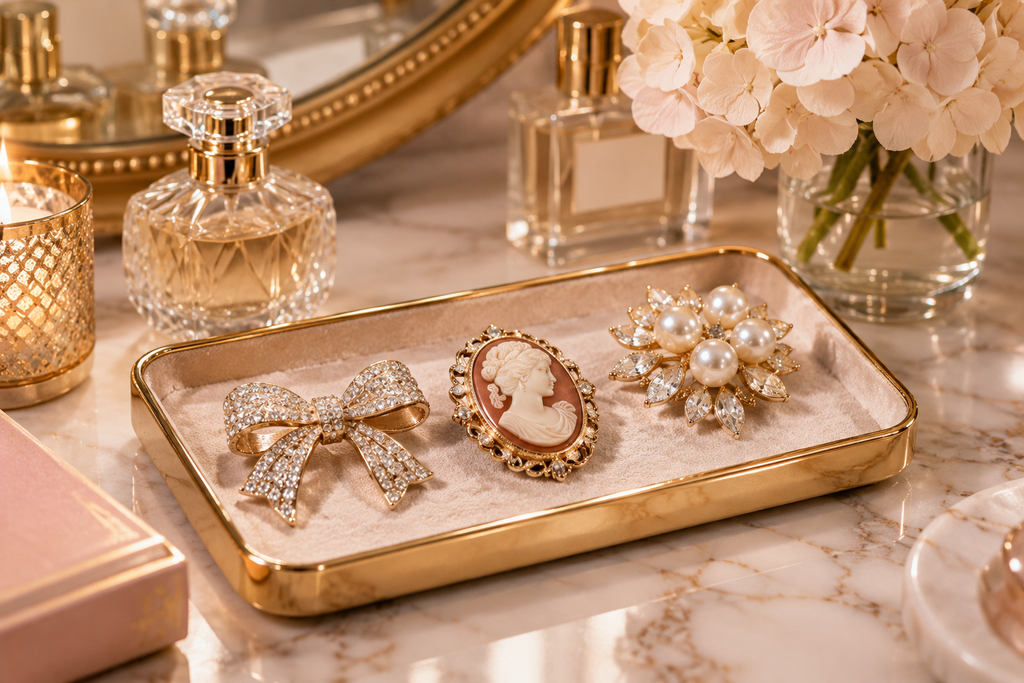
Designer fashion houses have contributed to this renewed interest by exploring different materials, shapes and interpretations of their signature motifs. Traditional floral designs now sit alongside sculptural logos, embellished emblems and more playful constructions.
The result is an accessory that feels less restricted by occasion or age. Rather than being reserved for formal events, the brooch can become part of everyday styling, adding an individual finishing touch to pieces already in the wardrobe.
Its return also fits naturally into the wider appreciation for thoughtful dressing: choosing details that have character, rather than relying exclusively on seasonal trends.
Six Designer Brooches Worth Knowing
The contemporary brooch comes in many different forms, from delicate decorative pieces to bold designs with unmistakable fashion identities. These six examples illustrate the variety of approaches taken by some of the world’s best-known luxury houses.
1. Chanel – Gold and Crystal Brooch
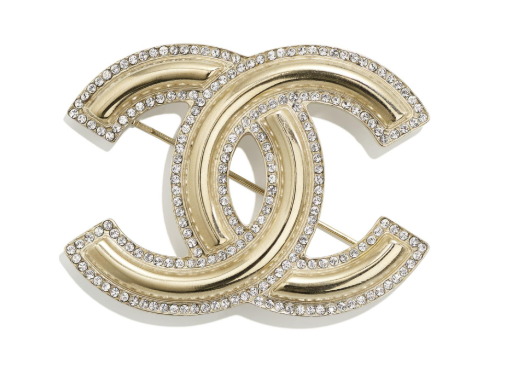
Chanel’s gold-tone and crystal brooch captures the house’s enduring appreciation for elegant decorative accessories.
Combining a luminous metallic finish with crystal embellishment, the design has a classic quality that feels particularly suited to refined tailoring. Its decorative character makes it an interesting addition to a structured blazer or coat, while the combination of gold and sparkle gives it enough presence to stand out against simpler fabrics.
The house’s relationship with jewellery and accessories is deeply connected to its founder’s vision of modern femininity. For more about the woman behind this distinctive aesthetic, discover The Designer Edit: Coco Chanel.
2. Dior – Petit CD Brooch
Delicate and feminine, Dior’s Petit CD brooch offers a softer interpretation of the designer accessory.
The design combines gold-finish metal with a white resin pearl and silver-tone crystals, bringing together traditional decorative elements in a contemporary composition.
The pearl introduces a timeless jewellery reference, while the crystal detailing adds a subtle sense of luminosity. It is a particularly graceful interpretation for those who prefer accessories with a recognisable identity but a more delicate appearance.
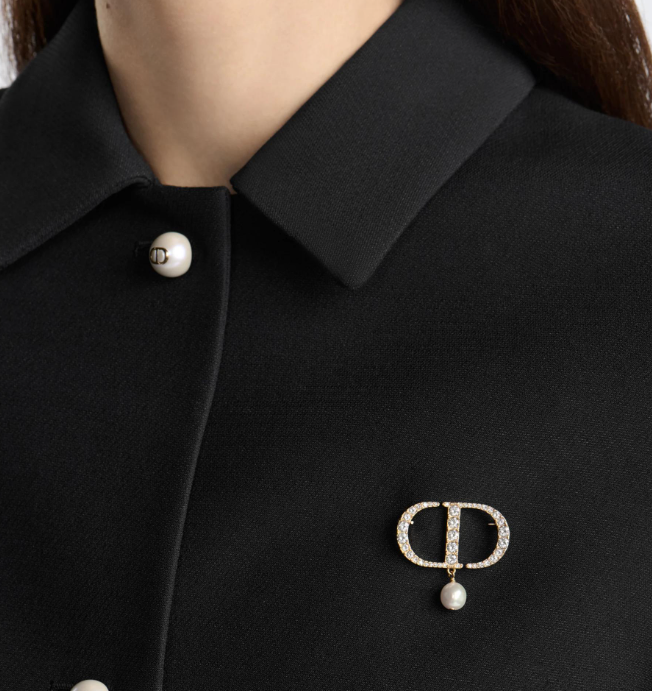
Dior’s history is filled with references to femininity, craftsmanship and beautifully considered details. The story behind the house’s distinctive design language is explored further in The Designer Edit: Christian Dior.
3. Loewe – Anagram Brooch
Loewe brings a more sculptural perspective to the brooch through its recognisable Anagram motif.
The interwoven emblem creates an interesting sense of movement and dimension, transforming the house’s signature design into a decorative accessory. Rather than relying on elaborate embellishment, the appeal comes from its shape and the visual strength of its construction.
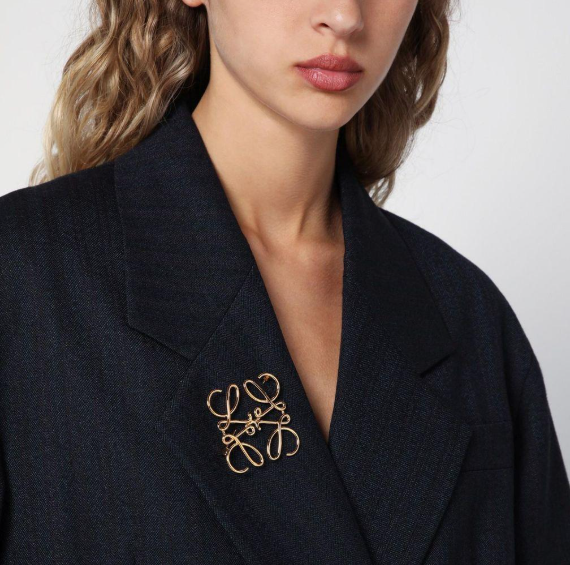
This is a particularly interesting example of how a familiar fashion-house symbol can become an accessory in its own right. Its sculptural character makes it an appealing choice for those who appreciate contemporary design and understated statement pieces.
4. Miu Miu – Leather Floral Brooch
Miu Miu takes a more playful approach with its leather floral brooch.
Moving away from conventional metal and crystal jewellery, the design introduces a botanical silhouette through a softer material. Its floral character gives it a distinctive personality, while the leather construction creates an interesting contrast with traditional decorative accessories.
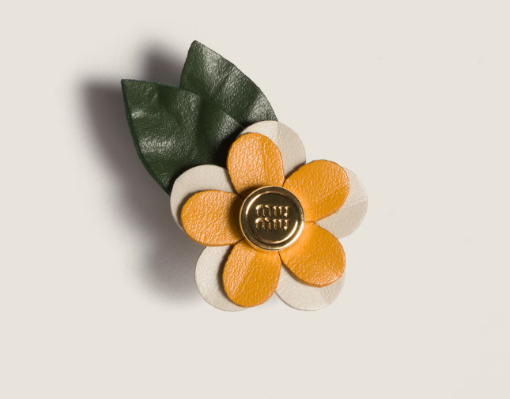
The result feels youthful without being overly casual. It demonstrates how a brooch does not necessarily need to rely on precious-looking materials or elaborate embellishment to become a memorable fashion detail.
5. Saint Laurent – Opyum YSL Brooch
Saint Laurent’s Opyum YSL brooch takes a confident, graphic approach to designer jewellery.
Centred around the recognisable YSL monogram, the design reflects the house’s preference for strong visual identities and sophisticated styling. Its sculptural appearance makes it particularly interesting alongside clean silhouettes and understated tailoring.
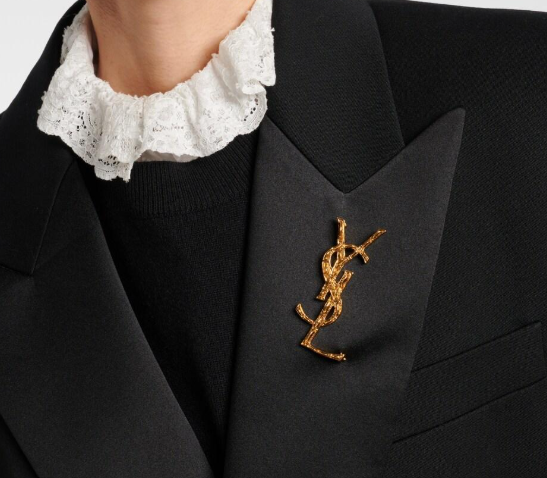
The piece also illustrates how a fashion-house emblem can become a decorative object in its own right. Rather than relying on intricate ornamentation, it uses a recognisable shape to create its impact.
For more about the designer who transformed modern tailoring and redefined the relationship between masculine and feminine dressing, explore The Designer Edit: Yves Saint Laurent.
6. Vivienne Westwood – Bas Relief Orb Brooch
Vivienne Westwood’s Bas Relief Orb brooch brings a distinctive heritage-inspired character to the selection.
The Orb, one of the most recognisable symbols in contemporary fashion, combines historical references with the designer’s unconventional creative vision. In brooch form, the motif becomes a decorative statement, often enhanced by crystal details that draw attention to its distinctive silhouette.
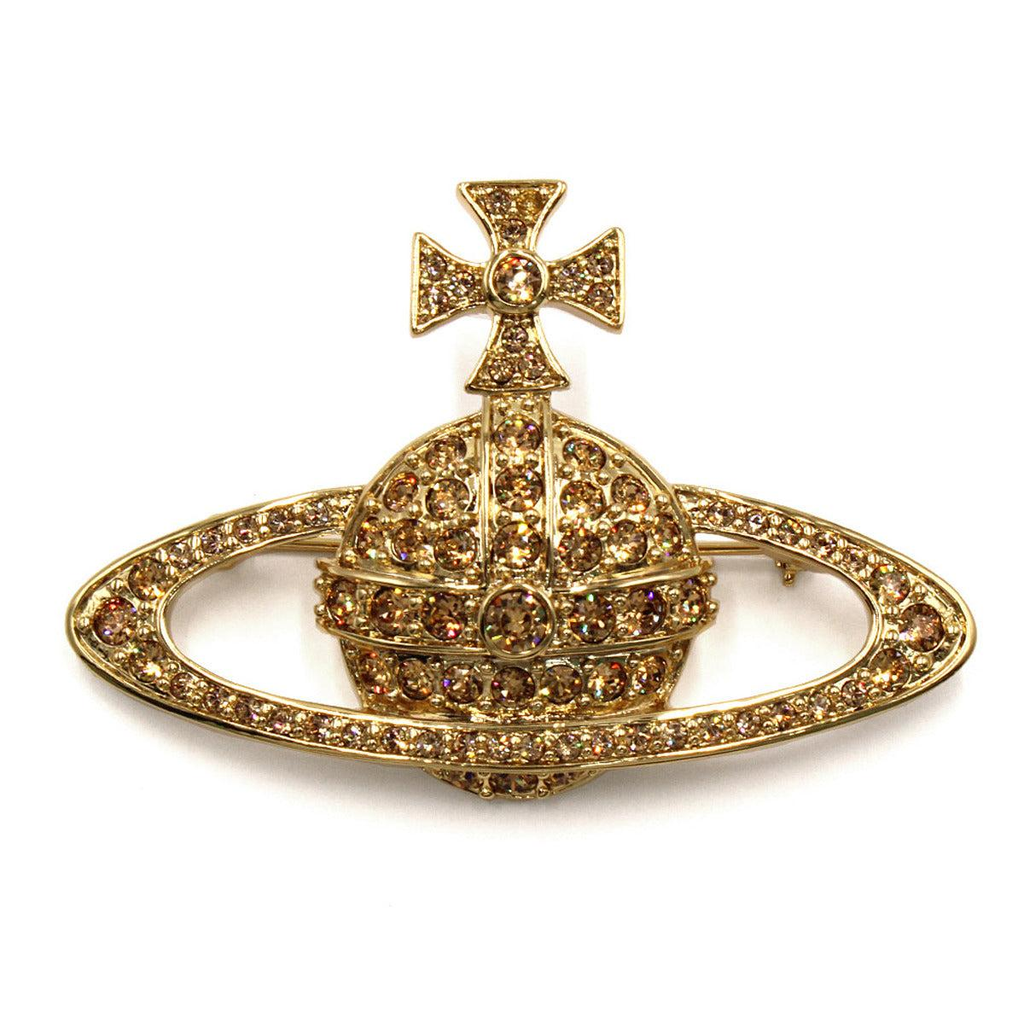
Its appeal lies in the contrast between traditional symbolism and a more rebellious fashion identity. It is an expressive accessory for anyone who appreciates designs with a strong personality and a story behind them.
My style is my signature.
Six Modern Ways to Style a Brooch
Knowing which brooch appeals to you is only the beginning. Its placement, relationship with the garment and the overall proportions of an outfit can completely change the result.
The traditional lapel remains a beautiful option, but there are several other ways to incorporate this accessory into contemporary dressing.
1. On a Blazer Lapel
A tailored blazer provides one of the most natural settings for a brooch. Its structured silhouette offers a defined area for decorative detail, making even a relatively small accessory noticeable.
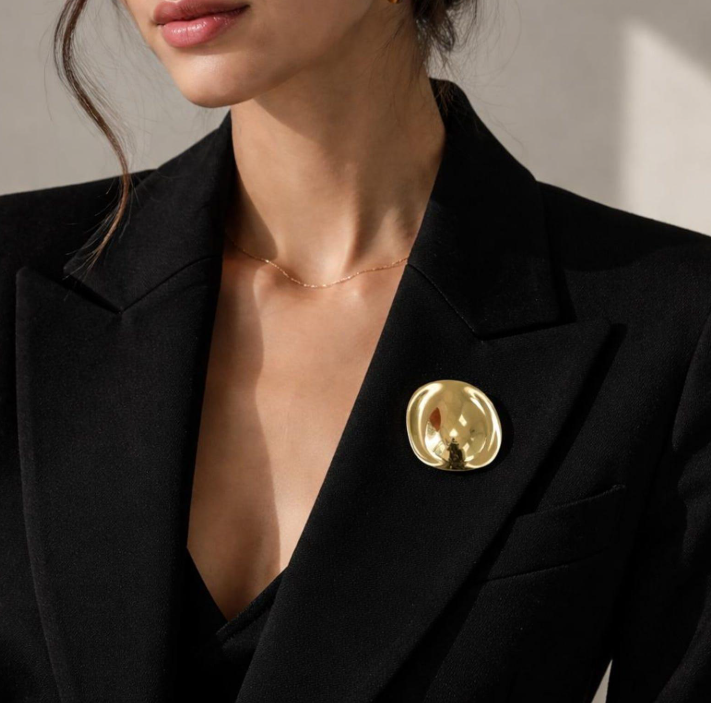
Position the brooch on one lapel, allowing it to become a focal point without competing with the rest of the outfit. A gold or crystal design works beautifully against black, navy or cream tailoring, while a sculptural piece can introduce an interesting contrast to a minimalist silhouette.
For more inspiration on making this wardrobe staple work across different occasions, see How to Style a Blazer in 7 Different Ways.
2. On a Coat
Outerwear offers another opportunity to experiment with brooch placement.
A classic wool coat in camel, charcoal, black or ivory can provide a beautiful backdrop for a decorative accessory. Position it near the lapel or slightly higher on the chest, taking care not to interfere with buttons or the natural lines of the garment.
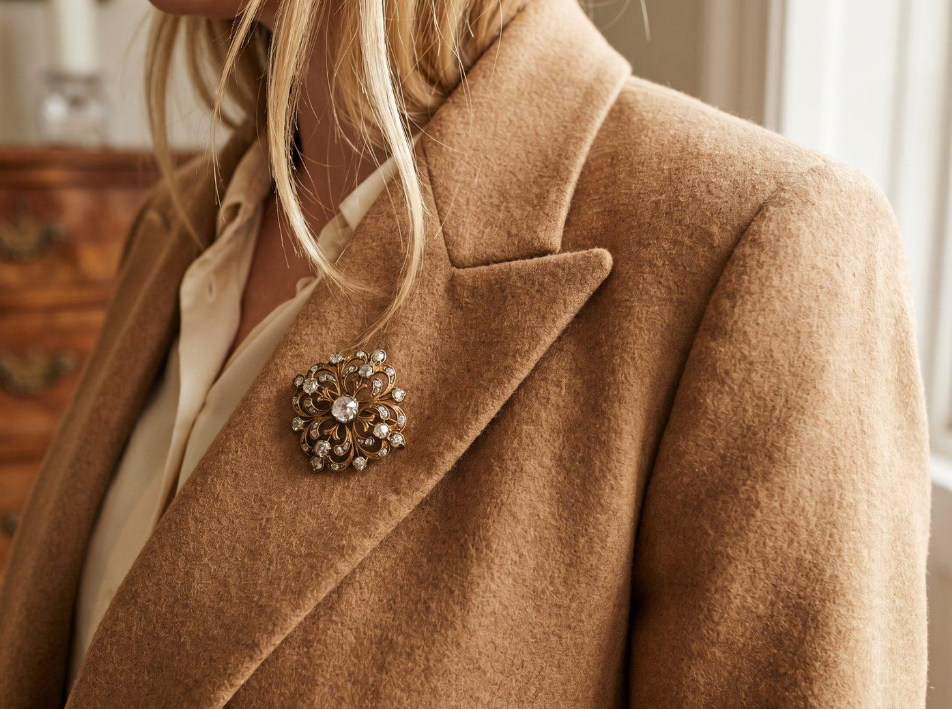
A distinctive brooch can make familiar outerwear feel more individual, particularly when the coat itself has a simple silhouette.
3. At the Collar
For a more delicate approach, consider positioning a brooch near the collar of a shirt or blouse.
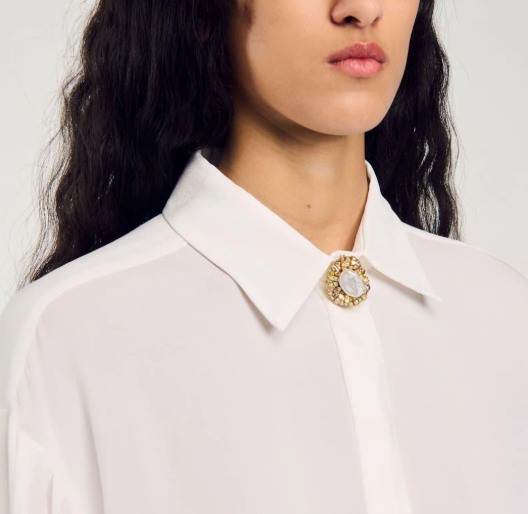
A small pearl or crystal design can introduce an elegant alternative to a traditional necklace. Another option is to place it slightly below the shoulder, creating an asymmetrical detail that feels less conventional.
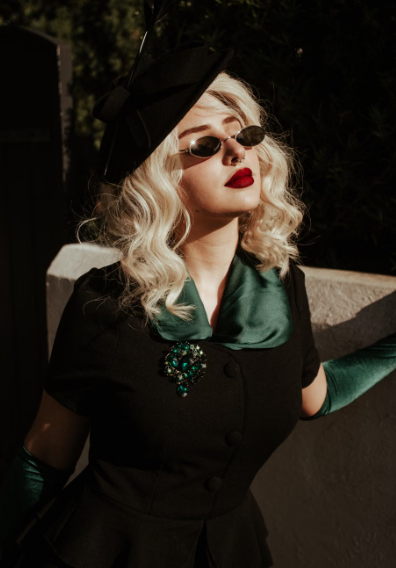
This works particularly well with crisp cotton shirts and silk blouses, where the contrast between the fabric and the decorative accessory becomes part of the appeal.
4. On Knitwear
A brooch can introduce an interesting decorative element to simple knitwear.
Fine-gauge sweaters and cardigans in neutral shades are particularly suitable because they allow the accessory to stand out without competing with other details.
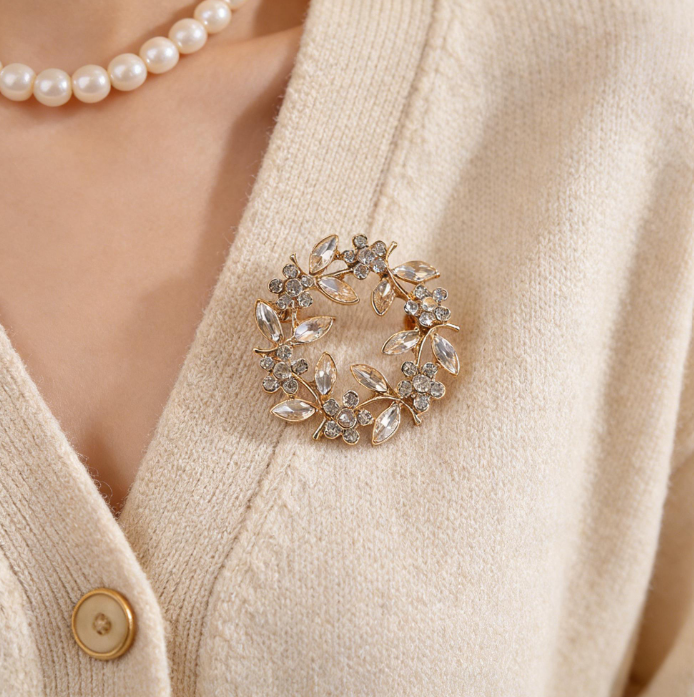
A delicate design can complement lightweight cashmere, while a more substantial piece may be better suited to thicker knitwear.
Always consider the weight of the brooch and the construction of the fabric. Heavier accessories can pull on delicate knits, leaving holes or distorting the material.
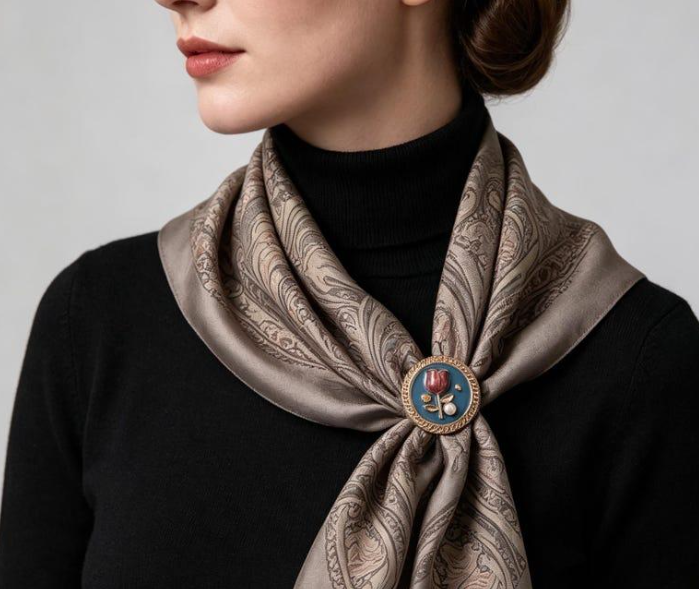
5. On a Scarf
A brooch can also become a decorative alternative to a conventional scarf fastening.
On a suitable scarf, it can help secure a fold while introducing an additional detail. A beautiful silk scarf paired with a decorative pin can create an interesting combination of colour, texture and jewellery.
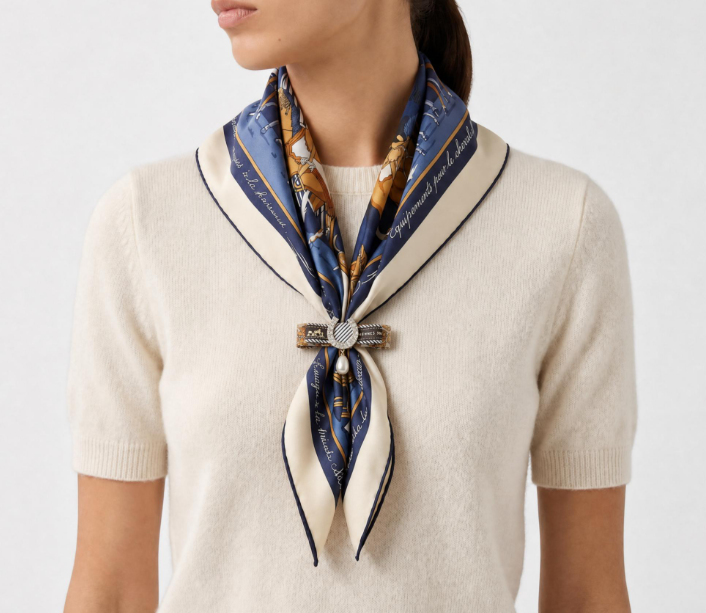
For more inspiration on wearing scarves in different ways, explore How to Style a Scarf: Elegant Ways to Wear This Timeless Accessory.
Choose the fastening carefully, particularly when working with delicate silk or cashmere, to avoid snagging or damaging the fabric.
6. Beyond Clothing
One of the more unexpected ways to approach brooch styling is to move beyond garments altogether.
A decorative pin can introduce personality to certain fabric handbags, hats and accessories that can accommodate a secure fastening.
A brooch attached to a suitable fabric bag, for example, can create an individual alternative to traditional bag charms. On a hat, it can become an interesting decorative detail for occasion dressing.
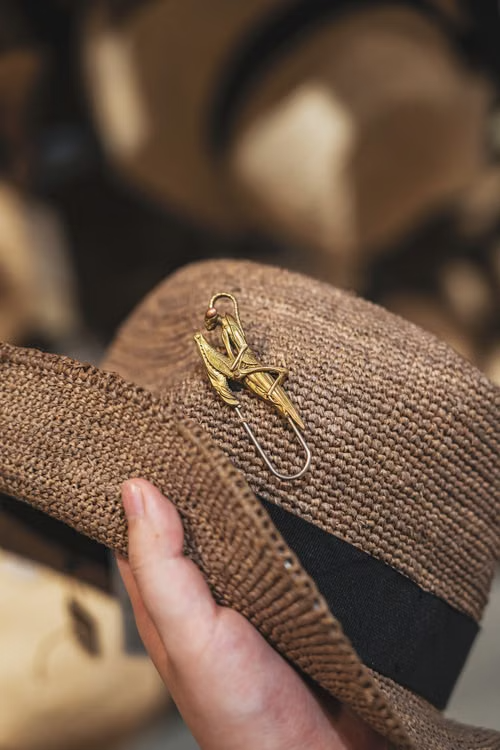
Always consider the material before attaching a brooch. Avoid piercing leather, delicate finishes or valuable accessories unless the fastening is specifically designed for that purpose.
How to Choose the Right Brooch
The best brooch is not necessarily the most elaborate or recognisable. It is the one that feels appropriate for your wardrobe, personal taste and the occasions on which you are likely to wear it.
Consider the proportions. A large sculptural brooch can make a strong impression on a coat or blazer, while a smaller design may be more suitable for a blouse or lightweight cardigan. Think about the scale of the accessory in relation to the garment.
Pay attention to materials. Gold-tone finishes, silver details, pearls, crystals, enamel and leather-inspired designs each create a different effect. Consider whether you prefer traditional jewellery aesthetics or something more contemporary.
Think about versatility. A design that works with several different outfits is likely to become a more useful addition to your collection. Classic motifs and considered proportions often offer greater styling flexibility.
Choose something personal. A brooch can be a reflection of your interests, memories or individual aesthetic. It does not need to match every other accessory or follow a particular fashion direction.
STYLE TIP
When wearing a brooch with a patterned garment, look for a design that complements one of the colours already present. This creates a natural visual connection without requiring every accessory to match.
Styling Mistakes to Avoid
Although brooches are relatively easy to incorporate into an outfit, a few considerations can make the difference between an elegant detail and an awkward addition.
- Overcrowding the look: Multiple statement accessories can compete for attention. If your brooch is particularly decorative, allow it to remain the focal point.
- Ignoring fabric weight: Heavy pins can damage delicate materials or pull on lightweight garments. Always consider the construction of both the accessory and the fabric.
- Choosing an unsuitable placement: A brooch should complement the garment’s natural lines. Experiment with positioning before securing it.
- Matching everything too closely: Jewellery does not have to coordinate perfectly. Mixing finishes and textures can create a more individual result, provided the overall look feels balanced.
- Limiting it to formal occasions: A brooch can work just as beautifully with everyday tailoring and knitwear as it can with eveningwear.
For more ideas on creating a balanced, polished appearance, our guide to How to Style Jewellery Without Overdoing It explores how individual accessories can work together without competing.
The New Rules of Wearing a Brooch
Perhaps the most interesting change in the way brooches are worn today is the freedom to experiment.
There is no requirement to reserve them for formal occasions, attach them exclusively to jacket lapels or choose designs that follow traditional jewellery conventions.
Instead, the modern approach is about understanding how an accessory interacts with the rest of an outfit.
A decorative pin can introduce contrast to minimalist tailoring, add character to a familiar coat or bring a personal detail to an otherwise simple combination. Its placement can be traditional or unexpected, depending on the garment and the effect you want to create.
The same principle applies to the wider wardrobe. Understanding how to balance outfit proportions can help you decide when an accessory should become the focal point and when a more discreet detail works better.
The most successful styling choices are not necessarily the most complicated. They are the ones that feel considered, comfortable and true to the person wearing them.
EDITOR’S NOTE
The most interesting accessories are often those that feel like an extension of personal style rather than an attempt to follow a trend. Whether your preference is a delicate pearl design, an architectural shape or a playful motif, choose a brooch because you genuinely enjoy wearing it.
Final Thoughts – A Small Detail, A Lasting Impression
The return of the brooch offers an opportunity to rediscover an accessory with a remarkable history and a surprisingly contemporary appeal.
From the intricate craftsmanship of traditional jewellery to the distinctive interpretations of modern luxury houses, the brooch has continually adapted to changing ideas of personal style.
Its renewed relevance is a reminder that fashion does not always require an entirely new wardrobe. Sometimes, a carefully chosen detail can give familiar pieces a different identity and make an outfit feel more personal.
Whether you prefer a classic designer emblem, an elegant floral motif or a sculptural statement piece, the brooch invites you to approach everyday dressing with a little more imagination.
After all, the most memorable elements of personal style are often the smallest ones.